
Tea Knowledge
International Tea Day: Producers and Tea Explained
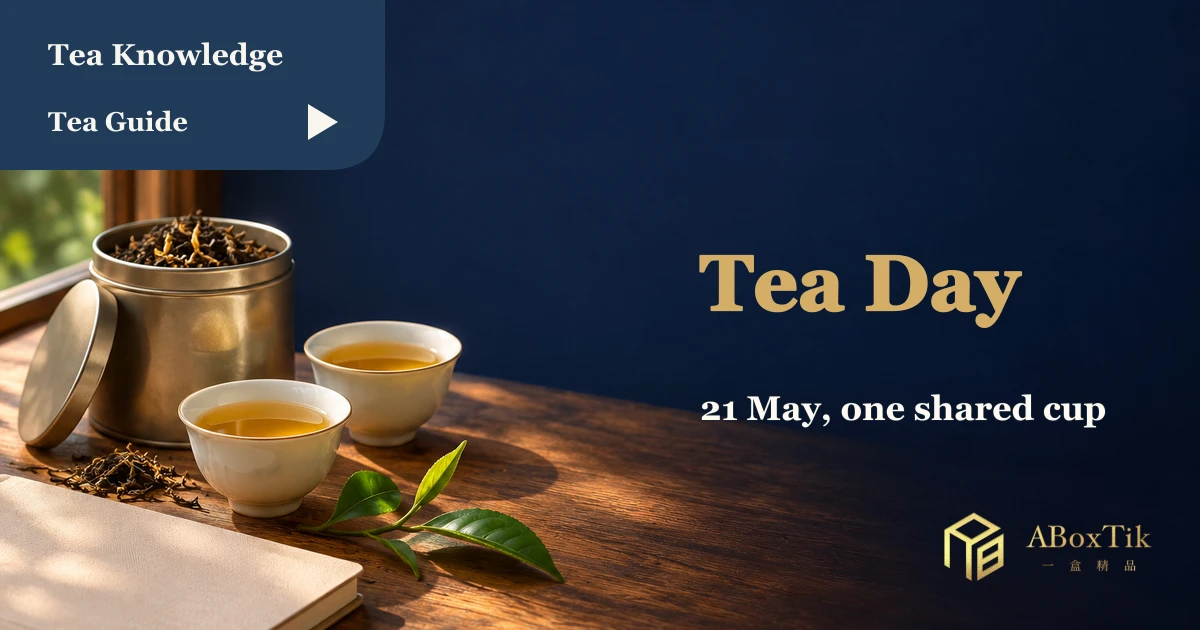
An ordinary cup connects many small decisions and many kinds of work. Read the tea name, choose one question and leave a little time for the answer. Sharing what is known, alongside what each person enjoys, can make a familiar tea break the beginning of a useful conversation.
Why is International Tea Day on 21 May?
International Tea Day is observed on 21 May. The United Nations established it to draw attention to tea’s place in rural livelihoods and sustainable production and consumption. The FAO facilitates the observance. It is a chance to enjoy a familiar cup while noticing the people and decisions that helped bring it to the table.
A global observance is different from a tea fair
The international day is an annual observance; a tea fair is a particular event with its own organiser, place, dates and programme. Both can introduce tea, but one does not automatically describe the other. Check the current organiser’s announcement before making travel or registration plans. Last year’s opening hours deserve a rest too.
Who works between field and cup?
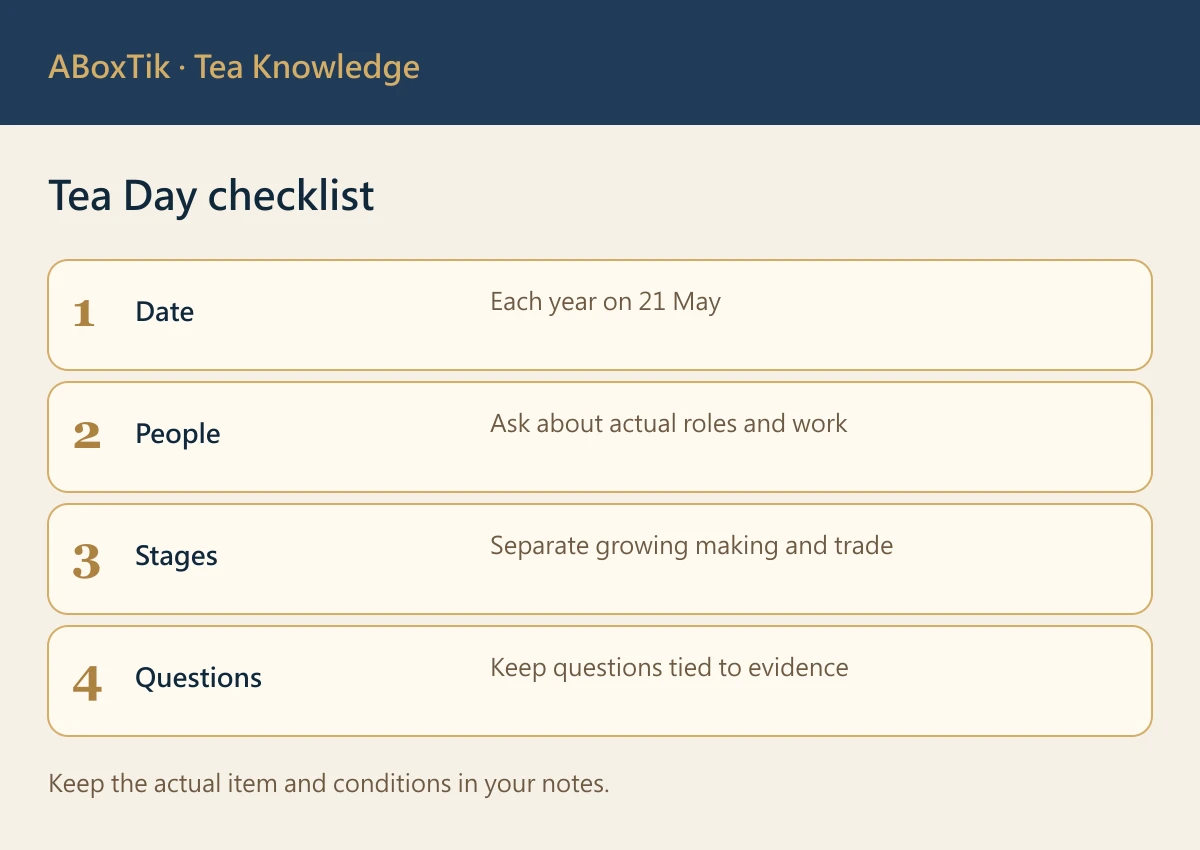
Growing, picking, processing, packing, transport, selling and brewing may involve different people and organisations. A grower might process their own leaves or supply a separate maker. Tea can also pass through several businesses or be blended. Ask about the actual batch instead of assuming that one person performed every step.
Follow the decisions behind one leaf
A garden needs care before leaves are picked. A maker then chooses processing steps appropriate to the material and the intended tea. Finished tea may pass through sorting, packing, storage, transport and retail before it reaches a cup. These roles differ across regions and businesses, and one person may perform several of them. When reading a product story, list grower, processor, packer and seller in separate fields. Check what is known about each role rather than assuming that a brand’s business address is the place where every leaf grew.
Tea and livelihoods
The UN and FAO connect tea with rural livelihoods. That broad observation does not tell us the income earned by a particular grower from a particular purchase. If the human story matters to you, ask the seller who grew and processed the tea, what is known about the batch, and when the information was last checked. A field left open for an answer is more useful than a convincing invented one.
A practical first conversation with a seller
There is no need to demand a complete biography at the first question. Start with the tea’s name, stated origin and style. Then ask which growing or processing organisation is known and whether the details apply to the batch in the package. If the seller needs time to check, explain which field matters to you and leave room for a later answer. If the information is not available, record the gap rather than attaching a generic regional story to the product. Respect private addresses and commercially sensitive details that cannot appropriately be shared.
Make sustainability a more precise conversation
Farm management, processing water, packaging, transport and livelihoods are separate subjects. When comparing a claim, ask which activity it covers, the period, the unit and who gathered the evidence. A measure in one part of a supply chain does not establish the overall impact of the whole product. For a product certification, check the specific item, issuing body and scope.
Why separate farming, processing and packing?
Each stage involves different people, resources and decisions. A garden question might concern cultivation or harvest; a processing question might concern steps, equipment or time; a packaging question might concern materials, portions and transport. Naming the stage makes a question easier to answer. “What material is the inner packet made of?” is more specific than asking whether the whole box is perfectly sustainable. The answer to one packaging question does not settle every environmental or social question about the tea.
Three easy ways to take part
Read the name and producer details on a tea already in the cupboard. Choose one question to ask the seller. Share the tea with a friend and separate verified origin details from personal flavour impressions. “I notice a floral note” and “this batch came from this place” can both be useful sentences; they need different kinds of support.
Host a small tea-day conversation
Choose a tea with a clear name and brewing instructions. Set out clean cups, drinking water and a simple card for questions. Begin with one sentence about the international observance on 21 May, then invite each person to choose a question they would like to explore. Before tasting, read the information on the packet; afterwards, each participant can note one aroma or texture in their own words. Someone who prefers water or a pause is still part of the gathering. There is no prize for filling every field or recognising the most aromas.
Bring the questions to the next purchase
First write down the practical need: how many cups you drink, what equipment is available, where the tea will be stored and the budget. Compare net weight, ingredients, stated origin, brewing instructions and the contact for after-sales questions. If a product mentions a certification or environmental attribute, look for the issuing organisation, the subject, the period and the scope. These details help you understand a specific claim; they do not guarantee that the flavour will suit every drinker. A small portion and a clear brewing note can be useful when discovering a new style.
Make a small tea-day card
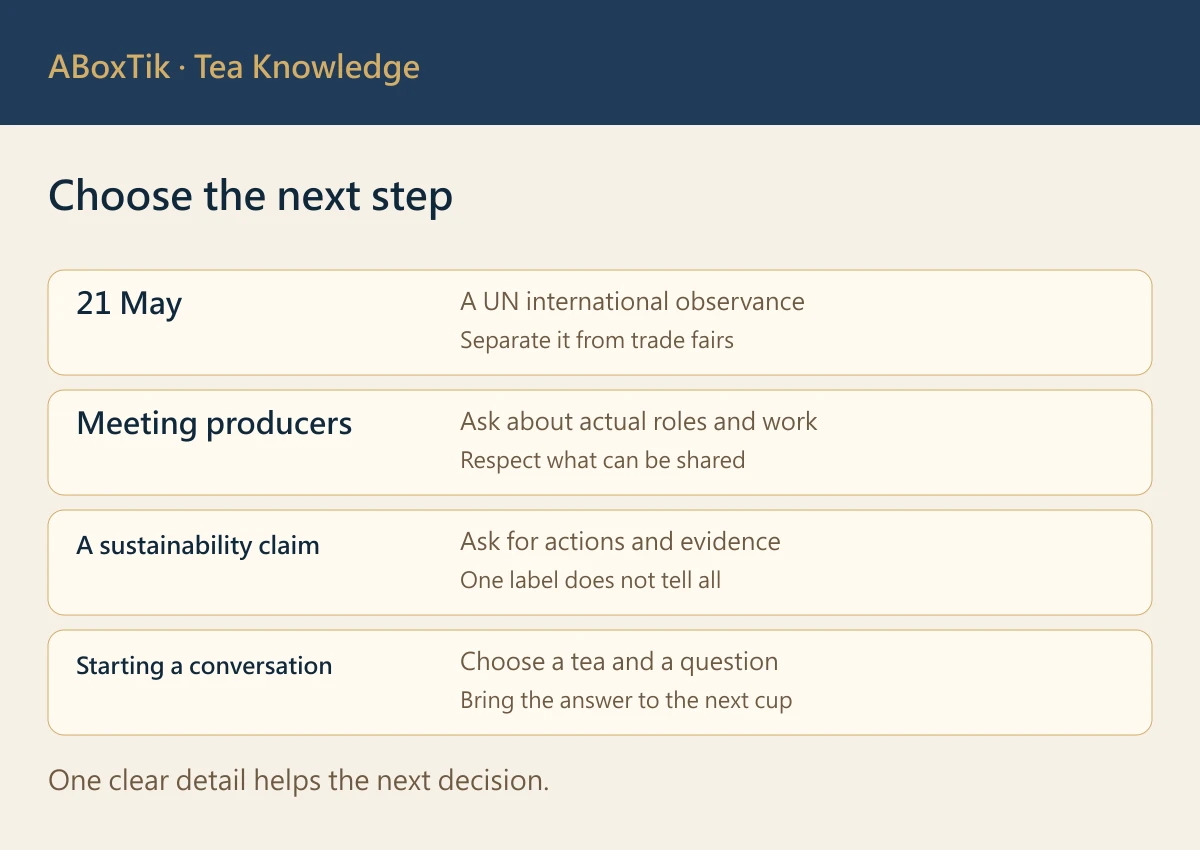
Fill in four lines: tea name; stated origin or producer; what is known about processing; one question for later. It is fine to start with just a name. Invite a friend to choose a different question, then compare what each of you learned. The card is a conversation starter, not an examination.
| Tea-day question | Record first |
|---|---|
| What tea is this? | Name, ingredients and label |
| Who helped make it? | Confirmed source and roles |
| What would I like to ask? | Question, source and date |
Keep the card current
Add a date beside each source. Products, packaging, suppliers and event programmes can change. A previous year’s announcement can be useful history, while this year’s event requires a current organiser announcement. When a seller supplies an update, preserve the earlier note and add the date and the batch to which the new answer applies. This prevents information from two different purchases being combined into a neat but inaccurate history. A tiny date field can save a surprisingly long search later.
An accessible question for new tea drinkers
A conversation can begin with “Where were these leaves picked?” Look at the package together and answer only what it actually tells you. If the answer is missing, write the question down and check a reliable source or ask the seller later. Sensory observation can remain equally simple: look at the leaf shape or notice a dry aroma, then invite anyone who wishes to taste to describe their own impression. One person’s floral association is a description, not a compulsory answer for the table.
Common questions
Can people outside the tea trade participate? The UN invites governments, organisations and other stakeholders to observe the day in ways suited to their circumstances. Is the programme identical every year? No: check the organiser and year. Does the word sustainable prove every claim about a particular box? Ask for the scope and supporting information.
Make the day a beginning, not a deadline
International Tea Day can be a yearly reminder to notice the people and information behind a familiar drink. It does not require a special purchase or a perfect knowledge of the supply chain. Choose one useful question, find the best available answer and keep its scope clear. Share the cup at a comfortable pace, then return to the card when another question arises. Curiosity can fit into an ordinary tea break without requiring the whole afternoon to become a conference.
Leave room for the next cup
A useful observance need not end in a shopping list. Read what is known, stay curious about what is not, and make space for the people behind the tea. If you want to explore further, start with the origins and craft of Taiwanese tea, then choose a question to carry to your next cup.
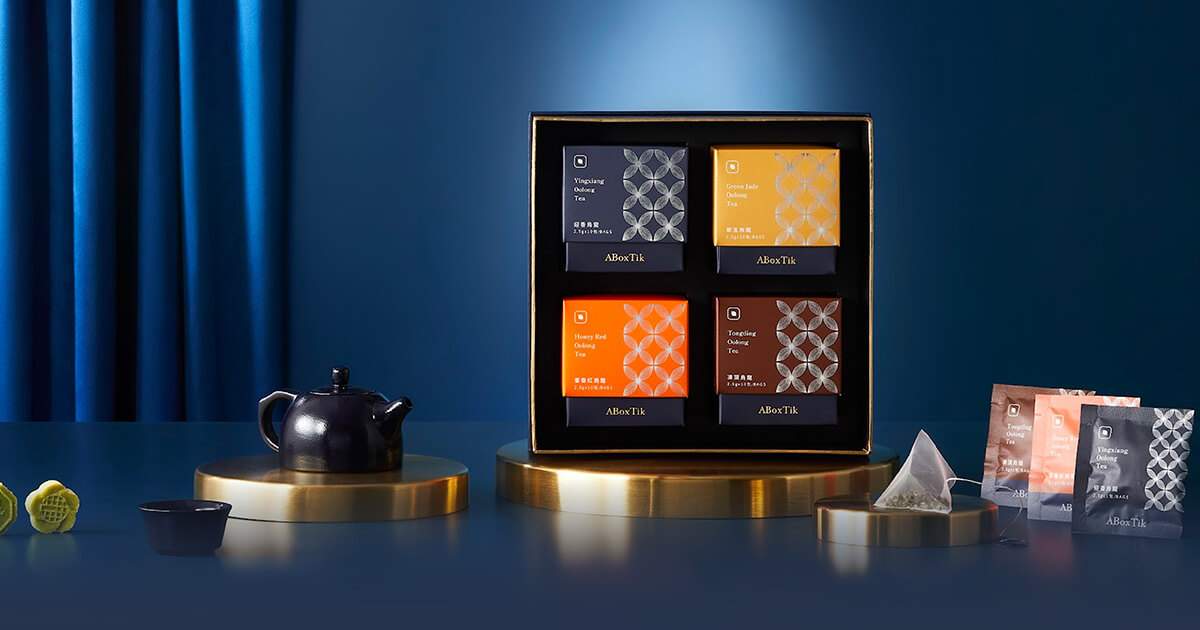
Share a cup with ABoxTik. Begin with a familiar tea and leave one line for what you noticed today. Follow a related guide below when another question arises, and choose a next step that fits the way you enjoy tea.
Related reading
- Taiwan International Tea Expo visitor guide
- Discover Taiwanese tea and craft
- Cross-cultural tea gift etiquette