
Tea Knowledge
How Big Is That Teapot? Read Teaware Dimensions Beyond the Photo
Start with numbers outside the frame
A vessel can look larger or smaller depending on camera distance and composition. Find the height, widest dimension and capacity, then place those measurements on your own table. A beautiful object also needs a comfortable place to land.
What do the measurements include?
Ask whether a pot’s width includes the spout and handle and whether its height includes the lid knob. Record a cup’s rim, foot and height separately. When units or measurement points are unclear, ask the seller. Handmade pieces can vary; consult the information for the actual item.
Match capacity to your routine
A capacity may describe a brim-full volume or a recommended working amount; ask the supplier which is meant. Consider how many people will drink, how many cups to pour and whether a pitcher is needed. A photographed hand is not a reliable measure for everyone’s grip.
Rehearse the layout on paper
Cut paper to the stated maximum footprint of the pot and cups. Leave room to pour, lift and set each item down; check the spout, handle, table edge and neighbours. For a cabinet, measure shelf height and door clearance. Paper has no tea aroma, but it can reveal that the table is smaller than the photo suggests.
Ask about material and care too
Alongside size, check materials, care, actual-item photographs and availability. The National Palace Museum’s Yixing exhibition is a cultural introduction to teaware; it does not establish the material of another product. Once the choice fits, let the first cup settle comfortably on the table.
To bring these questions back to an actual tea choice, browse ABoxTik Taiwan teas, then check the product label and batch information supplied for that tea.
Photography attracts the eye; measurements put the object on the table
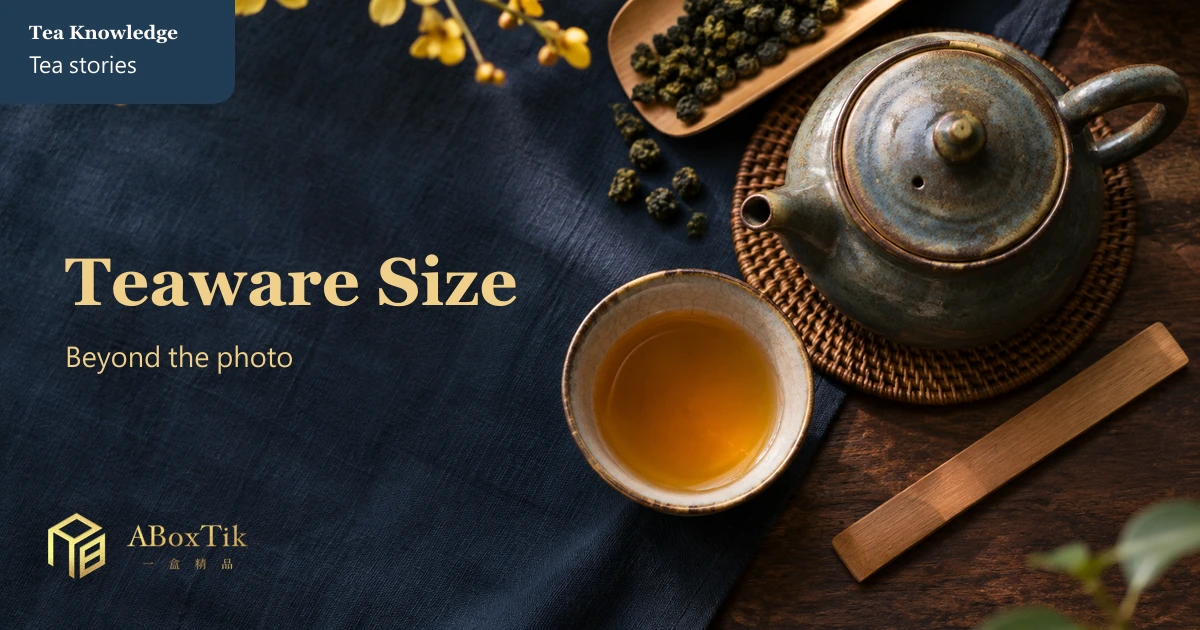
A teapot can resemble a small mountain in a close-up and arrive barely larger than a palm. Another vessel may look unusually slim because of a wide lens, low viewpoint or tight crop. Images are excellent for shape, glaze and detail, but a frame without a reliable scale cannot answer how much space the object will take on your tea table. Copy the dimensions and capacity first, then return to the photographs.
A hand, a pile of leaves or a piece of fruit is not a standard ruler. Hands differ, props may exist only for styling, and the main image may use a different camera distance from the lifestyle view. A photograph with a measured ruler, familiar cup or several angles can help, but written units and clearly defined measurement points remain the reliable basis.
Ask where each measurement begins and ends
For a teapot, useful figures include body diameter, maximum width from spout to handle, body height, total height including the lid knob and the opening size. For a cup, record rim diameter, foot diameter and height. For a tray, distinguish the outer dimensions from the usable inner area. A single figure labelled “width” might describe the body or the complete spout-to-handle span, with very different results on a table.
- Table footprint: use maximum width and depth, not only the vessel body.
- Storage: include the lid knob, projecting handle and the path of a cupboard door or drawer.
- Handling: consider handle opening, grip, filled weight and surface heat; a photograph offers clues, not certainty.
- Cleaning: check whether the opening admits a hand or tool, how the filter is formed and whether parts can be removed.
Handmade pieces may have reasonable individual variation. If only approximate dimensions are listed, ask whether the item is randomly selected or individually photographed and how the tolerance is described. That is practical preparation, not excessive fuss. It saves a beautiful pot from arriving home only to debate geometry with the cupboard door.
One height is not enough: read dimensions as a set
The National Palace Museum’s collection records separate total height, mouth diameter, width and foot diameter for one Yixing pot; other records also distinguish depth and base dimensions. These are not extra numbers added to turn teaware into a mathematics examination. A vessel may project at the spout, handle, lid knob and foot, so one height cannot describe its footprint or how it will be handled. Apply the same test to a product page: does it distinguish the outer envelope, opening, base and usable interior?
Canada’s Office of Consumer Affairs advises that reliable online sellers provide detailed product information including size, colour, weight and material, and recommends saving or printing that information. For teaware, keep the dimension page, actual-item photographs and any clarifications from the seller before purchase. If the delivered piece raises a question, you will have a clear record for comparison. Photographs are excellent at atmosphere; saved specifications are excellent at bringing the conversation back to centimetres and millimetres.
Distinguish brim-full capacity from a comfortable working volume
A stated 200 ml capacity might mean water filled to the rim or a recommended brewing amount. Ask when the listing does not say. Brewing normally requires space for leaves, the lid and a controlled pour. Tightly rolled oolong can expand substantially, so leaf volume matters too. Do not translate a brim-full laboratory-style measure into an instruction to fill the vessel to the edge every time.
Relate capacity to people and cups. Measure how much water you actually put in the cups you use, then decide how many servings you want from one pour and whether a sharing pitcher is part of the setup. A product name such as “two-person pot” is less precise than your cup size and serving rhythm. If the pot will be lifted repeatedly, include the vessel’s own weight and the water it carries.
Rehearse the tea table without spilling any tea
Cut paper footprints for the pot, cups, pitcher and tray using their maximum dimensions. Arrange them on the table you normally use. Leave a clear path in front of the spout, room for a hand at the handle, and enough distance to lift each cup. Then rehearse adding water, removing the lid and carrying the vessel toward the sink. Photography often hides the edge of the table outside the frame; paper is frank enough to include the phone and snack plate too.
When using a tray, arrange the templates inside its usable area rather than comparing only the outer frame. For storage, measure shelf depth and height as well as the entry path through a door or drawer. Travel sets also need the inner bag dimensions, protective spacing and total weight. An object that can be pushed into a space is not necessarily one that can be removed safely.
A photo-to-size reading card
- Record the unit: centimetres, millimetres or inches.
- Confirm whether maximum width and total height include spout, handle and lid knob.
- Ask whether capacity is brim-full or a recommended working amount.
- Measure the real fill volume of a cup you use and estimate the desired servings.
- Test the table, tray, storage and movement paths with paper templates.
- Then verify material, weight, care, actual-item images, variation and availability.
The National Palace Museum’s Yixing exhibition is a cultural route into vessel form and craft history. It does not authenticate the clay, date, maker or performance of another item for sale. For value questions about wood-fired or handmade wares, continue to the wood-fired teaware value guide. This article has the separate, practical task of translating photographs and dimensions into a tea-table plan.