
Tea Knowledge
How to Read a Tea Moisture Test: Sample, Method and Storage
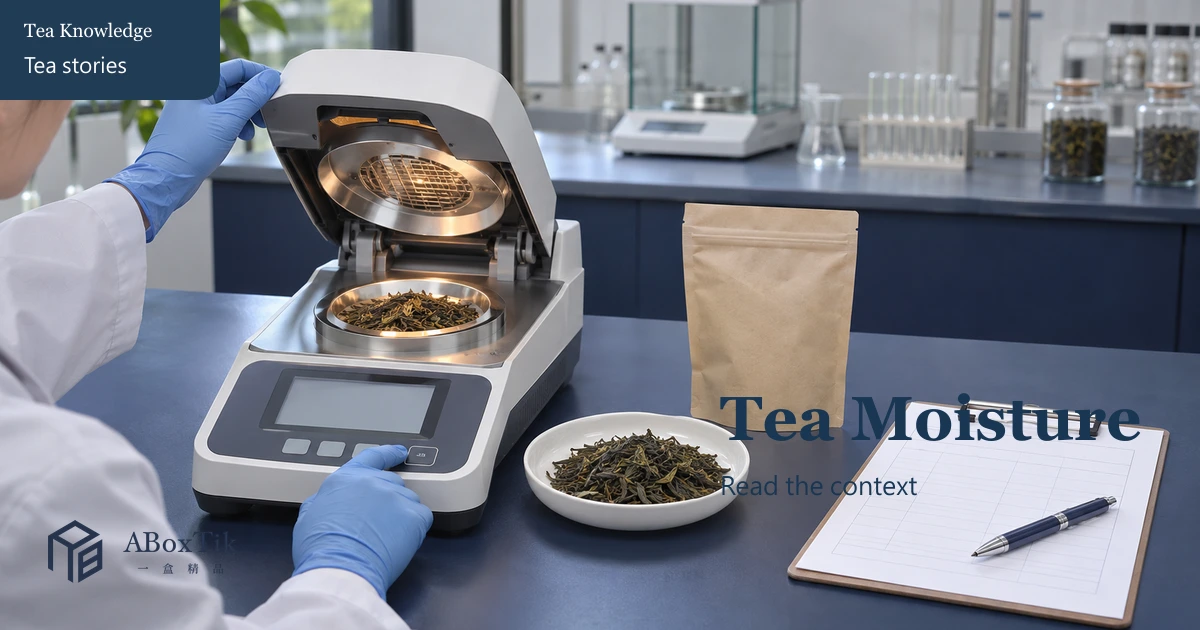
A moisture number is useful when its context travels with it. Before judging a whole batch, look at the sample, sampling date, test method, units and storage conditions.
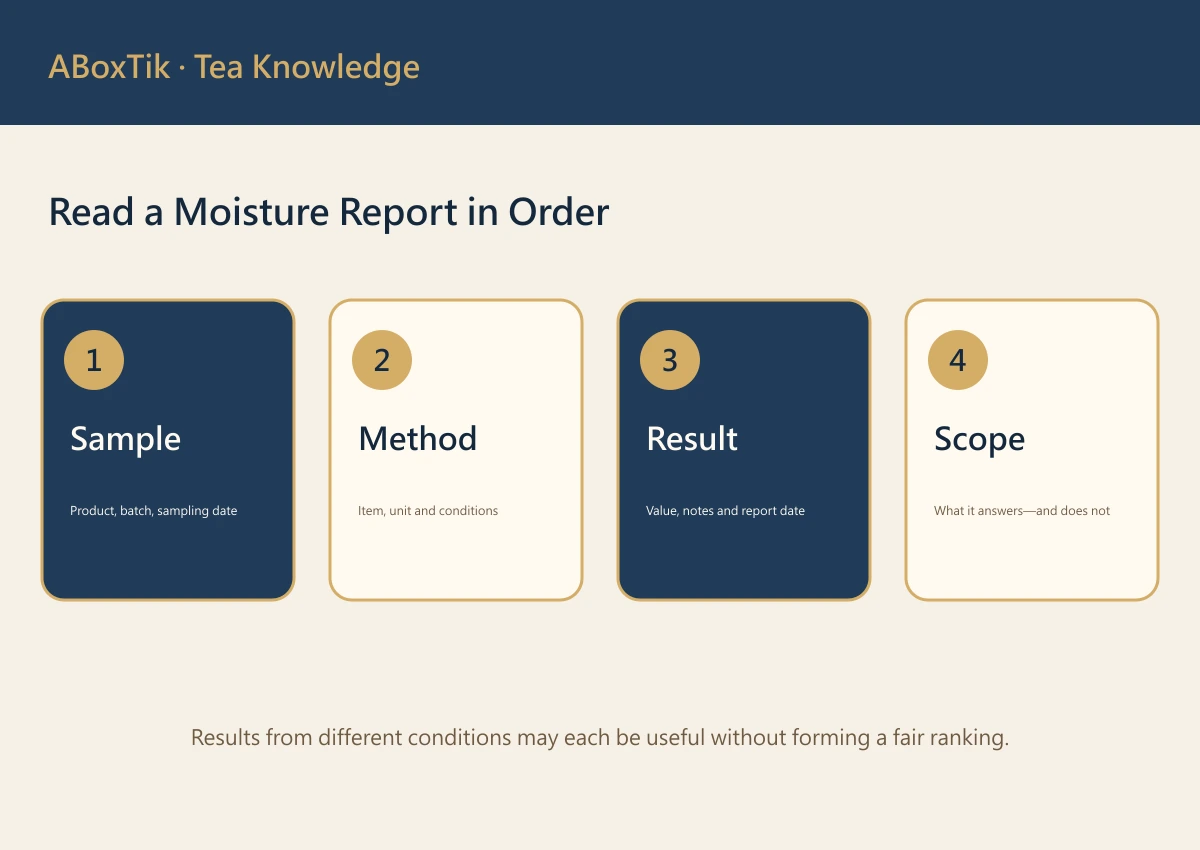
Start with the report fields
Record sample name and batch, sampling and test dates, method, result, units and issuing body. Ask whether the sample represents the same product and batch; the scope of a report depends on the actual document and traceability records.
Moisture content and water activity are different
Moisture content describes the proportion of water in a sample. Water activity is another measure relating to the state of water. The figures and methods are not interchangeable. If a report supplies only one, do not invent the other, and do not use one number alone to determine flavour, safety or an entire shelf life.
Consider the package and timing
The Taiwan Tea and Beverage Research Station discusses moisture, light, temperature, oxygen, time and odour absorption as factors in tea storage. Whether sampling occurred before packing or after opening matters to a comparison. Follow the product’s storage instructions and ask the supplier what conditions apply.
A report-reading card
Product and batch: ____; sample and sampling date: ____; method and units: ____; test date and result: ____; package and storage conditions: ____; source of the document: ____; questions: ____. Compare test items, methods and units before comparing figures.
Common questions
Does a lower number guarantee better flavour? No single measurement describes a tasting experience. Can two reports be ranked directly? First check whether samples and methods are comparable. Can smell replace testing? Sensory observation and testing answer different questions; if storage conditions are abnormal, stop using the product and ask the seller.
Identify the sample described by the report
Place the sample name or number beside the product name, batch, packaging details and document date. If a report describes raw material, an in-process sample or a different batch, record its relationship to the item being sold. Similar names do not establish that two samples are identical. Ask who sampled it, when, and how the document describes the sampling scope. Quantity, package condition and location may affect representativeness; leave unanswered questions open instead of applying one result to a whole batch.
Keep the date and version of any supplier clarification and ask whether the report applies to the package in hand. Suppliers may disclose different information. Before quoting a result, check the document, batch and scope of the proposed wording. Reading a report is a little like reading a map: first check the place and date, then see where the information leads.
Keep the result, unit and method together
Record the test item as written, result, unit, method and issuing body. Preserve any detection limit, uncertainty or other notes supplied. Even a percentage needs the calculation basis defined in the document. Before comparing two reports, ask the laboratory or supplier which methods, sampling details and conditions are comparable. Two numbers alone cannot determine which package is necessarily better.
Imagine one report concerns unpackaged raw material and another an opened finished package. Even if both use the word moisture, the label does not prove identical conditions. Different results alone do not identify which stage caused the difference either. This is an example of how to read a document; an actual interpretation needs the complete report and appropriate professional advice.
Give moisture content and water activity separate columns
Moisture content describes the proportion of water in a sample. Water activity is a different measure relating to the state of water. Their methods, values and uses differ; a report containing one does not permit a direct calculation of the other. If both are reported, keep each name, unit, method, date and sample together to avoid copying a value into the wrong field.
The Taiwan Tea and Beverage Research Station discusses light, temperature, oxygen, time, moisture and odour among storage factors. A test result concerns the sample under the conditions recorded at the test; transport, package integrity and handling after opening are separate records. Follow product storage instructions, and stop using a product and ask the seller if its condition is abnormal. One number cannot guarantee every tea’s flavour, safety or shelf life.
Questions for a laboratory or supplier
Ask which product and batch the report covers, when and how sampling occurred, how the value and unit are defined, and what differs from another report. For an applicable regulation, contract requirement or testing method, bring the complete document to the laboratory, responsible authority or another appropriate professional. Separate confirmed facts from open questions so the next review involves less guesswork.
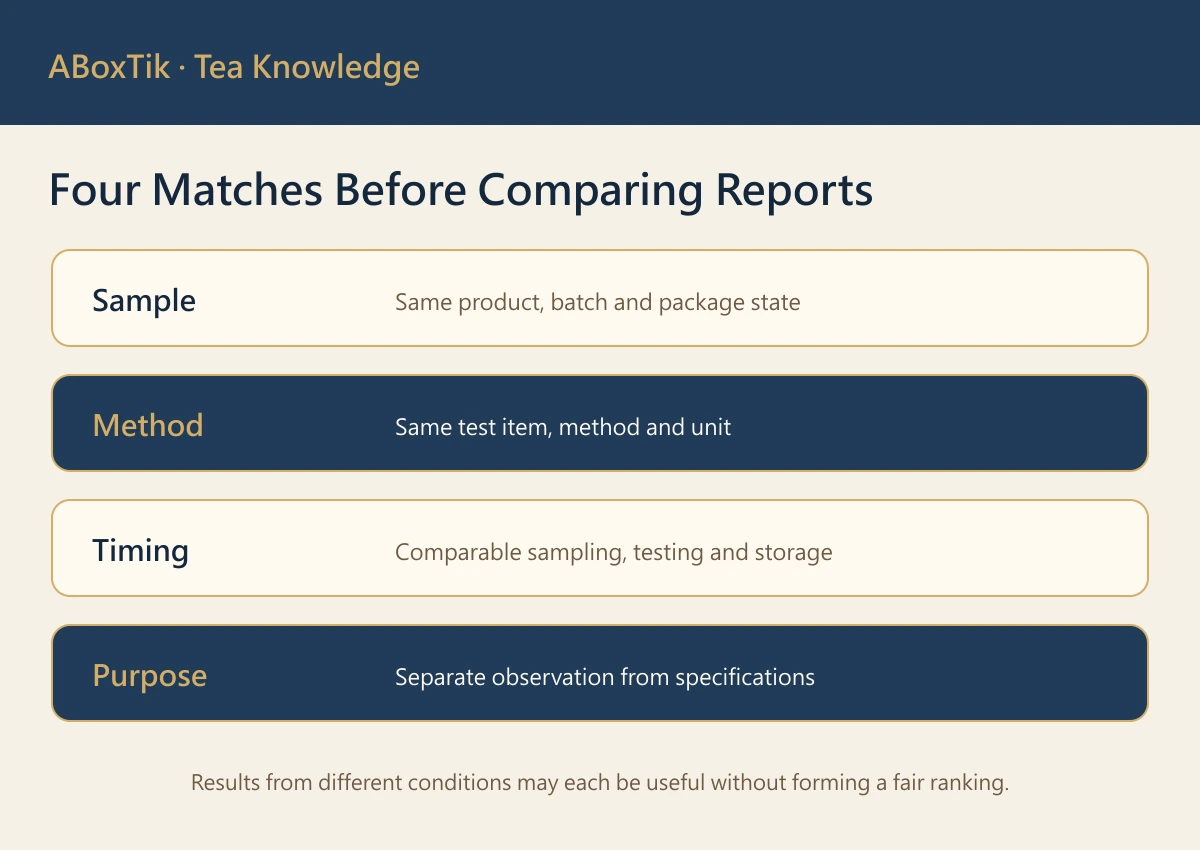
Separate the method name from an everyday conclusion
ISO 1573 describes a method that heats a test portion of tea under specified oven conditions until constant mass. That is a useful reminder: “moisture” on a report is not a description guessed by touch. It belongs with sample preparation, temperature, endpoint and units. If a laboratory uses another method, keep the exact method name and version shown on that report. Results from different methods should not be treated as though they were marks on an identical ruler.
Copy the method wording into the record, then add a plain-language line such as, “This value describes this sample under the method stated in the report.” The first line preserves traceability; the second helps a non-specialist understand the scope without turning a test name into a product promise. When a supplier provides only a number, ask for the document version, issuing body and units. This is not an interrogation. It is simply how a fair comparison gets the same ruler.
Moisture content, water activity and storage answer different questions
Moisture content and water activity are related but not interchangeable. The FDA technical guide defines water activity through the ratio of a food’s vapour pressure to that of pure water under the same conditions, and explains why temperature control matters to measurement. The guide helps clarify why a moisture percentage cannot be converted directly into water activity without the required data and method. Nor does one universal figure establish the safety or shelf life of every tea.
If the purpose is to compare changes before and after packing within one batch, begin by checking that sampling and methods match. If the result is being used for a product specification, a contractual decision or an unusual condition, the responsible business, laboratory or appropriate professional should interpret the complete record. Taiwan’s Tea and Beverage Research Station lists moisture, light, temperature, oxygen, time and odour among storage factors. A moisture value may be an important cup on the table; it is not the whole tea service.
Three situations call for three different questions
When first receiving a report: ask which product, batch and package state it covers. When comparing two suppliers: ask whether the test item, method, unit and sampling time are comparable. When an opened package seems unusual: stop using it, retain the package, lot information and photographs, and ask the seller what to do next. A report for an unopened sample should not be stretched into a guarantee for every later handling condition.
Record the report date, the date of any supplier clarification and the date of your own review separately. If the information changes, you can see which conclusion came from which version. The reading card does not need to become a laboratory paper. It only needs to let the next reader find the original evidence, understand what has been confirmed, and recognise what still needs an answer.
Explore next
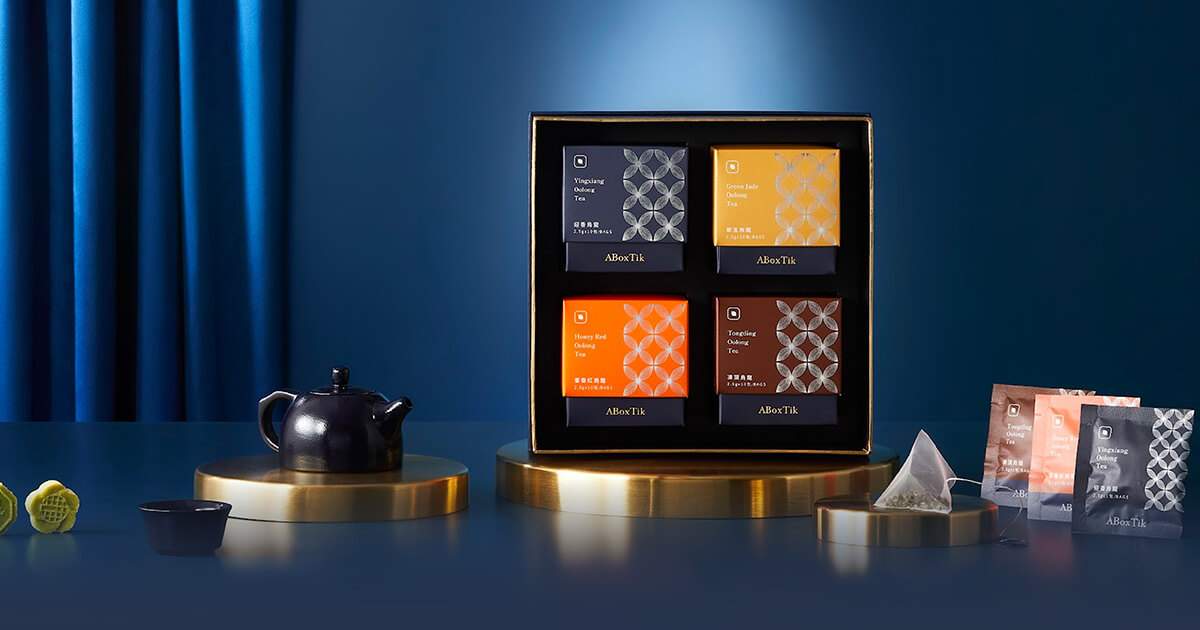
The moisture reading can return to its sample and storage context; your next step needs no decimal places. Choose a premium tea gift, another useful article, or the latest boutique selections below.
Sources
Taiwan Tea and Beverage Research Station—Tea Packaging and Storage · ISO 1573:1980—Tea, determination of loss in mass at 103°C · U.S. FDA—Water Activity in Foods