
Tea Knowledge
Light Oolong with a Fruit Platter: Compare Sweetness or Acidity First?
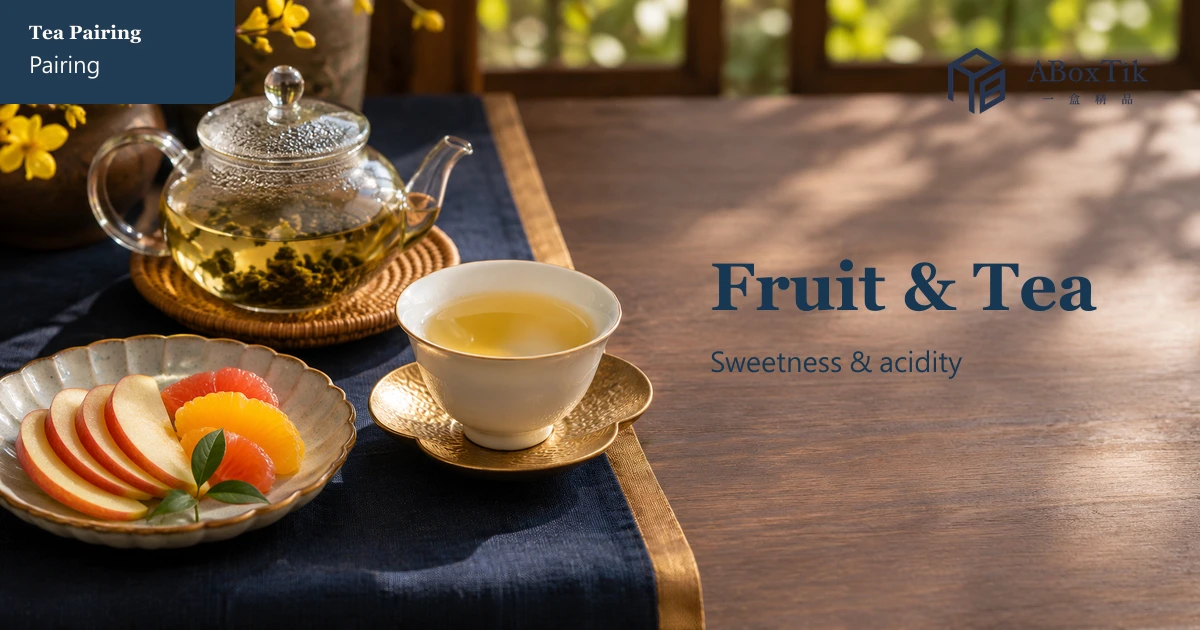
Choose an easy starting order
With a fruit platter and tea, try a small piece with gentler, clearer sweetness first, then one with more noticeable acidity. This is an observation aid rather than a fixed rule: ripeness, tea, brewing and personal taste all affect the experience.
Prepare two small contrasting portions
Choose two fruits you enjoy and can safely eat, perhaps one sweeter and one sweet-tart. Note variety and ripeness. Brew a familiar light oolong using the package as a starting point and record leaf, water, temperature and time. This is a suggested home comparison; let your own cup provide the result.
Taste separately, then together
Sip the tea and note aroma and strength. Taste a little of each fruit and describe sweetness, acidity and aroma. Then pair each fruit with a sip of tea and notice whether the tea aroma becomes easier to notice or is covered. Take water and a short pause between comparisons.
Leave room on the tasting card
Record “fruit A sweetness/acidity and impression with tea; fruit B sweetness/acidity and impression; which to try first next time.” If neither pairing stands out, that is a useful answer too. Taste is not a multiple-choice exam.
Care for freshness and portions
Wash fruit and equipment, store cut fruit appropriately under applicable food safety guidance and conditions, and prepare small portions to enjoy promptly. Check ingredients against individual allergies or dietary needs and take care with hot tea.
Change one thing next time
For another comparison, change either the fruit or the tea strength while keeping other conditions similar. Keep the combination you like; the platter has room for future discoveries.
To apply this guide to an actual tea choice, browse ABoxTik Taiwan teas and check the product page together with the available batch information.