
Tea Knowledge
Tea Table Negative Space: Objects, Movement and Sightlines
Leave room for the hands first
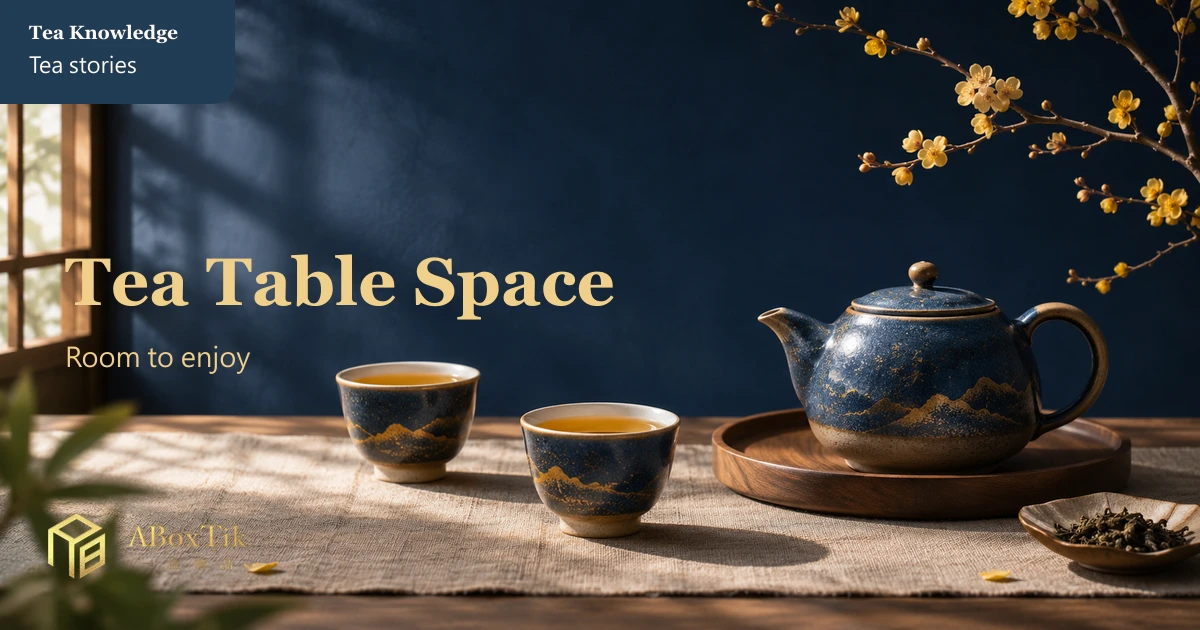
Negative space on a tea table can begin with use: a stable pot, cups within reach and room to pour without touching other objects. Open space also gives the eye a place to rest. There is no secret ratio that every table must obey.
Place the necessary pieces
Start with the pot or gaiwan, cups for the group and a pitcher if needed. Place water and a tea cloth, then rehearse reaching, pouring and passing cups. Keep hot water and hand movements away from the edge and objects easily knocked over.
Consider the view from each seat
From the drinking position, notice which object catches the eye and whether the cup is easy to find. Place taller vessels and flowers where they do not obstruct conversation or pouring. If guests cannot see one another, the flowers may be busier than the host.
Adjust for one person or a group
For one person, keep frequently used pieces on the comfortable side. For sharing, give each cup a clear place and leave room to pass and collect it. The table, vessels, number of guests and actions all shape the space needed.
Compare two arrangements
Photograph the initial layout, then remove one unused object and take another. Is it easier to lift a cup, wipe the table and talk? A fuller setting can be lovely too when each piece has a suitable place.
Let the table respond to the moment
The National Palace Museum’s tea culture area invites visitors to explore and combine teaware; different times and cultures have their own contexts. Take inspiration, then arrange your own table for the people using it. Open space can simply make room for the next cup.
To apply this guide to an actual tea choice, browse ABoxTik Taiwan teas and check the product page together with the available batch information.