
Tea Knowledge
What to Include with a Handmade Teaware Gift: A Simple Information Card
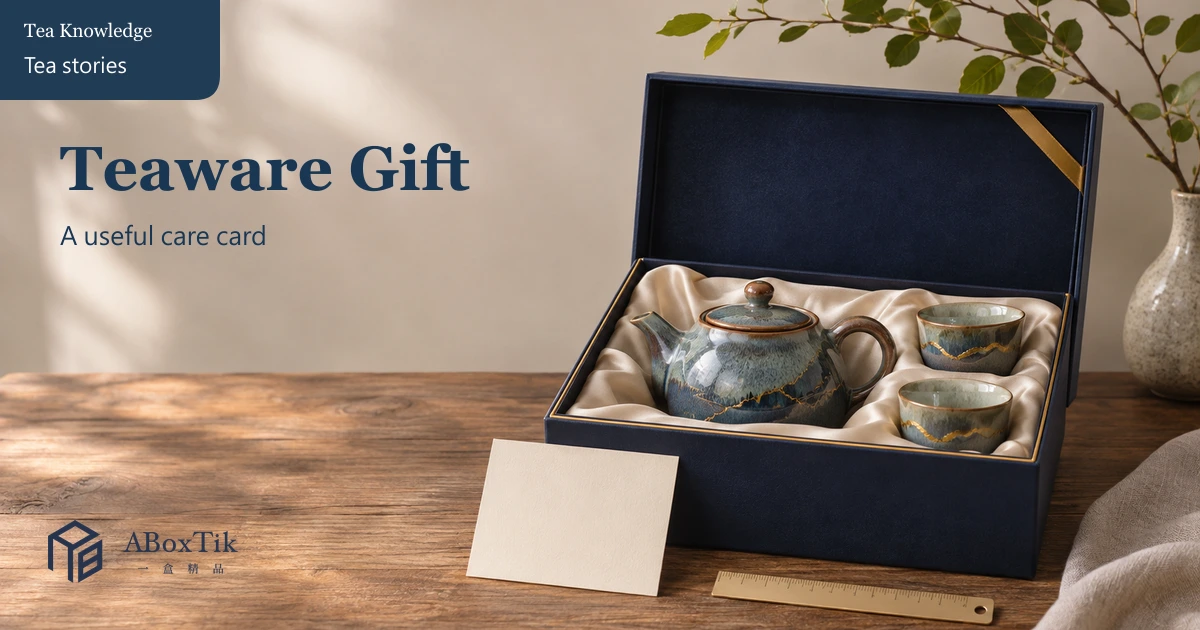
A handmade piece is lovely to unwrap, and a small information card can make it easier to use. Gather the actual dimensions, capacity, material and the maker’s care instructions so the recipient does not have to admire it while guessing how to clean it.
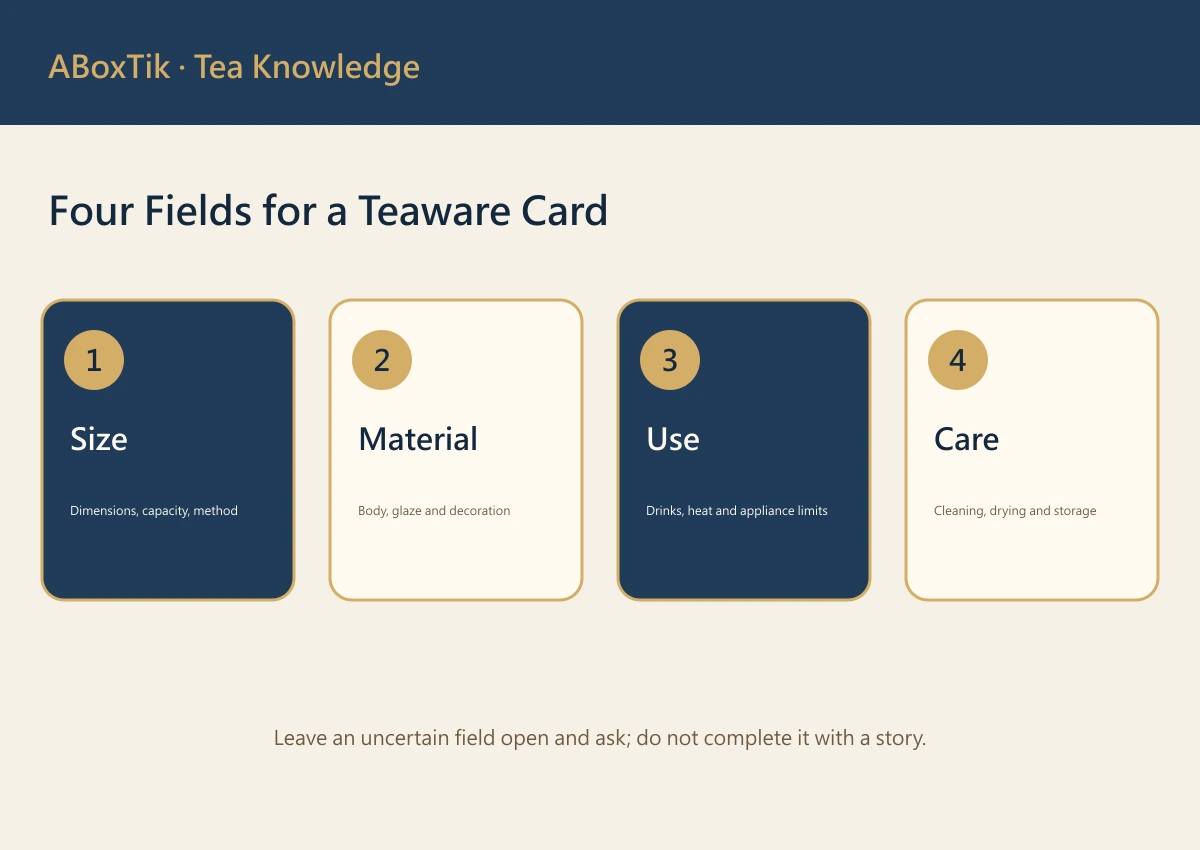
Start with information you can verify
Record the item name, maker or supplier, main material, dimensions and how capacity was measured. Handmade pieces can vary; when a measurement applies to one item, identify that item instead of presenting the figure as a guarantee for every piece.
Pass on the maker’s use and care guidance
Include suitable beverages, cleaning, drying and storage guidance. If the maker specifies limits on dishwashers, microwaves or temperature changes, pass them on accurately. Where information is missing, ask the supplier; appearance and the word handmade do not establish heat resistance, safety or appliance suitability.
Consider the recipient’s routine
Does the person usually use a cup, pot or gaiwan? Drink alone or share? Capacity, weight and grip can matter. If the piece cannot be held before purchase, dimensions and a photograph alongside a familiar-sized object can be more useful than calling it “just right.”
A reusable information card
Item and maker: ____; material and capacity: ____; dimensions and measurement method: ____; use and cleaning: ____; conditions to avoid: ____; supplier contact: ____; date confirmed: ____. Ask about any uncertain field before completing it.
Common questions
Are all handmade variations defects? Read the maker’s description of the piece and its condition. Is there one care method for every piece? Materials and processes differ, so begin with the maker’s instructions. How long should the card be? Enough to find use, cleaning and a contact; teaware does not need a small dissertation.
Describe the dimensions of the actual piece
A useful card can list length, width, height and capacity, and say whether the width includes a handle or the measurement refers to the opening. Distinguish a brim-full capacity from a maker’s suggested serving amount. If the measurement method is unclear, ask the supplier. A photograph with dimensions is often easier to interpret than “small” or “just right,” especially because hands and table spaces differ.
For a one-of-a-kind work, match the card to the item actually received. For a series, ask whether dimensions describe the individual piece or an indicative range. Handmade variation may be part of a work, but it should not be used to dismiss every concern automatically. If the received item differs from its description, keep the packaging and photographs and ask the supplier.
Verify maker, material and work information
Begin with the product label and information supplied by the maker or seller. Record the maker’s name, work title, material, process where confirmed, and the date of the information. A mark, certificate or story card can be kept with the purchase record; a mark alone should not be treated as a guarantee of authenticity, age or a particular process. If details are incomplete, include a supplier contact so the recipient has a clear place to ask.
A gift card does not need an invented legend. A simple note might say, “I chose this piece to accompany your tea moments; I hope it finds a comfortable place in your routine,” followed by the verified work information. Check permission before reproducing a maker’s words or photographs.
Make care information actionable
Use the maker’s guidance to record first use, cleaning, drying and storage. Pass on any stated limits concerning temperature changes, direct flame, microwaves or dishwashers. If an appliance is not mentioned, do not turn silence into permission. Ask the supplier a specific question such as “Is this cup suitable for a dishwasher?” or “How should it be dried after use?” and keep the answer with the card.
Materials and surface treatments vary, so a care method for one ceramic, wooden or metal object should not be applied automatically to all works. If a recipient notices a crack, an unusual odour or another unexpected condition, stop using the piece and ask the supplier instead of guessing the cause or forcing a repair with household tools.
Make delivery and damage follow-up easy
Before shipping, confirm a convenient delivery time, protective packaging and contact method. Ask the supplier how arrival inspection and damage reports are handled. If something is concerning, retain the outer box, cushioning, photographs and order details and contact the supplier according to the agreed process. Reporting windows and replacement arrangements depend on the actual transaction; do not promise a refund or exchange for every case in advance.
Finish the card with the supplier’s name and contact, the confirmation date and where the original instructions can be found. Once the useful details are clear, the recipient can choose a favourite tea at their own pace. The instruction card need not weigh more than the teapot.
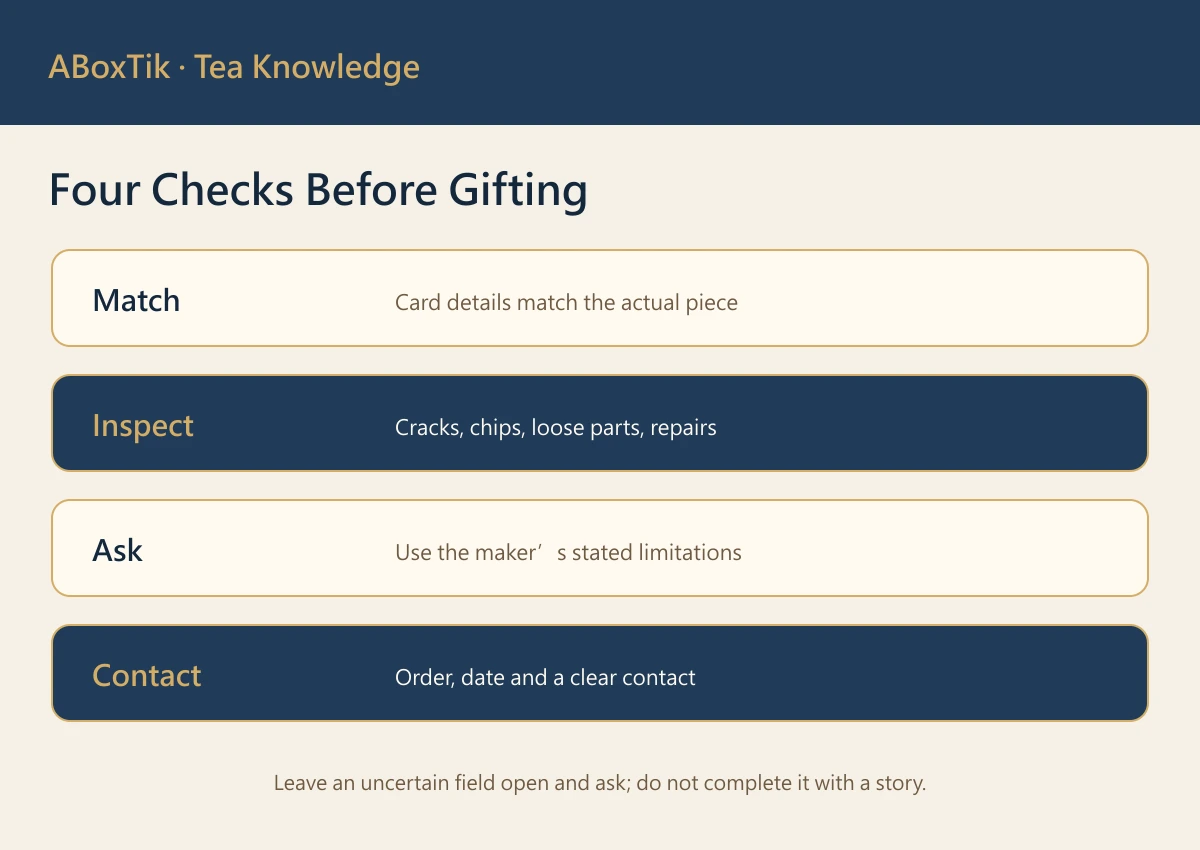
Make dimensions imaginable—and repeatable
“One-person size” can mean very different volumes. Record body height, total width including handles, rim diameter and a practical serving capacity. Say whether capacity means filled to the rim, a recommended working volume, or the supplier’s published figure. For a one-off piece, identify the actual item measured. For a series, label measurements as a reference range and mention expected variation. These details help someone decide whether the piece fits a tray or cupboard far more than another adjective about elegance.
A photograph with a ruler or familiar object can provide scale, but written measurements should remain primary because wide-angle photographs and crops can distort proportions. Add weight if it materially affects grip. The card does not need to label every artistic detail. Its job is to anticipate the small questions that appear after the wrapping comes off.
Begin with the maker’s stated use limitations
Canadian Conservation Institute guidance notes that ceramics and glass may be hard yet brittle, and that impact, stress on handles or spouts, rapid temperature changes and unsuitable cleaning can cause damage. Overglaze decoration, gilding, old repairs and porous bodies may require different care. Museum conservation guidance is not a use manual for every contemporary teacup, however. The information card should first repeat what the maker or supplier actually states about food contact, temperature, dishwashers, microwaves and cleaning. Where the maker is silent, leave a question instead of turning appearance into a technical claim.
Support the body with two hands rather than lifting only by a handle or spout. Prevent pieces from knocking together in storage and ask whether soft separators are recommended before stacking. If there is a crack, chip, unstable surface or old repair, do not assume the piece remains suitable for beverages; ask the maker or an appropriate professional. A thoughtful card is not the one with the most confident “yes” answers. It is the one that leads an uncertain question to someone who can answer it.
Keep arrival checks and the contact on one side
Before shipment, photograph the piece and packing state and record the order, version and confirmation date. On arrival, follow the seller’s instructions to check the outer box, cushioning, lid, handle, spout and foot. If anything looks unusual, retain the packing and photographs and contact the seller within the applicable transaction terms. Avoid experimental gluing, abrasion, bleach or acidic cleaning, which can cause further damage and make later assessment harder.
Finish the card with the maker or shop name, contact details, original instruction link and the date the information was checked. If the card and the actual piece differ, return to the physical item and the supplier’s current guidance. The result is a gift that arrives with care and has a better chance of becoming part of an everyday tea table.
Explore next

A thoughtful teaware gift deserves a clear card; a thoughtful reader deserves an easy next step. Below are premium tea gifts, more articles, and the latest boutique selections—neatly arranged, with no tiny care instructions to decipher.
Sources
Canadian Conservation Institute—Basic care of glass and ceramic objects · Canadian Conservation Institute—Preventive conservation for ceramics and glass · U.S. National Park Service—Removing dust from ceramic and glass objects