Tea Knowledge
Handmade Craft Characteristics: What to Check Before Buying
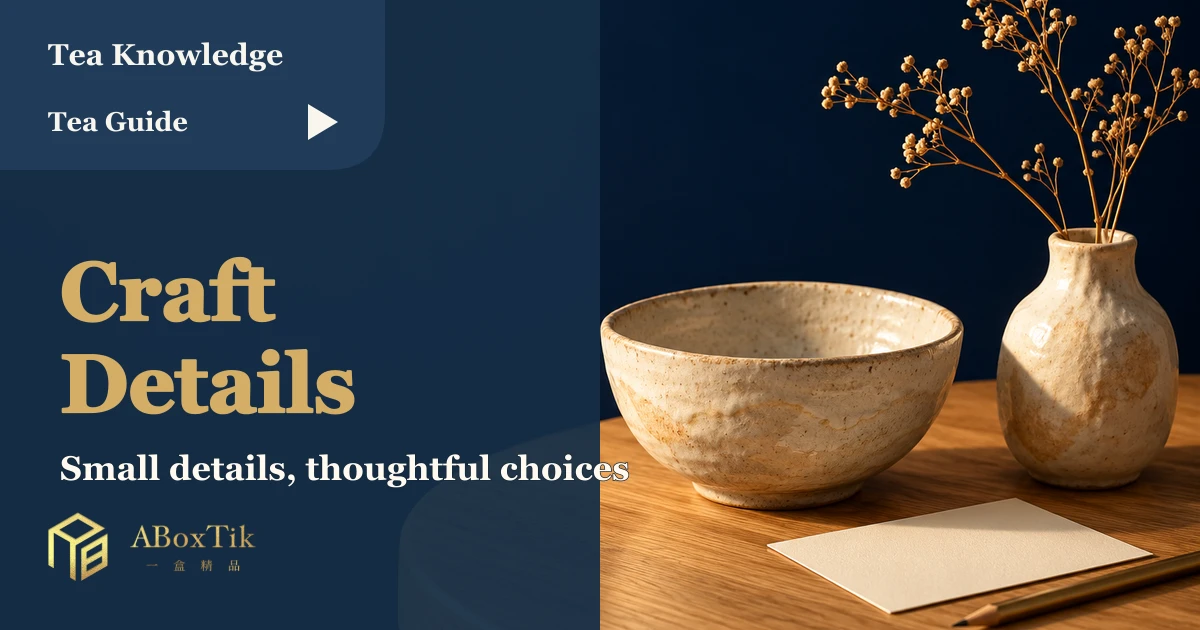
Look closely at the character of a handmade object, and ask just as carefully how it is meant to be used.
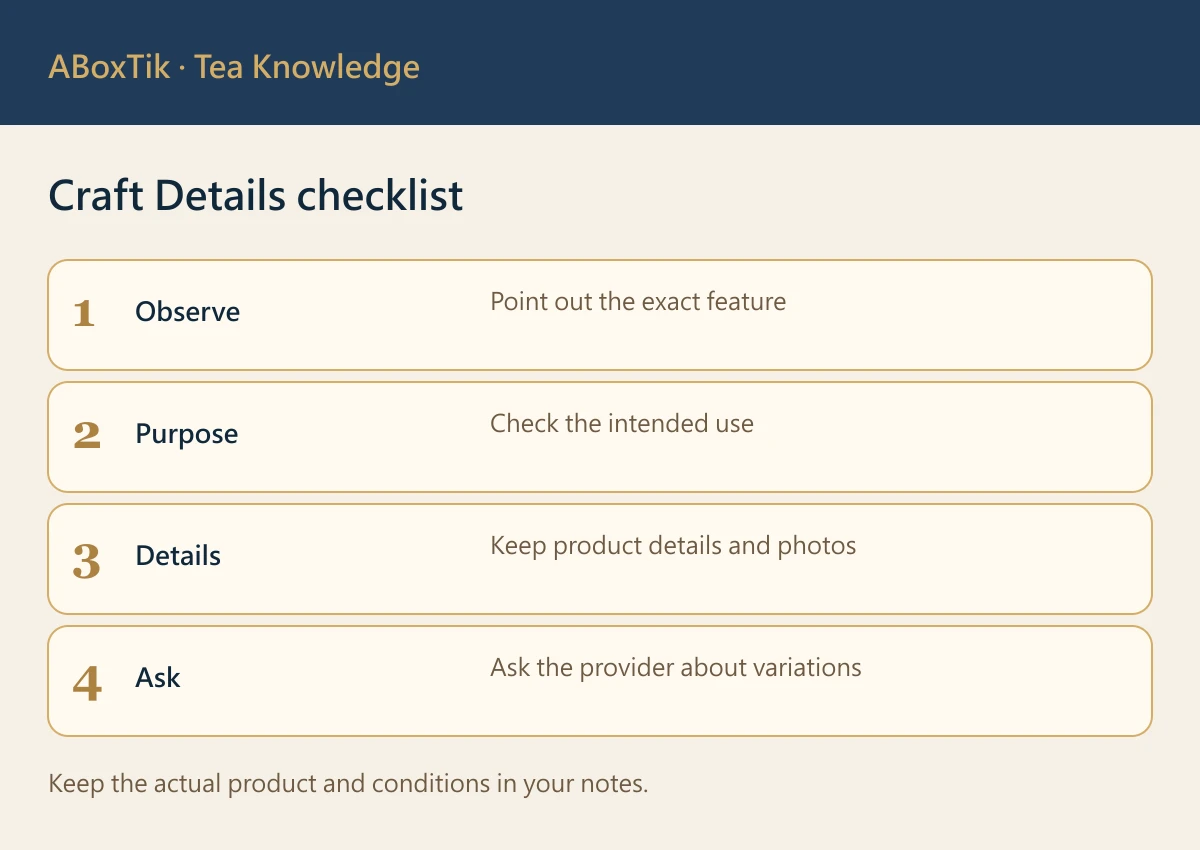
To assess a handmade craft object, record visible colour, texture and shape separately from questions about stability, joins, edges and intended use. A photograph or the word “handmade” cannot settle every question about a particular piece. Ask the maker or seller to explain uncertain details and confirm the specifications, intended use and purchase arrangements before deciding.
A cup may look slightly asymmetrical; the grain on a wooden piece may vary from one side to the other. It is reasonable to wonder whether a detail is part of the work’s character or something that deserves a question. This guide helps make that question specific so the maker or seller can respond to the detail you noticed.
Describe what you see before deciding what it means
Start with a location and an observation: “There is a rough area on the right side of the rim,” “the base rocks on the table,” or “the grain is darker on one side.” Such descriptions let the seller identify the detail. “It is badly made” and “it must be intentional” have already assigned a cause; that can make the next conversation less useful.
Then ask what the detail affects. A difference in colour may be a feature you enjoy, or it may differ from the photograph you expected. Stability, joins, edges and load-bearing relate to how you intend to use an object. Ask about the actual purpose: does a drinking vessel have use and cleaning instructions? Does a display piece have placement requirements? Different materials and works cannot all be assessed against one universal checklist.
Handmade does not mean every variation must be accepted. Appearance matters to a purchase, and a concern about use deserves a specific answer. If a photograph or video would help, record the location in suitable light and ask the maker or seller to explain before deciding whether the piece fits your routine.
Look at appearance without guessing the cause
Ceramics may show differences in glaze, surface texture or shape; wood can display varied grain and colour; textiles may show changes in handwork, joins or texture. These are observations worth describing. The words “natural” and “handmade” do not, by themselves, prove the cause or condition of a particular mark. Ask, “How do you describe this detail in this piece, and is there anything I should know about its use or care?”
When shopping online, ask whether the photograph shows the exact individual item or illustrates a series. If pieces vary, clarify dimensions, materials, colour variation and whether images of the actual piece are available. Photography and screens can change how colour appears. If a detail matters to your intended use, ask for a clear written explanation or additional view.
Some features become easier to see in different light. Place an item securely and observe it gently; there is no need to scratch, strike or perform a home load test. Follow the seller’s instructions while considering a piece so that the inspection does not create the damage you were trying to understand.
Check the work against its intended use
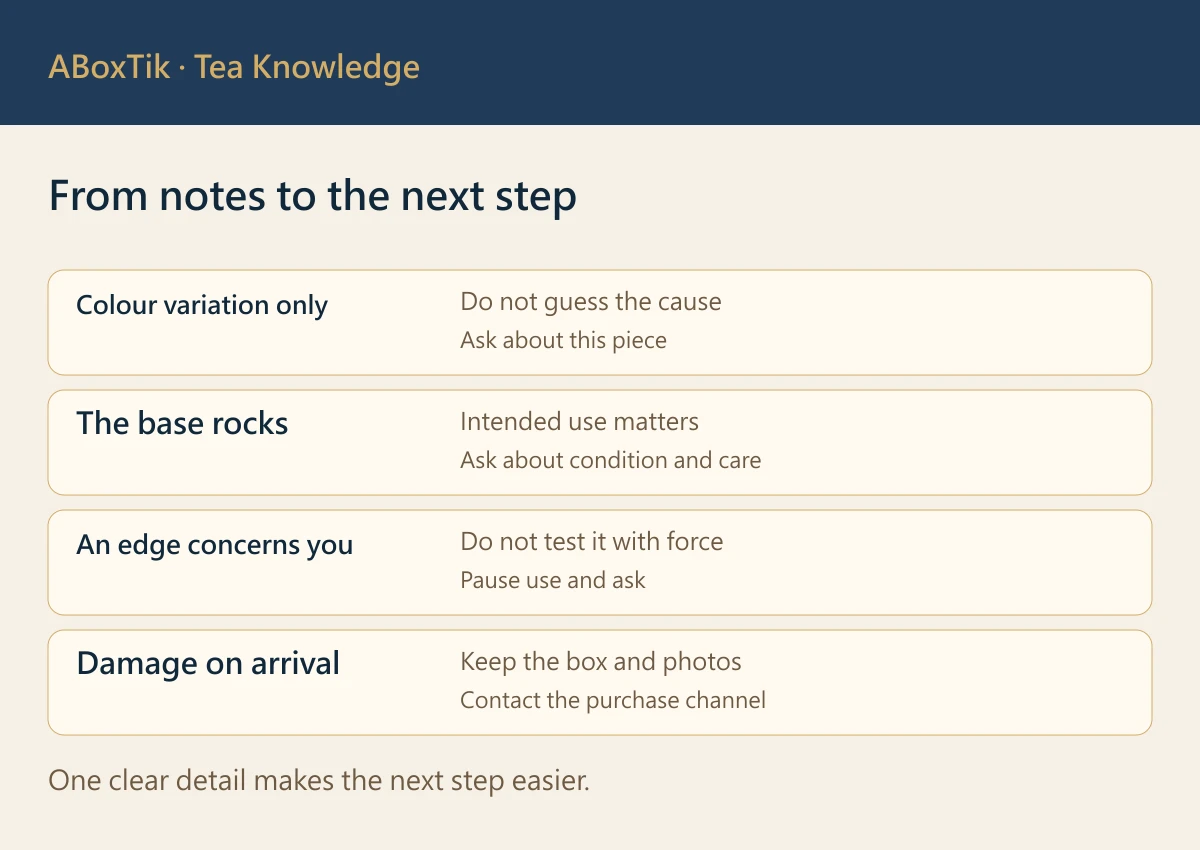
Stability and joins. Place the piece on an appropriate level surface as intended and observe whether it sits securely. For a lid or moving part, ask how it is designed to fit. If a base rocks or a connection feels loose, describe the observation and seek an explanation rather than deciding that it is either a desirable feature or a tolerable condition.
Edges and contact points. Where the seller permits handling and it is safe, notice a sharp area or visible damage where the object will be held. If concerned, stop using it and ask. Repeated force is not needed to establish whether an edge might be uncomfortable. For a cup or food vessel, confirm the actual item’s use, material and care information.
Load and care. Ask what the piece is intended to do, where it should be placed and how it should be cleaned and stored. A work presented for display should not automatically be assumed suitable for hot drinks or prolonged food contact. If heat, food contact, a dishwasher or another specific use matters, ask for information matching that piece. Appearance alone cannot establish suitability.
The National Taiwan Craft Research and Development Institute’s catalogue gives details such as materials, dimensions and care for individual works. One listed tea set, for example, includes cleaning and air-drying instructions. Those instructions belong to that item; they do not become a rule for all ceramics. Use the directions supplied for the piece in hand.
A card for visible variation and use questions
| Record | What I observed | What to ask |
|---|---|---|
| Appearance and dimensions | Colour, texture, shape: _____ | Is the image of this piece or an example from a series? |
| Stability and joins | Placement or fit: _____ | How is this piece intended to work? |
| Edges and contact | Location and sensation: _____ | How should this area be handled or cared for? |
| Use and care | Intended use: _____ | Is it suitable, and how should it be cleaned? |
| Purchase information | Details supplied: _____ | Who should I contact after delivery? |
Leave unknown fields blank and note the date, work name and any item number. If the maker describes a texture as part of the design, record that explanation separately from your own preference. Understanding an artistic decision and deciding whether the object suits you can both be true at the same time.
Ask a question the seller can answer
Provide the work’s name, specifications, enquiry or purchase date, and a photograph that makes the location clear. For example: “Hello, I would like to ask about the base of this cup. It rocks slightly on a level surface. Is that the expected condition of this piece, and how would you suggest using or addressing it?” Before purchase, say that the question concerns a photograph rather than a received object.
For a gift, confirm the delivery timing, packaging, recipient arrangements and contact after receipt. If colour or dimensions matter, explain the acceptable range in advance. Where several versions exist, ask which individual work corresponds to the price and photographs. A general series image is useful for orientation, but it is not automatically a photograph of the item that will arrive.
For care, “What can I use to clean it, what should I avoid, and what should I do before storage?” is more actionable than “Is it easy to care for?” Mention hot drinks, food, weight or outdoor use if relevant. Save the response with the product information so that the basis for care can be found again if instructions are updated.
After delivery, check before deciding the next step
Keep the order information, item name, instructions and packaging. Compare the received contents and appearance with what was confirmed. If there appears to be transit damage or a difference from the agreed description, document the outer box and the object and contact the purchase channel using its stated process. Ask before attempting a repair; changing the piece can make the original condition harder to understand.
State the observation and the help requested: clarification, care information or an explanation of available options. Conditions depend on the actual transaction and applicable local rules. Keep the communications and ask the responsible contact about unresolved questions. A handmade work deserves a careful look, and a buyer’s practical questions deserve a clear response.
Bring the right piece into daily life
You do not need to become an appraiser before choosing a craft object. Notice the details you enjoy, clarify the intended use and care, and let the maker explain what remains uncertain. For a piece intended for the tea table, explore Taiwanese ceramic craft, then return to the material and use of the actual object.
Every visible difference may have a story, but the story needs a source. Every question about use also deserves space. A precise observation and an informative answer make it easier to decide which piece you want to live with.
Related recommendations
- Taiwanese ceramic craft for material and historical background.
- Teapot materials for choosing equipment by intended use.
- Tea price and value for comparing information, use and preference.