
Tea Knowledge
Tea Process Label Clues
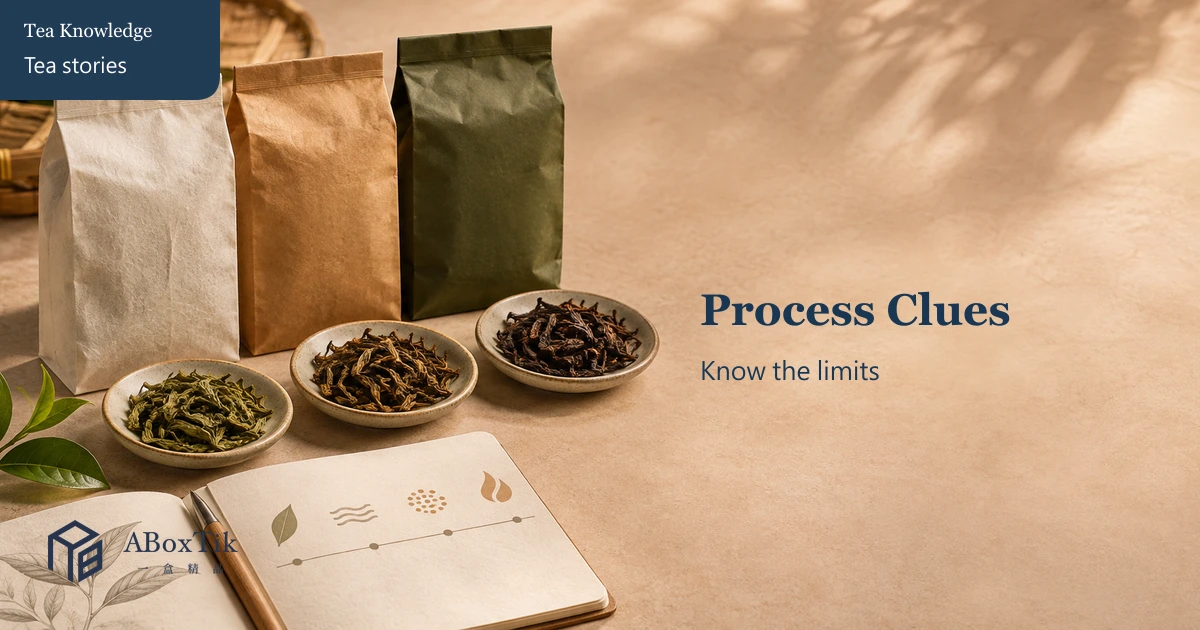
A tea package can offer useful process clues, but it is not a complete production diary. Read the printed facts first, keep voluntary flavour language in a separate column, and ask for batch-specific information when the decision needs more precision. That approach is a little less cinematic than guessing from a mountain sketch, yet considerably kinder to the tea—and to the person buying it.
Create checkable fields
Record the date, version, product or batch, then add the quantities, materials, equipment, dimensions, languages and owners that matter. Mark each item confirmed, pending or not applicable; an empty cell should not quietly become approval. Beside every important fact, note whether it came from a package, supplier, authority or observation and when it was checked. A concise record can still show which question each fact answers.
Compare one point at a time
When a comparison is needed, hold the other conditions as steady as practical and change one variable. Put two or three options side by side and write their use, advantage, limitation and next action. Do not let the word best do all the work. If a trial, document or current specification is missing, list it as a check and arrange a small test or ask the responsible party before making a larger commitment.
Keep story and evidence separate
A photograph, name, flavour description or brand story can be a useful clue, but each supports a different conclusion. Origin, processing, safety, environmental, rights and partnership claims should return to applicable labels, records and primary sources. Keep the jurisdiction, date and conditions of official information visible. Evidence from one place, product or study should not be stretched to every case simply because the sentence sounds convenient.
Run a handover test
Give the sheet to someone who was not part of the earlier discussion. Ask that person to find the purpose, current version, completed items, next action and owner. If the answer requires three follow-up questions, simplify the order or remove duplication. For an exception, isolate it where appropriate, record what happened and send it to the right person rather than inventing a missing answer under time pressure. It is a useful note to your future self.
Questions that prevent confusion
Must every detail appear publicly? No. Readers need relevant product and use information; personal data, internal lists, quotes and undecided versions belong elsewhere. Can one photograph or phrase replace documentation? It may begin a question but rarely finishes it. Pause when food safety, law, copyright, testing, environmental claims or high-value collecting is involved and the available evidence is not enough.
Leave a clear next step
After the label-to-process inference boundary is complete, assign an owner and review time to every pending item, then archive outdated versions. Continue with a related ABoxTik guide and another practical article, checking current labels and actual needs. A checklist is not there to make tea bureaucratic; it lets the thoughtful details survive a busy day.
Put the sheet into a real situation
Start with one realistic example that contains no unnecessary personal data. Record the use case for tea process label clues, the current version, the relevant object or batch and the decision that must actually be made. Give the label-to-process inference boundary to a colleague or household member and ask that person to complete one lookup or comparison without an explanation. Note where the reader pauses, which term needs clarification and which fact appears in the wrong place. This is not a test of the reader; it is a test of whether the record can work on a busy day.
In the second revision, keep necessary fields, remove repeated reminders and move the most error-prone step closer to the beginning. Every pending item should have a source, owner and review time. If there is no owner, do not quietly present the item as complete. Separate records from different batches, versions or conditions instead of combining them into one answer that looks neat but no longer describes a single case.
Write the judgement as repeatable steps
Use the first attempt as a baseline, change one condition in the second, and decide after that whether another comparison is useful. Put photographs, aromas, names and stories in an observation column. Put labels, documents, measurements and primary official information in an evidence column. Both columns can help, but neither should impersonate the other. When a result applies only to a place, date, vessel, product or trial condition, write that scope beside the conclusion rather than hiding it in a distant note.
Before closing the task, ask four questions. Which decision does this record support? Can the reader reach the original source? Does each limit sit near the related conclusion? Can another person repeat the process? When all four have an answer, archive the older version. It sounds like one extra step, yet it prevents many small episodes of “I thought you knew” and turns considerate service into useful detail.
One final check: keep the record with the real object
Before handover, storage or use, compare the sheet with the actual item once more. Check the name, version, quantity, date, language and owner. If information will be separated from its original package, keep the necessary details with the item in a form the next person can find. When a condition changes, update the master version and tell the person taking over. Finish with a short result and one next adjustment, so this experience becomes a useful starting point rather than a page everyone remembers seeing but nobody can find.
Start with what the label actually says
For a packaged tea sold in Taiwan, the required food information includes items such as product name, contents, quantity, responsible business information, origin and expiry date, subject to the applicable rules. Those fields identify the food and its commercial record; they do not automatically disclose oxidation level, roasting temperature, picking date or every refining step. Copy the exact words rather than converting them into a more impressive conclusion.
| Printed clue | Reasonable first reading | What it does not prove alone |
|---|---|---|
| Tea type or style | A named product category or intended style | Exact oxidation percentage or full process |
| Light / roasted aroma | A sensory or processing direction claimed by the seller | Roasting temperature, duration or number of firings |
| Spring / winter tea | A stated harvest season | Exact picking day, cultivar or weather |
| Hand-picked | A stated picking method | Plucking standard, labour share or leaf grade |
| Origin | The declared country or stated place | The complete farm, lot and processing chain |
Oxidation, roasting and harvest answer different questions
Oxidation develops during withering and leaf agitation before heating stops that activity in many partially oxidised teas. Roasting is a later heat treatment that can reduce moisture and shape aroma. A darker leaf or amber liquor may be consistent with several combinations of cultivar, oxidation, roasting, storage and brewing; colour alone cannot separate them. “Fermentation” is common tea-market language, but when precision matters, ask what the seller means and which stage the statement describes.
Harvest information belongs in its own lane. A season can help compare lots, yet it does not determine quality by itself. If picking date, cultivar, plucking standard or elevation matters, ask whether the answer belongs to this exact batch. A general brand story or last year’s process photo should not quietly become the record for the bag in hand.
Use a three-level confidence note
- Confirmed: printed on the current package or supplied in a batch record.
- Seller-stated: provided in product copy or conversation but not tied to a record you can review.
- Sensory hypothesis: suggested by leaf, aroma or liquor and useful for the next tasting, not a manufacturing fact.
For everyday brewing, the first two levels may be enough. For a high-value purchase, competition entry, origin claim or formal gift specification, ask for a lot number, harvest season, cultivar, oxidation or roasting description and the responsible business contact. If the information is unavailable, keep the conclusion modest: “roasted aroma is noticeable” is honest; “roasted three times at a precise temperature” is a screenplay unless someone has the production record.
Sources
Ministry of Agriculture — Taiwanese tea styles and processing · Ministry of Agriculture — tea processing and roasting overview · TFDA — required Chinese information on packaged foods