
Tea Knowledge
Reuse an Old Tea Tin
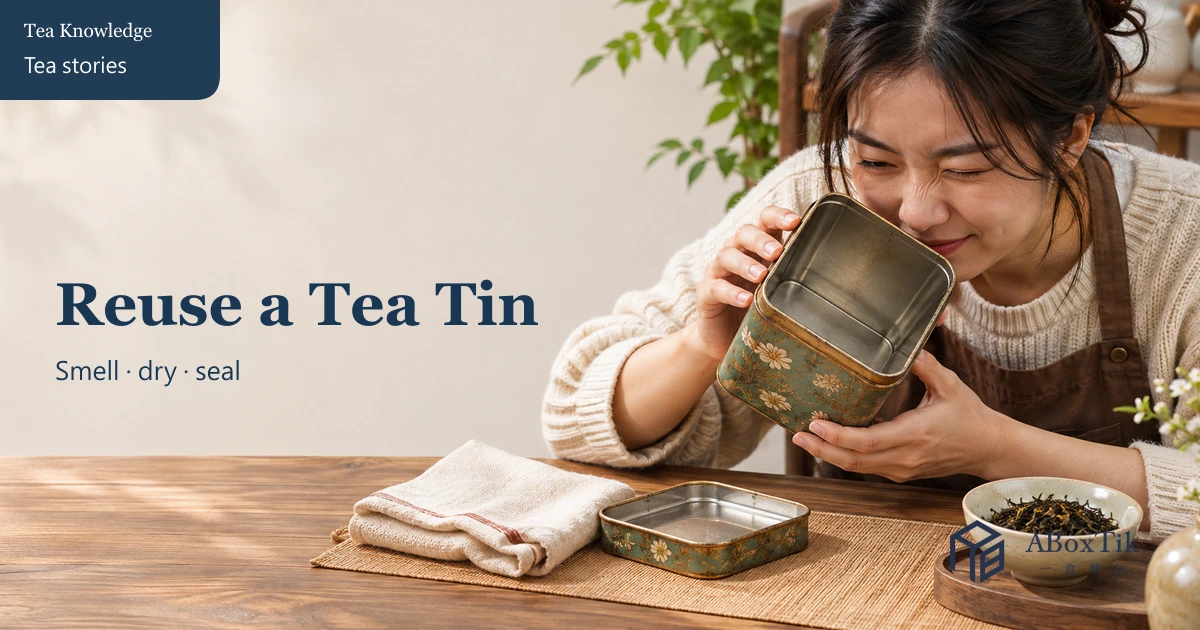
Reusing an old tea tin becomes easier when its material, condition and intended use are clear. This guide turns the decision into a practical pre-reuse checklist. There is no need to find an impressive answer immediately. Put what is known, what is pending and what happens next on one page. That small courtesy prevents the next person from solving a mystery during the busiest part of the day.
Create checkable fields
Record the date, version, product or batch, then add the quantities, materials, equipment, dimensions, languages and owners that matter. Mark each item confirmed, pending or not applicable; an empty cell should not quietly become approval. Beside every important fact, note whether it came from a package, supplier, authority or observation and when it was checked. A concise record can still show which question each fact answers.
Compare one point at a time
When a comparison is needed, hold the other conditions as steady as practical and change one variable. Put two or three options side by side and write their use, advantage, limitation and next action. Do not let the word best do all the work. If a trial, document or current specification is missing, list it as a check and arrange a small test or ask the responsible party before making a larger commitment.
Keep story and evidence separate
A photograph, name, flavour description or brand story can be a useful clue, but each supports a different conclusion. Origin, processing, safety, environmental, rights and partnership claims should return to applicable labels, records and primary sources. Keep the jurisdiction, date and conditions of official information visible. Evidence from one place, product or study should not be stretched to every case simply because the sentence sounds convenient.
Run a handover test
Give the sheet to someone who was not part of the earlier discussion. Ask that person to find the purpose, current version, completed items, next action and owner. If the answer requires three follow-up questions, simplify the order or remove duplication. For an exception, isolate it where appropriate, record what happened and send it to the right person rather than inventing a missing answer under time pressure. It is a useful note to your future self.
Questions that prevent confusion
Must every detail appear publicly? No. Readers need relevant product and use information; personal data, internal lists, quotes and undecided versions belong elsewhere. Can one photograph or phrase replace documentation? It may begin a question but rarely finishes it. Pause when food safety, law, copyright, testing, environmental claims or high-value collecting is involved and the available evidence is not enough.
Leave a clear next step
After the pre-reuse checklist is complete, assign an owner and review time to every pending item, then archive outdated versions. Continue with a related ABoxTik guide and another practical article, checking current labels and actual needs. A checklist is not there to make tea bureaucratic; it lets the thoughtful details survive a busy day.
Put the sheet into a real situation
Start with one actual empty tea tin. Record its intended use, material, former contents and the decision that must be made. Give the pre-reuse checklist to a household member and ask that person to inspect it without an explanation. Note where the reader pauses, which term needs clarification and which fact appears in the wrong place. This is not a test of the reader; it is a test of whether the checklist can work before dry tea is exposed.
In the second revision, keep necessary fields, remove repeated reminders and move the most error-prone step closer to the beginning. Every pending item should have a source and a review point. If the material or lining remains unknown, do not quietly present the tin as approved. Separate records from different containers instead of combining them into one answer that looks neat but no longer describes a single object.
Write the judgement as repeatable steps
Use the first inspection as a baseline, clean only by the applicable instructions, and decide after full drying whether another odour check is useful. Put colour, smell, corrosion and closure in an observation column. Put maker labels, material information and official guidance in an evidence column. Both columns can help, but neither should impersonate the other. When a result applies only to one material or condition, write that scope beside the conclusion.
Before closing the task, ask four questions. Was the container intended for repeated food contact? Can the reader reach the original instruction? Does each limit sit near the decision? Can another person repeat the inspection? A neat tin is not automatically a suitable tin, and a cautious “use it for stationery” is still a successful reuse decision.
One final check: keep the record with the real object
Before handover, storage or use, compare the sheet with the actual item once more. Check the name, version, quantity, date, language and owner. If information will be separated from its original package, keep the necessary details with the item in a form the next person can find. When a condition changes, update the master version and tell the person taking over. Finish with a short result and one next adjustment, so this experience becomes a useful starting point rather than a page everyone remembers seeing but nobody can find.
First decide whether the tin was meant to be reused
Do not assume that every attractive container is suitable for repeated food contact. Read the maker’s marks and instructions, identify the material, and check whether it is described for food contact and repeated use. If the label says disposable, if the lining is unknown, or if cleaning directions cannot be established, use the tin for non-food storage instead of improvising a tea container.
The look–smell–dry–close checklist
| Check | Pass | Pause or retire |
|---|---|---|
| Body and lining | Clean, smooth, no visible corrosion | Rust, flaking, deep scratches, cracks or deformation |
| Odour | Neutral when empty and dry | Persistent spice, soap, smoke, mustiness or perfume |
| Dryness | All seams and corners fully dry | Droplets, damp cloth smell or uncertain drying |
| Lid and seal | Closes evenly without forcing | Warped lid, damaged gasket or loose closure |
| Information | Tea name and opening date can stay with the tea | The new tea could be confused with an old label |
Clean by the maker’s method, then wait
Taiwan FDA’s current consumer guidance for reusable food containers uses a “read, wash, replace” approach: read the material and use instructions, clean thoroughly as directed, and replace a damaged or deteriorated container. For a tea tin, avoid abrasive tools that can scratch a surface or lining. Rinse away cleaning product and allow the container to dry completely with the lid off. Do not add dry tea merely because the outside feels dry; seams and lid channels deserve a final look.
Check residual odour without hiding it
When the empty tin is dry and at room temperature, close it briefly, reopen and smell the headspace. A strong former tea, spice or fragrance can migrate into a delicate new tea. The Ministry of Agriculture’s tea-storage guidance notes that clean, rust-free metal or airtight containers can be deodorised with a small amount of dry tea; treat that as a limited household method, not proof that a damaged lining or musty container is safe. Do not cover an unwanted odour with perfume, scented tissue or another food aroma.
Let an inner barrier do the delicate work
The Taiwan Tea and Beverage Research Station explains that tea readily absorbs moisture and odours and that aroma compounds are sensitive to loss and oxidation; light control also matters. A decorative tin therefore does not automatically replace the tea’s intact, suitable inner bag. If the current tea arrives in a well-sealed, labelled inner package, keeping that package inside the clean dry tin can preserve identity and reduce direct contact. Record the tea name, lot or date, and opening date, and never mix a new tea with crumbs from the previous one.
Reuse decision
- Intended for repeated food contact: yes / no / unknown.
- Material and cleaning directions found: ______.
- No corrosion, peeling, cracks or deformation: ______.
- Neutral odour after cleaning and full drying: ______.
- Lid closes evenly: ______.
- Tea remains in a suitable labelled inner package: ______.
If any structural or odour question remains, retire the tin from tea duty. Reuse is helpful only when the next tea does not have to inherit the previous container’s mystery novel.
Sources
TFDA — read, wash and replace guidance for reusable food containers · TBRI — tea packaging and storage · Ministry of Agriculture — household tea storage