
Tea Knowledge
Long-term Teaware Storage
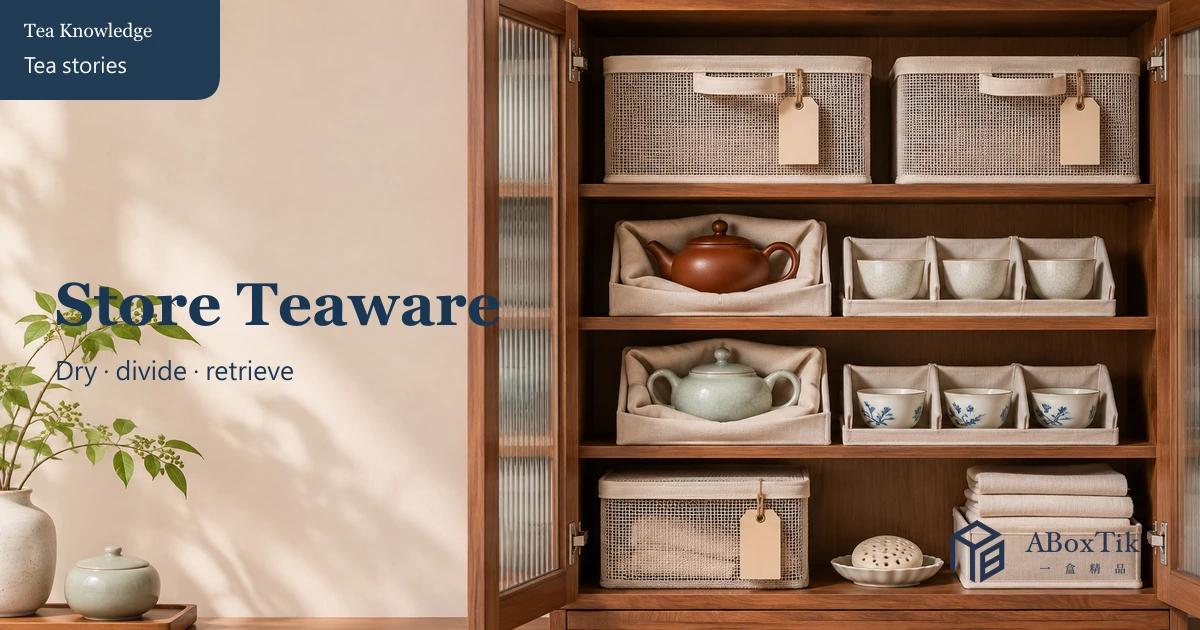
Long-term teaware storage is less about finding a grand display cabinet and more about three quiet details: the pieces are truly dry, fragile surfaces do not rub, and the set can be reached without a small avalanche. This guide turns those details into a practical cabinet checklist. A few calm minutes before storage can spare a favourite cup from stale odours, trapped moisture and the classic “I only touched the lid” accident.
Create checkable fields
Record the date, version, product or batch, then add the quantities, materials, equipment, dimensions, languages and owners that matter. Mark each item confirmed, pending or not applicable; an empty cell should not quietly become approval. Beside every important fact, note whether it came from a package, supplier, authority or observation and when it was checked. A concise record can still show which question each fact answers.
Compare one point at a time
When a comparison is needed, hold the other conditions as steady as practical and change one variable. Put two or three options side by side and write their use, advantage, limitation and next action. Do not let the word best do all the work. If a trial, document or current specification is missing, list it as a check and arrange a small test or ask the responsible party before making a larger commitment.
Keep story and evidence separate
A photograph, name, flavour description or brand story can be a useful clue, but each supports a different conclusion. Origin, processing, safety, environmental, rights and partnership claims should return to applicable labels, records and primary sources. Keep the jurisdiction, date and conditions of official information visible. Evidence from one place, product or study should not be stretched to every case simply because the sentence sounds convenient.
Run a handover test
Give the sheet to someone who was not part of the earlier discussion. Ask that person to find the purpose, current version, completed items, next action and owner. If the answer requires three follow-up questions, simplify the order or remove duplication. For an exception, isolate it where appropriate, record what happened and send it to the right person rather than inventing a missing answer under time pressure. It is a useful note to your future self.
Questions that prevent confusion
Must every detail appear publicly? No. Readers need relevant product and use information; personal data, internal lists, quotes and undecided versions belong elsewhere. Can one photograph or phrase replace documentation? It may begin a question but rarely finishes it. Pause when food safety, law, copyright, testing, environmental claims or high-value collecting is involved and the available evidence is not enough.
Leave a clear next step
After the cabinet checklist is complete, note which pieces need a later moisture or surface check, then archive outdated versions. Continue with a related ABoxTik guide and another practical article, checking the actual material and maker’s care advice. A checklist is not there to make tea bureaucratic; it keeps the thoughtful details from disappearing into the back of a cupboard.
Put the sheet into a real situation
Start with one realistic example that contains no unnecessary personal data. Record the use case for long-term teaware storage, the current version, the relevant object or batch and the decision that must actually be made. Give the cabinet checklist to a colleague or household member and ask that person to complete one lookup or comparison without an explanation. Note where the reader pauses, which term needs clarification and which fact appears in the wrong place. This is not a test of the reader; it is a test of whether the record can work on a busy day.
In the second revision, keep necessary fields, remove repeated reminders and move the most error-prone step closer to the beginning. Every pending item should have a source, owner and review time. If there is no owner, do not quietly present the item as complete. Separate records from different batches, versions or conditions instead of combining them into one answer that looks neat but no longer describes a single case.
Write the judgement as repeatable steps
Use the first attempt as a baseline, change one condition in the second, and decide after that whether another comparison is useful. Put photographs, aromas, names and stories in an observation column. Put labels, documents, measurements and primary official information in an evidence column. Both columns can help, but neither should impersonate the other. When a result applies only to a place, date, vessel, product or trial condition, write that scope beside the conclusion rather than hiding it in a distant note.
Before closing the task, ask four questions. Which decision does this record support? Can the reader reach the original source? Does each limit sit near the related conclusion? Can another person repeat the process? When all four have an answer, archive the older version. It sounds like one extra step, yet it prevents many small episodes of “I thought you knew” and turns considerate service into useful detail.
One final check: keep the record with the real object
Before handover, storage or use, compare the sheet with the actual item once more. Check the name, version, quantity, date, language and owner. If information will be separated from its original package, keep the necessary details with the item in a form the next person can find. When a condition changes, update the master version and tell the person taking over. Finish with a short result and one next adjustment, so this experience becomes a useful starting point rather than a page everyone remembers seeing but nobody can find.
Dry completely before anything is stacked
After washing, let every water-holding part drain and air-dry separately: pot, lid, filter, fairness pitcher, cups and tray. Run a clean, dry finger around lid grooves, spouts, foot rings and the underside of trays. If a tissue picks up moisture, the piece is not ready for a closed cabinet. TFDA guidance for cleaned tableware emphasises drying and protection from dust and pests; it also says washed items that have not been dried should not be stacked. At home, the useful principle is simple: do not trap water between two apparently dry surfaces.
Material changes the care plan. Glazed ceramic, glass and stainless steel can still hold water in rims and joints. Unglazed clay, wood and bamboo may need more time because their surfaces or joins can retain moisture and odour. Follow the maker’s instructions for a special finish, and avoid applying a commercial heat-disinfection method to a piece that was not designed for it. “More heat” is not a universal shortcut—teaware is allowed to have feelings, especially about thermal shock.
Separate by weight, fragility and frequency
Place heavy pots and kettles low and stable; keep thin cups and fitted lids where they are visible and can be lifted straight out. Use clean, non-shedding dividers between surfaces that could knock or rub, but do not wrap a damp piece in an airtight layer. Store lids beside their pots or lightly supported according to the object’s form, never balanced where opening the door turns the shelf into a percussion section. Keep the cabinet away from splashes, cooking grease, strong odours and cleaning chemicals.
| Check | Ready for storage | Pause and fix |
|---|---|---|
| Dryness | No moisture in rims, spout or tray | Tissue or fingertip finds dampness |
| Surface | No new crack, chip, rust or flaking | Damage or residue needs assessment |
| Separation | Pieces lift out without rubbing | Lids slide; heavy ware sits above thin ware |
| Environment | Clean, dry, low-odour shelf | Near steam, grease, pests or chemicals |
Before the next brew, reopen the set slowly
After a long rest, inspect the cabinet and ware before rinsing everything on autopilot. Look and smell for dampness, dust, pest traces, mustiness, rust, cracks, loose handles or degraded padding. Rewash pieces that are dusty or have been exposed, using a suitable food-contact cleaner and rinsing thoroughly. Set aside any damaged item until its material and safe use can be assessed. The goal is not museum perfection; it is a set that returns to the tea table cleanly, without surprise aromas joining the tasting uninvited.
Sources
TFDA — good practice guidance for washing and drying tableware · TFDA — hygienic storage of cleaned utensils · TFDA — choosing and rinsing food-use detergents