
Tea Knowledge
How Premium Tea Packaging Tells a Taiwan Story
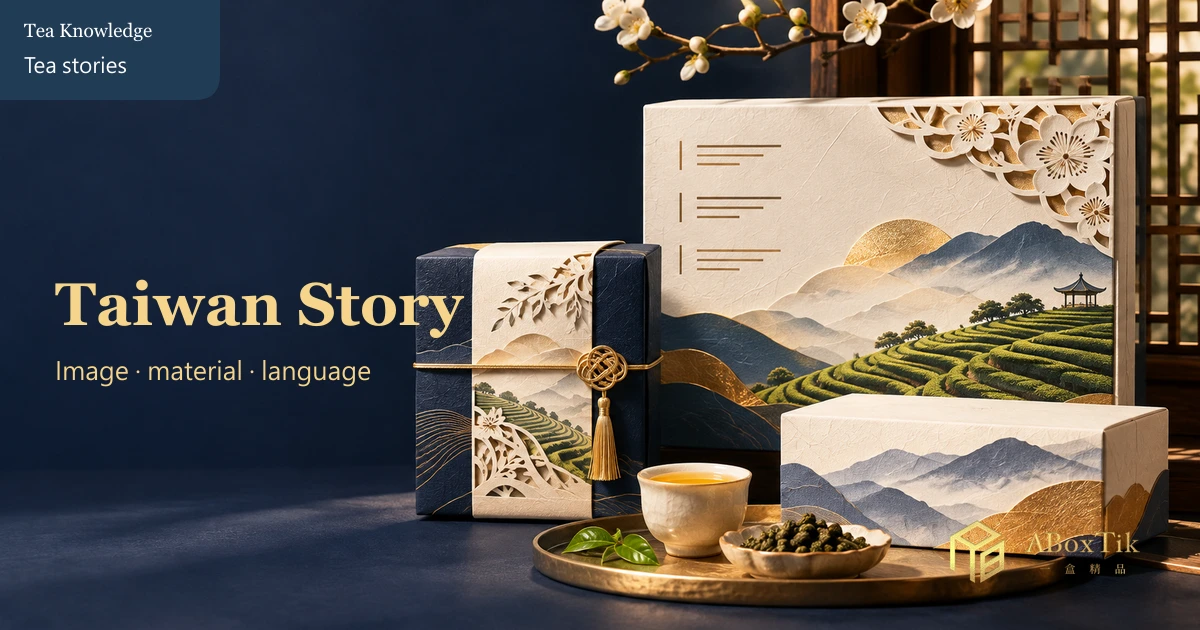
Taiwan Story Tea Packaging becomes easier when the audience, occasion and deadline are clear. This guide turns Taiwan premium packaging into a practical packaging story review. There is no need to find an impressive answer immediately. Put what is known, what is pending and what happens next on one page. That small courtesy prevents the next person from solving a mystery during the busiest part of the day.
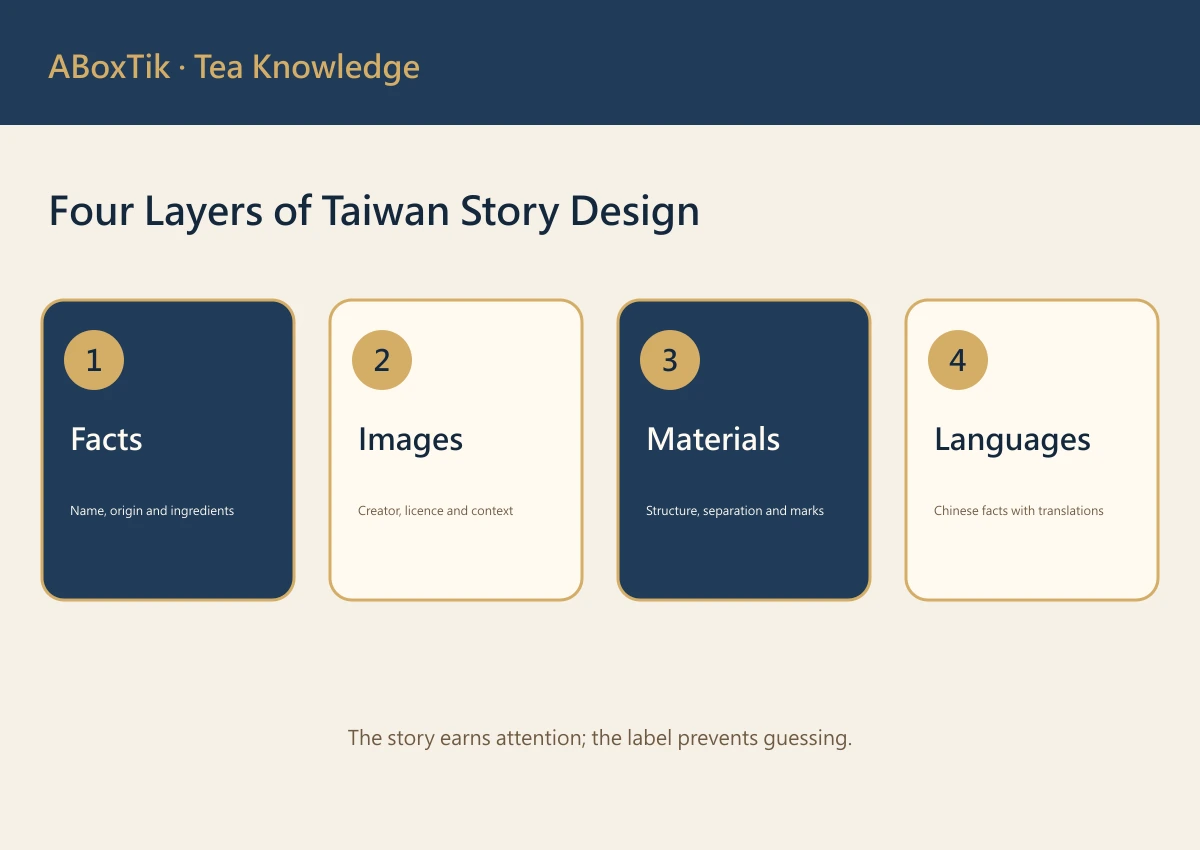
Create checkable fields
Record the date, version, product or batch, then add the quantities, materials, equipment, dimensions, languages and owners that matter. Mark each item confirmed, pending or not applicable; an empty cell should not quietly become approval. Beside every important fact, note whether it came from a package, supplier, authority or observation and when it was checked. A concise record can still show which question each fact answers.
Compare one point at a time
When a comparison is needed, hold the other conditions as steady as practical and change one variable. Put two or three options side by side and write their use, advantage, limitation and next action. Do not let the word best do all the work. If a trial, document or current specification is missing, list it as a check and arrange a small test or ask the responsible party before making a larger commitment.
Keep story and evidence separate
A photograph, name, flavour description or brand story can be a useful clue, but each supports a different conclusion. Origin, processing, safety, environmental, rights and partnership claims should return to applicable labels, records and primary sources. Keep the jurisdiction, date and conditions of official information visible. Evidence from one place, product or study should not be stretched to every case simply because the sentence sounds convenient.
Run a handover test
Give the sheet to someone who was not part of the earlier discussion. Ask that person to find the purpose, current version, completed items, next action and owner. If the answer requires three follow-up questions, simplify the order or remove duplication. For an exception, isolate it where appropriate, record what happened and send it to the right person rather than inventing a missing answer under time pressure. It is a useful note to your future self.
Questions that prevent confusion
Must every detail appear publicly? No. Readers need relevant product and use information; personal data, internal lists, quotes and undecided versions belong elsewhere. Can one photograph or phrase replace documentation? It may begin a question but rarely finishes it. Pause when food safety, law, copyright, testing, environmental claims or high-value collecting is involved and the available evidence is not enough.
Leave a clear next step
After the packaging story review is complete, assign an owner and review time to every pending item, then archive outdated versions. Continue with a related ABoxTik guide and another practical article, checking current labels and actual needs. A checklist is not there to make tea bureaucratic; it lets the thoughtful details survive a busy day.
Put the sheet into a real situation
Start with one realistic example that contains no unnecessary personal data. Record the use case for Taiwan premium packaging, the current version, the relevant object or batch and the decision that must actually be made. Give the packaging story review to a colleague or household member and ask that person to complete one lookup or comparison without an explanation. Note where the reader pauses, which term needs clarification and which fact appears in the wrong place. This is not a test of the reader; it is a test of whether the record can work on a busy day.
In the second revision, keep necessary fields, remove repeated reminders and move the most error-prone step closer to the beginning. Every pending item should have a source, owner and review time. If there is no owner, do not quietly present the item as complete. Separate records from different batches, versions or conditions instead of combining them into one answer that looks neat but no longer describes a single case.
Write the judgement as repeatable steps
Use the first attempt as a baseline, change one condition in the second, and decide after that whether another comparison is useful. Put photographs, aromas, names and stories in an observation column. Put labels, documents, measurements and primary official information in an evidence column. Both columns can help, but neither should impersonate the other. When a result applies only to a place, date, vessel, product or trial condition, write that scope beside the conclusion rather than hiding it in a distant note.
Before closing the task, ask four questions. Which decision does this record support? Can the reader reach the original source? Does each limit sit near the related conclusion? Can another person repeat the process? When all four have an answer, archive the older version. It sounds like one extra step, yet it prevents many small episodes of “I thought you knew” and turns considerate service into useful detail.
One final check: keep the record with the real object
Before handover, storage or use, compare the sheet with the actual item once more. Check the name, version, quantity, date, language and owner. If information will be separated from its original package, keep the necessary details with the item in a form the next person can find. When a condition changes, update the master version and tell the person taking over. Finish with a short result and one next adjustment, so this experience becomes a useful starting point rather than a page everyone remembers seeing but nobody can find.
Decide what the story should help a reader understand
A map of Taiwan, mountains, window patterns, indigo, calligraphy and tea gardens all carry visual energy. Premium packaging, however, is not a suitcase into which every cultural symbol can be stuffed before someone sits on the lid. Begin with one truthful sentence about this tea, then choose imagery, materials and copy that support it. Origin, cultivar, contents, weight, responsible business and date are product facts. Landscape and gifting narratives are story. They may illuminate one another, but should not impersonate each other.
Taiwan imagery does not by itself mean made in Taiwan or made from Taiwanese ingredients. If tea, board, printing and finishing come from different places, describe them separately. The story panel can explain inspiration; the label must describe the product.
Before admiring an image, confirm who can license it
For illustration, photography, calligraphy, maps, historic images or patterns, record creator, rightsholder, source file, licensed use, territories, term, quantity, media and permitted alterations. Taiwan’s Intellectual Property Office notes that original online images may receive copyright protection, and naming the source is not the same as permission. A commissioned work also needs terms for packaging, ecommerce images, advertising, overseas languages and later editions. Otherwise the boxes may be printed before the licence has made it past the front door.
When imagery draws on a specific community, religion, historical person or local tradition, check terminology and context as well as copyright. Avoid mixing unrelated regional symbols into a generic “Taiwan look.” Ask a knowledgeable reviewer when appropriate and credit creators or partners in a usable location.
Make the material story separable and checkable
A papery texture, earthy colour and green mood are not material evidence. List the actual outer box, insert, film, handle, labels and inks; identify what separates, how each component is handled, and whether a recycling mark applies. Taiwan’s environmental rules specify the scope, design, size and placement of container recycling marks. Check the current rule for the actual container instead of inventing a reassuring little green circle.
For reduced plastic, recycled content, recyclable or lower-carbon claims, retain supplier specifications, proportions, applicable parts and review date. Explain the disposal route honestly when a laminate is hard to separate. Good packaging need not use no material; it should protect tea, travel well, communicate clearly and avoid handing the disposal puzzle to the recipient.
Multilingual design is not shrinking every sentence three times
Taiwan FDA guidance requires packaged food sold in Taiwan to display prescribed information clearly in Chinese and common symbols, and prohibits false, exaggerated or misleading labelling. Reserve a stable area for Chinese product facts before placing English, Japanese or another language. Translation helps international readers, but must not displace the product name, contents, origin, responsible business or date.
Maintain a terminology sheet for tea names, cultivar, origin, brewing units, storage and cautions. Compare every number, unit, date and statement after translation. English should not acquire an extra region while Simplified Chinese quietly loses an ingredient. Test type size, line spacing and contrast at printed scale; text that looks generous on a monitor can become unexpectedly shy on the side of a small box.
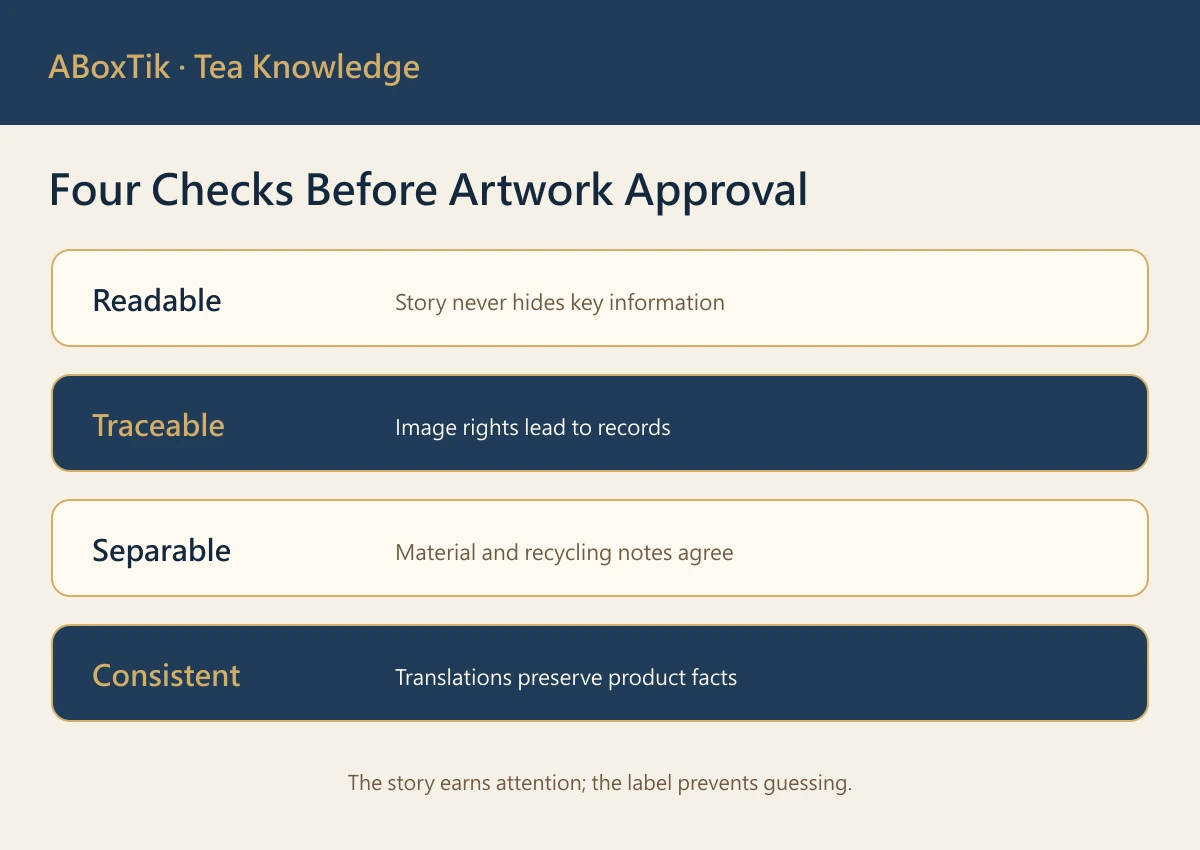
A handover checklist before artwork approval
Product/version: ____; approved label file: ____; story claim and evidence: ____; image creator/rightsholder: ____; licence scope: ____; component materials: ____; separation and disposal: ____; recycling-mark basis: ____; terminology sheet: ____; number/date check: ____; printed reading test: ____; approver/date: ____.
Finally, ask someone outside the design team to identify the tea, retell the main story and explain what to do with the box within ten seconds. If all three answers are possible, story and function have probably shaken hands. If the only memory is “beautiful,” let the layout steep once more and return the important facts to a place the reader can see.
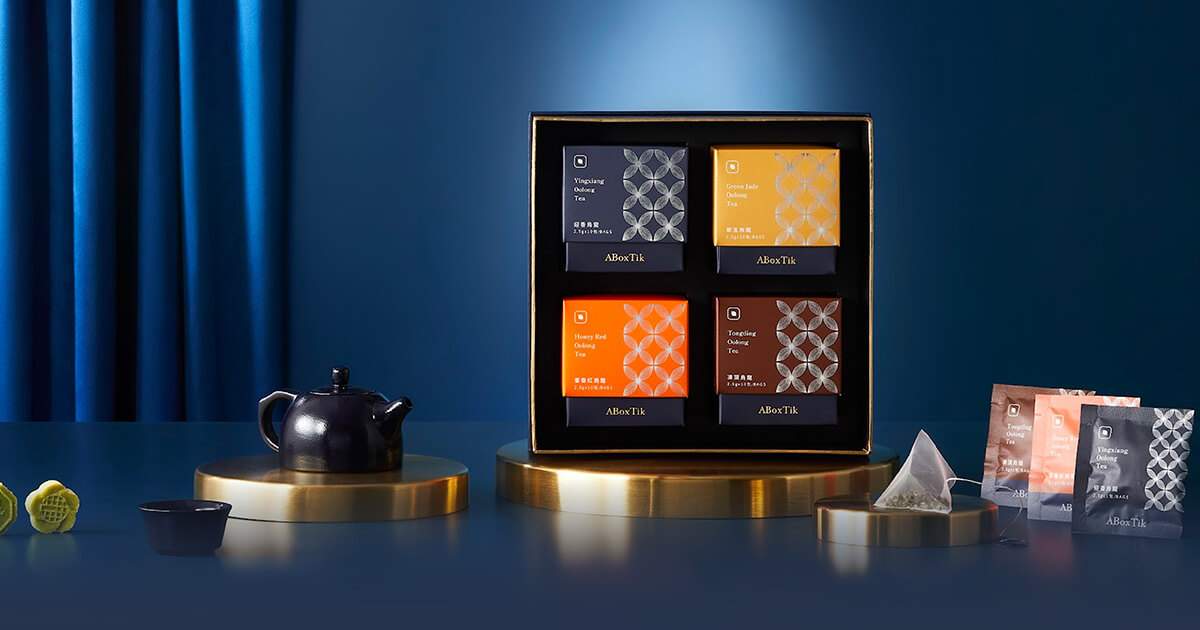
A Taiwan story can unfold through image, material and language; below, it opens into three more paths: premium tea gifts, further reading, and the latest boutique selections. No ribbon needs to be cut in a hurry.
Sources
Taiwan FDA—Food labelling FAQ under Article 22 · Taiwan Intellectual Property Office—Online images and packaging permission · Ministry of Environment—Container recycling mark rules