
Boutiques
Taiwan Paper Craft: Handmade Paper and Tea Gift Packaging
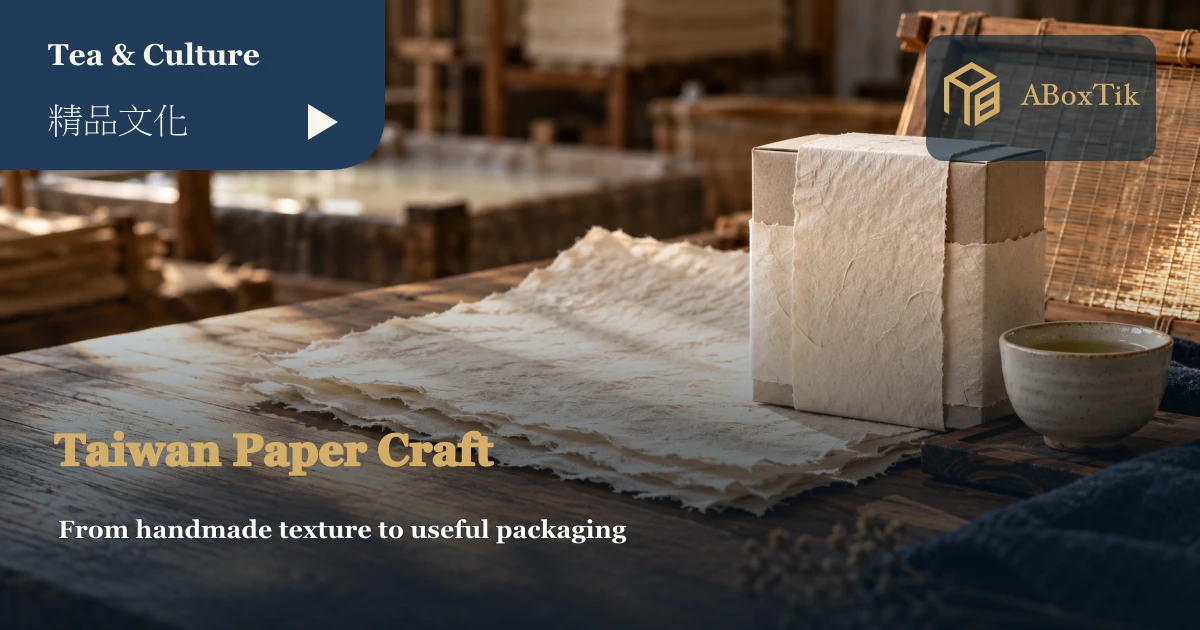
The small rise and fall of paper under a hand suggests that packaging sometimes speaks before a word is printed.
Taiwanese paper craft offers a tactile way into the story of a gift. Puli handmade paper follows material preparation, pulping, sheet forming, pressing and drying. For packaging, consider the resulting surface together with printing, structure and protection. A physical sample turns an attractive impression into questions that can be answered.
A fibre-rich surface may invite a second touch, and that curiosity is a good starting point. Ask how the contents sit inside, how clearly the instructions read and how the recipient opens the box. Beauty and usefulness can arrive together, with a little planning before the ribbon goes on.
Five stages of Puli handmade paper
Taiwan’s Bureau of Cultural Heritage records Puli handmade paper through material preparation, pulping, sheet forming, pressing and drying. Preparation readies fibre; pulping disperses it; forming catches it on a mould; pressing removes water; drying completes the sheet. Five short names, each with a real effect on the page.
The Taiwan Forestry Research Institute also notes that material and hand-forming methods can give each sheet different texture. That variation is part of reading craft, not evidence that every handmade sheet is superior or suited to every job.
For a wider craft context, visit Hsinchu Glass Craft, Sanyi Woodcarving and Taiwanese Lacquerware. Each material has its own light, weight and care needs.
Fibre and texture: ask why a surface feels this way
Fibre, pulp dispersion, mould and drying influence texture, thickness and visual rhythm. When holding a paper box or card, notice whether fibre is pronounced or fine, whether the surface is smooth or textured, and whether edges may abrade. These are material properties, not immediate verdicts.
Touch shapes a first impression, but it is not the only job. Packaging also protects its contents, travels safely, works with printing and opens well. How to Choose a Tea Gift Box starts with the recipient and occasion.
For tea, add moisture protection, odour control and clear product information. How to Store Tea addresses what happens after opening; packaging design should help care for those conditions before and after delivery.
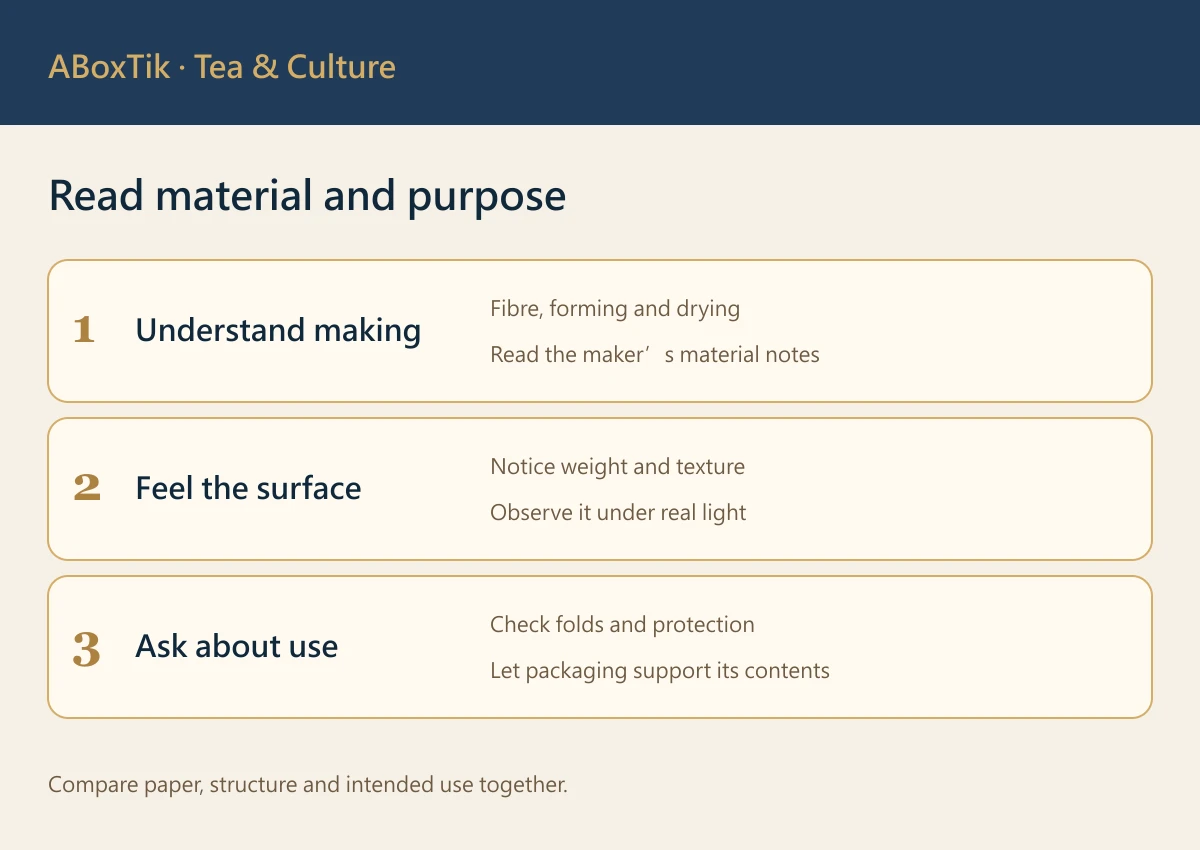
Pulping and sheet forming make paper more than a flat background
Pulping disperses fibre in water; sheet forming catches it on a mould. Together they create a structure, not merely a coloured surface. A fine natural variation can be an invitation to read process rather than an instruction to rank the paper.
Texture does not guarantee easy printing. Fine lines, pale text, foil work and broad colour areas need to be tested for a particular stock and print method. For corporate or multiple-recipient gifts, information must remain clear in actual light. Corporate Tea Gift Branding offers a related planning lens.
Ask to see a physical sample: check type size, colour, corners and closure rather than only a screen mock-up. Paper on a screen is usually very well behaved; real paper has more personality.
Pressing and drying point to the box’s protective work
Pressing and drying remove water and finish a sheet. For packaging, they are a reminder that material condition, storage and environment matter together. Durability and flatness also depend on structure, handling and transport.
Do not ask only whether a tea box looks good. Ask whether it needs an insert, whether its contents are crush-sensitive, whether there will be multiple delivery points, and whether a recipient may reuse it. Tea Gifts for Partners and Corporate Gift Quantity Planning approach personal and larger-scale situations from different sides.
Confirm a protective test separately from a visual proof. A box that looks lovely on a tea table may still need preparation for shipping. That is not romance lost; it is care placed underneath it.
Four questions for paper-craft packaging
| Question | Check | Why it matters |
|---|---|---|
| How does it feel? | Surface, thickness, edges | First impression and durability |
| Does it print clearly? | Type, colour, sample | Information remains readable |
| Does it protect? | Insert, closure, shipping | Care for contents |
| Is information complete? | Material and process details | Evidence replaces guesswork |
These questions do not select one correct paper. They turn ‘beautiful quality’ into conditions that can be discussed. For a gift, add how the recipient will open, store or reuse it.
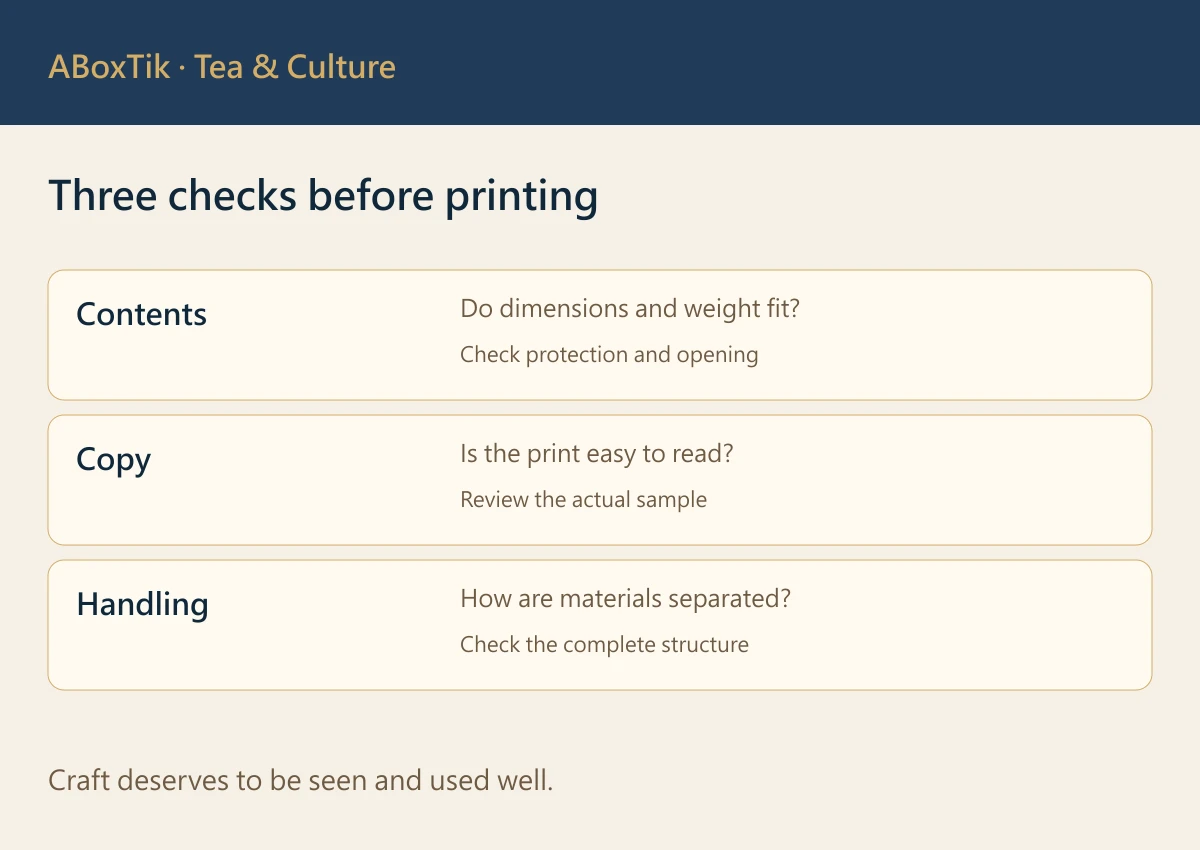
Walk through one sample as the recipient would
Begin with a closed sample containing items of the right dimensions and weight. Set it down, lift it, open the fastening and remove the contents without explaining the design aloud. If someone must be told where to pull, turn that moment into a question for the next proof. It is much easier to revise an opening detail before a large order than to add a rescue instruction to every gift.
Next, put the information card beside the actual tea. Can the reader tell which name belongs to which packet, find the brewing instructions and return the remaining portions to the box? A beautiful card loses much of its usefulness when it has to be held under a lamp or separated from the product to make sense. Review the smallest text in ordinary room light rather than only in a large design file.
For a shared gift, imagine the box travelling beyond its first opening. One person may take a tea packet to a desk while another keeps the card. Keep the essential product and brewing information with the relevant portion, according to the actual packaging arrangement. The outer paper can introduce the craft, while the contents remain understandable after the presentation has changed.
Finally, write down what the sample demonstrated and what still requires supplier confirmation. Record stock, dimensions, print treatment, insert and packing arrangement as separate decisions. Ask about the finished combination when discussing handling or disposal, including coatings, laminates and attached components. This is a practical conversation about a particular package, rather than a verdict based on the word paper alone.
A useful review can end with three short notes: keep this touch, enlarge this text, change this opening. Those instructions give the next sample a clear purpose. They also leave the enjoyable part intact: choosing the surface that feels right for the occasion, once the package has shown that it can do its everyday work.
Avoid over-promising about materials
Handmade, natural-fibre and recyclable paper describe parts of a material or process; none automatically proves lower environmental impact. If packaging makes an environmental claim, ask about sourcing, recycling systems, processing, transport and specific evidence. How to Read Low-Carbon Claims gives a useful evidence framework.
‘Handmade’ also does not remove the need to confirm dimensions, printing, timing and protective design. Samples, specifications and written confirmations keep the craft discussion practical.
Let paper craft serve the tea gift
When considering the Classic Taiwan Tea Four-Box Set or Two-Box Tea Bag Gift Set, review current contents first, then consider protection, information and opening pace. Packaging should not drown out tea; it should let a recipient move smoothly from box to explanation to first infusion.
Puli handmade paper reminds us that paper is not a hurried surface. Next time you hold paper-craft packaging, look at the fibre, the type and the structure. Small details can show that a tea gift was carefully arranged.
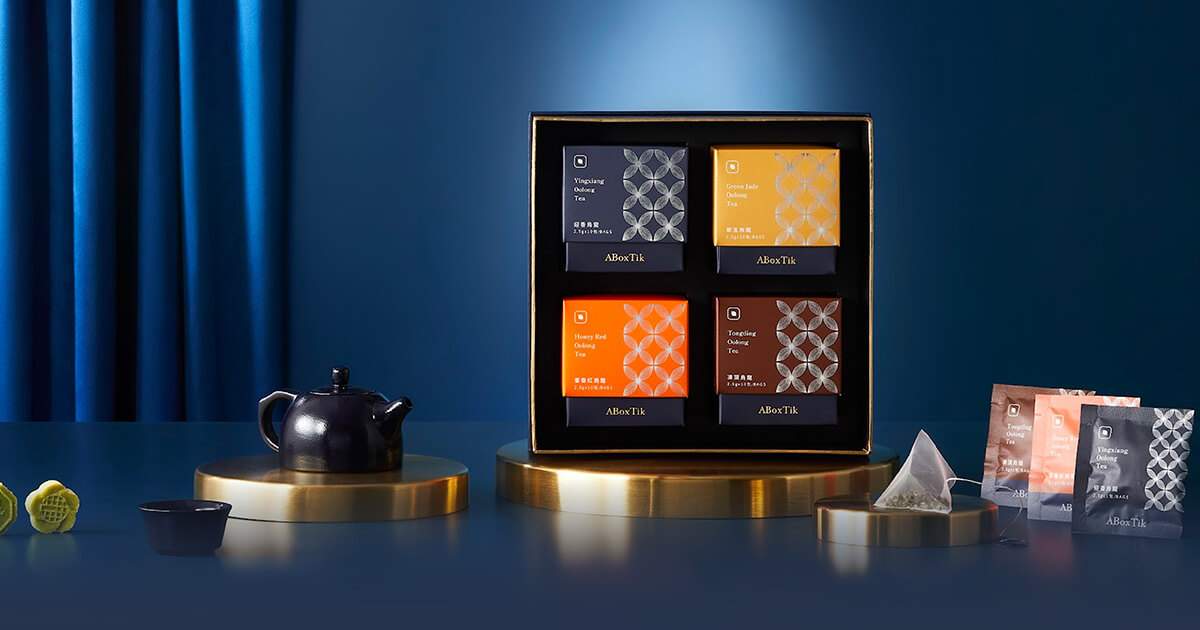
ABoxTik begins with Taiwanese craft, tea terroir and the details of giving, so each box can open with clarity and ease.
Let paper craft make a thoughtful opening for tea
Check material, sample, protection and information separately before choosing the paper feeling that suits this gift.
Paper need not tell the entire story of quality or impact; it can simply complete touch, readability and protection with care.
Related reading
Sources
- Bureau of Cultural Heritage: Puli handmade paper
- Taiwan Forestry Research Institute: handmade-paper technical material
- National Taiwan Craft Research and Development Institute: Taiwan paper craft
Sources checked 19 October 2026.