
Tea Knowledge
How Long Does a Custom Corporate Gift Box Take? From Tea Selection to Delivery
A considered corporate tea gift is rarely made by rushing. It becomes calm when each confirmation has a clear place to land.
A custom corporate gift box does not have one fixed lead time. The pace is usually shaped by how complete the brief is, whether tea and packaging direction can be confirmed, who gives final artwork approval, when quantities and addresses are frozen, and whether delivery is to one location or many. For an annual client gift, event or partnership, it helps to ask something more useful than “What is the fastest possible date?”: what does the next stage need before it can begin?
This is a year-round editorial planning model, not an ABoxTik commitment to a fixed customization scope, MOQ, quotation, sample, production period or delivery date. Products, packaging, feasibility and hand-off terms must be confirmed in writing for the actual request. If the task is a festival shipment with a specified arrival date, see the separate Corporate Mid-Autumn Gift Timeline. This article is about keeping a custom project from waiting on avoidable decisions.
The direct answer: the timeline follows a confirmation chain, not one calendar number
A gift box moves through a brief, tea and packaging direction, feasibility and quotation, artwork proofing, production and assembly, quality checks, then dispatch or hand-over. When an earlier decision is still moving, the following stage should not be treated as fully started. Separating those steps does not make a project bureaucratic; it prevents a beautiful proof from becoming unusable because the tea selection, logo version or recipient list is still unsettled.
Begin by naming one project contact and one final approver. The contact collects questions and keeps one current brief; the approver signs off only when the complete version is ready. That small division lets colleagues contribute without turning several chat attachments into competing source files. Before a budget has settled, the corporate tea-gift budget guide can frame the per-gift ceiling, quantities and delivery variables. Before quantities have settled, use the corporate gift quantity checklist to establish one deduplicated master list.
A seven-stage workflow for the internal meeting
| Stage | Prepare internally | Confirm with supplier | Common waiting point |
|---|---|---|---|
| 1. Brief | Purpose, budget range, target date, recipient setting | Whether the request is ready to assess | Decision-maker or date remains provisional |
| 2. Tea and packaging direction | Flavour, format, brand feeling, quantity range | Current item and packaging feasibility | Appearance chosen before use context is known |
| 3. Scope and quotation | Customization needs and delivery model | Scope, conditions and effects of change | An exploratory discussion is treated as a confirmed order |
| 4. Design and proof | Vector logo, brand colours, copy, final approver | Proofing version and approval method | Assets are scattered; several people edit separately |
| 5. Production and assembly | Approved contents, quantity and version record | Start conditions and required data | Names, card copy or quantities change after proofing |
| 6. Quality and hand-over | Check points, spare policy, receiving contact | Batch and hand-over information | Presentation packaging is confused with transit protection |
| 7. Delivery or consolidated receipt | Frozen addresses, phones, receiving windows and groups | Project-specific delivery terms | An address changes after labels are prepared |
Use this as a conversation map, not a promise chart. A box may be simple in one dimension and complex in another: a standard tea selection can still need careful recipient-data handling, while a visually ambitious project can progress smoothly when decisions and files arrive together.
Three planning scenarios: choose the amount of change before chasing the fastest answer
Existing packaging concentrates the work on tea direction, quantity, card information and hand-over. It can remove design variables, but availability and actual terms still need checking. Light branding, such as a card, sleeve or label, adds asset specifications, proofing and change control. Full customization can bring together contents, packaging structure, visual design and more hand-offs. None of these scenarios has a universal day count. The more change a project carries, the earlier it benefits from having an accountable approver and finished source files.
To discuss gift formats without assuming a commercial commitment, explore the premium tea gift-box guide, the two-tea-bag gift set, the four-tea collection, or the four-flavour tea gift. Product pages help a team articulate a direction; they are not a batch price, stock allocation or promise that a customization option will be available.
Make the first proof more useful: place four items in the brief
First, state who has final approval and when that person will respond. Second, provide the usable logo, colour reference and current copy; an old screenshot or a file retrieved from a chat often sends wording and colour back into revision. Third, list language versions, forms of address, dates and product names as proofing fields rather than judging only whether the layout looks attractive. Finally, state which changes must return to feasibility review. A change to quantity, contents, dimensions, address model or delivery method can alter the assumptions behind the previous discussion.
A card can gently introduce recipients to why Taiwanese tea is distinctive, the Taiwan tea regions, or the meaning of giving tea as a gift. Keeping this storytelling separate from scope confirmation makes both the message and the operational conversation clearer.
Sample, production and quality check: verify what is seen separately from what will be delivered
A sample can help a team evaluate flavour, scale or visual direction. It should not be read as proof that every production condition has been promised. Before work begins, the approved written version should identify contents, packaging, quantity, artwork and hand-over method for that request. Quality checks should look beyond the presentation box: can the inner tea pack remain sealed, are labels readable, does the gift box hold contents securely, and does the outer carton protect the edges?
Taiwan’s Tea and Beverage Research Station notes that tea quality can be affected by moisture, light, temperature, oxygen, time and odours. That is why an inner tea pack, a gift presentation box and a transport carton have different jobs. A beautiful exterior does not replace protective packing, and a strong shipping carton does not replace clear product information.
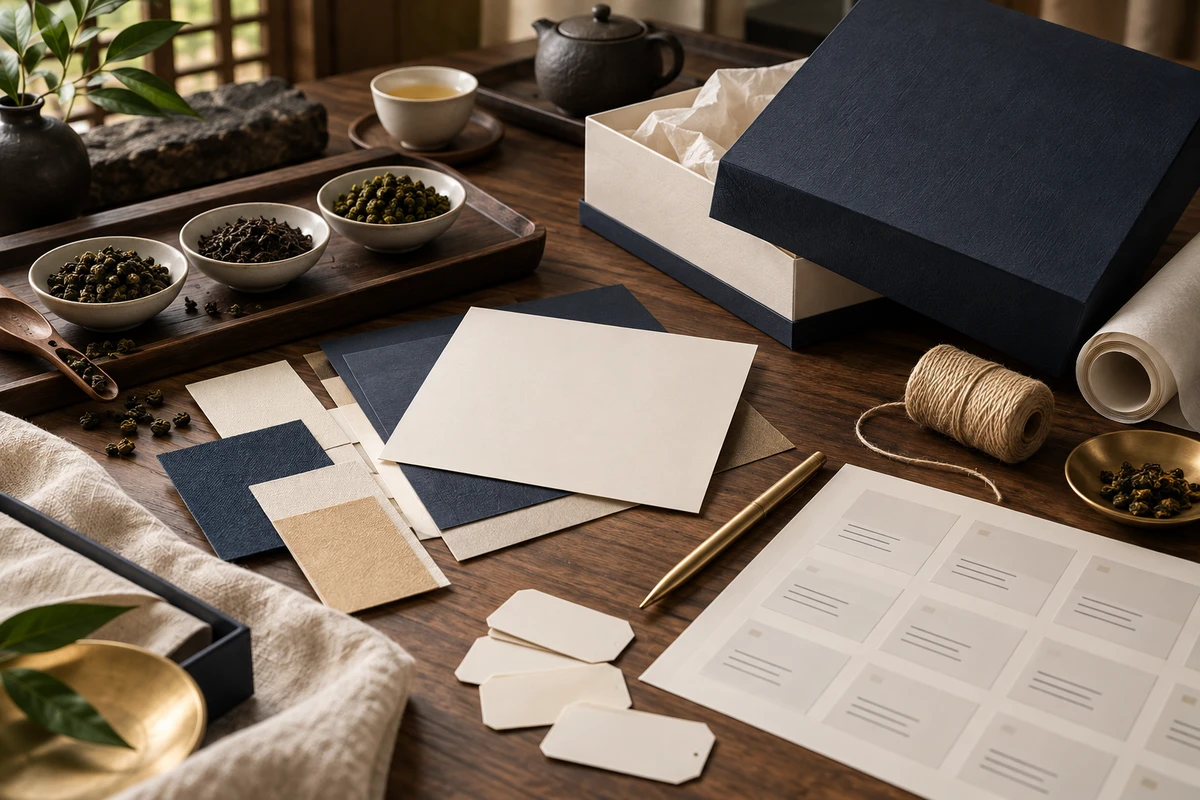
Addresses, spares and split dispatch: make the final tidy-up before labels exist
A single delivery point still needs a receiving contact, receiving window and an internal distributor. Multiple addresses also require a postal code, full address, telephone number, receiving restriction and destination group. Shipping labels ordinarily depend on complete sender and consignee details, so the address file needs one owner, one version date and one source of truth. Keep only the information needed for fulfillment and hand it over under the organisation’s own privacy rules.
Spares are not a standard percentage, and they are not a substitute for counting unconfirmed recipients. First record what a reserve would cover: a late addition, a corrected address, a damaged unit or an event requirement. Then decide who may release it. Split dispatch is similarly not an assumed service. Where recipients have different needs, keep those groups marked “to be confirmed” rather than promising a shared arrival date. For a request-specific conversation, provide quantity range, target date, destination distribution and customization needs through the ABoxTik contact page.
Leave time for the confirmations that matter, not last-minute repair
Corporate tea gifting feels thoughtful not because every step is pushed faster, but because tea, copy, design, quantity and addresses are each confirmed when they need to be. Use the seven stages to find the one column that is still open, then decide whether existing packaging, light branding or fuller customization best fits the project. Even while a target date is being discussed, that gives the team a useful next action.
For ABoxTik’s view of Taiwanese tea and gifting, visit About ABoxTik. Product range, pricing, stock, customization, delivery and hand-over terms remain subject to the written confirmation for the specific request.
Recommended next reads
- How Many Corporate Gifts Should You Order?
- Corporate Tea Gift Budget Guide
- Corporate Mid-Autumn Gift Timeline
Sources
- Taiwan Tea and Beverage Research Station: Tea Packaging and Storage (checked 2026-09-30)
- Chunghwa Post: Delivery-Time Enquiry (checked 2026-09-30)
- UPS: How to Prepare Your Shipments (checked 2026-09-30)