Tea Knowledge
A Year-Round Taiwan Tea Season Observation Calendar
A little preparation leaves more room to enjoy the tea.
A Taiwan tea year is not a calendar in which every garden turns the page on the same day. Spring, summer, autumn, and winter offer useful observation cues, but they cannot promise a fixed harvest date or a guaranteed aroma for every region. Altitude, place, weather, cultivar, garden management, and making decisions all shape the rhythm. The day leaves are picked, the day they are processed, and the year a package reaches a shop may all be different.
This is a year-round observation calendar, not a contest between winter and spring tea. Sijichun is a cultivar name; it does not mean every season supplies a tea with that name. For place-based context, read the Taiwan tea regions guide; for high-mountain questions, see six conditions behind high-mountain tea quality. Here we connect season, batch, and cup.
Separate three dates: harvest, processing, and the year you buy it
A harvest date answers when raw leaves were picked. Processing and refinement answer when those leaves became this tea. A packaging or sales year answers when you encountered it. They are not interchangeable. When a label says “spring tea” or “winter sprout,” ask whether it describes a harvest season, cultivar, processing term, or a seller’s series name. A specific answer helps comparison; an unknown field is better left unknown than invented.
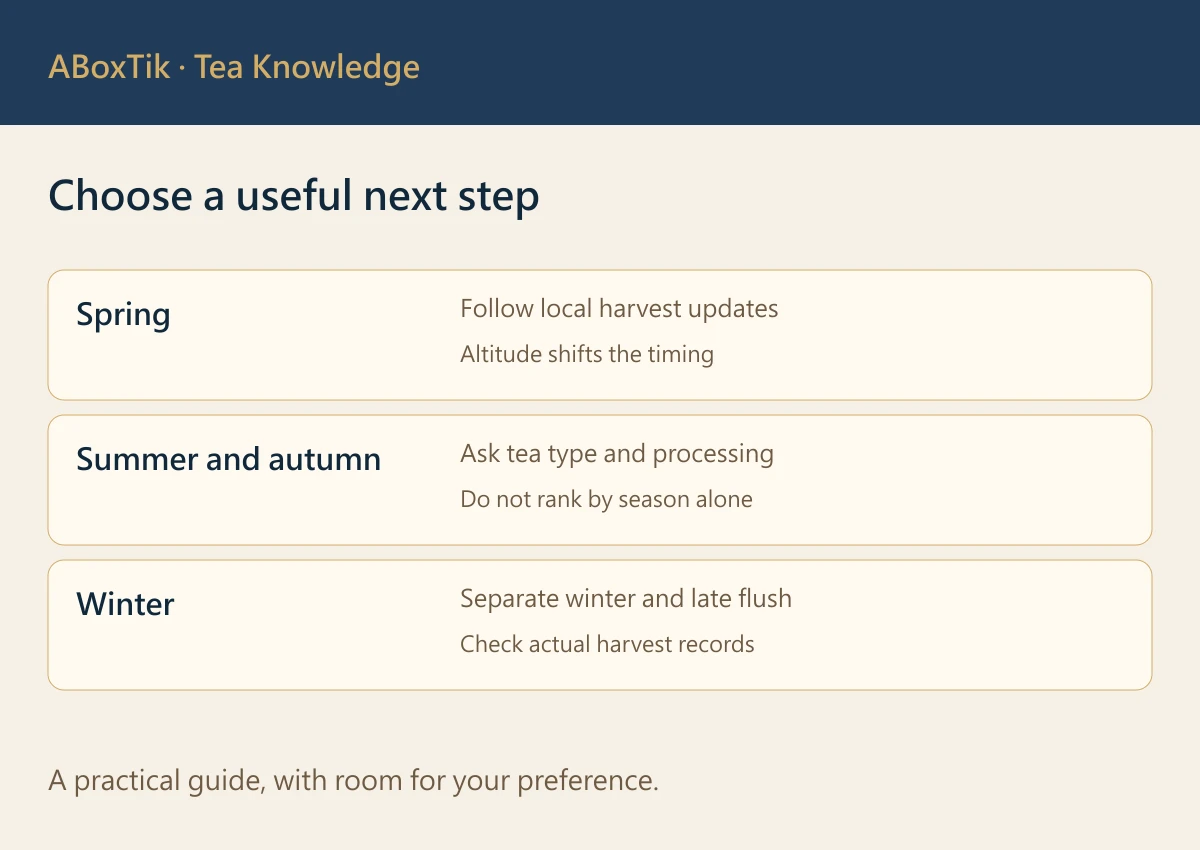
Ministry of Agriculture food-and-farming material gives broad reference windows: spring tea roughly mid-March to mid-May; first summer tea roughly mid-May to late June; second summer tea July to August; autumn tea September to October; and winter tea late October to late November. The same source notes the effects of sunlight, temperature, and humidity. These are not nationwide harvest appointments or delivery promises.
A reusable 12-month observation calendar
| Month | Useful observation or question | Do not turn it into a fixed conclusion |
|---|---|---|
| January | Does a previous batch still have clear storage and tasting information? | Every garden is dormant or has no tea. |
| February | When will garden or supply information update before spring? | All Taiwan begins picking on one date. |
| March | How do region, altitude, and weather differ? | Every spring label tastes alike. |
| April | What are cultivar, place, raw-material, and processing details? | Spring is always best, most fragrant, or most expensive. |
| May | How are late-spring and early-summer batches identified? | Garden work changes season in synchrony. |
| June | Which tea type and brewing guidance apply to this batch? | Summer tea is always bitter or inferior. |
| July | How are heat, rain, and location affecting available information? | Every region has the same summer batch. |
| August | What are the current batch’s storage and opening notes? | Product year equals harvest date. |
| September | What do current regional updates say about autumn growth? | Autumn tea is inevitably gentler than summer tea. |
| October | Do late-autumn or winter descriptions name region and batch? | All winter tea comes from one altitude. |
| November | What do cultivar, harvest, and process notes say about winter tea? | Winter sprout means all winter Sijichun tea. |
| December | Before gifting, confirm current contents, label, storage, and delivery terms. | Year-end release means freshly picked tea. |
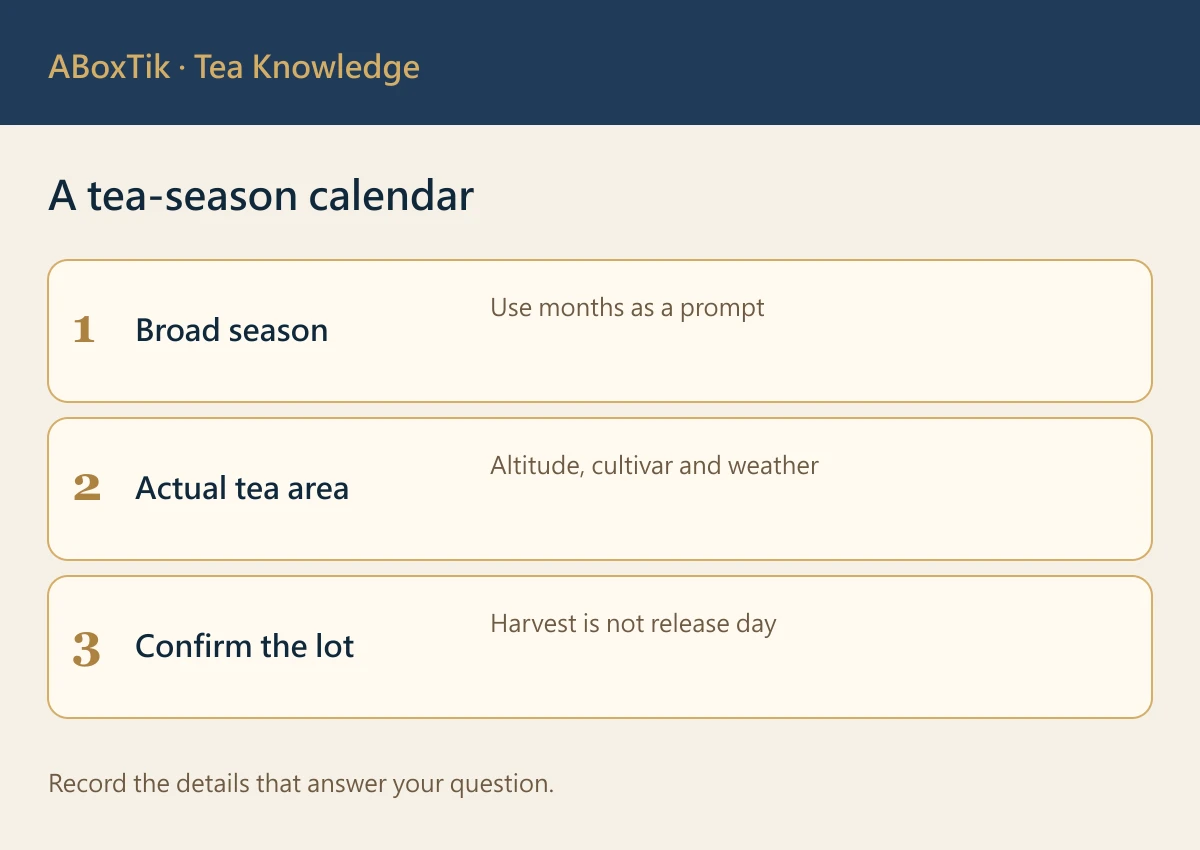
The question marks are the point. Seasonality should help a buyer, gift-giver, or drinker ask better questions, not make confident claims from a month on a label.
Use seasons as observation language, never as a ranking
Spring is often discussed with new growth after winter and moderate conditions. Summer may bring faster growth and different raw-material conditions. Autumn and winter have their own climate and management context. These are entries into tea-garden observation, not a quality ladder. Some tea types or processes may be more often mentioned in a particular period, but whether a tea is made, how it is made, and how it tastes remain batch-specific.
Keep a season label beside a tasting note, not in front of the palate. Write dry-leaf aroma, warm aroma, first taste, texture, and finish; then add known region, cultivar, harvest information, and process. If a cup differs from expectation, check leaf amount, temperature, and time before deciding that “this season is bad.” Tea is not obliged to win a seasonal podium.
Ask regional questions instead of ranking regional workloads
Northern hills, central mountains, Greater Alishan, eastern valleys, and high-mountain areas have different terrain, cultivars, and tea-making histories. High mountain is not one single region. Ask a producer or seller: What is the actual tea area or village? Which cultivar is used? Is harvest or processing information available? How did fresh leaves move into production? Which label gives storage and brewing advice? Those questions produce usable information without turning agricultural work into a leaderboard.
If a description says only “Taiwan high-mountain tea” or “spring limited,” do not dismiss it and do not fill gaps yourself. Use it as an invitation to ask more. Place, altitude, cultivar, season, and process are separate fields; recording them separately keeps one handsome mountain name from doing every job.
When contacting a seller, choose a tea you have already enjoyed as a starting point. Note the season, lot and purchase date from the previous package, then ask which changes in the new batch are confirmed. A different sales year does not establish the same harvest window, and the same season does not establish identical processing. Keep the reply with your notes so that the comparison has a clear reference later.
You can also build a very small watch list: two tea areas that interest you, one familiar cultivar and the harvest detail you would like to ask about next. Check updates at your own pace. You do not need to buy a new tea every month to appreciate a seasonal calendar. It can tell you when to ask a question without becoming a monthly checkout reminder. If you still have tea you enjoy at home, caring for that tea is a perfectly good seasonal plan.
For a gift with a fixed handover date, start with confirmed availability and delivery arrangements. A regional harvest estimate cannot reserve stock or guarantee finished packaging. Once the actual product is chosen, add its own harvest information to the card only when the supplier can substantiate it. The calendar remains a conversation aid, while the order and label supply the practical details.
A seasonal tasting note for the next cup
- Background: tea name, cultivar, region, stated season, batch or purchase date; write “unconfirmed” when needed.
- Brewing: vessel, water, leaf amount, temperature, and time; start from the current package guidance.
- Observation: dry leaf, warm aroma, entry, texture, and finish—one plain sentence for each is enough.
- Next time: shorten time, change a cup, or repeat unchanged; alter one variable at a time.
This is not a grading certificate. It simply keeps season information, brewing conditions, and personal preference from blending into one vague verdict. When tasting with a friend, ask “How did you brew it?” before “What does it taste like?” Sometimes the answer is not that tea changed; today’s mug was simply enormous.
Bring the calendar into choosing and gifting
A seasonal label does not need to create gift pressure. If a recipient likes floral, roasted, honeyed, or black-tea directions, first confirm the current product name, contents, storage details, and availability. A card can say, “There are different Taiwan tea directions in this box; start with whichever matches today,” without promising the finest aroma of a season.
Keep this calendar for the next time spring, summer, autumn, or winter appears on a label. One gentle, useful question makes the word clearer: which date, which place, and which batch does it describe?