Tea Knowledge
Spring Tea vs Winter Tea: Understanding Winter-picked Tea
Spring and winter each have their own pace. Read the harvest label, brew the actual batch, and leave the choice of a favourite cup to yourself.
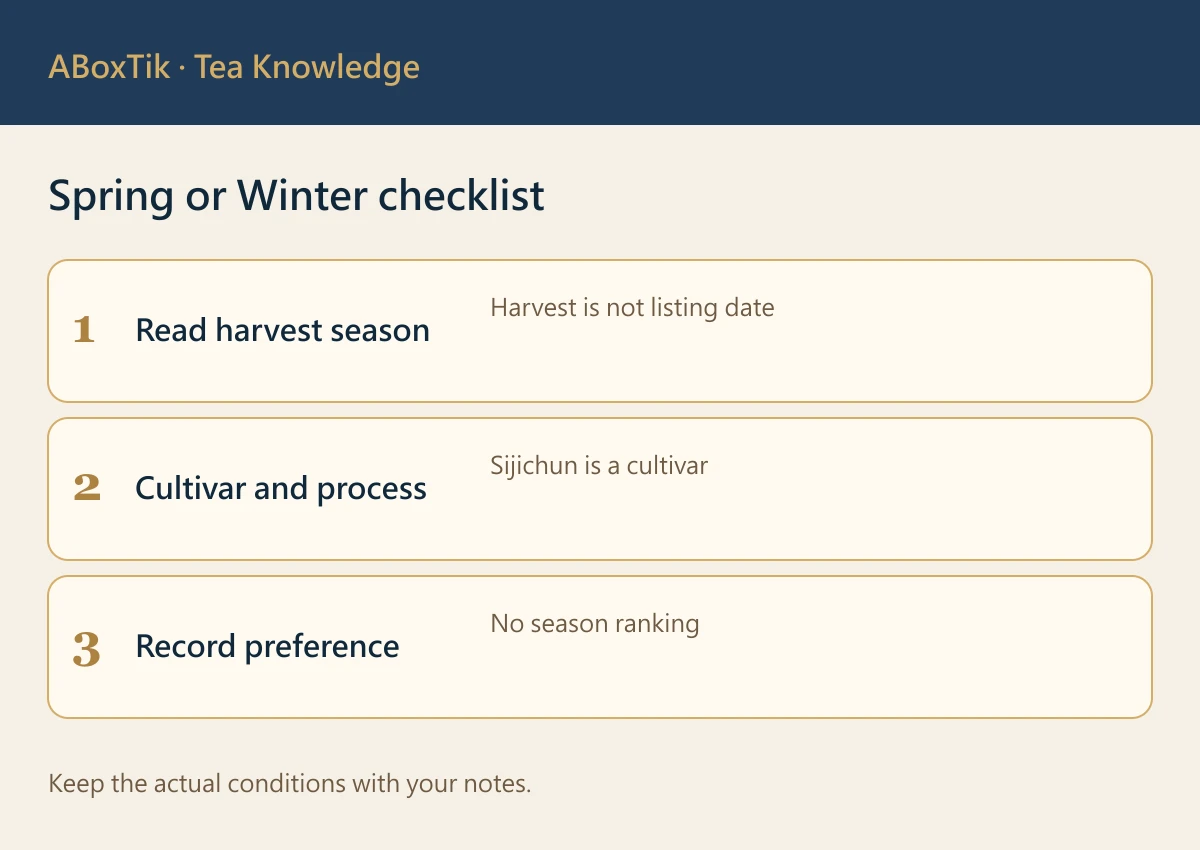
Spring tea, winter tea and winter-picked tea begin with different moments in the life of a tea garden. Spring tea is made from spring growth; winter tea is harvested in the winter season; winter-picked tea, often called dong pian, generally refers to tender shoots that grow again after the winter harvest when conditions permit. None of these names is a quality ranking. Cultivar, garden, processing, storage and brewing all deserve a place in the conversation.
If three packages promise fragrance and sweetness, it can be difficult to know where to begin. Separate what the label tells you from what the cup tells you. The first helps you ask useful questions; the second helps you discover what you would enjoy drinking again.
Three labels, three questions
| Label | What it describes | A useful question |
|---|---|---|
| Spring tea | Tea made from spring harvests | Which garden, cultivar and harvest batch? |
| Winter tea | Tea harvested in the winter season | What are the harvest and processing details? |
| Winter-picked tea | New shoots after the winter harvest, when conditions allow | Where and when was this batch picked? |
Taiwan’s Ministry of Agriculture presents seasons as a way to understand garden conditions and notes the influence of sunlight, temperature and humidity. Terrain, altitude, local weather and management vary, so a general seasonal window cannot promise one harvest date across the island. A tea appearing in a shop at the end of the year is not necessarily picked that day. Harvest, processing, packing and sale are separate events.
The winter-picked tea production guide offers a broader way to follow the year. Here the practical question is narrower: how can these three labels help when two or three teas are already on the table?
Growth in spring and winter follows its own rhythm
Spring is often associated with new growth after the slower winter period. Agricultural guidance describes the moderate conditions and developing buds commonly associated with the season. Winter brings a different pattern of temperature and moisture, and growth can slow. Such context explains why a season is useful information; it does not provide a guaranteed aroma or strength for every tea carrying that label.
Two batches of one cultivar grown in different areas may have encountered different weather. Two teas from one area may have been made differently. If one spring tea smells floral and one winter tea seems quieter, that is a useful observation about those cups. It is not proof that every spring tea smells stronger. Descriptive words work best when they stay attached to the batch and the brewing conditions that produced them.
To make a seasonal comparison more informative, ask a producer or seller whether they have the same cultivar and garden with a similar processing style in different harvests. Even then, record the differences that are known. If the details do not match, the teas can still be enjoyable to compare; the notes simply need to make that context visible. No one needs to turn an afternoon cup into a laboratory exam.
Winter-picked is not a synonym for all winter tea
Taiwan’s Agriculture and Food Agency explains that, after the winter harvest, tea plants can produce tender new shoots when warmer conditions and sufficient water encourage growth. Those shoots are known as dong pian. The agency describes the harvest as variable and often associated with lower- and mid-elevation gardens. The sequence matters: not every tea harvested in winter is winter-picked tea, and a packing date alone cannot identify it.
Sijichun, meanwhile, names a tea cultivar. A package labelled winter-picked Sijichun can tell you both cultivar and harvest context; Sijichun may also be harvested at other times. High mountain describes a growing environment, another separate field. These ideas can overlap on a single package without becoming interchangeable. For a closer look at that distinction, read winter-picked Sijichun and high-mountain tea.
If a seller uses a poetic description such as “cool character,” ask what it means for this particular tea. Does it refer to aroma, the sensation on the palate or the finish? The answer can make a label more useful without asking a seasonal name to prove a flavour in advance.
Read the bag in five steps
Start with tea name and cultivar. Then look for growing area, season or harvest batch. Note how the tea was made, including any information about oxidation and roasting. Finally, record net weight, number of bags if relevant, and the recommended brewing method. When a field is missing, ask the seller; if the answer remains unknown, leave it blank. A blank space is more useful than a guess dressed as a fact.
Imagine two packages both say winter tea. One describes a light roast and another a more pronounced roast. Different aromas may reflect processing as well as other factors; the season alone cannot tell you why they differ. Leaf form, storage and brewing are useful context too. The Taiwan tea regions guide adds a place-based perspective.
Compare price using a common unit of weight, or record tea per bag and the number of bags in a box. Loose leaf and tea bags offer different routines and packaging, so convenience can matter alongside the number. A higher price does not by itself establish that a season is better. If curiosity is the main reason for buying, a manageable quantity leaves room to learn without filling the cupboard for an entire year.
A comparison card to try: make one column each for spring, winter and winter-picked. Under each, leave spaces for cultivar, region, harvest information, processing or roast, brewing conditions and personal impression. Add one final line: “What would I like to ask next?” The card describes the actual batches, not a scoreboard for seasons.Make one common brew before following individual directions
Choose teas with clear information and similar processing where possible. Use the same water, comparable cups, the same leaf-to-water ratio, temperature and steeping time for the first round. Write down warm aroma, strength, texture and finish. Everyday language is enough: “flowery,” “rounded” or “a little brisk” can be more useful than searching for an approved tasting vocabulary.
If you have only one suitable vessel, brew the teas separately and keep the conditions in your notes. Let each cup cool for a similar length of time before comparing it. You might taste with a friend and ask what each person notices, but there is no obligation to reach the same verdict. Different preferences are useful information, not a problem to solve.
For a second round, follow each product’s own brewing instructions. Keep those results separate from the common-brew notes. The first round offers a shared reference; the second gives each tea a chance to be enjoyed as its maker suggests. Neither proves a universal difference between entire seasons. The cups have enough work holding tea without also acting as judges.
Adjust one thing when a cup is too strong or too light
Begin with the package guidance. If a cup feels too intense or astringent, try a shorter steep next time. If it remains too strong, adjust the amount of leaf in a later brew. When it tastes too light, a slightly longer steep may be a useful first change. Write down the water volume and actual time so the next cup has a clear starting point.
Changing water, vessel, quantity and time all at once makes it difficult to tell which adjustment helped. Nor does the word spring or winter-picked dictate one universal temperature and duration: different leaf forms and processing choices can need different handling. A tea that still does not suit your taste after a careful attempt can simply be a tea you prefer to leave for someone else.
Choose for the way tea fits your day
For a gift, consider whether the recipient enjoys a fresh or roasted direction, loose leaf or tea bags, and confirm the current contents and delivery arrangements. A seasonal name can add context to a card when the harvest details are known; it should not become a promise of a particular aroma or arrival date.
To explore several Taiwan tea styles, the Classic Taiwan Tea four-box set is one place to review current options and specifications. Choose according to the tea and the routine that suit the recipient, and check the product page for current contents and availability.
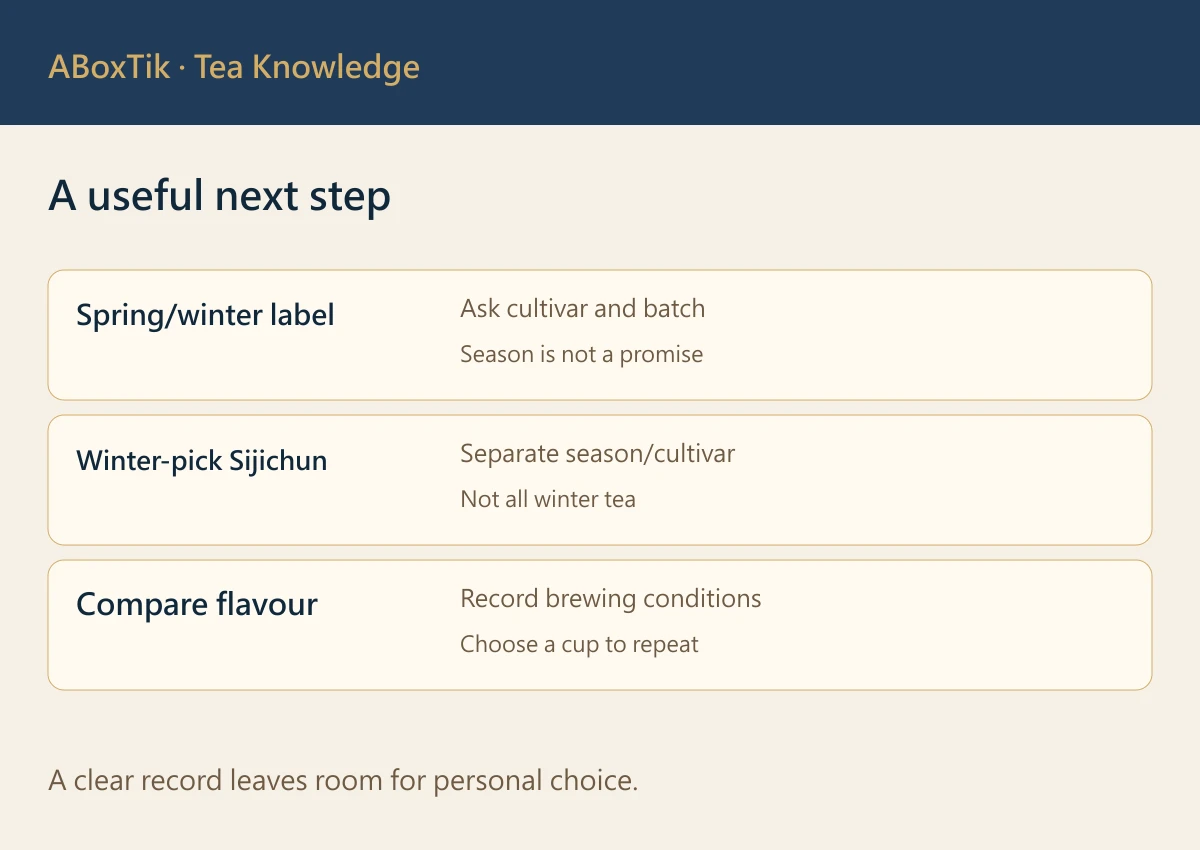
Next time spring, winter or winter-picked appears on a label, ask about the garden and batch, then choose a brewing method you can repeat. Keep the aromas and textures you enjoyed in a small note. The next familiar label will have a useful companion: your own experience of a real cup.