
Tea Knowledge
Tea Ware Across Cultures: Pots, Cups and Daily Use
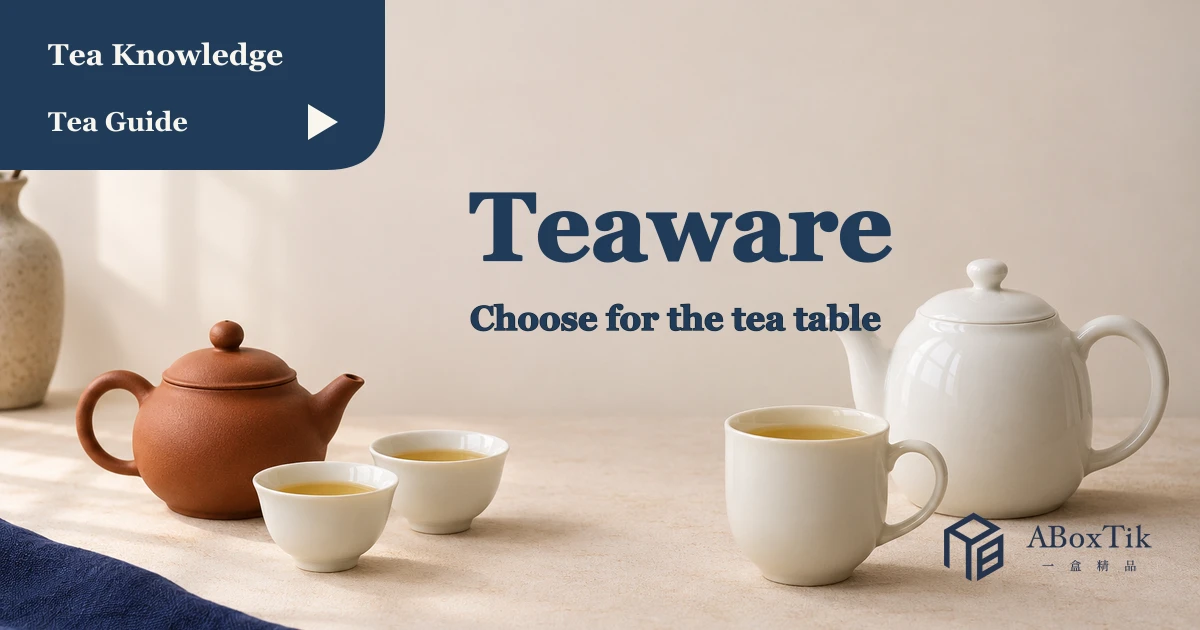
A pot and a cup can fit many different routines. Begin with the people at the table, the amount to brew and the way the leaves will leave the water. An object that pours comfortably and is easy to care for can make a modest gathering feel thoughtfully prepared.
What should we compare in tea ware across cultures?
Compare tea ware across cultures by asking how each object steeps, serves and cleans. Pots and cups take many forms. Some prepare several small infusions; others share a larger pot or brew directly in a cup. These are observable practices, not two fixed systems called East and West. Begin with the number of people, the form of tea, the steeping method and how the leaves will be separated. A useful comparison leaves room for different habits within every place.
Objects travel as well as people
The Metropolitan Museum of Art holds an eighteenth-century Chinese porcelain teapot with Dutch decoration made for a European market. Its collection also includes a silver teapot made in Bordeaux in 1775–77; the museum explains that its overall form draws on Chinese porcelain pots likely made for Europe. Each object has its own date and context. Neither represents every household, but together they show how forms, materials and decoration moved through trade and adaptation.
Read three fields when looking at a museum object
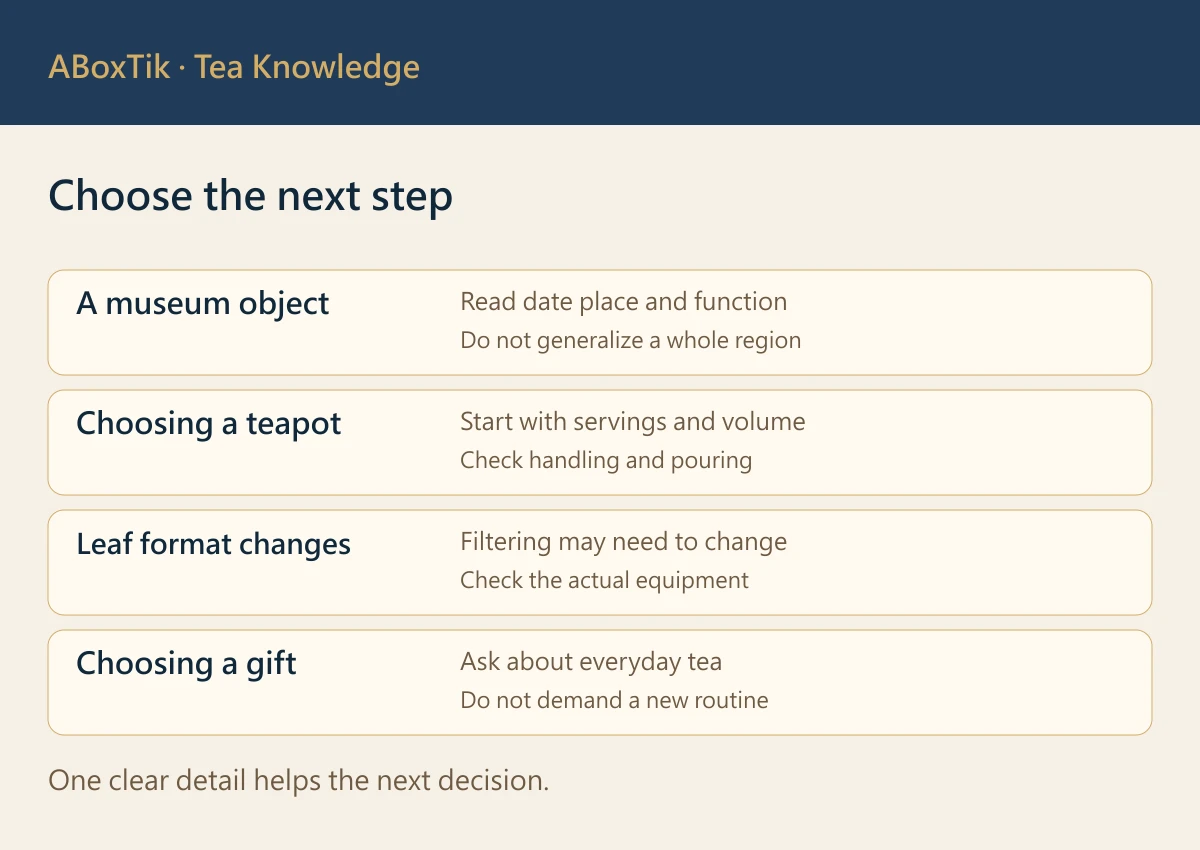
An object’s name, place of manufacture and date are a useful beginning. Where a catalogue identifies a market or an intended use, note that too. Export porcelain may bring together a form, decoration and market associated with different regions. One motif is not enough to assign a single cultural identity to the whole object. Similar-looking pots may also differ in date or function. When the image cannot answer a question, return to the museum’s object record. A beautiful photograph can invite curiosity without carrying the whole history by itself.
Pots: capacity and pouring come first
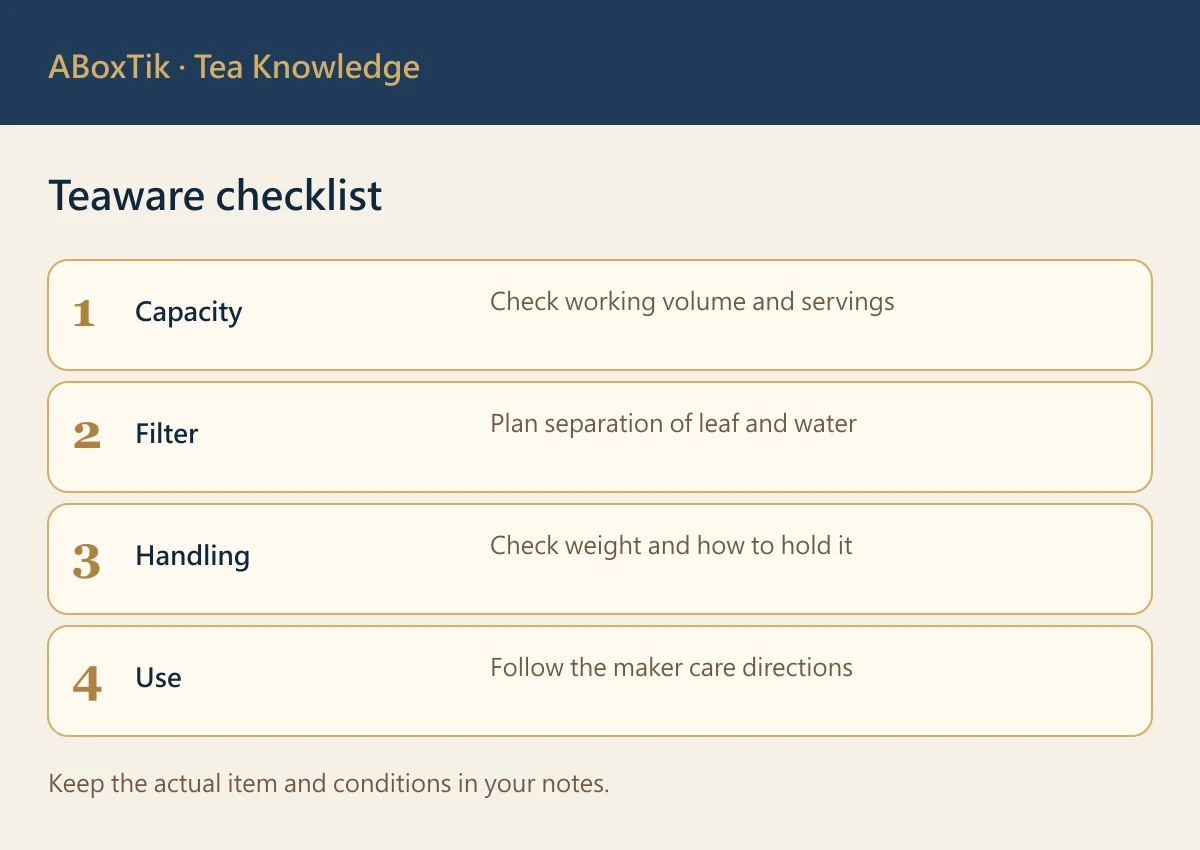
A small pot can make several short servings manageable; a larger pot can prepare more tea at once. Look for usable capacity at the intended fill level, not merely the outside dimensions. Check how the handle feels when filled, how the lid is controlled and whether the spout pours and stops comfortably. A large pot does not automatically identify the user’s nationality, and a small one does not guarantee better tea.
Cups: capacity, rim and grip
Small cups make it convenient to divide a serving and notice changes over time. A larger cup may suit a longer drink. Rim, wall thickness, handle and the amount poured all contribute to the experience; time in the cup changes temperature too. To compare two cups, pour one infusion into a sharing vessel and divide similar amounts. Record grip and personal impressions rather than deciding from a photograph that one shape must produce a stronger aroma.
Decide when the leaves leave the water
Whether using a pot, basket, infuser or tea bag, plan how steeping will end. Loose leaf can be poured out completely or removed with a suitable infuser; a bag can be removed according to the packet. Leaves that remain in contact with water continue to affect the infusion. Before buying a set, check whether this action is easy with the equipment and the kind of tea you actually use.
Break a tea gathering into four actions
Before looking at a catalogue, write down four tasks: measure water, steep, serve and clean. Measuring requires a way to know the actual volume. Steeping requires room for the tea and water. Serving requires a stable way to pour into each cup. Cleaning requires access to the surfaces that touched the drink. One object may handle several tasks, while another needs a companion. Working backwards from the task makes it easier to see whether a complete set is useful for your table or whether a familiar cup and one infuser already do the job.
Choose capacity for the people present
Estimate how much each person would like and whether you intend to make another infusion. If one pot does not serve everyone, make two rounds rather than filling beyond the recommended level. If preparing more at once, check whether the tea can be poured out at the intended time. A stated capacity may describe a vessel filled to the brim; ordinary use can require space for a lid and safe handling. Ask the maker about usable capacity and try the calculation with the cups you actually own. No single millilitre figure is a worldwide rule.
Match loose leaf, tea bags and filters
Start with the instructions for the tea in hand. With a tea bag, check that the cup opening lets you place and remove it easily. With loose leaf, consider the filter openings, room for the leaf to expand and a practical way to end steeping. A deep infuser may also need a brush that reaches its bottom and edges. Each format can make sense in daily life. Clear portions, a way to end contact with the water and straightforward cleanup are useful criteria regardless of whether the vessel is ornate, plain, new or inherited.
Several small infusions or one shared pot?
Several small infusions can suit a group interested in observing how the same leaves change across rounds. A shared pot can suit an occasion when people want tea at the same time with fewer steps at the table. Both methods benefit from recording leaf, water and time, and both can be adjusted for preference. Do not turn a choice of format into a ranking of cultures. When the vessel changes size, start again with the actual capacity and the tea maker’s instructions; the previous steeping time may no longer give the same result.
Sharing: organise around the people at the table
Tea ware across cultures can share forms and functions; ask what each piece actually does. Estimate how much each person wants, how much the brewing vessel can serve at once, and who is comfortable pouring and cleaning. A pot, a sharing pitcher and cups each have a job, but every gathering does not need every object. If milk, sugar or another addition is offered, make the ingredients clear and allow guests to choose. Plain tea and additions can sit at the same table without the equipment deciding for anyone.
Material and care belong to the individual object
Porcelain, clay, glass and metal cover many constructions. Glaze, wall thickness, handle and filter design matter too. Check the maker’s instructions for food contact, heat, cleaning and any heating restrictions. If an object has a crack, chip, damaged glaze or persistent odour, stop using it and ask the maker. Museum objects help us understand history; their catalogue descriptions do not replace instructions for the item on your own table.
What to ask before buying an individual piece
Read the product description and ask who made it, what the contact surface is intended for and how the item should be cleaned. Check whether it can tolerate the intended temperature and whether sudden temperature changes or direct heating are restricted. Hold the vessel with the seller’s agreement and test the balance with room-temperature water where practical. A hand-built piece can be appreciated for its form while its capacity, lid, handle and care remain practical questions. If the information is unavailable, leave that field open and ask the seller before relying on it.
Make a comparison card
Record the object name, maker or stated origin, usable capacity, method for separating the leaves, cleaning instructions and how it feels in your hand. Keep documented facts separate from your own impressions. If a date is unknown, leave it blank instead of dating an object by appearance alone. With two sets, practise handling and pouring with room-temperature water first, then follow each maker’s directions for use.
| Use | Check the object |
|---|---|
| Steeping | Capacity and room for leaves |
| Serving | Grip, lid and pouring |
| Cleanup | Remove and wash the filter |
Keep a first comparison gentle and repeatable
Use a familiar tea and follow its package for the first round. Note the pot, cup, water volume, time and how the tea was separated. If comparing cups, distribute tea from one prepared infusion so that the cup is the main object being observed. If comparing pots, record their different capacities and pouring times instead of assuming that the material alone explains a result. A difference that disappears when positions are swapped is still useful information. The aim is to find an arrangement you can use comfortably again, not to produce an absolute ranking.
Choose a gift around the recipient’s routine
Ask how many people normally drink together, whether the recipient uses loose tea or bags, how much cleaning space is available and whether a handled cup would be more comfortable. Check the actual material, usable capacity and care instructions, then arrange suitable protective packaging. If a new object is not needed, a short card with the tea name and brewing directions may add a new use to a cup already in the cupboard. The most useful size for a gift is often the one that fits naturally into daily life.
A small question for the next cup
The most interesting comparison is often the shared problem rather than a supposed cultural divide: how much water fits, when the leaves leave the infusion, and how the tea reaches each person. Pick one detail to improve and choose equipment that feels comfortable and can be cared for. A tea set does not have to represent a whole culture; it can simply make a particular gathering easier.
Share a cup with ABoxTik. Begin with a familiar tea and leave one line for what you noticed today. Follow a related guide below when another question arises, and choose a next step that fits the way you enjoy tea.
