
Tea Knowledge
Share a Tea Budget
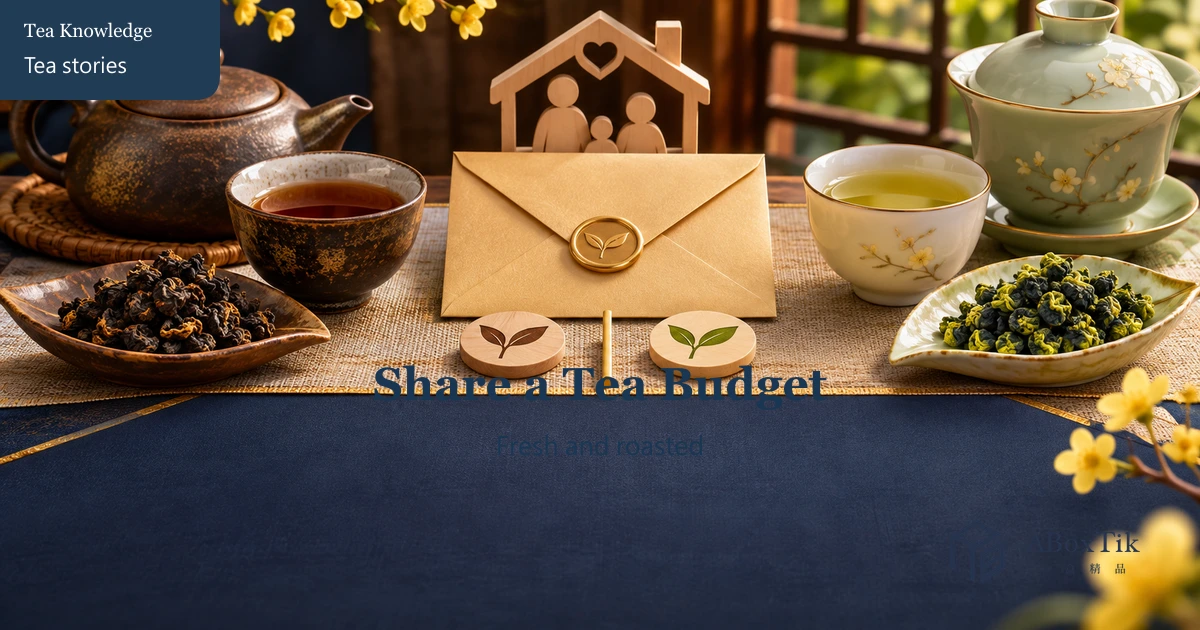
A shared tea budget does not require anyone to surrender to the household majority. Give everyday shared tea one envelope, then reserve a smaller personal envelope for fresh floral styles and another for roasted styles. The result is less “whose tin is blocking the cupboard?” and more “which tea fits tonight?”—a considerably friendlier use of arithmetic.
Create checkable fields
Record the date, version, product or batch, then add the quantities, materials, equipment, dimensions, languages and owners that matter. Mark each item confirmed, pending or not applicable; an empty cell should not quietly become approval. Beside every important fact, note whether it came from a package, supplier, authority or observation and when it was checked. A concise record can still show which question each fact answers.
Compare one point at a time
When a comparison is needed, hold the other conditions as steady as practical and change one variable. Put two or three options side by side and write their use, advantage, limitation and next action. Do not let the word best do all the work. If a trial, document or current specification is missing, list it as a check and arrange a small test or ask the responsible party before making a larger commitment.
Keep story and evidence separate
A photograph, name, flavour description or brand story can be a useful clue, but each supports a different conclusion. Origin, processing, safety, environmental, rights and partnership claims should return to applicable labels, records and primary sources. Keep the jurisdiction, date and conditions of official information visible. Evidence from one place, product or study should not be stretched to every case simply because the sentence sounds convenient.
Run a handover test
Give the sheet to someone who was not part of the earlier discussion. Ask that person to find the purpose, current version, completed items, next action and owner. If the answer requires three follow-up questions, simplify the order or remove duplication. For an exception, isolate it where appropriate, record what happened and send it to the right person rather than inventing a missing answer under time pressure. It is a useful note to your future self.
Questions that prevent confusion
Must every detail appear publicly? No. Readers need relevant product and use information; personal data, internal lists, quotes and undecided versions belong elsewhere. Can one photograph or phrase replace documentation? It may begin a question but rarely finishes it. Pause when food safety, law, copyright, testing, environmental claims or high-value collecting is involved and the available evidence is not enough.
Leave a clear next step
After the two-preference purchasing plan is complete, assign an owner and review time to every pending item, then archive outdated versions. Continue with a related ABoxTik guide and another practical article, checking current labels and actual needs. A checklist is not there to make tea bureaucratic; it lets the thoughtful details survive a busy day.
Put the sheet into a real situation
Start with one realistic example that contains no unnecessary personal data. Record the use case for household tea budget, the current version, the relevant object or batch and the decision that must actually be made. Give the two-preference purchasing plan to a colleague or household member and ask that person to complete one lookup or comparison without an explanation. Note where the reader pauses, which term needs clarification and which fact appears in the wrong place. This is not a test of the reader; it is a test of whether the record can work on a busy day.
In the second revision, keep necessary fields, remove repeated reminders and move the most error-prone step closer to the beginning. Every pending item should have a source, owner and review time. If there is no owner, do not quietly present the item as complete. Separate records from different batches, versions or conditions instead of combining them into one answer that looks neat but no longer describes a single case.
Write the judgement as repeatable steps
Use the first attempt as a baseline, change one condition in the second, and decide after that whether another comparison is useful. Put photographs, aromas, names and stories in an observation column. Put labels, documents, measurements and primary official information in an evidence column. Both columns can help, but neither should impersonate the other. When a result applies only to a place, date, vessel, product or trial condition, write that scope beside the conclusion rather than hiding it in a distant note.
Before closing the task, ask four questions. Which decision does this record support? Can the reader reach the original source? Does each limit sit near the related conclusion? Can another person repeat the process? When all four have an answer, archive the older version. It sounds like one extra step, yet it prevents many small episodes of “I thought you knew” and turns considerate service into useful detail.
One final check: keep the record with the real object
Before handover, storage or use, compare the sheet with the actual item once more. Check the name, version, quantity, date, language and owner. If information will be separated from its original package, keep the necessary details with the item in a form the next person can find. When a condition changes, update the master version and tell the person taking over. Finish with a short result and one next adjustment, so this experience becomes a useful starting point rather than a page everyone remembers seeing but nobody can find.
Turn preference into observable criteria
“Fresh” and “roasted” are useful starting words, not purchase specifications. Ask each person to name two or three details: floral or grain-like aroma, light or rounded body, brisk or soft finish, preferred brewing vessel and the number of cups usually made. TBRI sensory guidance separates appearance, liquor colour, aroma, taste and infused leaf; borrowing those categories keeps the conversation about what is actually enjoyed rather than who has the more sophisticated vocabulary.
| Question | Fresh-style preference | Roasted-style preference |
|---|---|---|
| Aroma | Floral, green, fresh fruit | Toasted grain, caramel, ripe fruit |
| Body | Light to medium | Medium to rounded |
| Usual moment | Daytime, lighter meals | After meals, cooler evenings |
| Trial note | Water temperature and aroma clarity | Roast comfort and finish |
These are prompts, not rules. A lightly roasted tea can still be floral, and a deeply aromatic tea is not required to feel heavy.
Use three envelopes, then adjust by actual cups
Start with a monthly or quarterly ceiling that the household is comfortable spending. One simple trial is 50% for a shared everyday tea, 25% for a fresh-style choice and 25% for a roasted-style choice. It is an example, not a sacred ratio. After four weeks, adjust using the number of brews finished, not the enthusiasm shown while shopping. If the shared tea disappears first, give it more room; if one personal tea remains nearly full, buy a smaller pack next time.
Compare like with like. Unit price per gram helps, but brewing dose and number of satisfying sessions matter too. Record package weight, price, grams per brew and approximate brews per pack. A higher price per gram can still fit the budget when the dose is smaller or the tea is reserved for weekends; a bargain is not economical if it becomes a fragrant cupboard tenant with permanent residency.
Buy a trial size before a household-size promise
- Choose one fresh and one roasted candidate in the smallest sensible pack.
- Brew with the same water, vessel and leaf-to-water basis, adjusting only what the tea genuinely needs.
- Each person records aroma, taste, finish and whether another cup is wanted.
- Mark “shared”, “personal” or “not this round”.
- Only then move the successful option into the regular budget.
Review dates keep the system gentle. Write when each pack was opened and schedule a short check before the next purchase. The aim is not perfectly equal spending every month; it is visible, agreed access to both preferences without duplicated impulse buys.
Once the tea budget has found its balance, the next choice can stay pleasantly unhurried: compare a premium tea gift, continue with another practical guide, or browse the latest boutique selections—no family budget meeting required.
Sources
TBRI — tea sensory evaluation · Ministry of Agriculture — fresh and roasted tea styles · Executive Yuan Consumer Protection — comparing unit prices