
Tea Knowledge
Employee Festival Tea Gifts: Balance, Practicality and Budget
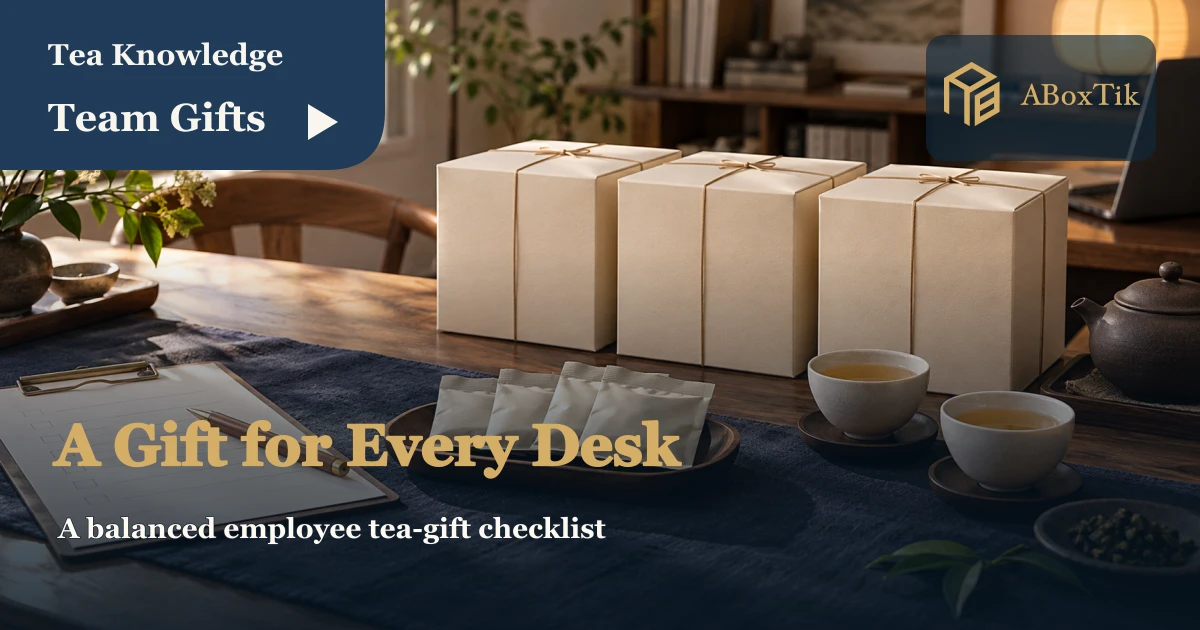
A thoughtful team gift begins before the boxes arrive. Count each person carefully, make the handover easy, and leave the recipient free to enjoy a cup at their own pace.
Employee tea gifts are easier to plan when a consistent standard of value and service comes before the flavor selection. Define who is included, confirm the quantity and total budget, then choose a format people can actually use. Finally, organize cards, delivery and collection records. Fairness does not require everyone to enjoy the same taste, and usefulness does not grow automatically with the size of the box.
The organizer often has two questions running at once: have we missed anyone, and are we still within budget? A single working list can separate confirmed recipients, pending replies and justified spare gifts. It is a calmer companion than five spreadsheets all called final. The corporate gift-selection guide covers the wider framework; this article focuses on a seasonal gift shared across one team.
Employee tea gifts: what should stay consistent?
Agree first on the budget range per recipient, presentation standard, information supplied and collection experience. Then decide whether a small choice of teas would be helpful. If someone does not drink tea, ask whether they want the gift and what alternative arrangement could work, with the project owner confirming the decision. A preference should not become an awkward exception that the spreadsheet refuses to accommodate.
Two similarly valued options may be more considerate than ten combinations that nobody can reconcile. If one format is chosen for everyone, provide clear flavor and ingredient information and a person to contact. The guide to giving tea helps define the gesture. The mixed tea-bag gift-box guide is useful when deciding whether variety would serve the recipients or simply complicate distribution.
Give the recipient list a version before giving it a total
Keep the fields needed for the project: a recipient reference, department or location, delivery method, confirmation status and collection record. Ask one owner to maintain the working version and record the date and reason for changes. Check that office collection and a later home-delivery request have not created two entries for the same person. The quantity-planning guide offers a broader approach to lists and spares.
Here is an illustrative planning example, rather than a recommended percentage: 48 confirmed gifts, two pending replies and two justified spares would mean an upper limit of 52 if every item were approved. Narrow the figure once replies arrive. Record what the spares are for and where unopened gifts will be kept. “A few extra to feel safe” is understandable, but each extra should have a reason before it acquires a place in the budget.
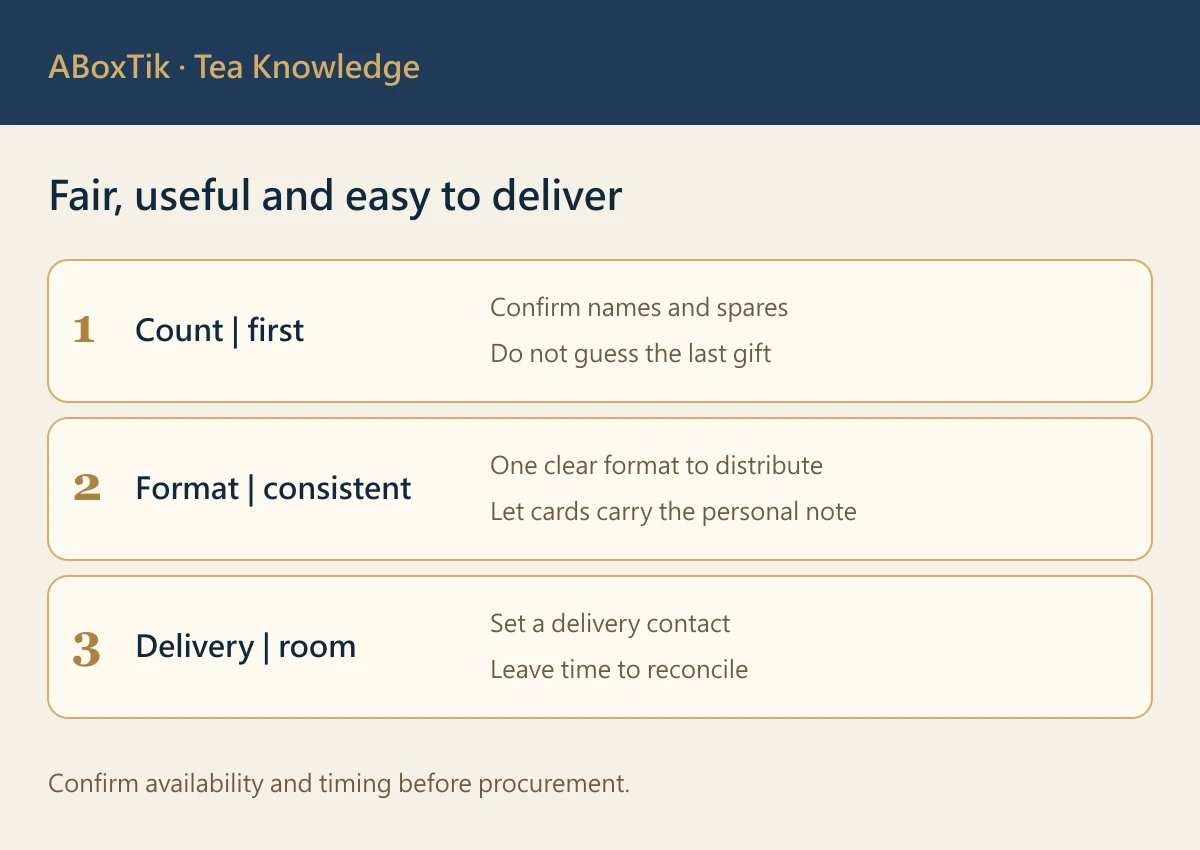
Put the per-person budget back into the whole project
Separate the tea gifts, cards or customization, transport and outer cartons. Check whether quoted prices already include taxes and relevant services; do not add an included cost twice. Mark unknown charges as awaiting a quote. When comparing suppliers, align quantities, net contents, presentation and delivery locations. A total that includes shipping cannot be compared fairly with one that leaves it for a later invoice.
The corporate tea-gift budget guide provides fuller cost context. For this project, leave six clear fields: target cost per gift, confirmed quantity, pending quantity, one-off costs, delivery costs and approved total. Ask a second colleague to check units as well as arithmetic. A gift box, an inner tea box and an individual bag are different units. Discovering that before ordering is more relaxing than practicing mental arithmetic over the final invoice.
Choose a format that fits an ordinary workday
For office use, check access to suitable hot water, familiar cups and a way to remove the leaves or bag. Include cleanup in the decision. Loose leaf can suit an established tea drinker with an infuser; whole-leaf tea bags reduce the measuring step. The steeping-time guide helps explain adjustments, while the instructions for the chosen product remain the starting point for each cup.
Do not assign flavors by seniority, age or gender. Ask whether someone prefers fresh or roasted notes, or would simply appreciate fewer choices. The fresh and roasted tea comparison and aroma guide can help make preferences easier to describe. A short usable brewing note is more helpful than a complete manufacturing process squeezed into tiny type. The recipient should be able to begin without studying the entire history of oolong.
Walk through delivery before distribution day
At one location, confirm the receiving point, temporary storage and arrangements for collection by another person. For multiple locations, keep carton counts, named receiving contacts and collection windows separate. On arrival, check items, quantities and packaging condition before putting gifts in the collection area. Use the same version for cards and the recipient list so a carefully chosen gift does not accidentally travel home with somebody else’s message.
Customization creates dependencies: tea selection, artwork, sample review, wording approval and dispatch confirmation belong in a workable sequence. Use the custom gift-box timeline for background, and the brand-placement guide when discussing cards or packaging. Confirm the actual service, lead time and quantity in the current supplier response. Keep that confirmed response with the handover list, so the next person can follow the same plan.
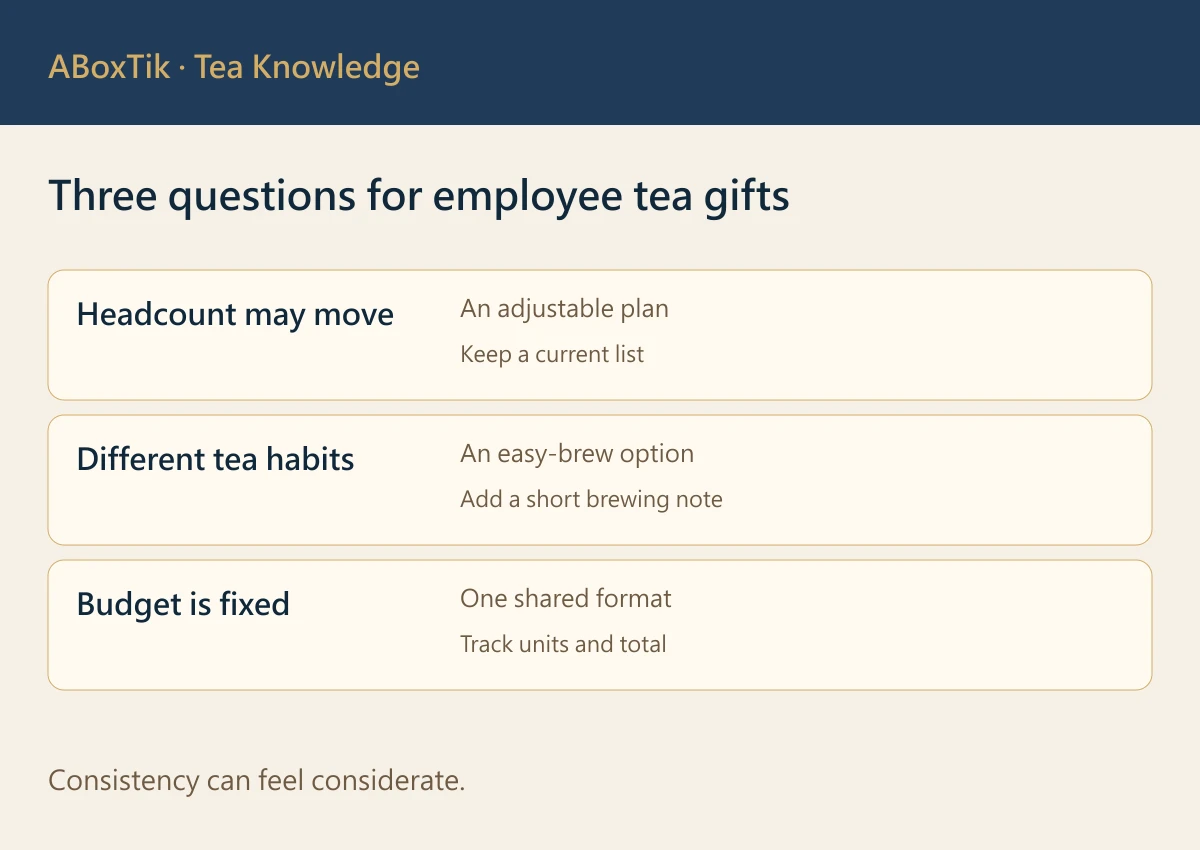
Finish with a count and a useful question
First reconcile the gifts: collected, waiting, returned and spare quantities should account for the actual delivery. Someone who was absent has not necessarily rejected the gift. Keep their packaging intact and agree on another handover. Second, make the storage instructions easy to find: follow the product directions and keep tea dry, away from light, heat and strong smells. The tea-storage guide can support that small but practical detail.
For feedback, ask one or two concrete questions: were the directions clear, and would tea bags or fewer flavor options work better next time? That is more useful than asking colleagues to award full marks for gratitude. Save the answer for the next purchase rather than turning it into another meeting. The Taiwanese tea introduction and ABoxTik story can remain optional reading for people who want to explore beyond the first cup.
Follow ABoxTik | Count every gift and think of the person receiving it.
Put fairness in the details and ease in the handover
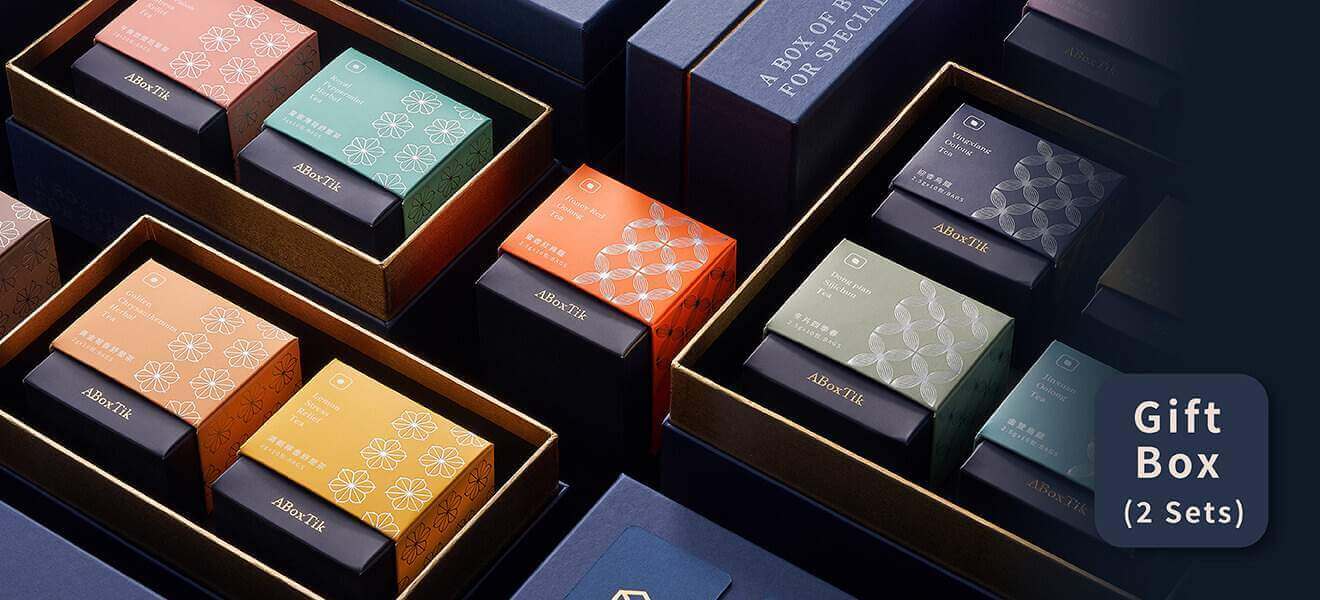
A balanced employee tea gift starts with a clear scope, a reasoned quantity and a delivery plan that can be completed. Explore the two-box tea-bag gift set for a smaller selection, or the Classic Taiwanese Tea four-box set when more flavor choices would be welcome. Confirm contents, specifications and services against the current product information and written quote.
Begin with three columns on a blank page: who receives it, how it will be used and how it will reach them. Once those are clear, let the tea selection follow. The better the preparation, the more naturally the final handover can feel like a simple seasonal greeting.
Related reading
- Gift quantities: separate the main list and spares.
- Corporate tea-gift budgets: align cost boundaries.
- Two-box tea-bag gift set: choose for real everyday use.
Sources
Sources checked 15 October 2026.