
Tea Knowledge
Corporate Tea Gift Approval Proposal: Put Budget and Options on One Page
A corporate tea gift approval proposal should put the purpose, quantity, comparable totals, recommendation and approval conditions on one readable page. It gives a manager a bounded decision and gives the person arranging the gifts a practical record to follow.
Below are a copyable request and a complete three-option calculation. Start by separating approval in principle from authority to order. Then turn “a nice gift” into recipient needs, confirmed specifications and a clear next step. A tea box deserves thoughtful planning; it need not acquire its own museum of attachments.
Start the corporate tea gift approval proposal with the decision
Put the request in the opening sentence: approve Option B, within a stated total cap, subject to the checks listed below. A manager should not have to reach attachment eight to discover that the document needs a decision. Describe the occasion, recipient group, quantity, deadline and accountable owner, then make the requested authority explicit.
Approval to explore an option is different from approval to place an order against a confirmed quotation. If supplier details are incomplete, request approval in principle and name the conditions that must be met before buying. A friendly “looks good” should not have to carry the responsibilities of a blank cheque.
Use the corporate tea gift RFQ template when supplier questions still need answers. Use the gift decision priorities guide when colleagues have not agreed on the requirements. This page handles the next task: making the internal approval request readable.
Five fields make a one-page gift proposal useful
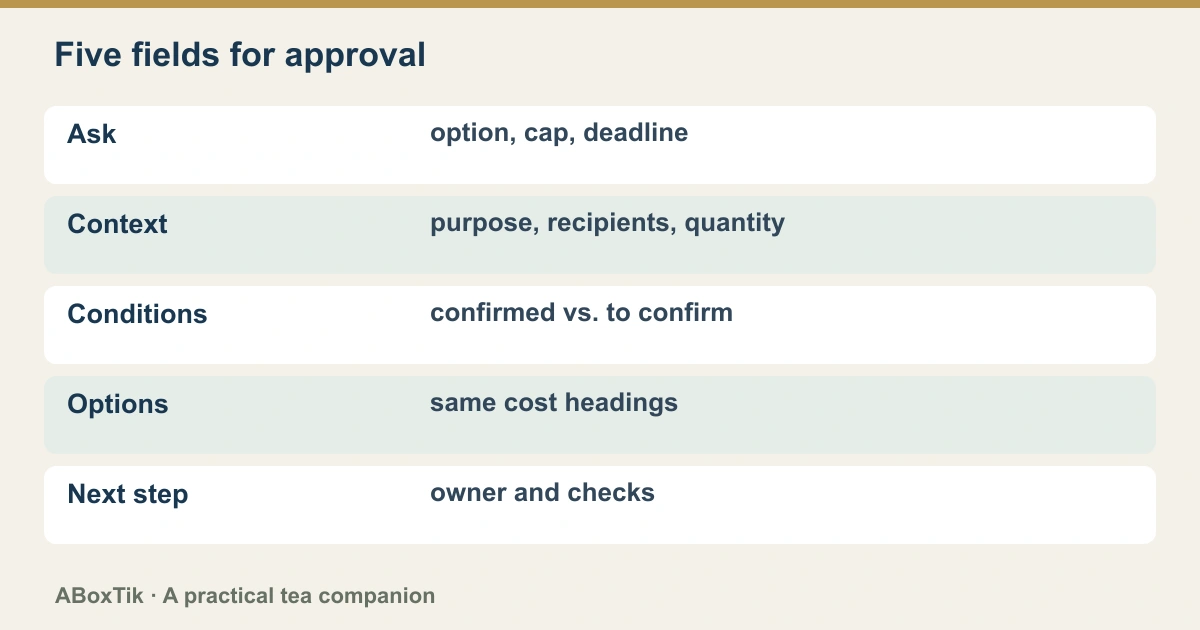
The first field is the approval requested: option, cap and conditions. The second describes the purpose, recipient group and quantity, without circulating an unnecessary personal mailing list. The third records common requirements such as the desired receipt date, drinking format and budget ceiling. The fourth compares options on the same cost basis. The fifth gives a recommendation, an owner and a date for the remaining checks.
Keep confirmed facts separate from estimates. Include the quotation date, currency, tax treatment and validity where available. If a field is unknown, say what needs checking and who will check it. A reassuring adjective cannot do the work of a missing delivery date, however politely it is written.
Use your organisation’s existing form if it has one; these fields can fit inside it. For the wider allocation question, the corporate tea gift budget guide covers budget planning. Here, the aim is to make this particular choice clear enough to approve and trace later.
Compare three options using the same cost headings
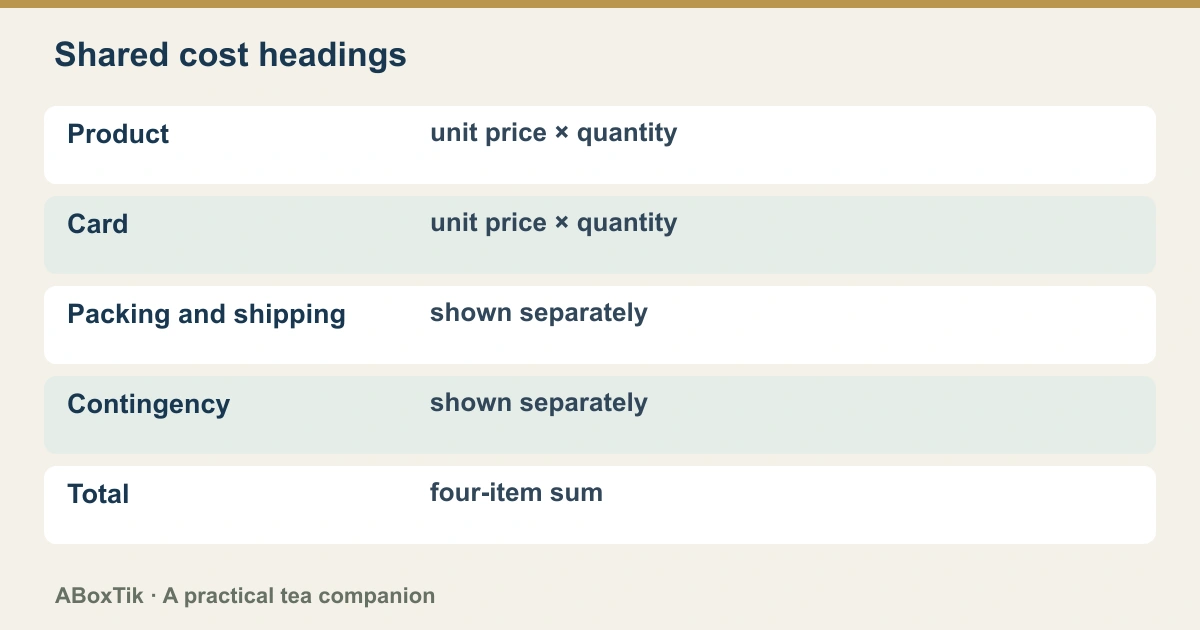
The illustration below assumes 60 gifts and uses hypothetical New Taiwan dollar amounts throughout. None of the options corresponds to a named ABoxTik product. It is a calculation exercise, not a quotation. Separate the product, cards, packing and shipping, then show any unspent contingency so the approver can distinguish an order cost from a requested budget ceiling.
| Cost heading, NT$ | Option A | Option B | Option C |
|---|---|---|---|
| Product ×60 | 720×60 = 43,200 | 900×60 = 54,000 | 1,150×60 = 69,000 |
| Card ×60 | 20×60 = 1,200 | 20×60 = 1,200 | 25×60 = 1,500 |
| Packing and shipping | 2,000 | 2,500 | 3,000 |
| Contingency | 1,000 | 1,300 | 1,500 |
| Total cap | 47,400 | 59,000 | 75,000 |
For a real comparison, add whether tax is included, the validity date and any unresolved charge. Do not charge for packaging twice if it is already included in the product price. Mark estimated shipping as estimated. Contingency is a reserved allowance within the cap, not a supplier fee and not automatic permission to spend the balance.
Write a selection reason someone can check
“A lovely gift” is pleasant, but it does not explain a choice. Try: “Recipients mainly drink at the office, so compare tea-bag format, contents per box and ease of preparation; confirm the available blends before ordering.” This connects a recipient need to observable conditions and a next step. It asks less mind-reading of everyone involved.
When the product direction is unsettled, use the seven questions for choosing a tea gift box. For current specification examples, the two-selection tea-bag gift box has two groups of ten bags, twenty in total. Classic Taiwan Tea has four groups, forty bags in total. Check each page’s choices and contents rather than treating “two” and “four” as price labels.
Put the confirmed differences into the recommendation and describe the trade-off against another viable option. A higher price does not explain its own value. If the reason is still unclear, keep that option as an alternative while the missing information is gathered.
Copyable corporate tea gift approval proposal template
Replace the bracketed fields with real information. Put the comparison table after the options summary, and keep quotations and detailed specifications in dated attachments. The main page should still work when read on its own.
Subject: Request approval for tea gift Option [A/B/C] for [occasion or purpose].
Purpose and recipients: Gifts for [recipient group], quantity [number], to be [received/distributed—state which] by [date].
Common requirements: Total cap [currency and amount]; essential conditions [contents, use, presentation]. Confirmed [facts and evidence date]. Still to confirm [items].
Options summary: A [total and trade-off]; B [total and trade-off]; C [total and trade-off]. All use the same quantity, tax and delivery basis.
Recommendation: Choose [option] because [verified conditions that meet this occasion’s needs]. The accepted trade-off is [difference against another option].
Approval requested: Approve [further quotation work/purchase against a confirmed quotation—choose one], up to [cap]. Do not order until [conditions] are confirmed.
Owner and change control: [Owner] will confirm [product, quotation, stock and delivery conditions] by [date]. A cap increase or material change to approved requirements returns through the organisation’s approval process. Attachments [title, version and date].
The corporate tea gift approval proposal template records what was agreed. It can be brief without becoming cryptic. “Please approve” is a request; the details above make it a request somebody can responsibly answer.
After approval, confirm before assumptions reach checkout
First, pass the approved option, quantity, cap and conditions to one accountable contact. Next, confirm the current product contents, price, available quantity, receipt arrangements and timing. Check that the confirmed offer still fits the approval. Then retain the final quotation or order version so later reconciliation refers to the same information.
For an enquiry, use the contact page with the purpose, quantity, desired date and budget. Distinguish the date goods should arrive from the date gifts will be distributed. State single- or multiple-location needs as requirements to discuss, rather than assuming any service has already been agreed.
Recheck the four-selection classic tea specifications when classic tea choices matter, or the two-selection gift box options for the relevant combination. Checking the selection menus and total before ordering is considerably calmer than looking for a missing tea choice in an old email chain.
Handle a returned proposal or changed assumption
If the response is “too expensive,” clarify whether the concern is the overall total or the amount per recipient. If it is “make it more distinctive,” ask for a condition that can be compared. Translate that feedback into a change to quantity, contents, presentation or timing, then update the affected rows. You do not need to rewrite the entire document every time someone changes an adjective.
When quantity, price or timing changes, recalculate the relevant costs and date the new version. An approval for sixty gifts should not silently become a different quantity under the old heading. Follow the organisation’s existing authority and process for changes. A gift may contain a pleasant surprise; the accounts should not.
Common questions about a one-page approval request
Does a corporate tea gift approval proposal need three options? No. Three is a convenient editorial example for showing trade-offs. If only two viable choices meet the essential requirements, explain the screening and compare those. An intentionally unsuitable third option adds paperwork rather than clarity.
Can it go forward without a final quotation? It can request approval in principle, with estimates and pre-order conditions clearly identified. That keeps an early direction decision from being mistaken for authority to buy at an unconfirmed price.
What if every specification will not fit? Keep the decision, cost summary and material constraints on the main page. Put details in labelled, dated attachments. If the reader still cannot tell what needs approval, shorten the background and move the request to the beginning.
A corporate tea gift approval proposal is most useful when it records a clear decision. Keep the common requirements, comparable costs and owner together, and the buying process can move forward on the same information. Start with the field that is still missing; a calmer approval often begins with one clearer sentence.
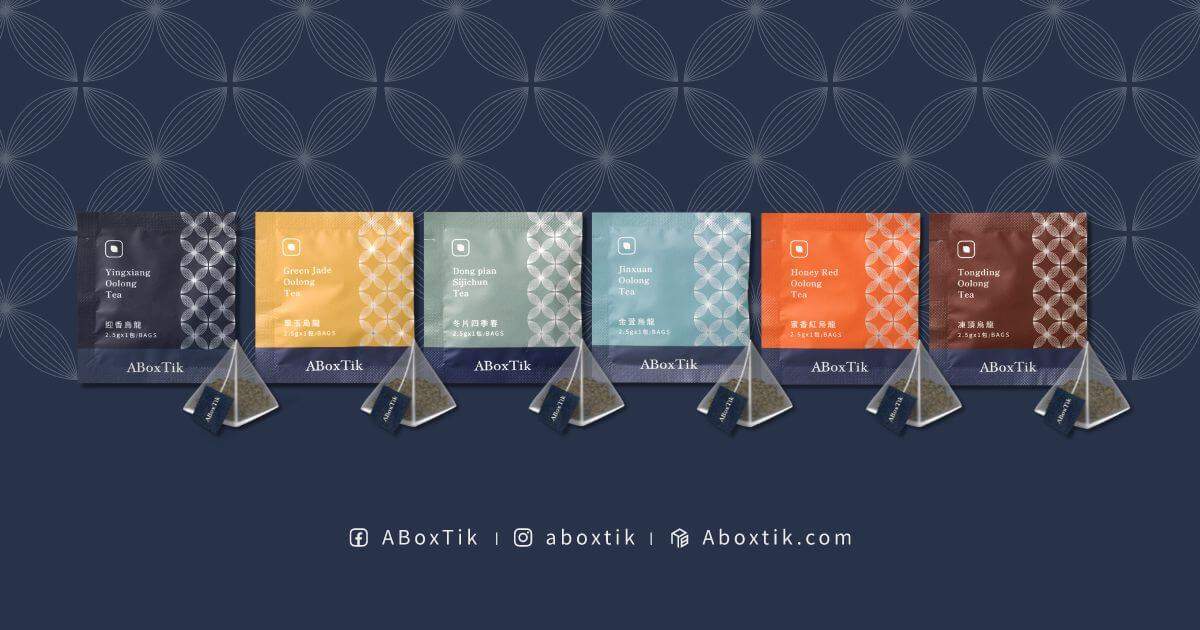
Once the one-page decision is clear, browse premium tea gifts, further reading, and latest selections at an easy pace. Tea gifts need not take the microphone.