
Tea Knowledge
Taiwan Tea Weight Units: Catty, Liang and Grams Explained
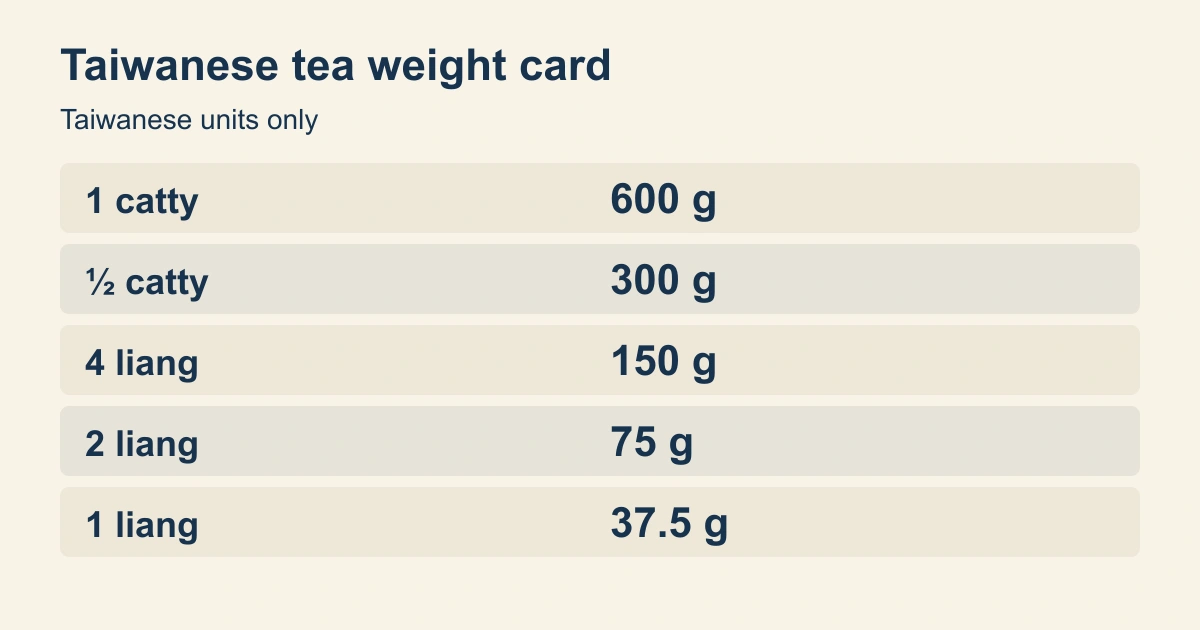
Taiwan tea weight units start with a few handy figures: one Taiwanese catty, or tai jin, is 600g and 16 Taiwanese liang; half a Taiwanese catty is 300g; four Taiwanese liang are 150g; one Taiwanese liang is 37.5g. If a listing says only jin or catty, check which system it uses: the mainland Chinese market jin is 500g.
A simple tea purchase can suddenly come with a surprising amount of arithmetic. If the different labels have caused a second look, that is entirely understandable. Keep the table nearby and let memory take the afternoon off.
Find the net dry contents, convert them to grams and compare the price per 100g. With those three small steps settled, there is more room to enjoy choosing the tea itself. The calculator can help with the figures; favourite flavours remain a much nicer decision to make.
First, get to know the catty on the label
Taiwan’s Bureau of Standards, Metrology and Inspection gives the conversion as 600g for a Taiwanese catty and 37.5g for a Taiwanese liang. Sixteen of those liang make one Taiwanese catty. The mainland Chinese market jin is 500g, so the English word catty and the Chinese word jin do not describe one universal pack weight.
Two products both described as one catty could therefore differ by 100g if they use those different systems. That difference says nothing about the flavour or grade of the tea, and the size of the outer box cannot resolve it. For a cross-border purchase, a simple question helps: what is the net dry tea weight in grams? Asking the seller to confirm saves a little guesswork and makes the next step more comfortable.
All traditional units in the following table are Taiwanese units. In particular, four liang equal 150g only when liang means the Taiwanese unit used here. If a product already specifies grams, use that stated net weight for the rest of the comparison.
| Taiwanese unit | Taiwanese liang | Grams |
|---|---|---|
| 1 catty / tai jin | 16 | 600 g |
| Half a catty | 8 | 300 g |
| Quarter of a catty | 4 | 150 g |
| 2 liang | 2 | 75 g |
| 1 liang | 1 | 37.5 g |
Keep the unit nearby and spare a little guesswork
A calculator is welcome to help, and the unit should come along too. Multiply Taiwanese catty by 600 to find grams; multiply Taiwanese liang by 37.5. For the reverse, divide the grams by 600 or 37.5 respectively. A few extra letters beside a number can save the next shopping trip from becoming a small detective story.
For example, 150g divided by 37.5 gives four Taiwanese liang. A 300g pack divided by 600 is half a Taiwanese catty. A set containing two separate 150g tea packs therefore contains 300g of tea in total. If the description says only two tins, find the net contents of each before adding them together. The tins can look after the tea; the grams can explain the quantity.
Tea style and pack size are separate decisions. The Taiwanese tea selection guide helps distinguish floral, roasted and ripe-fruit directions. Once a style is chosen, bring the actual pack sizes back to this conversion table. It is easier to compare a few relevant teas than every weight on the shelf.
A lovely box still needs a look inside
A handsome gift box can feel reassuringly substantial in the hand. For the tea calculation, give the dry contents their own space: leave out the tin, box, carrier bag and shipping materials. If only shipping weight is visible, look for a contents section or ask the seller for the grams of tea in each selected pack. There is no need to solve a missing specification alone.
Record multi-pack products in two parts: grams per pack and number of packs. A description such as two packs of 150g is easier to compare than a two-tin gift set without further detail. With mixed teas, retain the weight of each variety as well as the total, so that two similarly sized gift boxes are not mistaken for identical contents.
Presentation, service and the pleasure of receiving a thoughtful gift still deserve consideration. Settle the tea quantity first, then see how the complete gift fits the occasion and budget. The premium tea price and value guide can help with that wider choice at an unhurried pace.
Price per 100g gives both packs common ground
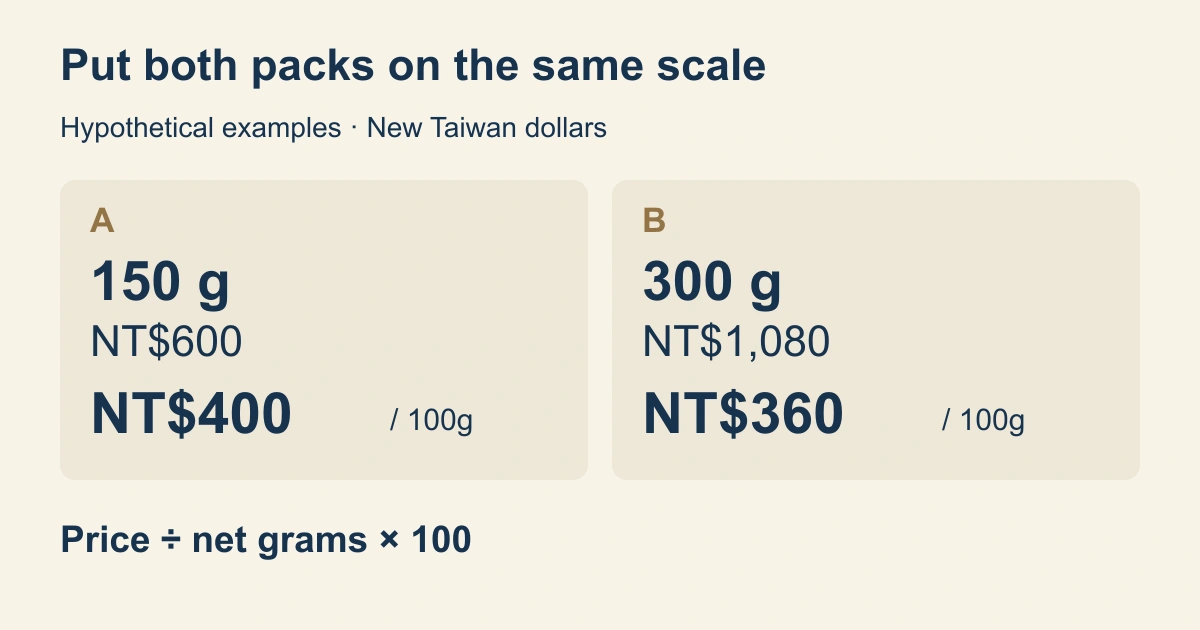
Price per 100g = price on a consistent basis ÷ net dry contents in grams × 100. Here is a hypothetical example, with both amounts in New Taiwan dollars rather than live shop prices. Pack A contains 150g for NT$600: 600 ÷ 150 × 100 = NT$400 per 100g. Pack B contains 300g for NT$1,080: 1,080 ÷ 300 × 100 = NT$360 per 100g.
This is a good point to pause for a sip: Pack B costs more altogether and less per 100g. Both figures can be right. The calculation answers the weight-price question only. Different tea types, processing, flavours and packaging can still lead to different choices, while a practical quantity leaves enough room to enjoy the tea regularly. Treat unit price as a helpful companion, then consider whether this is a flavour worth opening again tomorrow.
| Hypothetical pack | Illustrative price | Per 100g |
|---|---|---|
| A: 150 g | NT$600 | NT$400 |
| B: 300 g | NT$1,080 | NT$360 |
Use the same currency and discount basis for both entries. Keep shipping in a separate column if destinations differ, rather than treating delivery costs as a tea characteristic. When comparing currencies, first convert both prices into a common currency using the same reference time, then apply the formula.
Count the bags, then check what each contains
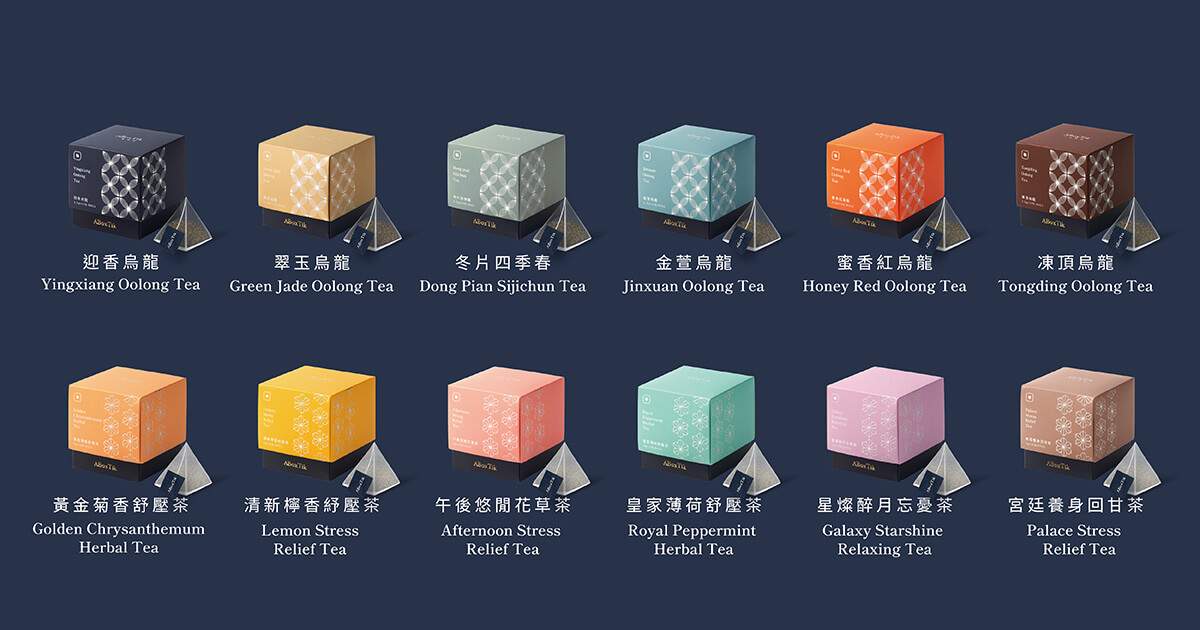
After counting the bags, there is one more small detail to check: grams per bag. In ABoxTik’s classic tea specification, each bag contains 2.5g and each selection includes ten bags, or 25g. The four-selection classic tea gift set contains 40 bags, giving 100g of dry tea at that specification. Keep the count and weight together for an easier return visit.
The two-selection tea bag gift set allows classic tea or herbal selections. Classic tea bags contain 2.5g each; herbal bags contain 2g each, with ten bags per selection. Two classic selections give 50g; one classic and one herbal selection give 45g; two herbal selections give 40g. The bag count stays the same while the dry contents change with the combination.
Those figures describe dry contents, rather than the weight of the prepared drink. Loose tea and tea bags may also be used differently even after their prices are converted to the same weight basis. The loose-leaf and tea bag cost guide takes the next step into use. To estimate how long a box will last, use the tea box duration guide with personal quantities and frequency.
A small shopping note, a favour to the next visit
Leave a small kindness for the next shopping trip: keep the product name, net contents per pack, pack count, price in a common currency and price per 100g on one line. Note the chosen varieties in a mixed gift. A photo of the box is handy; a few details beside it make reordering much less mysterious.
For instance, a useful entry might read: classic tea bags; 2.5g each; 40 bags; price to be filled in for the selected combination; total 100g. That is easier to reuse than a photograph of the outer box alone. Complete one product’s row before moving to the next, especially when price and weight appear in different parts of a page.
For a gift, the ABoxTik tea and pack comparison can help choose a flavour before checking the figures. Then there is time for the thoughtful part: does the recipient enjoy a lighter cup, a floral aroma or a roasted note? Familiar little habits are often the best clues to a gift that feels personal.
A little help with the easy-to-miss details
Do four liang always mean 150g?
Four Taiwanese liang do: 4 × 37.5g = 150g. Check the stated grams when a seller uses another regional system. The word liang on its own is not enough for a cross-border comparison.
Can a 150ml tin hold 150g of tea?
Millilitres measure volume; grams measure mass. A tin’s 150ml capacity cannot be directly converted into 150g of tea. Leaf shape and how the tea fits inside also matter. Ask about a suitable capacity before ordering, so the tea does not arrive home before its accommodation is ready.
Is the lowest price per 100g the best choice?
Consider flavour, drinking frequency and storage plans as well. Unit price is one comparison tool; a practical pack is one that suits the way the tea will actually be used.
The figures are settled; choose a tea to enjoy
For tea bags, narrow the flavour choice first, then check grams per bag and the total count. ABoxTik’s classic teas and herbal selections have different dry-content specifications, so variety, quantity and weight belong together in the shopping note.
For loose tea, note the grams in the selected variation and use the same formula. Understanding one pack and finding a useful quantity is a good result for today. Put the calculator down, make a cup, and give the person who did the arithmetic a little care too.
The figures are settled, and the calculator deserves a tea break. Explore premium tea gifts, linger over more tea stories, or browse the latest selections for a cup that suits a familiar routine or someone on your mind.