
Tea Knowledge
From Herbal Infusions to Loose-Leaf Tea: Finding Familiar Aromas
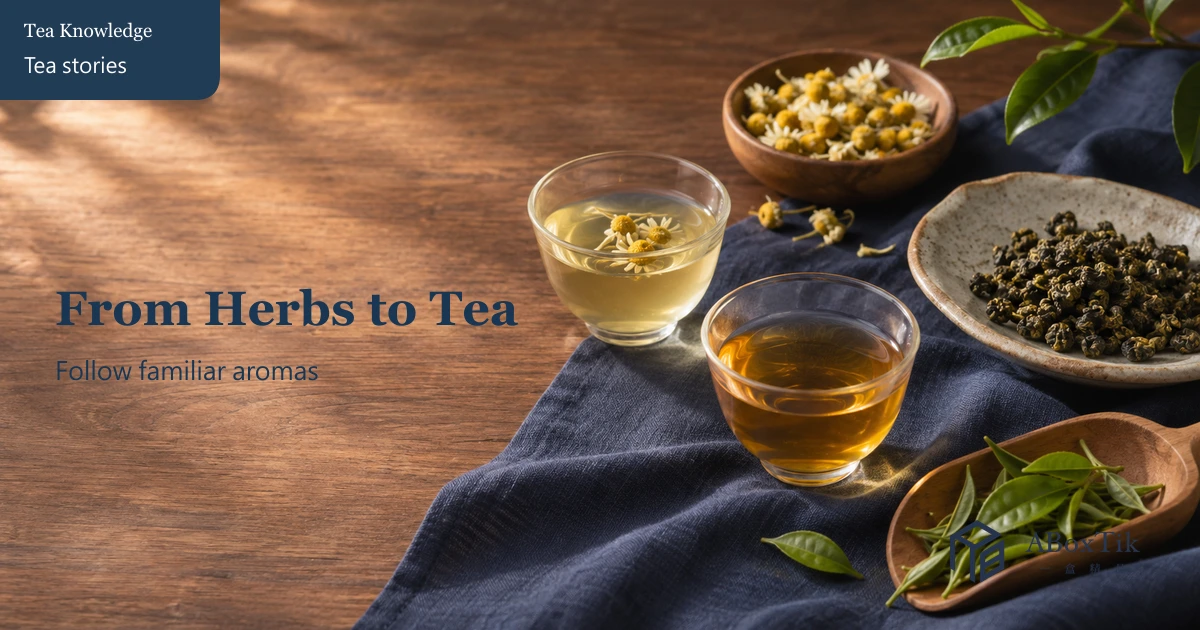
If you love the familiar scent of an herbal infusion, a first cup of loose-leaf tea need not feel like arriving in the wrong classroom. Write down the aromas you enjoy, look for a tea whose current description mentions a similar floral or fruity note, and start with a small package. You can keep enjoying your herbal favourites too; there is no graduation ceremony.
First, distinguish the drinks
An herbal infusion can contain flowers, leaves, fruit or other plants; check the ingredient list for the actual blend. Tea made from the tea plant can be processed as green, oolong or black tea. Flower-scented tea is tea that has absorbed floral aroma, and the finished product does not necessarily contain visible petals. A description of floral aroma can also refer to the tea itself rather than an added flower.
Turn a favourite aroma into a useful question
Think about a cup you already enjoy. Does it remind you of fresh flowers, ripe fruit, herbs or toasted grain? Do you prefer a pronounced fragrance with a light body, or a fuller cup? Two plain words are enough to start a conversation with a seller. The Taiwan tea flavour wheel groups aromas into families such as floral, fruity and roasted; use it as a shared vocabulary rather than an exam.
Three gentle routes to explore
For a fresh floral impression, look at current descriptions of lightly styled oolong or bao zhong and ask which available tea suits that preference. For a sweeter fruit impression, ask about an oolong or black tea described in those terms. If you enjoy a clearly floral herbal blend, explore the ingredients of a flower-scented tea before comparing it with tea without added flowers. Cultivar, processing, preparation and individual perception all shape aroma; no description guarantees the same experience in every cup.
Compare with a small tasting card
Read each package’s suggested amount, water, temperature and time. First prepare each tea as suggested. On a later comparison, record the conditions and keep the cups, tea-to-water amounts and serving temperature reasonably consistent where appropriate. Some teas need different preparation; keep those differences visible rather than forcing an identical method. Smell, sip and note aroma, taste, texture and one possible change for next time.
Plan around the ingredients
Tea from the tea plant generally contains caffeine. Herbal blends can contain other ingredients worth checking, depending on the person and the recipe. If caffeine is a concern, ask about the product and plan according to your own circumstances; consult a professional when needed. A pale colour or a floral scent does not establish that a drink is caffeine-free. For a gift, a simple question about whether the recipient enjoys tea can be a thoughtful start.
Questions that often come up
Is a stronger floral scent always better? No: a subtle cup and an expressive cup can both be enjoyable. Can a tea bag be used for practice? Yes. Record the amount per bag, the vessel and the time just as you would for loose leaves. Must herbal drinks be replaced entirely? Not at all. Different cups can have different places in the day.
Leave room for curiosity
Choose a small quantity, record the conditions and your own impressions, then decide whether another style is worth exploring. Flavour is not a test. “I would happily have another cup today” is a perfectly good first note.
Begin with a familiar cup and one change
If a light herbal infusion is part of your routine, keep the usual cup and time of day for the first comparison. Ask the seller about the current tea’s suggested amount, water and temperature, prepare a small serving as directed, and record the vessel and time. Separate two observations: what smells familiar, and what feels different when you sip. Tea may bring sweetness, bitterness, astringency or a different body alongside aroma. Plain words are enough; you do not need a polished tasting vocabulary before you begin.
If the first cup is stronger than expected, check the amount, water and time against the package. On another occasion change one condition, perhaps a shorter steep, while keeping the others similar. A useful note could say “the aroma stayed pleasant and the body suited me better,” or “the aroma became too faint; I preferred the first cup.” Both results make the next choice easier. A popular tea is not an assignment that must earn the same score from everyone.
Tell the seller what you like and what you do not
A practical question might be: “I usually enjoy a delicate floral aroma and prefer to avoid a strong roasted note. I use a mug and would like a small quantity. Which current teas are described this way, and what ingredients and preparation does each have?” If caffeine or an ingredient is a concern, state the purchasing requirement without sharing private medical details. Check the current product name, format, net weight, ingredients, batch and package directions. When comparing cost, note how much you expect to use per serving and keep packaging and delivery charges visible.
If the familiar aroma comes from actual flowers, ask what a scented tea contains and whether flowers remain in the finished product. If you want tea without added flowers, ask the seller to identify the current options. An aroma description and an ingredient list answer different questions; using both avoids an unnecessary guess. The same product name does not guarantee an identical impression from every batch, so keep the actual package and your own tasting notes together.
Two easy observations are enough to begin
On the first occasion, write the tea name, vessel, tea and water amounts and steeping time. Add one impression for the aroma, one for the first sip and one after the cup cools. On a second occasion use the same tea and vessel and adjust a single condition. If comparing another tea instead, record each tea’s own recommended preparation before trying a consistent setup. Weather, food and attention can influence what you notice; the card helps you choose, not judge another person’s palate.
A floral-infusion lover may discover a quieter aroma with a fuller tea texture, or may still prefer the original herbal cup. Either is a useful result. For a gift, ask about the recipient’s routine and equipment and include ingredient and preparation information. A small portion and a genuine choice make a first experiment feel welcoming.
Read three labels before choosing by aroma
Use three separate lines on a comparison card. First, copy the ingredient list: tea leaves, flowers, fruit pieces, flavourings or other declared ingredients. Second, copy the aroma language: floral, fruity, roasted or another sensory direction. Third, note the production description, such as a scented tea made by bringing tea and fragrant flowers together during processing. These lines can overlap, but they are not interchangeable. A tea may remind you of flowers without containing flowers; a scented tea may have absorbed floral aroma even when visible petals have been removed.
Taiwan’s Tea and Beverage Research Station describes the flavour wheel as an index that helps people move from broad impressions toward more specific words. Its wheel files also separate tea types and sensory families. Use those tools to ask a better question, not to promise that a package will deliver every word on the wheel. For a first purchase, choose one current product whose ingredients, format and brewing directions are clear, then compare your cup with the description at warm and cooler temperatures.
A small decision table keeps the transition gentle: if actual flowers or other botanicals matter, prioritise the ingredient list; if a familiar floral impression matters, compare aroma descriptions and a small sample; if convenience matters, choose the format that fits the vessel you already use. The best bridge is not the tea with the longest poetic paragraph. It is the one you can identify, prepare and evaluate without needing a detective hat before breakfast.
Explore next
Explore tasting notes and brewing conditions before choosing a tea. Tea tasting notes · Steeping time
Sources
- Taiwan Tea and Beverage Research Station: Fragrant flowering plants and scented tea
- Taiwan Tea and Beverage Research Station: Introduction to the Taiwan Specialty Tea Flavor Wheel
- Taiwan Tea and Beverage Research Station: Flavor Wheels for the Six Tea Types
Checked 12 November 2026.