
Tea Knowledge
A Tea Thank-You for a Neighbor, Sized with Care

A thoughtful question makes the next cup easier to choose.
For a neighbor who helped with a key, a parcel, a plant, or an unexpected home emergency, a small tea gift is usually most graceful when it feels easy to accept and easy to use. Match it to the favour, the relationship, and the household situation; add a short note; then let the thank-you end cleanly. The aim is appreciation, not a tiny diplomatic summit conducted in the hallway.
There is no fixed conversion rate between “watered my basil” and “one box of tea.” A neighbor may have watched a parcel once, fed a cat during a weekend away, received a delivery while you were late, lent a tool, or helped when a pipe chose an inconvenient moment to become expressive. The useful question is not “What does this favour cost?” It is “What gesture says thank you without making either household feel obliged?”
This article is for a low-pressure local thank-you. It differs from a gift for parents, a teacher, or a business partner because proximity changes the practical details: privacy, door-step timing, household use, and the possibility that both people will meet again beside the bins. A warm note and a modest, clearly described gift often do more work than a large gesture that asks the recipient to manage your gratitude.
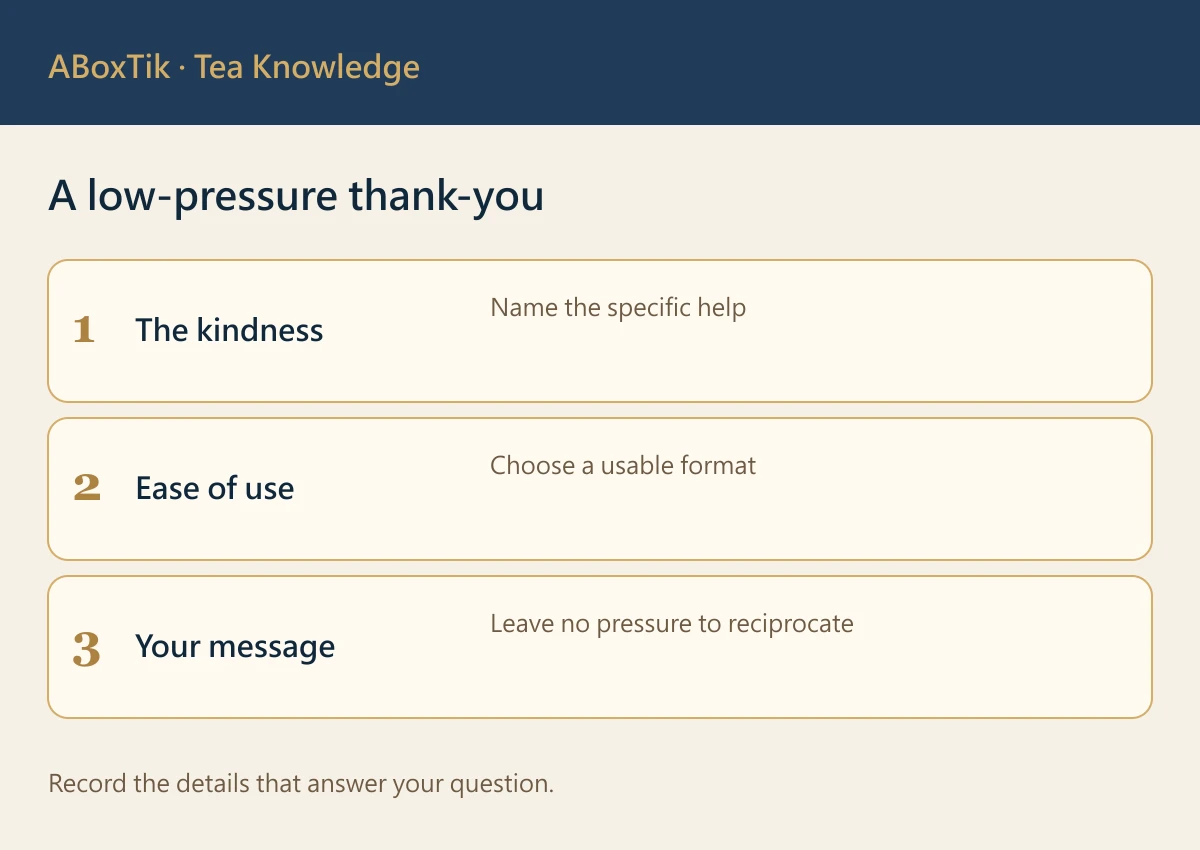
Start by naming the help plainly
Before choosing anything, describe the favour in one factual sentence: “They accepted a parcel while I was at work,” or “They checked the flat after the alarm sounded.” This keeps the gesture proportionate. It also prevents a common leap from one kind act to an imagined ongoing arrangement. Appreciation is welcome; assigning somebody a future role without asking is not.
| What happened | A proportionate response | What to avoid assuming |
|---|---|---|
| One-off parcel, key, or plant help | A brief card, a small shareable tea, or a sincere spoken thank-you. | That the neighbour drinks tea, wants a large gift, or will repeat the task. |
| Short emergency help | A thank-you note plus a modest gift if it suits the relationship; offer practical follow-up when needed. | That a gift replaces payment for professional work or repair costs. |
| Repeated informal help | Ask whether the arrangement remains comfortable; agree on boundaries before adding a gift. | That kindness means permanent availability. |
| Paid or skilled service | Pay or settle the agreed service first; add thanks only if appropriate. | That tea can substitute for a fee, invoice, or qualified assistance. |
The distinction matters. A small tea can say, “I noticed your kindness.” It should not say, “Please accept this instead of what we agreed,” or “Congratulations, you now run the building’s unofficial concierge desk.” If an electrician, sitter, cleaner, or other professional was hired, follow the agreed payment and communication channel. Gratitude can accompany a transaction; it should not quietly rewrite one.
The low-burden choice table
| Check | Ask yourself | A low-pressure choice |
|---|---|---|
| Relationship distance | Do we usually chat, only nod, or barely know each other? | Keep the gift and note as modest as the relationship is new. |
| Household use | Do I know they drink tea or share refreshments? | If not, choose something small, ask first, or use a card alone. |
| Privacy | Would they prefer a quiet handoff rather than attention in a corridor or group chat? | Use a sealed note and arrange a discreet time; do not post their help publicly without permission. |
| Delivery | Will someone be home, and is leaving food at a door appropriate? | Ask before leaving it; do not turn a thank-you into another parcel to manage. |
| Future help | Was this a one-time favour or an arrangement that needs a conversation? | Thank them, then separately ask what boundaries and contact method work. |
The table deliberately allows “only a card” as a successful answer. A gift is not a moral receipt. If drinking habits are unknown, food sensitivities may be relevant, or the neighbor has signalled they prefer no gifts, a handwritten thank-you can be the most considerate option. The tea does not get offended. It has never once filed a complaint with the building committee.
Quantity is about use, not theatre
Choose a quantity that a household can reasonably finish, share, or store. A small pack is often easier after a brief favour because it does not create storage, obligation, or a question about whether the sender spent too much. For a household you know well, a slightly larger shareable selection may fit a genuinely shared moment. Neither size proves more appreciation; it only changes the work required of the recipient.
Use what you know, not what you hope is true. If they have mentioned tea, ask what kind they enjoy or whether individually packed portions are convenient. If they have not, do not infer their taste from age, culture, household size, or the fact that they own a nice mug. A mug can be a mug. It is not a witness statement.
When a tea gift is appropriate, current product information should be clear: what the item is, the format, ingredients where relevant, and simple preparation guidance. Do not claim a tea will solve stress, improve sleep, impress guests, or guarantee a particular aroma. A thank-you becomes warmer when it does not arrive wearing a lab coat and a sales badge.
Four everyday situations
A parcel was accepted
Say thank you promptly. If the neighbour is at the door, a spoken thanks and a small note may be enough. If you add tea, give it after the parcel has been collected, rather than leaving a second item for them to receive on your behalf. The gift should reduce, not duplicate, the delivery work.
Plants or keys were watched
Return keys promptly and confirm that the arrangement is finished. A small tea and note can work if you know it will be welcome. Mention the specific help—“thank you for checking the plants while I was away”—rather than making it sound like they have accepted an ongoing caretaker position. If you may need help again, ask separately and accept an easy no.
An emergency interrupted their evening
First make sure any safety, repair, insurance, or professional obligations are properly handled. Then thank the neighbour for the immediate help. A gift may be appropriate, but it cannot settle costs or responsibility. The cleanest message is often: “Thank you for helping when things went sideways. We are taking care of the next steps.”
Help has become frequent
Repeated favours deserve a conversation before a bigger present. Ask whether the arrangement is still comfortable, what notice they need, and what they prefer in return. You may discover they would rather exchange contact details, borrow a tool in future, or simply keep things informal. A gift cannot reliably negotiate a boundary that words have avoided.
A card that does not overperform
Keep the message specific, short, and free of emotional accounting. Try: “Thank you for receiving the parcel on Tuesday. It made a difficult day much easier. Please enjoy this small tea gift if it suits you—no reply needed.” Or: “Thank you for checking the flat during the leak. We appreciate the help, and we are handling the repair from here.”
“No reply needed” can reduce pressure, but use it only when sincere. Do not use a note to ask for the next favour, collect compliments, or announce the value of the gift. A thank-you card has one job. Let it do that job well and go home.
Hand off with consent
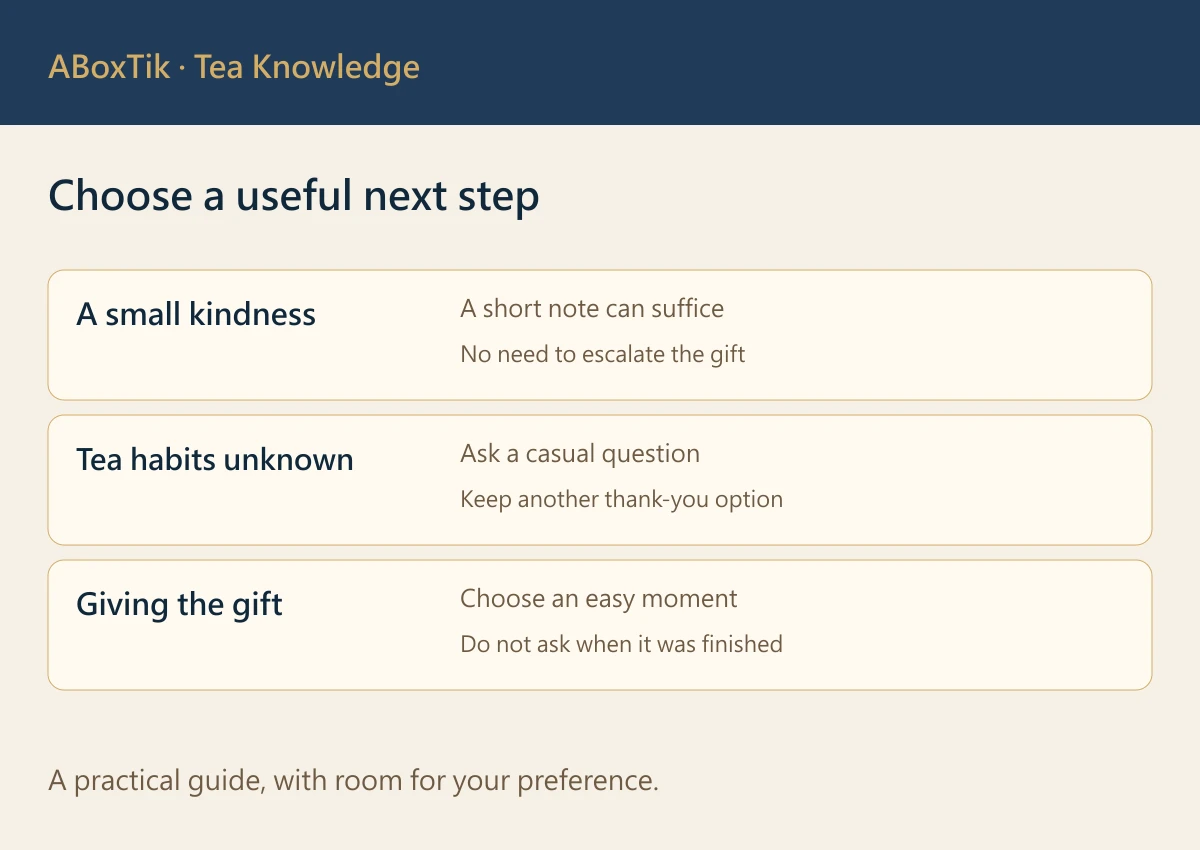
- Is tea welcome, or is a card better?
- Is the quantity easy for this actual household to use?
- Can I hand it over privately at a convenient time?
- Have I thanked the completed favour without assuming future help?
- If this was paid, skilled, or ongoing work, have I handled the proper arrangement first?
A neighborly thank-you is not a ranking of favours. It is a small acknowledgement that one household made another day easier. Choose a gesture that the other person can accept without fuss, say precisely what you appreciated, and leave enough room for the next friendly greeting to be just that: a greeting.

Related reading and tea choices
Sources
Sources checked 25 October 2026.