
Tea Knowledge
Tea Gifts for Partners: Shared Memories and a Personal Card
A tea gift for a partner can begin with “I remember” and end with “Shall we find a day?”
Tea gifts for partners work best when a shared memory meets a real drinking habit. Choose one moment you both recognise, connect it to a familiar flavour or useful format, and write a short card. The tea should be easy to enjoy; the note carries the part of the story that belongs to the two of you.
There is no need to wait for Valentine’s Day. A long breakfast, a train journey or ten unhurried minutes after dinner can provide a starting point. This guide turns that memory into practical choices, three example invitations and a small card worksheet, without requiring the gift to become a museum of the entire relationship.
Tea gifts for partners start with a scene you both know
Choose a scene before choosing a box: a window seat on a trip, the breakfast that ran into lunch, or a rainy evening when neither person hurried to fill the silence. Write where you were, what you did and one detail you still remember. A concrete moment gives the card a voice that a general declaration of appreciation cannot supply on its own.
Do not force the scene into a geographical tea match. A holiday in the hills does not automatically require high-mountain tea, and a seaside memory does not oblige the leaves to produce a wave. Borrow the mood—bright, quiet, warm or familiar—then check whether it fits the flavour your partner actually enjoys. Memory opens the conversation; their habits complete the choice.
Use the practical gift-selection questions to check tools and serving size. The guide to specific thank-you messages can help with wording. These are supporting tools, rather than a reason to combine birthday, wedding and New Year wishes into one crowded note.
Consider the cup before the size of the box
Picture where the gift will be opened and used. A partner who normally drinks from a mug may appreciate a removable tea bag. Someone who already enjoys weighing leaves and making several infusions may prefer loose leaf. Look at the cup that is used every day before imagining a new tea service; a gift should not quietly create an equipment-shopping assignment.
Choose quantity around frequency. An occasional drinker may enjoy a modest selection, while a daily tea routine may favour a familiar style. Variety becomes useful when the packets are clearly identified and easy to open. The mixed tea-bag selection guide can help compare formats, without turning the number of teas into a measure of affection.
Tea Research and Beverage Station storage guidance discusses the effects of light, moisture, temperature and surrounding odours. Keep the original sealed packets and their ingredient and storage information. Put the personal card outside them; opening every packet for an attractive photograph makes the gift harder to store. The tea-storage guide provides further context for its place at home.
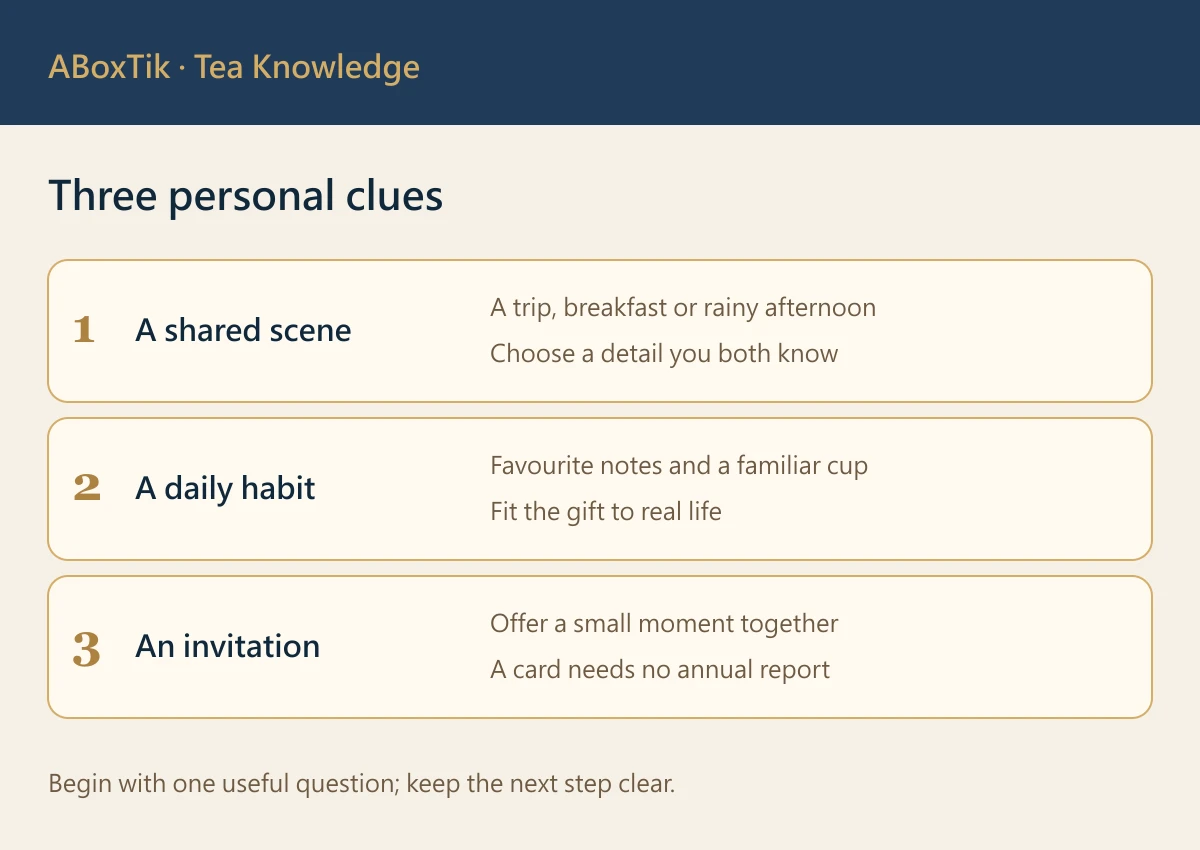
Three ways to connect a memory and a tea choice
For a shared breakfast memory, first ask whether your partner prefers a fresh floral direction, a fuller cup or a familiar roast. Then choose a format that works with the existing mug. A card might say: “I remembered the morning we talked until the café was closing. Shall we keep another slow breakfast for ourselves?” It offers something possible, rather than promising that a flavour will recreate a feeling.
For a quiet hill-country trip, start with a style your partner already likes. The fresh-versus-roasted tea guide helps describe the difference; the Green Jade Oolong page supplies information for one actual option. Let a small memory stay small: “I still think about the wind outside that window.” An evocative product name alone should not make the final decision.
For the end of a busy day, choose a dependable favourite or examine the current two-box tea-bag selection. If exploring together is part of the pleasure, look at the classic tea assortment. Confirm actual contents on the product pages. The invitation can be ordinary and specific: “After dinner, let’s finish the washing-up and keep ten minutes for us.”
Give the card three jobs
Let the first sentence recall a moment, the second explain the tea choice and the third offer a small shared activity. Read the draft aloud. If it sounds unlike anything you would normally say, remove the most impressive sentence first. A card is allowed to be tender without submitting an application for a literary prize.
| One shared scene | ____ |
|---|---|
| Why this tea fits their habits | ____ |
| A simple invitation | ____ |
| Where to find the tea name and directions | ____ |
Think about the setting in which the note will be read. A private joke may be lovely between two people and awkward beside colleagues or relatives. Keep the outer packaging comfortable to receive, and place intimate wording inside the card. For a long-distance gift, arrange a later tea call; an immediate response need not become another item in the parcel.
Make the first shared cup easy
If the gift includes time together, have two clean cups ready and offer a clear brewing starting point. Follow the directions for the actual tea. If your partner is busy, let the box wait. A tea gift does not need to trigger a full ceremony at the moment it is opened.
Different preferences can share a table. Make small servings, then adjust strength separately rather than deciding that both cups must agree. Ask each person for one clear aroma or texture impression; the aroma-note guide supplies vocabulary. Two answers to the same tea can become a pleasant conversation, rather than an error to correct.
Ask which part of the weekend is free before planning a long session. Put an anniversary date on the card, rather than allowing it to resemble a harvest year on the tea. The wedding tea-gift guide considers another shared occasion; here, keep the scale personal and suited to the way these two people actually spend time.
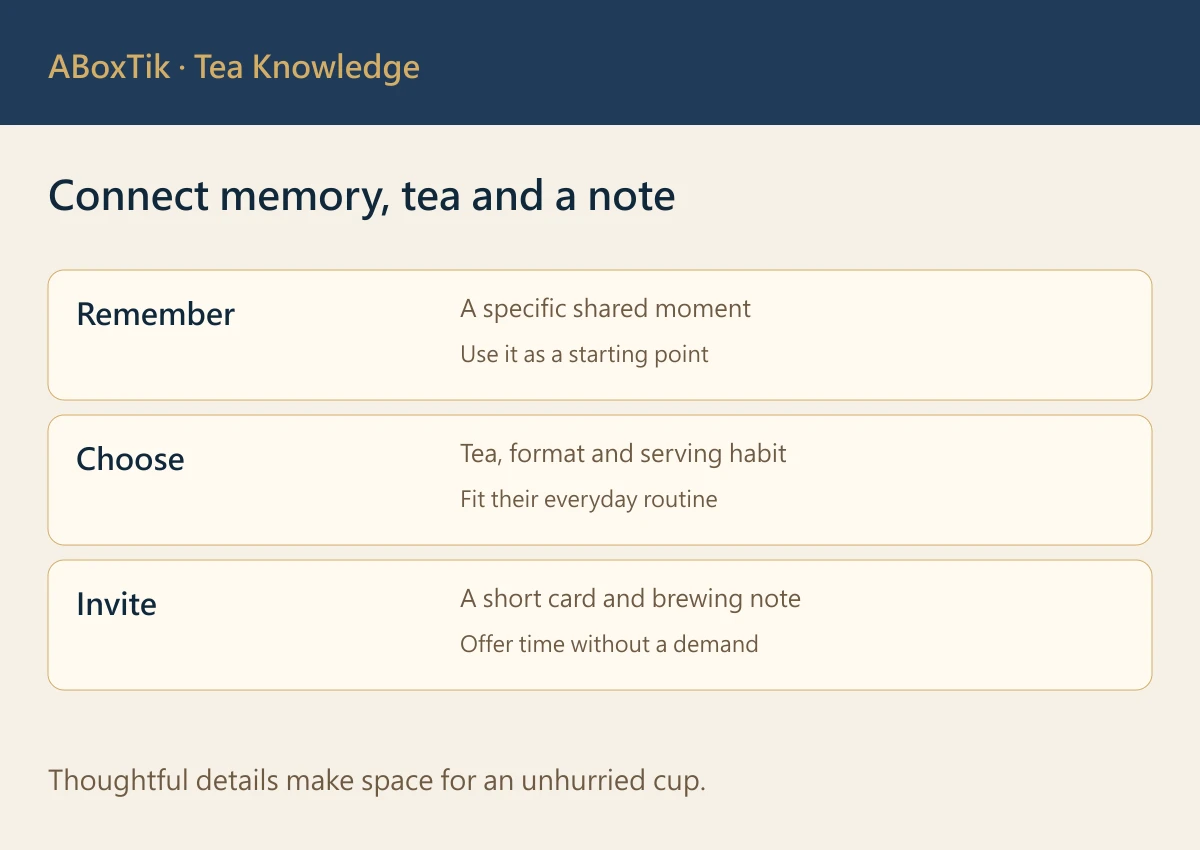
A final three-minute check
Check the tea, packet size and available tools; keep the original packaging intact; then read the name and date on the card once more. For delivery, confirm a workable address and receiving arrangement. Maintaining a surprise is less useful if the recipient must track a parcel they have never heard about.
Leave a longer brand story for a later conversation. The guide to Taiwanese tea’s places and craft offers context, but every region name need not fit on the card. The recipient should understand why this tea was chosen and how to begin, before being asked to absorb a complete tea history.
Finally, ask whether the plan is easy for the recipient as well as satisfying for the giver. If enjoying it requires buying tools, clearing a large stretch of time or publicly reporting a reaction, simplify it. A usable tea, a recognisable memory and an invitation that can be accepted freely give the gesture a comfortable place in everyday life.

ABoxTik makes room for the everyday moments a tea gift can hold.
Leave a shared memory for the next cup
Choose one scene, check the tea against a real habit, and write three sentences: a memory, a practical reason for the choice and something small to do together. That is enough structure to let a personal voice come through.
If two options remain equally appealing, invite your partner to choose. A surprise can survive a little collaboration. Making room for the way each person likes to drink is a quiet form of closeness too.
Related reading
Sources
Sources checked 17 October 2026.