
Tea Knowledge
Tea for Travel: Lightweight Gear and a Tea Packing Checklist

A familiar cup needs only a little room in the bag. Keep the tea dry, the kit simple, and a small pause ready for a different morning.
Tea for travel does not require packing a whole tea table. Portion dry tea for the cups you actually expect to drink, protect it from moisture and strong smells, then bring one vessel that makes sense where you are going. The useful question is not “what gear is impressive?” but “what lets this cup stay dry, brewable and easy to clear away?”
Use our guide to tea types to choose a flavour direction. For an easier packing format, see whole-leaf tea bags and the practical context in our pyramid tea bag guide. Check official destination guidance before deciding what may enter your destination.
Choose the cup you want before you pack the tea
Are you planning one quick cup each morning, or a few quiet sessions in a hotel room? The first case suits individually wrapped bags or measured portions. The second may suit a small amount of loose leaf and one simple filter. Let the itinerary set the scale; luggage has enough opinions already. For different Taiwanese tea directions, use the current details on the Classic Taiwanese Tea collection as a starting point.
Three jobs are enough for lightweight tea gear
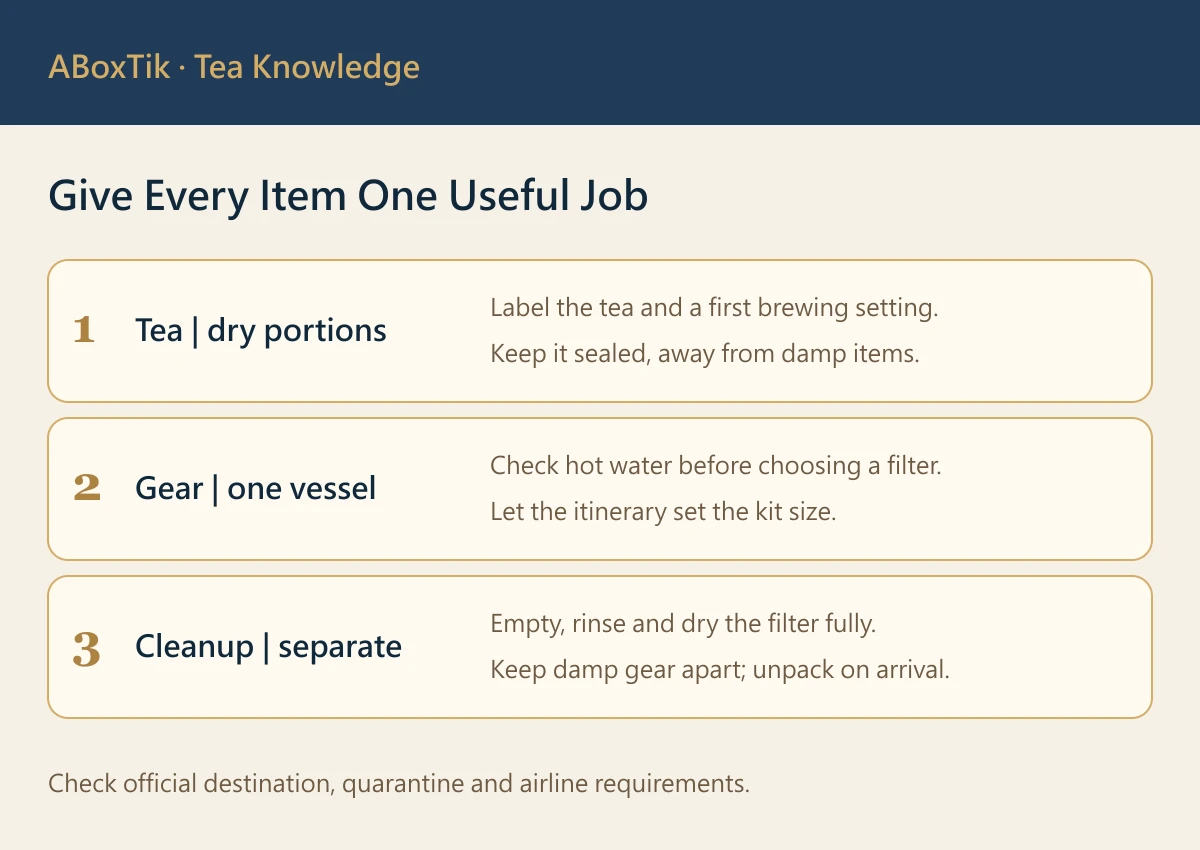
- A vessel: a lidded travel mug or heat-safe cup that you will genuinely use.
- A way to separate leaf and liquor: choose a tea bag, a reusable filter, or a filtered cup. Bringing all three is rarely a triumph.
- A tidy finish: tissues and a small pouch for a damp filter keep checkout morning pleasantly uneventful.
If the cup has no filter, tea bags remove a decision. If loose leaf matters, choose a filter that rinses easily. Bag shape alone is not a universal performance promise; our tea bag comparison explains why space, leaf form and brewing conditions all matter.
Portion dry tea for a real moment
One cup or one morning is a useful portion. Label each packet with tea name, packing date, a suggested water volume and a first-steep time. A label is kinder than memory on a rushed morning. Keep original individual wrappers for tea bags; for loose tea, use clean, food-contact-purpose sealed bags or containers.
There is no need to promise a laboratory-perfect cup. Different cups, water and schedules change the result. A short note such as “light today” or “shorten next steep” is enough. Our tea aroma guide offers language for noticing without turning the trip into an exam.
Keep moisture, light and odours apart
Taiwan’s Tea and Beverage Research Station lists moisture, oxygen, light, temperature, time and foreign odours among the factors that affect tea storage. Travel care can stay simple: do not let dry tea share space with wet items, leave it in direct heat or sun, or pack it beside perfume and strongly scented snacks. A wash bag or a pocket against damp clothes is usually a poor home for tea.
Take out only today’s portion and leave the rest sealed. If a packet is wet or damaged, first check whether the tea itself remains dry, then move it to a dry container. Our tea storage guide gives a fuller home-use reference; follow any product-specific label as well.
Brew simply where you arrive
Start with what is actually available. A kettle allows the package instructions to be a sensible first trial. With only a cup, a tea bag or an infuser is usually the calmest choice. If suitable hot water is unavailable, save the tea for a better moment rather than forcing a mystery-temperature brew. Our brewing guide can help establish the first water and time setting.
Change one thing at a time. If the cup is too strong, shorten the next infusion; if it is light, adjust water volume or time. Changing leaf quantity, cup and timing together turns a travel note into detective fiction. For a cold option, read our cold-brew tea guide and use sound food-handling judgment.
Let official destination information answer destination rules
Whether tea, packaging or equipment can travel to a particular destination may depend on customs, quarantine, airline and transit requirements, and those requirements can change. Before departure, check the destination’s official customs or quarantine information and the airline’s own guidance. Check each destination and transit stop separately. Keeping original packaging and clear contents information also makes personal checking easier.
A one-minute tea for travel checklist
- Is today’s tea portioned and labelled?
- Is dry tea away from wet items, bright heat and strong odours?
- Do the cup, bag or filter match the hot water you can access?
- Is there a plan for damp leaf and filter cleanup?
- Have you checked official destination and airline information yourself?

Give tea a small, dependable place in the trip
Travel tea does not need to reproduce every part of home. Choose a tea that fits the day, bring one useful cup, and keep dry storage and cleanup uncomplicated. Browse ABoxTik tea collection for portable formats, or explore the mixed tea bag gift box for several flavour directions. Our ABoxTik story is a quieter next read; current product details and availability belong on individual product pages.
One overlooked detail is timing. Put the tea plan in the part of the day that is genuinely available, rather than making it one more task before leaving the room. If breakfast is brief, make one cup; if evening is calmer, save a portion for then. This does not make tea magically better, but it does reduce waste created by hurry. The same approach helps on the return journey: keep unopened portions dry and separate damp leaf from dry tea before packing again.
It also helps to keep the brewing note modest. A package instruction is a starting point, not a test of competence. Water quality, cup shape and the amount of heat retained can all change the cup. Notice what happened, make one gentle adjustment, and allow the tea to be a small familiar pause rather than another item to optimise.
Before leaving, do one dry rehearsal at home. Put the cup, portion and filter in the pouch you intend to carry, then take them out and pack them again. If the lid, filter and tea packet do not return to the same place without effort, the arrangement is probably too complicated for a station platform or a small hotel desk. This is also a useful moment to check whether the container will stand securely and whether the chosen portion is realistic for the cup. Keep a spare tissue rather than a spare gadget. The aim is not to control every detail of the journey; it is to remove the small obstacles that make a familiar cup feel unnecessarily difficult.
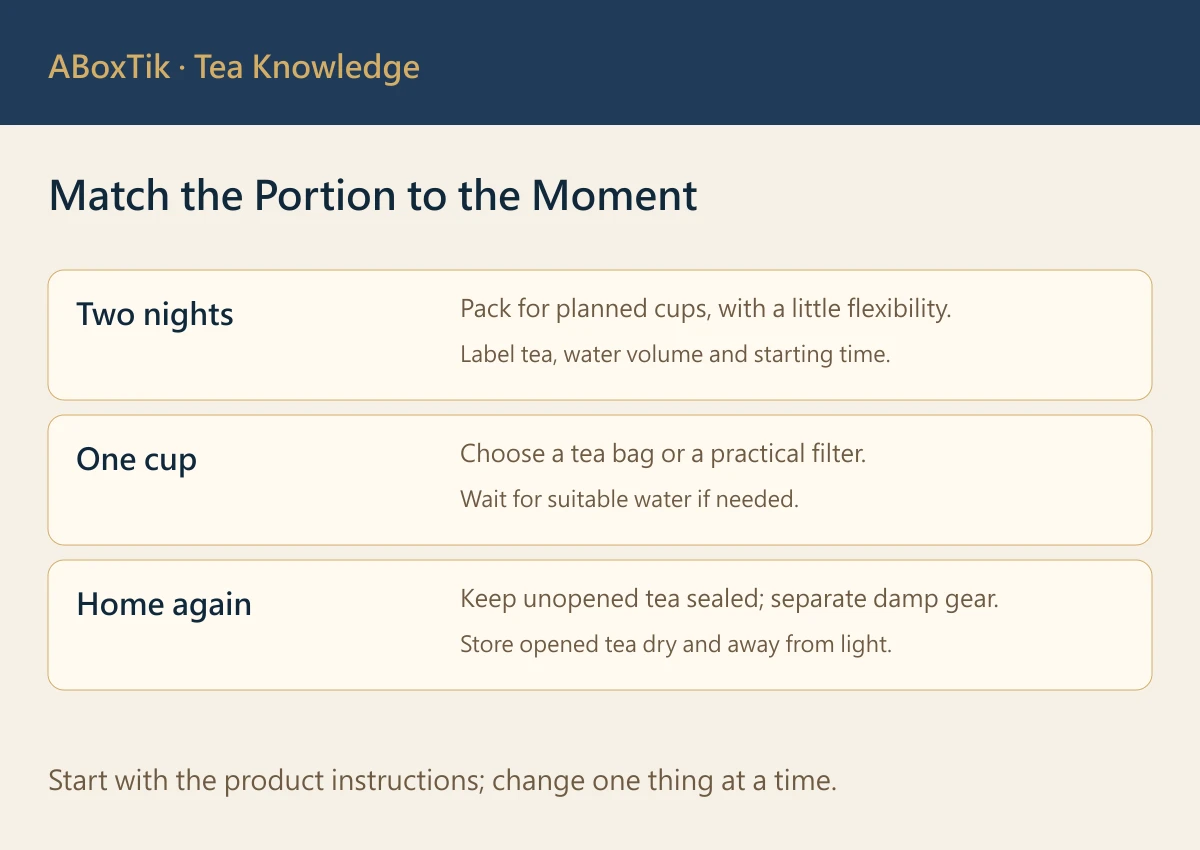
For two nights away, count the cups planned for two mornings and any evening tea, then pack those portions separately. Label each with the tea name, water volume and a starting steep time from the packet. After brewing, empty the leaves, rinse the filter and leave it open to dry. If departure comes first, carry the damp filter in a separate washable pouch and take it out on arrival; that pouch is temporary transport, not storage for dry tea. At home, keep unopened portions sealed and return opened tea to a dry, shaded cupboard. Leave a little empty space in the pouch as well. It gives the used filter, receipt or folded tissue somewhere to go without sharing a corner with the dry tea. Small margins are often the most useful piece of travel equipment.
Sources
- Tea and Beverage Research Station: Tea packaging and storage (checked 2026-10-14)
- USDA APHIS: Traveling with agricultural products (checked 2026-10-14; destination-specific rules must be checked with the relevant authority)