
Tea Knowledge
Shilin Chrysanthemum Festival Tea Table: Round Cups, Square Trays
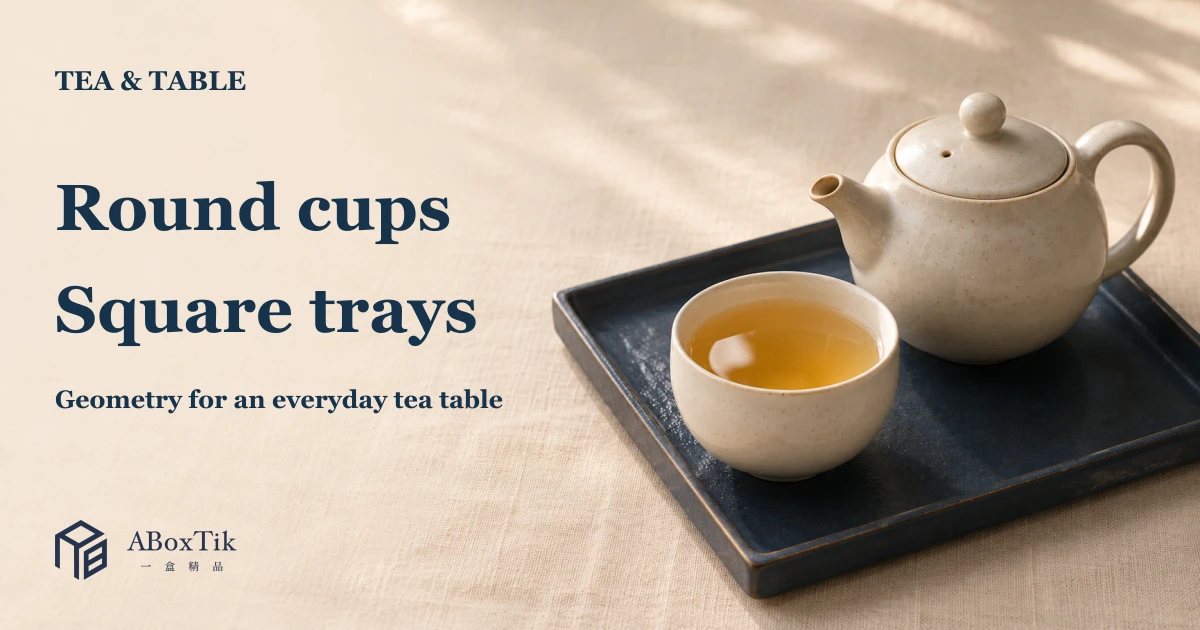
A Shilin Chrysanthemum Festival tea table can begin with a round cup, a square tray and a little clear tabletop. Trace the space the objects actually occupy, including handles and spouts, then leave room to lift and return them. Geometry becomes useful when it supports an ordinary cup of tea.
The 2026 Shilin Residence Chrysanthemum Festival runs from November 27 to December 13, with geometric forms woven into its floral displays. See the official Flowers in Taipei programme before a visit. At home, the circles and straight edges can inspire a small arrangement using familiar teaware.
Start the Shilin Chrysanthemum Festival tea table with one leading shape
Choose one object to lead the arrangement. A cup with a distinctive round rim may need only a quiet tray around it. If the tray has strong grain, colour or a prominent frame, a simpler cup can give it room. Two favourite objects can take turns: use one today and try the other tomorrow.
After an exhibition, it is tempting to bring every detail into the room. Instead, remember one relationship: a curve resting inside a rectangle, a larger area of space on one side, or a light object against a darker surface. Write that observation in one sentence, then see whether the pieces already at home can express it.
Measure the whole footprint, including the handle and spout
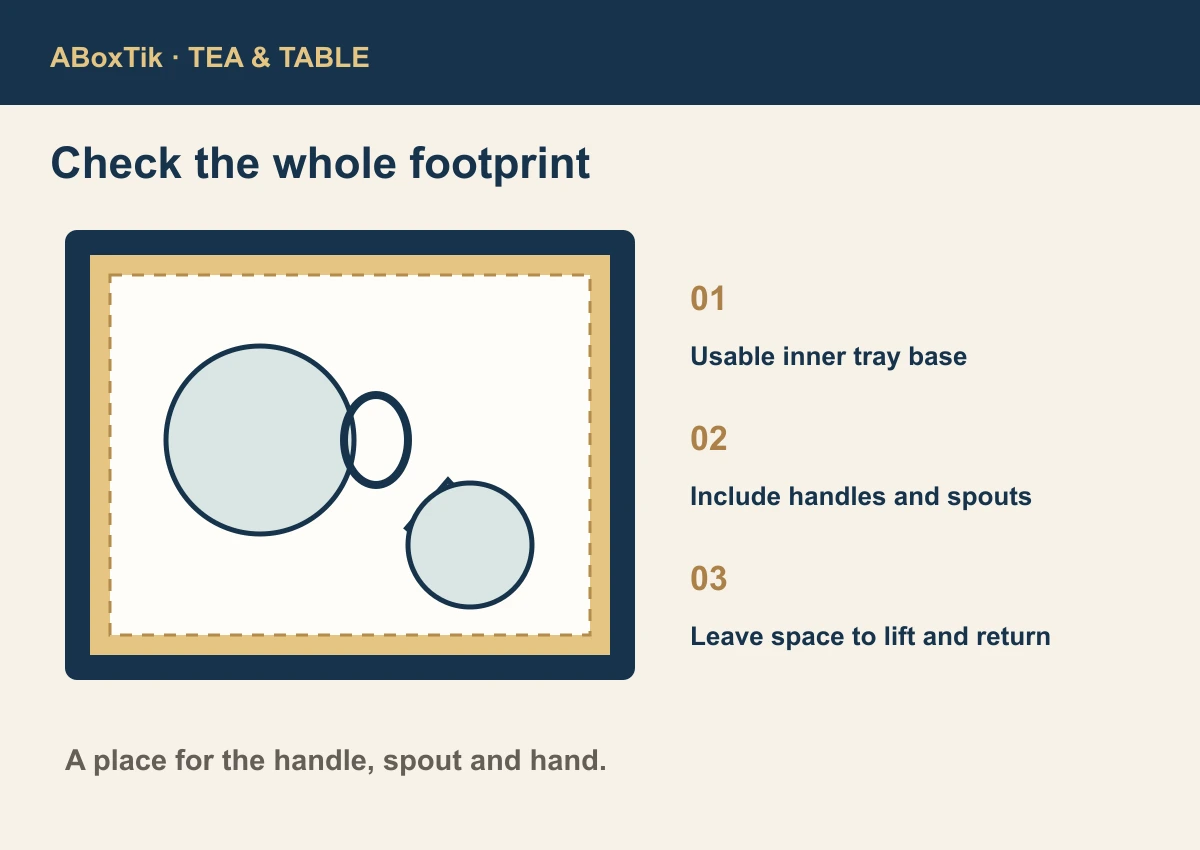
A cup’s rim diameter is only part of its footprint. Viewed from above, the handle extends beyond the circle; a pot adds a spout, handle and sometimes a projecting lid detail. Fingers also need a route into the arrangement. Place empty pieces on paper and lightly trace their outermost outlines before deciding how they fit together.
For the square tray, look at the level inner surface that can support the objects. A broad frame, sloping edge or rounded corner can make this area smaller than the outside measurements suggest. Place the outlines within that usable base, then check whether a hand can approach each handle without brushing another piece.
There is no universal gap to apply to every cup. The actual objects and the person using them provide the working measurements. The porcelain brewing guide helps with capacity and grip questions; also check each maker’s intended use and care instructions. A pleasing outline still needs to leave a comfortable place for the hand.
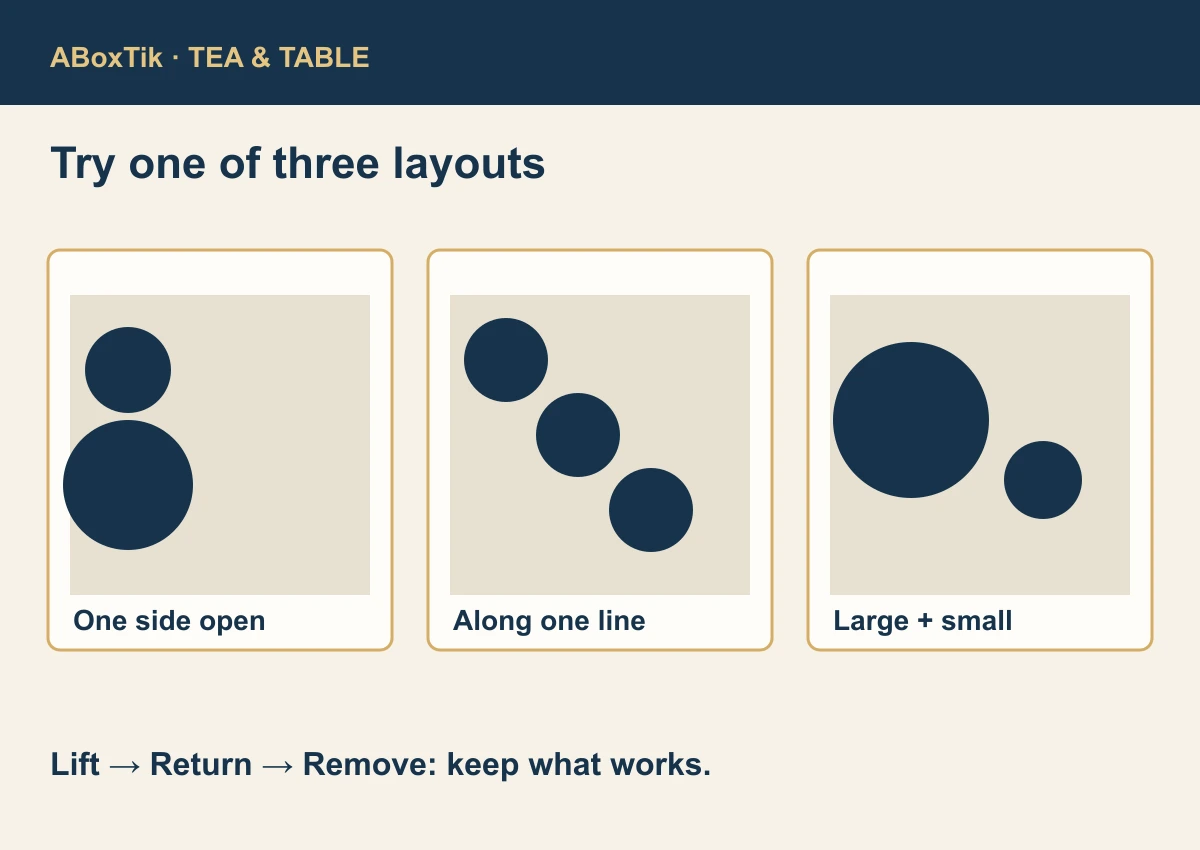
Try three simple ways to place round cups on a square tray
One side open: place the cup toward one side and keep a continuous clear area beside it. The leading object is easy to see and has a dependable return position. If a wet infuser keeps occupying that space, give it a small dish and decide where the dish belongs before adding another ornament.
Along a line: align a cup, pot or dish with an imagined straight line. The gaps need not be identical. Use the line to organise the view, then rehearse the actual pour. If the pot has to travel behind a cup awkwardly, move the pieces until the operation feels straightforward.
One large, one small: let a larger vessel anchor the group and a smaller cup sit beside it, leaving space on the opposite side. Size difference already creates variety. For the broader question of where dry tea, hot water and cleaning belong, explore a practical home tea bar.
Test the empty space with lift, return and remove
Begin with empty equipment. Lift the cup, return it, then remove the brewing vessel. Notice whether fingers can enter naturally, a handle catches the tray frame or the pot spout sits too close to another cup. If every action requires moving a second object, remove the less-used piece or use a separate stable surface.
Clear space has two jobs: helping the eye understand the group and helping the hand use it. They may overlap, but not always. An open area behind the pot can look balanced while the drinking hand still lacks a clear route. Rehearse the movement before deciding which part of the tabletop stays empty.
This rehearsal checks placement; follow the equipment instructions when actually brewing. The tea-cloth placement guide can help keep wiping tools accessible. A clear home for the cloth means a small drip need not rearrange the entire composition.
Add a second cup by considering the second person
For one person, give the drinking cup an easy return position and keep a stable place for the brewer. A removable infuser needs a resting dish; a used tea bag also needs a suitable container. The whole-leaf tea-bag guide offers a simple cup-based starting point when fewer tools suit the day.
When adding another cup, ask which side the other person will reach from. Two people seated in different directions may prefer handles pointing differently. Move a dish or decoration first, then decide whether a larger tray is necessary. One extra guest can often be welcomed by a small adjustment to the existing setting.
Match the amount poured from the brewing vessel to comfortable serving portions. The gaiwan and teapot comparison helps choose a suitable operation, while the Taiwanese tea hospitality guide offers ways to make sharing feel unhurried.
Keep colour and tea choices familiar enough to use every day
If tray, cups and tabletop all have strong textures, try removing one colour from the group. A pale cup interior can make the tea liquor easier to observe; a dark tray can clarify the outline of a light vessel. Lighting, glaze and shape still affect the result. For craft context, read about Yingge ceramics, then ask the maker about the individual piece.
Use a familiar tea while adjusting the setting, leaving one fewer condition to learn. The Taiwan tea starter guide can help choose a later flavour comparison. For a broader background, explore Taiwanese tea’s landscape and craft. The first setting only needs to serve today’s cup well.
Keep the useful arrangement when taking a photograph
Take one overhead photograph to remember the positions, then look again from the seated drinking angle. The overhead view shows circle and square clearly; the seated view reveals whether the tray frame hides a cup or makes its handle difficult to identify. If a piece moves purely for the photograph, return it to its useful position afterwards.
The tea-table photography guide covers light and recording details. When a book also occupies the table, the home reading tea corner helps preserve space for pages. Shape offers inspiration; the activity at the table tells us which clear areas are worth keeping.
Let the festival’s geometry become an easy-to-clear tea setting
A Shilin Chrysanthemum Festival tea table can grow through small trials. Start with the round cup and square tray, include handle and spout in the footprint, then lift, return and remove each piece. When clearing away is easy and the next cup feels inviting, the arrangement has found a useful proportion.
For a future addition, browse ABoxTik teaware and craft selections and check individual dimensions and intended uses. For everyday tea variety, explore the current two-box tea-bag set options. A little unoccupied tray space can remain part of the design.

With the cup comfortably placed, tea choices can take their time. Browse premium tea gifts, another article or the latest boutique selections; the next attractive object will find us ready with a little space and a measuring tape.