
Tea Knowledge
Tea Table Photography: Light, Objects and Honest Captions
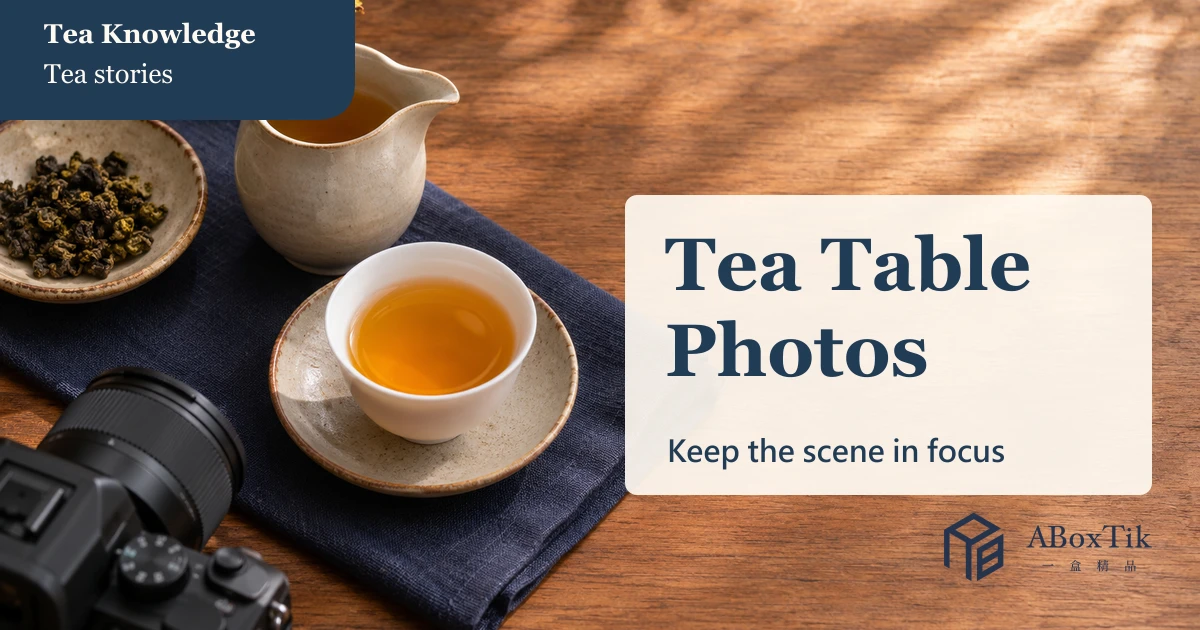
Light rests on a cup rim and the table carries traces of use. A clear frame and a precise caption help the next viewer understand the scene.
To photograph a tea table with a sense of place, first decide what the picture is meant to show: an actual gathering, a set of objects, or the gesture of preparing tea. Let the light, framing and caption answer the same question. If a scene was rearranged, record that fact instead of inventing an event the photograph cannot show.
Tea table photography starts with the light
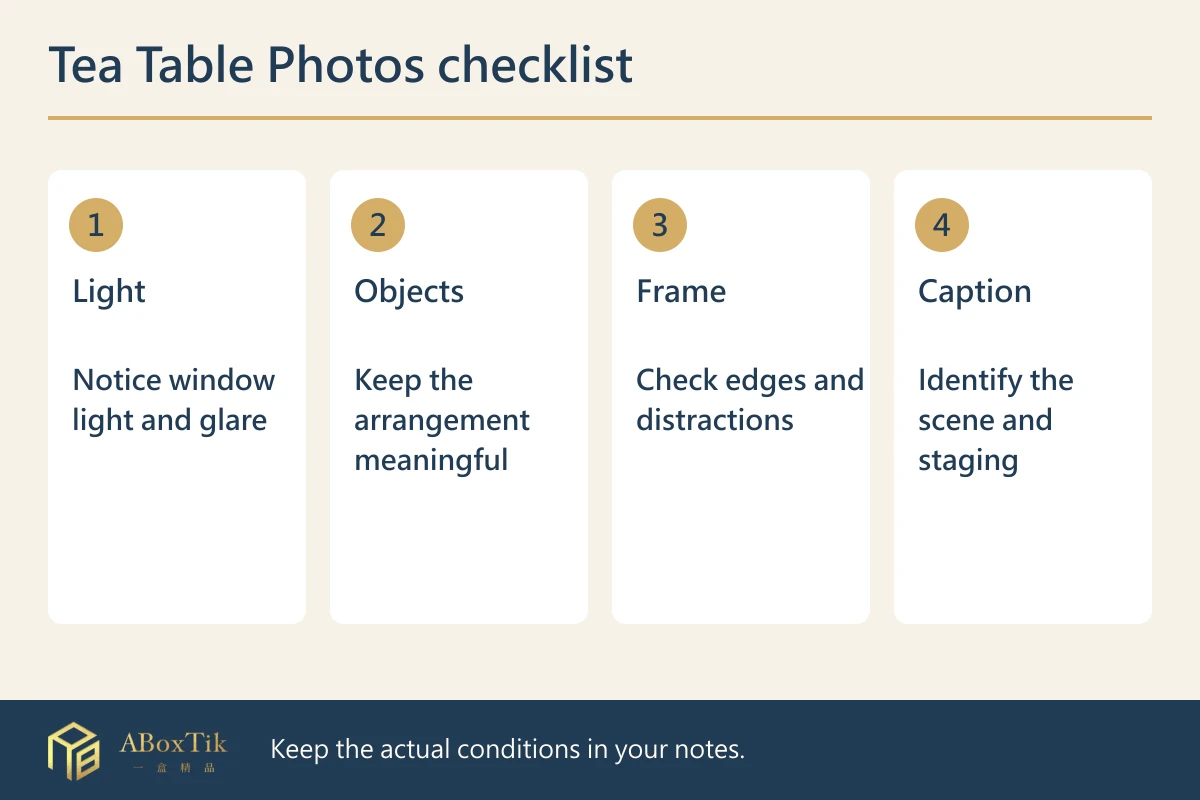
Start with window light or the lighting already in the room. Check whether the cup rim, tea and table are visible. Move your camera position or gently reposition an object to see whether reflections obscure the subject. If documenting an event, take an untouched record first and ask before changing the arrangement.
Try more than one angle for the tea. The tablecloth, cup colour and light can all change how an image appears; a photograph alone cannot establish a tea’s cultivar or quality.
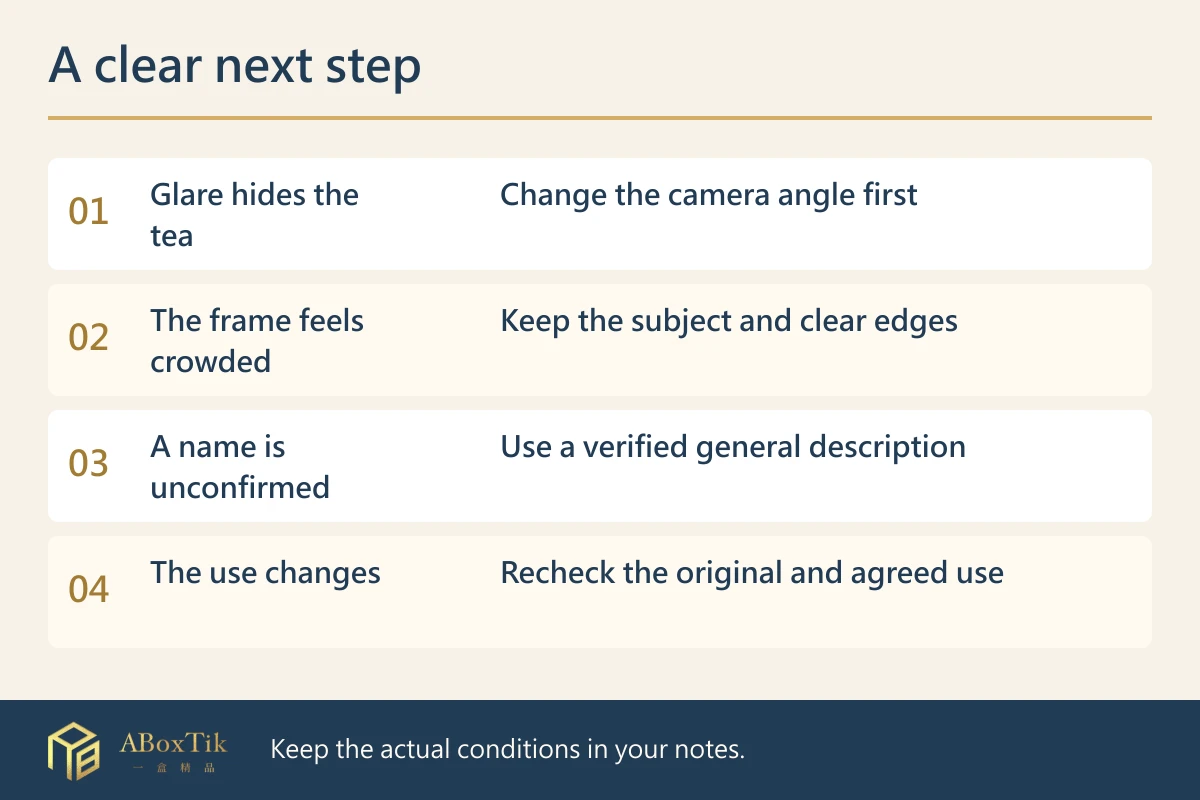
With a window to the left or right of a cup, begin by observing from roughly a right angle to the window. If a bright white reflection covers the tea surface, change camera height or move along the table edge. To keep a useful reflection, compare a second position where the rim remains visible. The goal is to make the subject readable while retaining the atmosphere, not to erase every highlight.
An overhead view explains where pot, cups and tray sit. A lower oblique angle can show the side of a cup and the pouring gesture. Leave an area of clear tabletop on one side if a layout may need text, but check that the photograph works without text as well. Make one frame with the bright window inside and one with it outside the composition, then compare which makes the subject easier to see.
Choose a subject and leave it space
Choose one main subject: a hand pouring, a cup, or the whole table. Remove unrelated clutter when appropriate, while keeping the objects needed to understand the activity. When recording an actual gathering, obtain the host’s agreement before moving belongings and note any changes to the scene.
A view from above can explain the arrangement; a side view or close detail can show a gesture. An image does not need every tea utensil in one frame. A little open table can also leave space for a caption.
Ask about people, hands and private spaces
Before photographing people, identifiable features or private belongings, explain the intended use and obtain appropriate consent. Agree the scope in advance for public or commercial use. Someone who prefers not to appear can be left out of the frame. Check location rules and any requests from the owner of the objects as well.
Save the date, location, photographer, confirmed names of people and objects, and the scope of consent alongside the file. Leave uncertain names or origins blank rather than guessing from the picture.
Write a caption from confirmed details
A simple caption might state that a teapot and cups were arranged at a particular place on a particular date, once those details are checked. Describe a staged demonstration as such. If a person or origin remains unidentified, a shorter accurate caption is more useful than a complete imagined one.
| Field | Record after the shoot |
|---|---|
| Image | Subject, light direction, overview or detail |
| Facts | Confirmed date, place, people and objects |
| Use | Photographer, consent and permitted scope |
| Open questions | Unknown names, origins or whether the scene was rearranged |
Keep the scene and its context together
Finally, compare the photograph and caption: do they describe the same thing? Check consent, file details and text before sharing. A quiet image can carry a precise record, leaving useful context for the next time it is viewed.
Tell the story in three frames
Start with a wide view that explains the table and room. Make a middle-distance frame showing how the objects relate, then move closer for a detail such as pouring water, a cup rim or leaves. You do not need to publish all three. Keeping options makes it easier to select an image later, and an overview can remind you which occasion a beautiful detail belonged to.
Use images of people only within the agreed scope of their consent. If the picture must contain objects alone, the position of the cups, the light and traces of use can still convey a setting. They do not give permission to invent participants or a conversation.
Plan the intended use before making the frame
A website banner, an article illustration, a personal record and a social post may require different crops. Capture a complete frame with room around the subject, then take a separate detail. When cropping, check that an important object or gesture remains understandable. Keep the original file and the edited export so the scene can be checked later.
When light is difficult, first ask whether the subject is identifiable and whether reflections obscure it. Change your camera angle, wait for the light or add appropriate illumination. During documentary photography, any changes to arrangement or lighting should fit the event and be recorded. Convenience for the photographer should not override participants’ wishes.
Check facts from photograph to caption
List people, place, objects and tea name in four fields. Mark each as confirmed, awaiting confirmation or unnecessary to publish. Confirmed details should lead back to the shoot record, the person concerned or information supplied by the object’s holder. If a detail remains uncertain, use a more general description or leave it out for now.
For example, a photograph can show where a teapot and cups sit on a table. The colour of a cup alone does not establish its origin, age or maker. When the record and caption agree, an attractive image becomes easier to understand and reuse responsibly.
While documenting the scene, distinguish what the image shows from what has been confirmed separately. The frame may show one pot and three cups; names of participants, the tea and the maker of an object require their own confirmation. A filename can include the date and session, while a separate note records where those details came from. Keep caption revisions when details are corrected so the next person can follow the change.
When selecting images, first choose one that is easy to understand, then decide whether a close detail adds useful information. Check whether a crop removes essential context, whether any visible text is legible and whether people appear within the agreed scope. If an address, document or private belonging appears in the background, decide whether to choose another frame or appropriately obscure it before use.
For a publication handover, send the image, caption and permissions information together. Mark which frames document the actual scene, which were rearranged for illustration and which names are still awaiting confirmation. The handover need not become a long story. Its purpose is to give the person publishing the picture enough information to write one accurate sentence and to know whom to ask when a question remains.
After publication, keep a record of where the image was used and the consent scope that applied. If a later use differs from the one originally discussed, revisit the permission with the people involved before proceeding. An organised record lets the photographer return to the table itself rather than searching through messages for the meaning of an old filename.
For handover, keep an uncropped or original composition alongside the version prepared for the article. Use matching identifiers in filenames and notes so the photograph, caption and scope of use remain connected. If a later use changes the context, check whether the original permission covers it before sharing.
Keep the shot list and file identifiers together so the next person can find the supporting context easily.
When a caption needs background, look up the subject rather than inventing a story: introducing Taiwanese tea in English, teahouse cultural context and tea-table etiquette address different parts of the tea setting. For an object, observing a craft object and artist statements and personal interpretation help separate visible details from interpretation.
If the shoot accompanies tea-garden interview questions, keep the interview notes with the images. cup shape and aroma and tea colour and taste strength also remind a photographer to separate what a picture shows from what a tasting or product record can establish.

Follow ABoxTik
Make the next cup easy to begin
Bring the useful observation back to an ordinary cup. Choose a tea format that fits the equipment and the occasion, use the current product information, and leave room for individual preference. ABoxTik offers a way into Taiwanese tea through clear descriptions and practical formats; a small, well-chosen next step is enough.