
Tea Knowledge
Tea with Zongzi: A Thoughtful Pairing Guide
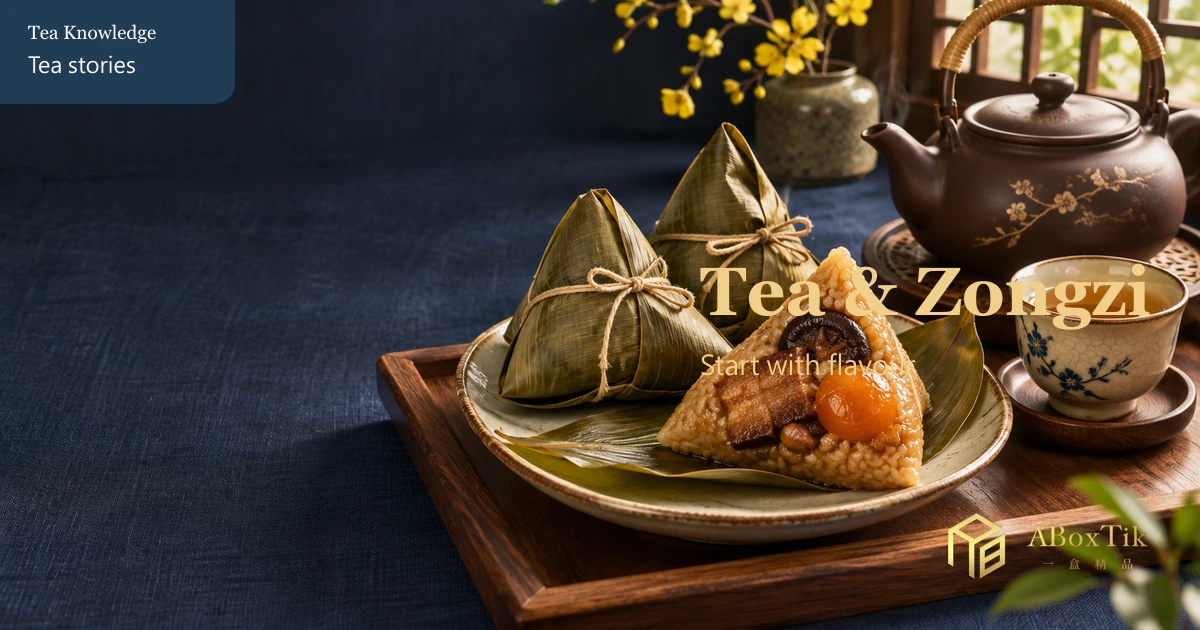
Match the filling first
Zongzi vary in seasoning and sweetness. Start gently with a light filling, try a steadier roasted oolong with a richer savoury filling, and taste a sweet filling before deciding how strong the tea should be. These are starting points for personal exploration.
Three pairing ideas
Try a lightly brewed fragrant oolong beside a delicately seasoned savoury zongzi. With a rich sauce or filling, compare a medium-strength roasted oolong. With a sweet bean or date filling, compare a fresh tea with a softer cup and notice the overall sweetness.
Make a comparison card
Prepare two teas and record tea quantity, water, time and temperature. Taste each, take a small bite, rinse with water and compare again. Change one brewing variable at a time and write down what you enjoy.
Make a gift easy to use
Ask about available teaware and preparation time. Check the current contents and format, include concise brewing guidance and verify ingredients where dietary restrictions matter.
Questions
Must every savoury zongzi go with roasted tea? No; fillings and seasonings vary. Is there only one tea for a sweet zongzi? No; begin by tasting the sweetness and adjust the tea to preference.
At the table
One zongzi and two small cups can start a lovely conversation. Everyone gets a vote.
Build the pairing from the dumpling, not from a festival slogan
Rice dumplings vary more than their leaf wrapping suggests. Start with four observations: savoury or sweet, light or rich filling, gentle or assertive seasoning, and soft or chewy texture. Then choose two tea directions rather than declaring one compulsory match. A lightly seasoned vegetable or mushroom dumpling may leave room for a fragrant oolong; a soy-rich, meat-filled or nutty dumpling may be easier to compare with a rounded roasted oolong. Sweet bean, date or alkaline-rice styles deserve their own test instead of inheriting the savoury table.
| Dumpling cue | Tea direction to try first | Question for the cup |
|---|---|---|
| Light savoury, rice aroma clear | Fragrant oolong, gently brewed | Can both rice and tea aroma remain distinct? |
| Soy, mushroom, pork or pronounced richness | Medium-roast oolong | Does roast sit beside the cooked aroma or make the meal too heavy? |
| Peanut, chestnut or nutty filling | Fragrant and roasted teas side by side | Which keeps the nutty note clear without adding harshness? |
| Sweet bean, date or sweet rice | Unsweetened tea in a moderate strength | After sweetness, is the tea still pleasant enough for another sip? |
These are editorial starting points, not guarantees about every recipe or tea. Regional methods, sauces, portion size, tea cultivar and brewing all change the result. Read the actual ingredient list when available and let the first small tasting correct the table.
Run a two-tea test without turning lunch into an exam
Prepare one dumpling, water and two teas with clearly different styles. Brew each tea according to its own product guidance and record tea amount, water, temperature and time. First taste each tea alone. Then take a small bite of the same dumpling portion, sip Tea A and note what remains clear; pause with water, repeat with Tea B, and reverse the order in a later round if possible.
Use three plain-language prompts: Can I still identify the dumpling’s main aroma? Can I still identify the tea? Do I want another sip? “Both are strong” is not automatically a good pairing, and “one becomes quieter” is not automatically bad. The useful result is the reason behind the preference. If bitterness or astringency dominates, change only one brewing variable next time—usually dose or time—so the adjustment stays understandable.
| Record | Tea A | Tea B |
|---|---|---|
| Tea and brew settings | ___ | ___ |
| Dumpling style and filling | ___ | |
| Flavour still clear after the bite | ___ | ___ |
| One change for next round | ___ | ___ |
For a gift, separate tea choice from food information
A Dragon Boat Festival gift may combine products from different makers. Keep the original labels and make it easy to identify which ingredient, allergen notice, expiry date and storage instruction belongs to which item. Taiwan FDA requires prominent allergen information for specified packaged-food ingredients; the safest practical habit for a mixed gift is to read each current package rather than infer suitability from “vegetarian,” “traditional” or a flavour name.
Ask the recipient about dietary choices before selecting the dumplings, then confirm the complete current information with the food supplier. Tea format is a separate hospitality decision: individually wrapped tea bags suit offices or homes without brewing gear, while loose tea suits someone who already enjoys pot brewing. A short card can name the two tea styles and invite a small comparison without promising a universal pairing.
Keep delivery and storage equally clear. The dumplings may have temperature and timing needs very different from dry tea. Follow each product’s label, do not let the tea box visually hide the food instructions, and arrange receipt when someone can store the food promptly. A gift is more thoughtful when the pretty ribbon is not asked to perform the job of a refrigerator.
Write a card for a mixed box, not a fixed verdict
If the box contains several dumpling flavours, number the items and match each number to its ingredient and storage information. On the tea side, offer two calm routes: “start with the fragrant tea for the lighter dumpling” and “try the roasted tea when the filling is richer.” Add the brew information from the current tea package and leave room for the recipient to swap the order. A card should reduce guessing, not turn a family meal into a compulsory tasting programme.
Before dispatch, perform one handover check: names match the physical items, the earliest relevant date is visible where required, cold items have an agreed delivery route, and the recipient knows which part needs prompt storage. Photograph the completed contents for the project record without exposing private delivery information.
Plan one table for different preferences
For a group, prepare small labelled pots rather than one very strong universal brew. Offer water and let guests skip a pairing without explanation. Keep serving utensils separate when the foods differ, and place ingredient information where it can be read. Hot-water vessels should stand on a stable surface away from children and busy serving paths.
The premium tea gift guide helps choose a usable gift format; the barbecue pairing guide handles an outdoor savoury meal; the cookie pairing exercise owns a controlled baked-sweet comparison. This page stays with rice-dumpling fillings, a reusable Dragon Boat table and the handoff of a mixed seasonal gift.
- Name the dumpling and its actual filling.
- Select two contrasting tea directions.
- Keep the first brew moderate and record it.
- Taste tea alone, food, then tea again.
- Change one variable and preserve the preferred reason.
Browse the ABoxTik Taiwanese tea selection and confirm the current tea, package and brewing details before assembling a gift. The festival table does not need a single champion: if one guest chooses fragrant oolong and another reaches for the roasted pot, the experiment has already done useful work.
Sources
- Taiwan Tea and Beverage Research Station: Taiwan specialty tea flavour wheel
- Taiwan FDA: packaged-food allergen labelling information
- Taiwan FDA: packaged-food labelling FAQ, including gift-box expiry information
Sources checked 11 November 2026. Pairings are tasting starting points; current ingredients, labels, storage and supply must be confirmed from each product.