
ABoxTik Tea, Tea Knowledge
Why Is Taiwanese Tea Special? 7 Qualities Behind Taiwan’s Finest Teas
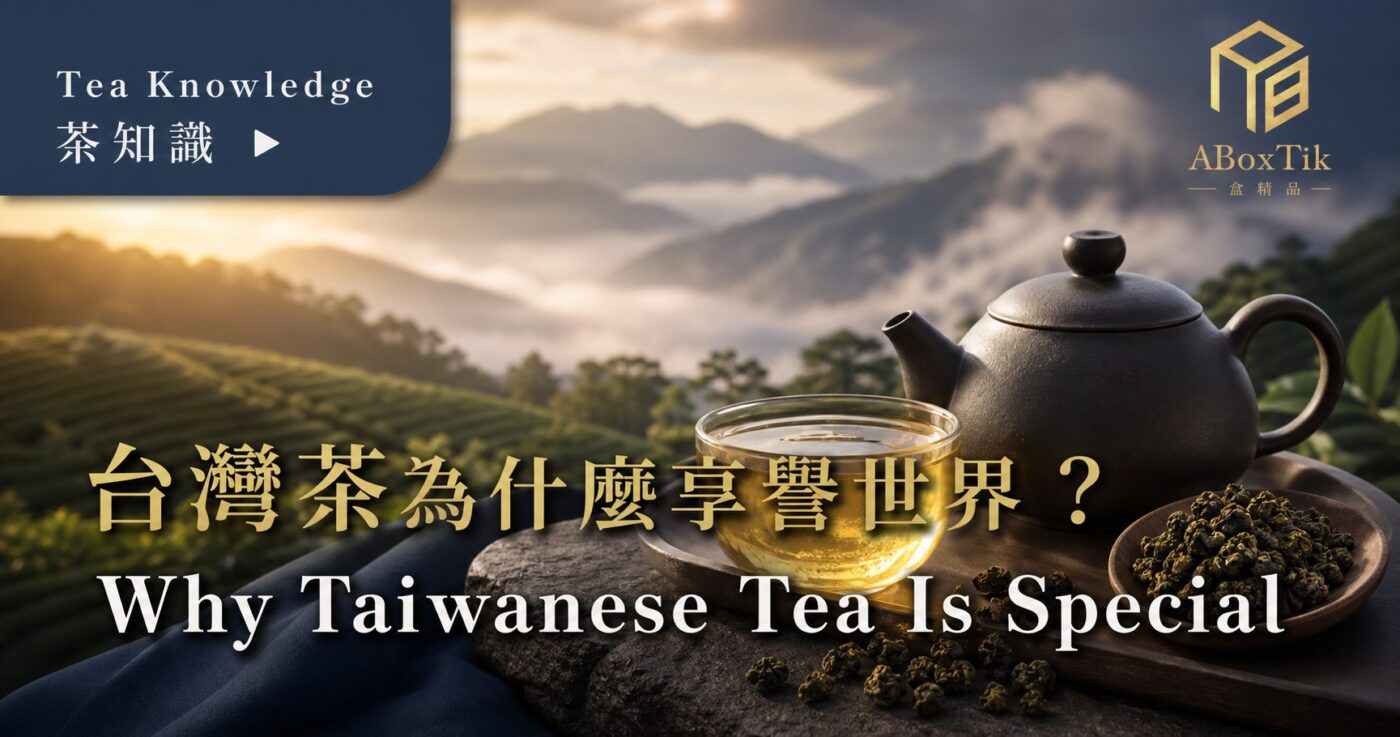
A cup of Taiwanese tea holds more than flavor. It carries mountain mist, changing seasons, local cultivars, and the judgment of the craftsperson who shaped the leaves. From bright high-mountain oolong and roasted Dong Ding to honeyed red oolong, Taiwan offers an unusually wide spectrum of tea experiences within one small island.
Why has Taiwanese tea earned such a devoted following among tea drinkers around the world? The answer is not simply altitude, rarity, or one famous variety. Its character comes from the meeting of terroir, plant breeding, precise oolong craftsmanship, regional traditions, and modern presentation. These seven qualities explain what makes Taiwanese tea special—and what to look for when choosing your first box.
Why Taiwanese tea deserves a place on the world stage
Taiwanese tea has a long international history. Taiwan’s Ministry of Agriculture records that tea was exported to New York under the name “Formosan Tea” in 1869, helping establish the island’s early global reputation. Over the following century, Taiwan’s tea industry gradually moved from high-volume exports toward smaller batches, greater diversity, and premium quality.
That evolution produced distinctive styles such as Wenshan Baozhong, Dong Ding oolong, Oriental Beauty, high-mountain oolong, and Ruby black tea. Today, Taiwanese tea makers preserve hard-earned traditional knowledge while continuing to develop new cultivars, sensory standards, traceability systems, and packaging for contemporary drinkers. Respect for tradition without fear of innovation is one of the island’s defining strengths.
7 qualities that make Taiwanese tea special
1. A small island with remarkably diverse tea terroirs
Taiwan is compact, but its landscape rises quickly from coastal plains and rolling foothills to steep mountains. Elevation, cloud cover, sunlight, temperature shifts, soil, rainfall, and harvest season all influence how slowly tea shoots grow and how their aromatic compounds develop. Northern hills, central mountain ranges, southern tea districts, and the eastern valleys can therefore create very different cups.
High-mountain oolong is a familiar example. Cool temperatures, frequent mist, and reduced direct sunlight generally slow growth and help produce tender, substantial leaves. The finished tea is often prized for a clean floral aroma, silky texture, gentle sweetness, and lingering finish. Elevation alone, however, never guarantees quality. Garden management, leaf maturity, weather, processing, and storage are equally important. Explore our guide to Taiwan’s high-mountain tea regions for a closer look.
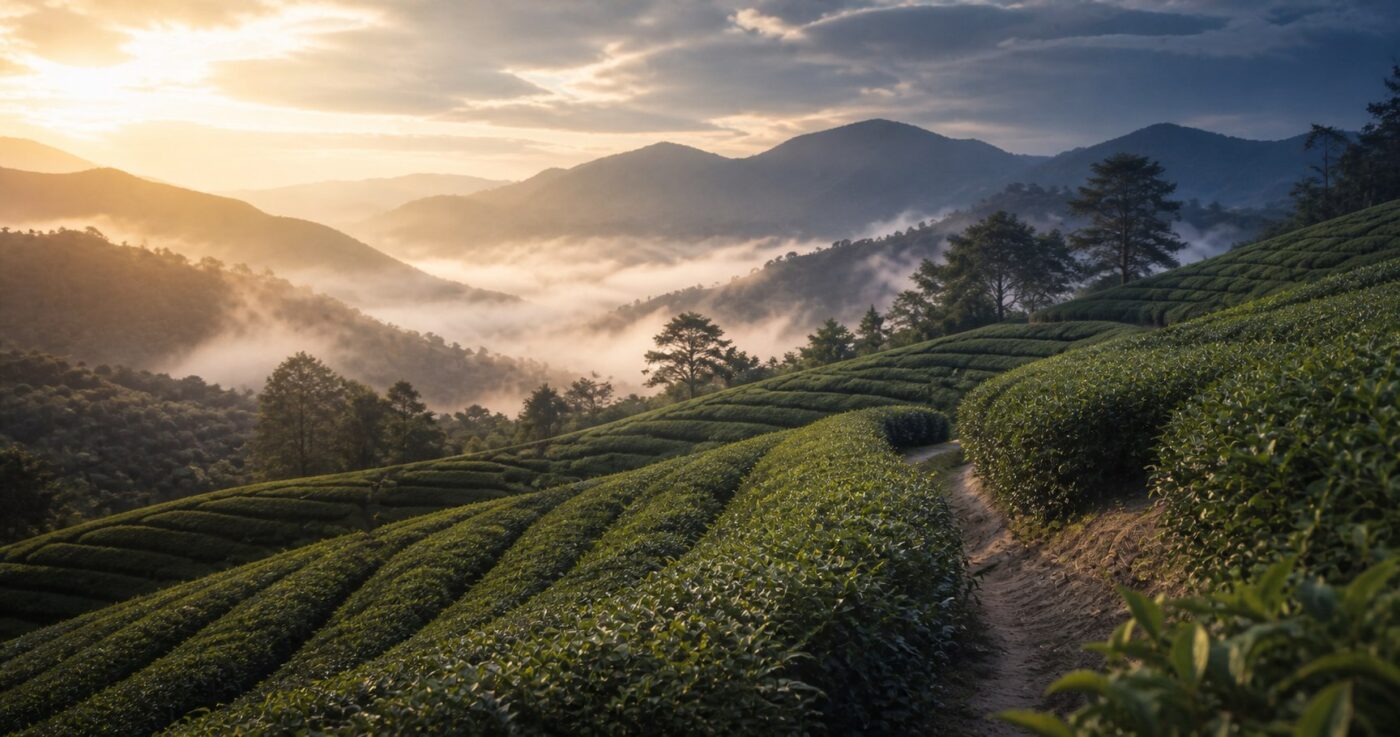
Mist, temperature shifts, and mountain ecology help shape the elegant character of Taiwanese high-mountain tea.
2. Exceptional control of oxidation and roasting
Partially oxidized tea—commonly known as oolong—is one of Taiwan’s signatures. Its production may involve outdoor and indoor withering, careful agitation, fixation, rolling, drying, and sometimes repeated roasting. Rather than following a rigid timer, skilled makers continually observe the leaves, aroma, temperature, and humidity, adjusting the process as conditions change.
Lighter oxidation can preserve a lifted floral character. Moderate oxidation may reveal ripe fruit and honeyed notes. Roasting can add warmth, structure, and aromas reminiscent of nuts, caramel, or wood. Even leaves from the same cultivar and garden may taste dramatically different in the hands of two makers. This responsive judgment is why Taiwanese tea making is better understood as a craft than a simple manufacturing formula.
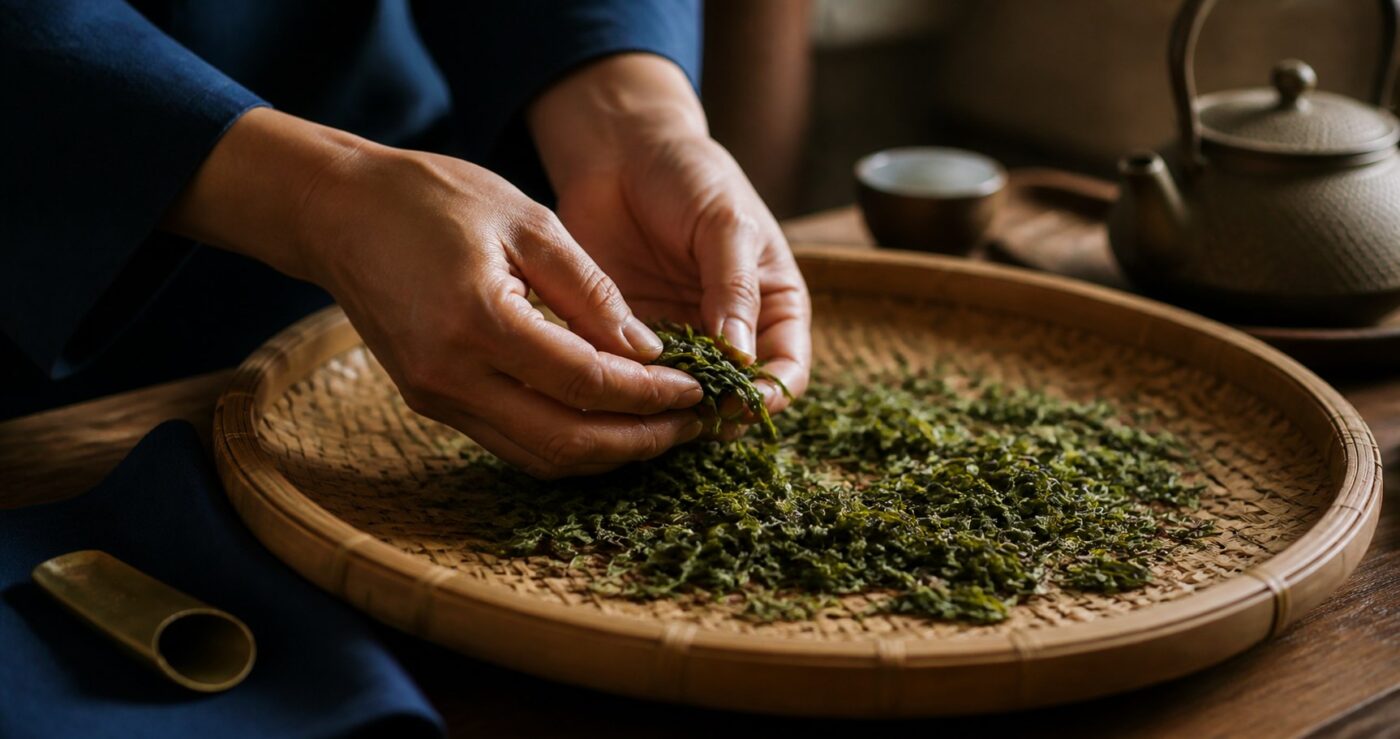
Every decision—from leaf condition to oxidation and roasting—changes the aroma and structure of the finished tea.
3. Distinctive cultivars bred in Taiwan
Terroir and technique matter, but the tea plant itself supplies the foundation. Taiwan’s Tea and Beverage Research Station has developed a series of cultivars known by “Tai Cha” or “TTES” numbers. TTES No. 12, better known as Jin Xuan, is suitable for oolong and Baozhong production. TTES No. 13, Cui Yu or Jade Oolong, is noted for high aroma. TTES No. 20, Ying Xiang, was bred for fragrant Baozhong and high-mountain styles.
A cultivar suggests an aromatic direction; place and processing complete the picture. When comparing Taiwanese teas, look for four pieces of information together: cultivar, origin, oxidation, and roasting. They reveal far more than a poetic product name or a high price by itself.
4. A flavor range that runs from fresh florals to honeyed fruit
There is no single “Taiwanese tea flavor.” Wenshan Baozhong is celebrated for a clear, elegant floral profile. High-mountain oolong often combines fresh flowers, gentle sweetness, a smooth body, and a long mountain finish. Traditional Dong Ding oolong can develop roasted nuts, ripe fruit, and a deeper, rounded texture. Oriental Beauty is famous for honey and ripe-fruit aromas, while Ruby black tea can offer vivid spice, sweetness, and a refreshing structure.
This range makes Taiwan welcoming to beginners and endlessly interesting to experienced drinkers. A newcomer can begin with an approachable aromatic oolong, while a collector can compare seasons, elevations, cultivars, roast levels, and individual makers. If small or unusual batches appeal to you, see our five indicators of rare and premium tea.
5. Small-batch production and living craft traditions
Many Taiwanese specialty teas are made by relatively small gardens and close-knit production teams. Small batches cost more to produce, but they allow the maker to respond to the maturity and moisture of each day’s leaves. Knowledge travels through families, regional communities, farmers’ associations, competitions, and long apprenticeships.
The value of specialty tea is therefore not rarity alone. It is the sum of deliberate decisions: when to pick, which leaves to accept, how far to oxidize, how firmly to roll, and when the roast is complete. Those choices determine whether the aroma is clean, the liquor is balanced, and the finish returns naturally rather than disappearing after the first impression.
6. Growing transparency around origin and quality
As “Taiwan-style” tea becomes more common internationally, it is increasingly important to distinguish tea made in Taiwan from tea made elsewhere using Taiwanese cultivars or techniques. Useful labels identify the growing region, cultivar, harvest season, processing style, packer, and storage guidance. Some regions also use origin marks, production records, or traceability programs.
Transparent information helps drinkers understand where flavor and price come from. For a brand, explaining where the tea was grown, who made it, and why it tastes the way it does is also a meaningful way to build trust across languages and borders.
7. Tea, design, and gifting culture brought together in one box
Fine tea deserves careful storage, but it also benefits from thoughtful presentation. Contemporary Taiwanese brands combine traditional whole-leaf tea with clear brewing instructions, individual portions, roomy pyramid tea bags, and refined gift packaging. That makes Taiwanese flavor accessible even to people who do not own a full gongfu tea set.
Tea also communicates hospitality, gratitude, and an invitation to pause. It works for business visits, reunions, travel memories, and personal celebrations without belonging to one particular holiday. A well-designed box with a clear origin story can introduce Taiwan in a way that feels both elegant and genuinely useful. Begin with a versatile two-variety premium tea gift box, or read seven reasons tea makes a meaningful gift.
Mountain mist leaves time inside the tea bud; the maker’s hands slowly open it. When hot water meets the leaf, an island’s landscape, craft, and generosity travel outward in the aroma.
How to choose Taiwanese tea for the first time
- Begin with origin and cultivar. Origin provides the environmental context; the cultivar supplies the basic aromatic shape.
- Check oxidation and roasting. Choose lighter oxidation and roasting for fresh flowers and a brighter cup. Try more oxidation or roast if you enjoy ripe fruit, toasted nuts, and a fuller texture.
- Look for protective packaging. Tea is sensitive to light, humidity, air, and surrounding odors. A well-sealed, light-resistant package with a clear packing date helps preserve aroma.
- Match the format to the occasion. Loose leaf gives you room to watch the leaves open and adjust each infusion. Spacious pyramid bags made with whole leaf are convenient for offices, travel, and international gifts.
- Choose a transparent seller. Specific information about source, flavor, and brewing is more useful than luxurious but vague claims.
Four approachable Taiwanese tea styles
High-mountain oolong: A graceful starting point for drinkers who enjoy floral aroma, a soft texture, and natural sweetness.
Dong Ding oolong: A satisfying choice for those who prefer roasted fragrance, nutty tones, and a deeper body.
Jin Xuan oolong: A rounded, gently sweet introduction to a Taiwan-bred cultivar. Natural Jin Xuan should express the leaf and craftsmanship—not rely on added milk flavoring.
Honey red oolong: An inviting option for drinkers who enjoy ripe fruit, honeyed sweetness, and a warm, lingering finish.
Whatever style you choose, suitable water temperature and infusion time will reveal more balance and detail. Before your first session, follow our five-step teapot brewing guide.
Frequently asked questions about Taiwanese tea
Is all Taiwanese tea oolong?
No. Oolong is one of Taiwan’s most representative categories, but the island also produces Baozhong, black tea, green tea, and other specialty styles. Tea categories describe processing and oxidation, not nationality alone; explore our guide to the six major tea types.
Does a higher elevation always mean better tea?
No. High elevation can create distinctive growing conditions, but garden care, leaf maturity, weather, processing, and storage are just as important. Judge quality by clean aroma, balance, texture, finish, and credible origin information rather than altitude alone.
What is the difference between Taiwanese tea and Taiwan-style tea?
Taiwanese tea generally means tea grown and made in Taiwan. Taiwan-style tea may use Taiwanese cultivars or processing methods while being produced elsewhere. Check the stated country and region of origin if provenance matters to you.
How should Taiwanese tea be stored?
Keep unopened tea in a cool, dry, dark place away from strong smells. After opening, reseal it carefully and reduce unnecessary air exposure. Unless the producer specifically recommends refrigeration, frequent movement in and out of a refrigerator may create condensation.
Tea leaves may leave the mountain, yet they carry its landscape into the cup. When a box of tea travels afar, the island’s story arrives with its aroma.

Follow ABoxTik
Where to buy Taiwanese tea? Discover Taiwan with ABoxTik
At ABoxTik, we believe a true boutique product is not defined by price alone. It should help you see the place, understand the maker, and feel the intention behind the gift. We begin with 100% made-in-Taiwan tea, careful quality selection, and understated premium packaging so that every box can become an introduction to the island.
Choosing your first Taiwanese tea—or a gift that can cross languages and cultures? Explore the ABoxTik Premium Taiwanese Tea Gift Box. If you prefer whole leaves, compare the Classic Taiwan Tea Gift Set. From bright florals and classic roasted depth to honeyed fruit, there is a Taiwanese flavor ready for you and the person you have in mind.
⚑ Read More ⚑
A Guide to Taiwan’s High-Mountain Tea Regions
Seven Reasons Tea Makes a Meaningful Gift