
Tea Knowledge
Tea for One: A Three-Tool Starting Kit
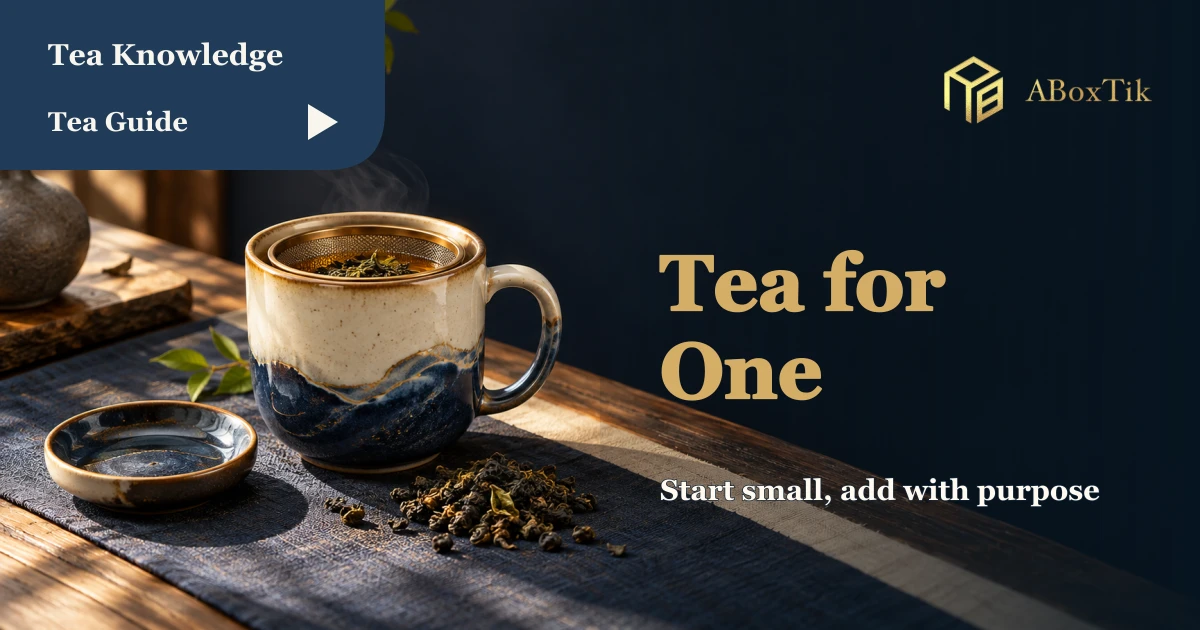
A little preparation leaves more room to enjoy the tea.
A solo tea set does not need to begin with a complete tea table. Begin with three functions: where leaves meet hot water, what you drink from, and where wet leaves rest after brewing. In this guide, “three tools” means physical item count. A kettle, tea, water supply, and invisible supplier assumptions are not counted. A handled infuser mug with a removable basket can brew and drink; it is still one item, not two because it performs two jobs. Give each object a clear job and the table will not feel like it has just hosted a very small meeting.
Three functions, not a ceremony
The brewing function lets leaves meet water and leave it at an appropriate time. The drinking function makes a hot cup safe and comfortable to hold. The wet-leaf-rest function gives a dripping basket, tea bag, lid, or leaves a temporary place. Without that last function, a paper towel, coaster, or anxious hand often gets recruited at the last moment. It is not decorative excess; it is what makes cleanup possible.
| Function | Smallest question | What can perform it | What to check |
|---|---|---|---|
| Brew | When do leaves leave water? | Gaiwan, small pot, basket, or brewing cup | Capacity, pour, and cleaning |
| Drink | How will the cup be held and used? | Cup, handled mug, tasting cup | Rim, capacity, and heat |
| Rest wet leaves | Where does the removed part go? | Small dish, drip tray, lid rest | Drips and easy washing |
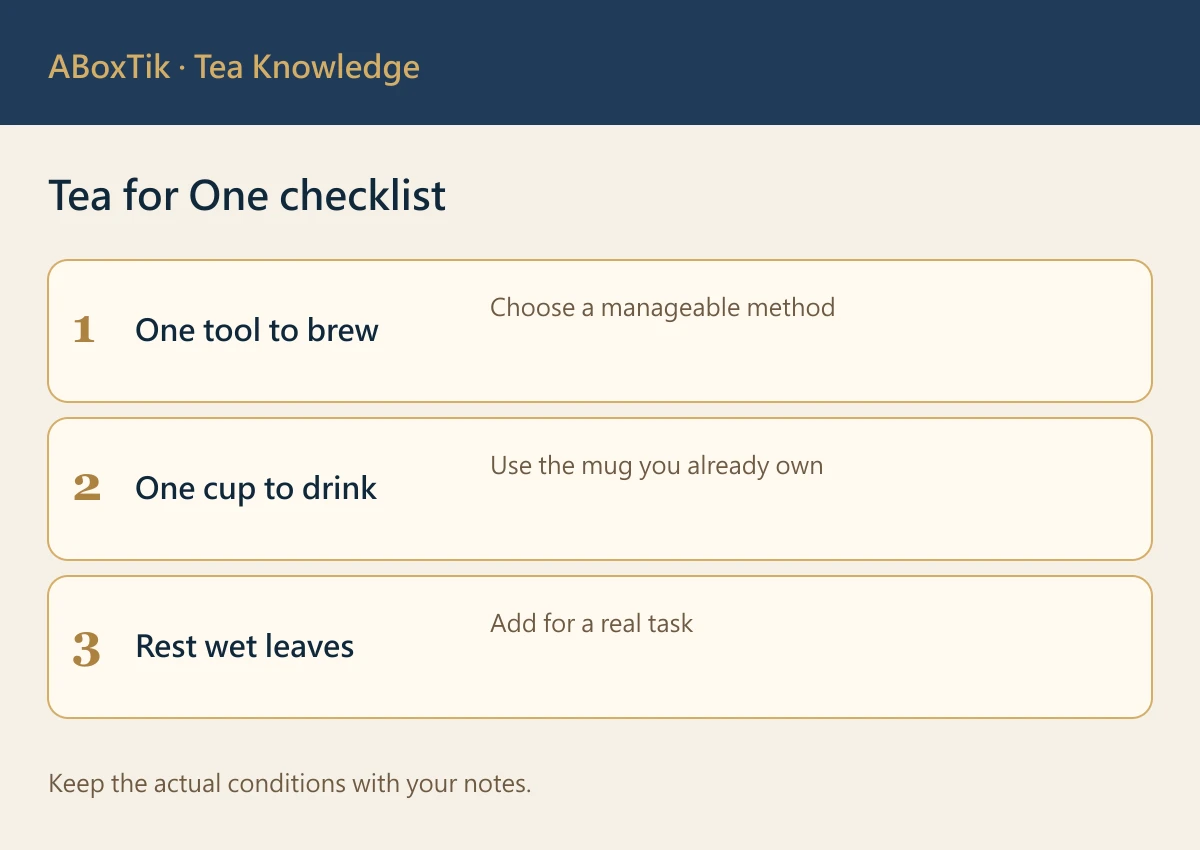
The table does not demand a separate object for each function. It asks only that the work be named before one object is expected to brew, drink, strain, catch water, and store itself all at once.
Kit one: handled infuser mug plus a small dish
A handled mug with a removable basket can brew and serve as the drinking vessel. When the time is up, lift the basket onto a small dish. Under this guide’s method, that is two items: the mug and the dish. The basket is a removable component of the mug, so it is not counted as another tool, although a shopping list may of course list it separately.
This arrangement suits someone who wants loose leaf tea at a desk or on an ordinary workday with fewer objects to move. Check that leaves can expand in the basket, that the handle is comfortable and safe, and that the basket has a stable place to drip. A lower item count is not automatically easier if the mug is too hot or the basket has nowhere to land.
Kit two: gaiwan, drinking cup, and lid rest
Here the gaiwan brews and pours, the cup is for drinking, and a lid rest or small dish receives the lid and stray drops. It is three items with three distinct jobs. The open form of a gaiwan makes leaves and liquor easy to observe, but it also asks for attention to water level and grip. If heat, hand mobility, or pouring practice feels uncomfortable, a handled tool is not a lesser choice. It may be the choice that makes tea repeatable.
Existing porcelain-brewing and gaiwan-versus-teapot guidance both point to capacity, pouring, cleaning, and material as more useful than a tool name. For one person, there is no need to build a full-looking ritual. Ask whether one round can be finished, whether leaves have room to open, and whether the surface can accept a few drops. A tea table is not an examination, and the lid rest does not award marks.
Kit three: small pot, cup, and drip tray
A small pot brews and pours, a cup drinks, and a small tray receives a lid or drips from the spout. It is also three items, excluding the kettle. If you want to compare several infusions, test actual pot capacity, pour speed, and lid stability first. A beautiful object does not remove the time needed to clean a spout and filter holes.
This kit suits someone who likes to notice each infusion separately and is willing to manage a little more cleaning. It is not the compulsory next level for a beginner. Glazed, easy-to-clean tools can make switching among teas simpler; food-contact suitability, material, and care should come from the maker’s or seller’s actual instructions.
Compare the approaches without taking sides
| Starter arrangement | Best for | Strength | Consider another option when |
|---|---|---|---|
| Infuser mug plus dish | Loose leaf tea at a desk | Few items; leaves leave water clearly | Mug or basket handling is unsafe |
| Gaiwan, cup, lid rest | Observing leaves and pour timing | Clear division of work | Heat, hands, or surface stability are concerns |
| Small pot, cup, tray | Multiple infusions and comparison | Brew and drinking are separate | Cleanup time or capacity does not fit |
Design the cleanup before buying more
Before brewing, decide where leaves go, where a wet basket rests, and where tools will be washed and dried. Remove leaves after use, wash according to material instructions, and dry thoroughly. Store dry tea separately according to its storage guidance, away from moisture, light, and odours. If cleanup is the reason tea rarely happens, reduce unnecessary tools before shopping for a more elaborate set.
Choose the solo-tea moment that sounds most like your real evening: one quick cup, quiet leaf observation, or several careful infusions. Give brewing, drinking, and wet-leaf resting each a dependable place, then see what is genuinely missing. Fewer objects are not automatically better. A good beginning is a set that can be used safely, washed well, and happily reached for tomorrow.
Use it for a week before adding a fourth item
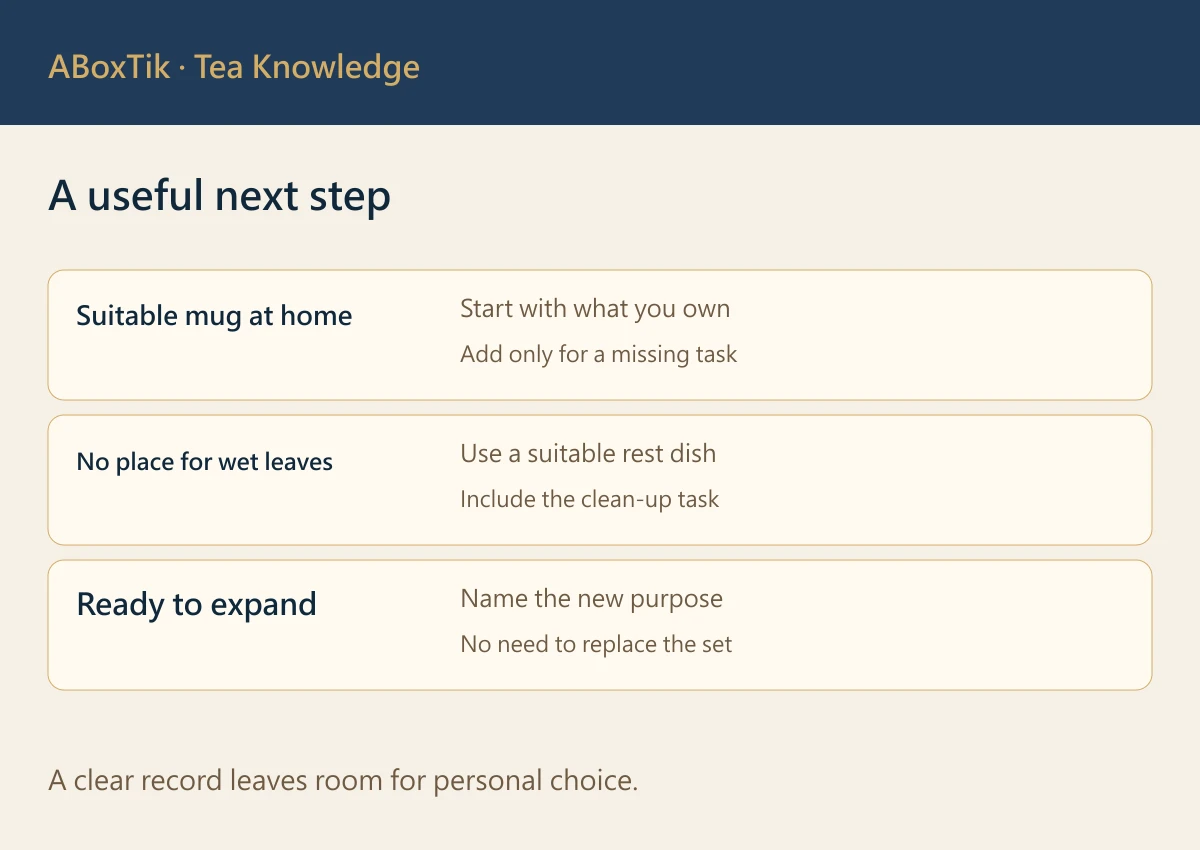
Use the same arrangement for a week and notice the moment that keeps catching: nowhere to place a lid while pouring, a basket dripping beside a laptop, a cup too small for one round, or a spout that is tiresome to clean. If the same problem appears three times, turn it into a buying condition. The next tool can then solve a real friction point instead of making a photograph look more complete.
A fourth item might be a measuring cup, tea scoop, cloth, or second drinking cup, but name the temporary action it replaces. A measuring cup stabilises water amount. A scoop makes leaf portioning less awkward. A cloth handles small drops. A second cup separates brewing from drinking. Each can earn a useful place; none is an admission ticket to solo tea.
This approach also makes comparison kinder to a budget and to a small home. Borrow a similar item if possible, check whether it fits the washing routine, and ask whether it will be stored dry and within reach. A tool earns its place when it reduces hesitation at the moment you want tea. When the cup is empty, the leaves are dealt with, and tomorrow’s setup still feels welcoming, the kit is already doing enough.
For a new tool, do not try to make a beautiful photograph and a precise comparison at the same time. Leave a safe working area, check the cup base and the water path, then start the timer.

Related reading and tea choices
Sources
- Tea and Beverage Crop Research Station, Introduction to tea sensory evaluation
- Tea and Beverage Crop Research Station, Tea Packaging and Storage