
Tea Knowledge
Buying Tea Online: Cross-Check Photos and Product Details
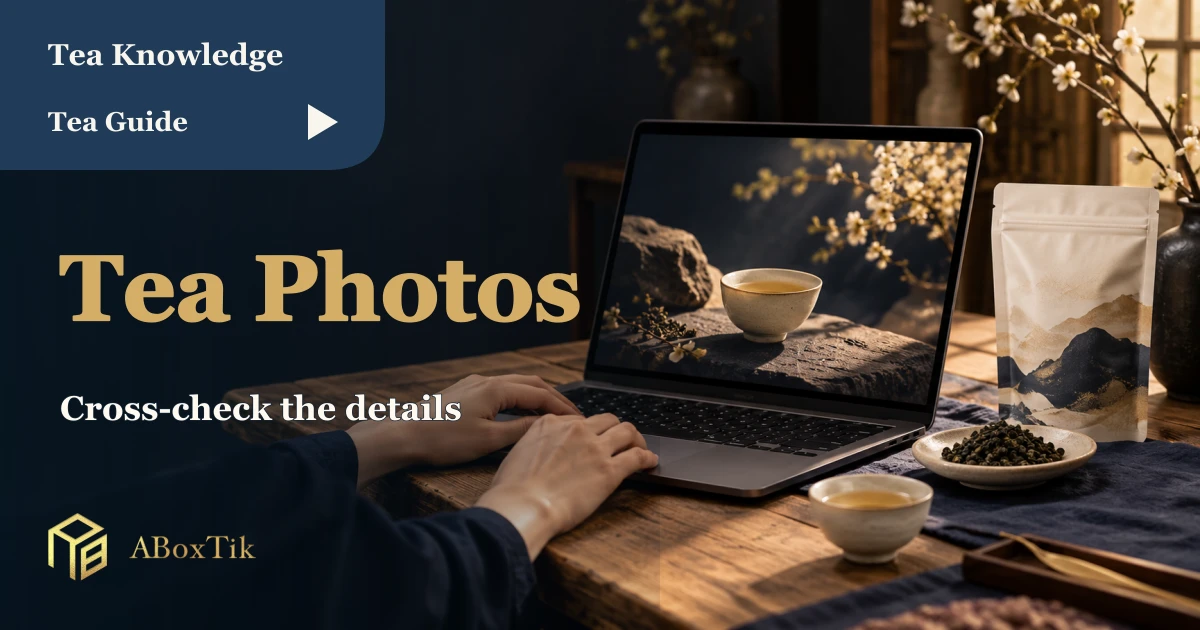
Let the photograph invite you in, and the details guide your choice.
Tea photographs can help you understand packaging, leaf appearance and a serving scene. They cannot deliver aroma, mouthfeel, lot-specific origin or the full product label. If you cannot inspect brewed leaves when shopping online, start by identifying what each image is showing, then cross-check the selected product name, tea format, quantity, origin information and brewing directions.
A beautiful tea table can make the shopping basket look very inviting. Pausing does not mean turning every purchase into detective work. It means letting a photograph do the job it can do, while specifications answer what will actually arrive. Admire the cup, then check whether you are buying the cup.
First identify the photograph’s job
A product photograph helps explain the supplied items and pack format. A lifestyle photograph introduces a setting, where flowers, snacks and teaware may be props. A dry-leaf image shows the photographed sample’s shape. A brewed-leaf image shows one sample after one preparation. All four can be useful, but they do not answer the same question.
Treat a mountain or garden scene as context until the producer supplies information connecting that place to the tea. Without a location, date and product relationship, the landscape does not establish the origin of a particular packet. A picturesque teapot cannot quietly promote itself to an origin certificate.
Where an image is described as an illustration or composite, continue to the actual pack details and specifications. A lack of documentary photography does not by itself mean poor tea. It does mean you should ask about delivery contents rather than filling an information gap with an attractive assumption.
A photograph cross-check card
| What you see | Useful initial information | Still check |
|---|---|---|
| Boxes and packets together | Pack format and presentation | Boxes, bags and weight in the selected option |
| Dry leaves | Shape of the photographed sample | Whether it matches the current specification or lot |
| Brewed leaves | That sample after preparation | Sample identity, brewing conditions and image date |
| Golden or red liquor | Colour shown in that photograph | Dose, water, light and vessel; colour is not concentration |
| Scenery and teaware | Story and serving context | Origin records, ingredients and supplied accessories |
| Label close-up | Legible fields on that package | Whether the version and dates apply to current stock |
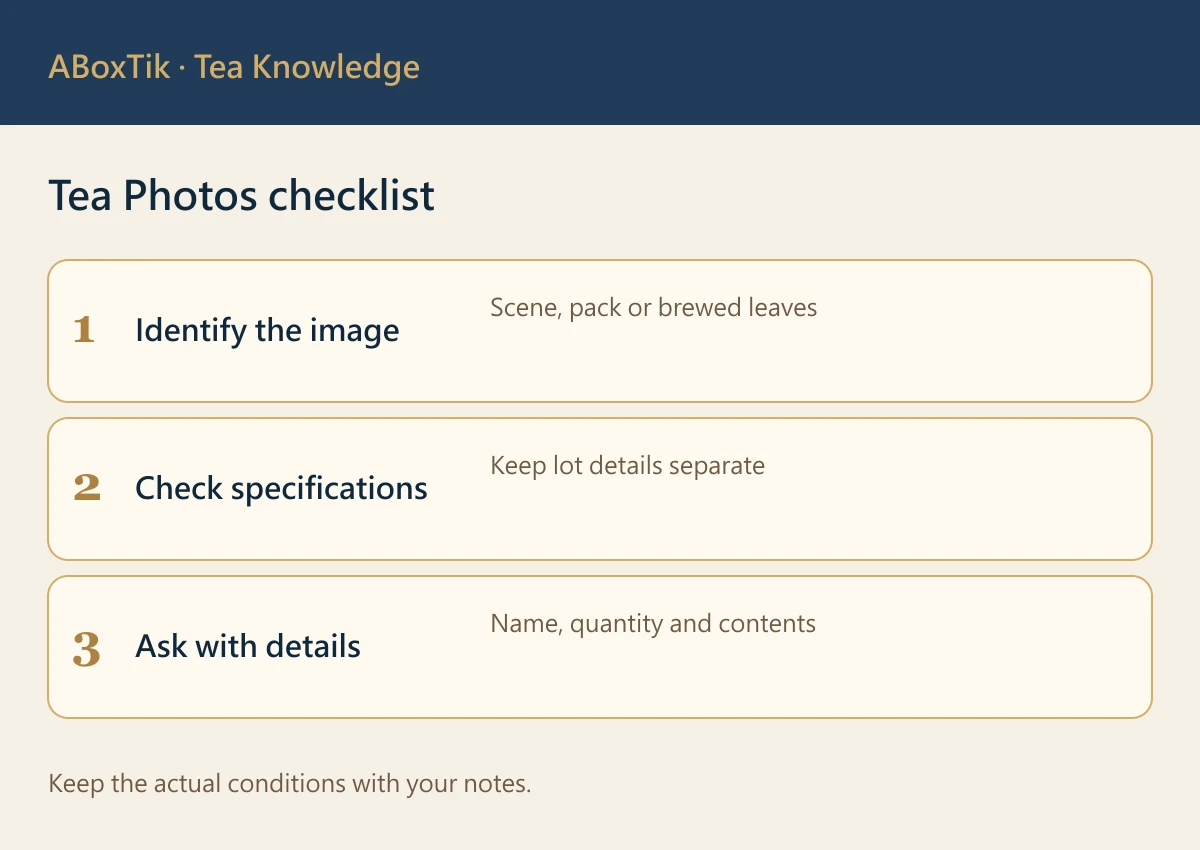
Ask something more specific than “is it good tea?”
Begin with the tea format, current option and quantity. Ask whether an actual package image and label information are available. If leaf form matters to you, ask whether dry or brewed-leaf images correspond to that product, and whether they show the current lot or a representative style sample.
Whole brewed leaves do not guarantee an aroma you will enjoy, and smaller pieces are not automatically inferior. Raw material, processing form and intended preparation can differ. For convenient tea bags, bag weight and suggested cup volume may be more useful than requiring every leaf to report for a perfect group photograph.
If no brewed-leaf image is available, clear information about tea type, source, flavour direction and preparation may still help you choose. Select a format that suits your routine and leave unconfirmed details unconfirmed. Buying one box does not require completing a degree in tea terminology before lunch.
When two images differ, check the selected version
The hero image, specification table, option menu and pack photographs may have been updated at different times. If the main photograph shows four box positions while your selected option is a two-box gift, read the active specification instead of adding together everything pictured across the page.
Ask whether a different colour or box shape represents an earlier pack, another combination or a styled scene. Keep the exact option name with your question: “I selected ___; does the pictured ___ come with it? Which packaging version is currently supplied?” One clearly identified difference is easier to resolve than a whole-page screenshot with no explanation.
Lighting, angle and surrounding surfaces also change how tea and packaging look. A brighter or darker image can prompt a question, but it does not measure oxidation, roast level or freshness. To compare flavour, you still need suitable product information and, eventually, a cup prepared under known conditions.
A hypothetical scene: avoid buying the props in your imagination
Imagine a hero showing four tea boxes, two cups and a pot, while the active option says “two-box tea-bag gift.” Your note could read: pictured—a tea-table scene; selected—two box positions; questions—bags per box, available teas and whether cups or pot are supplied separately. This is a reading example, not a description of a current ABoxTik combination.
Put each answer into its proper field. Quantity belongs with quantity, accessories with accessories and origin with the matching information. A general “image for reference” statement should not replace a clear answer about essential contents. If those contents remain unclear, waiting before ordering is a reasonable choice.
For a gift, add the recipient’s preparation routine. A formal tea-table image does not mean the recipient needs a complete gongfu setup. Convenient bags, a suitable portion or a clear instruction card may be more useful. Put the gift on their real desk before placing it in an imaginary photography studio.
Use the arrival as a separate cross-check
When the order arrives, compare the actual name, selected specification, quantity and package condition. Retain legible product information. If something differs, photograph what arrived and identify the selected option in one message. Do not open every pouch just to recreate a promotional photograph; dry tea still needs appropriate storage.
Begin brewing with the actual product directions. Record your vessel, water quantity and timing, then use ordinary words for aroma and strength. The photograph helps explain your original expectation, while your preference develops in the cup. Lot details and preparation conditions make a supplier conversation more useful than demanding an exact match to a photographed liquor colour.
Keep comparison notes small enough to use
You can compare two possible purchases with the same headings: selected format, supplied quantity, stated flavour direction, preparation needs and unresolved question. Leave price comparison until you know that both options serve the same purpose. A large display can look generous while containing a different number of usable portions.
Write a question only where an answer would change your decision. If you already know that you want individually portioned tea for a travel mug, the practical issue may be bag weight and preparation, not the exact leaf arrangement shown in a studio image. A shorter, relevant checklist is easier to finish than a collection of questions gathered just because they sound expert.
For repeat purchases, keep the old label photograph separately from the current listing. Matching branding does not establish an identical lot, and an old screenshot does not prove current availability. If you enjoyed a previous packet, explain which character you liked and ask about the current option. This gives the conversation a useful destination.
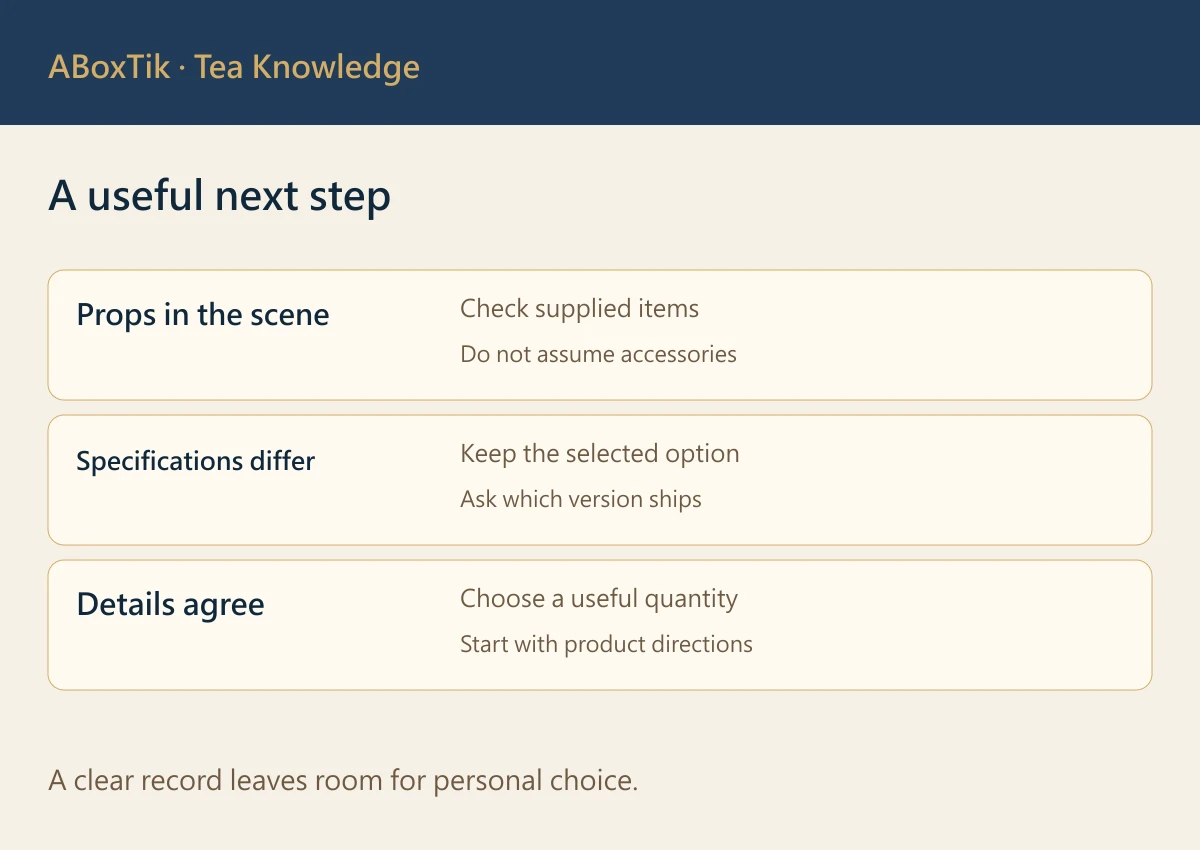
Which field matters most today?
Choose one: how many gifts will arrive, how much tea each contains, the general flavour direction, or suitability for your existing tools. Turn that need into one answerable question. Clear information and a suitable amount can support a comfortable choice; a missing essential detail is a good reason to let the basket wait.
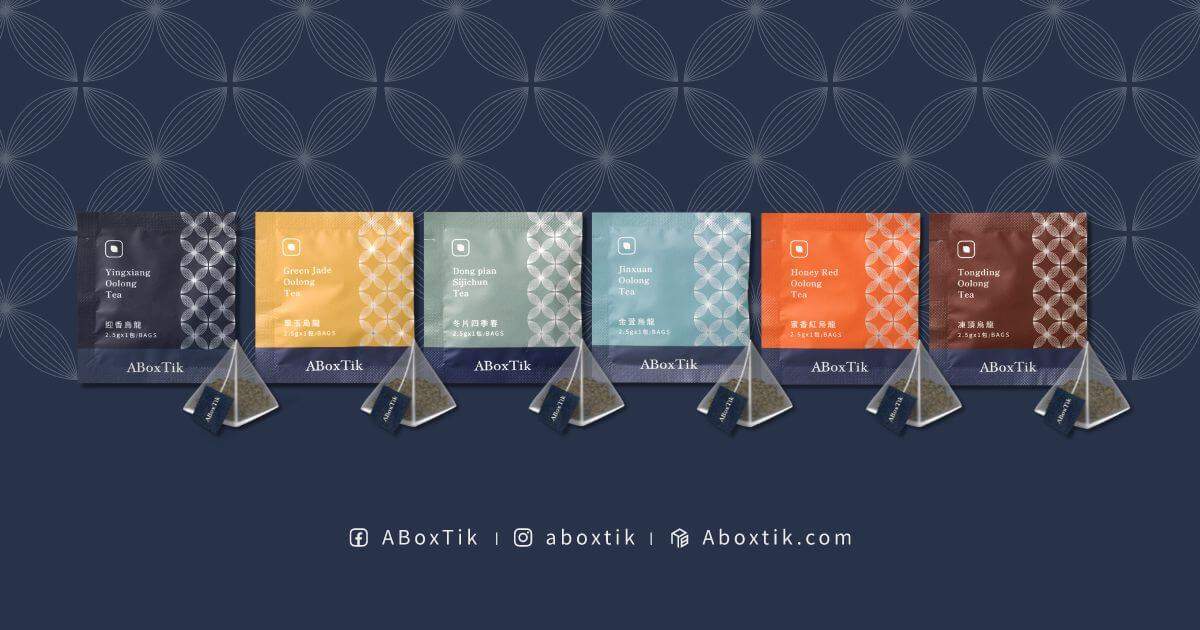
ABoxTik aims to make tea inviting to look at and understandable to choose. Let the image introduce the scene, then let specifications and conversation complete the details. On the next appealing tea page, ask: have I connected what I can see with what I will actually receive?
Related reading and tea choices
- Reading high-mountain tea quality
- Check quantities and purchase conditions
- Explore current Taiwan tea options
Sources
Sources checked: 25 October 2026.