
Tea Knowledge
Returning a Tea Gift: A Thoughtful Response Without Price Pressure

A thoughtful gesture can be answered in your own time.
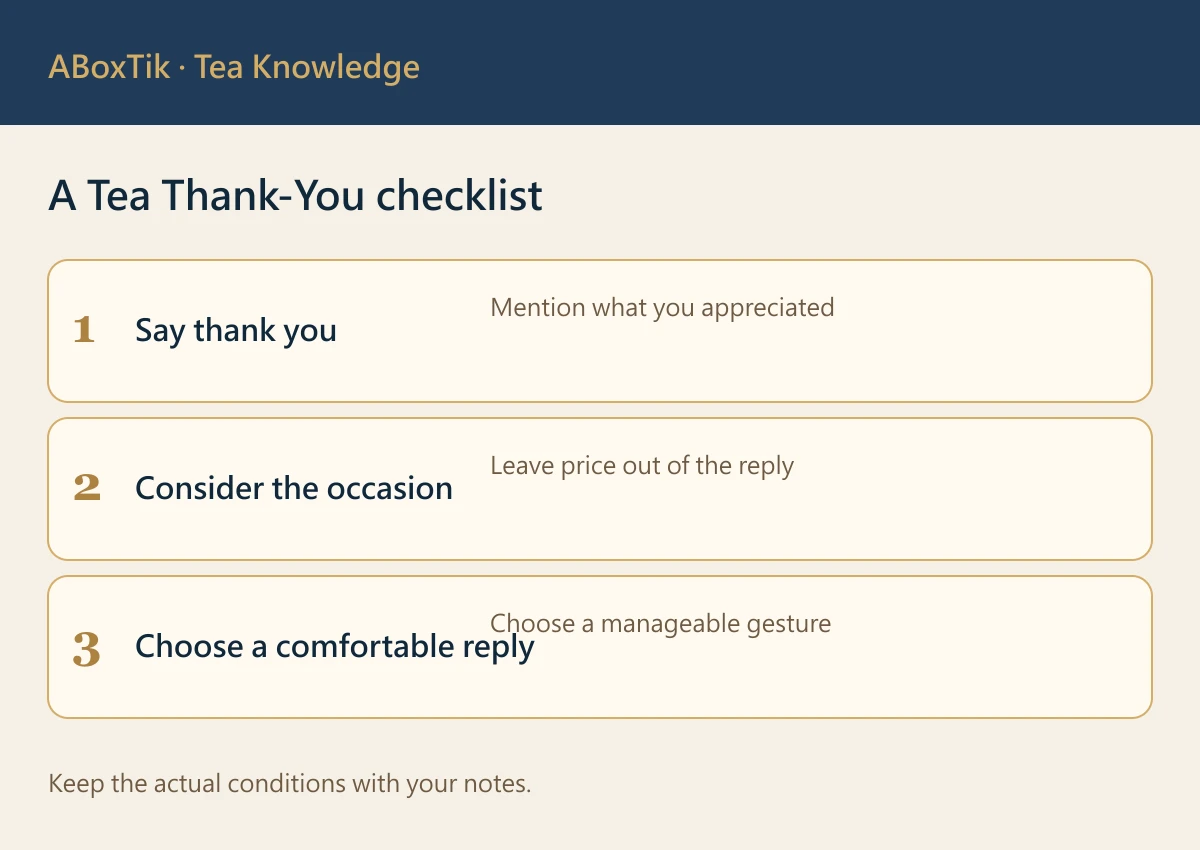
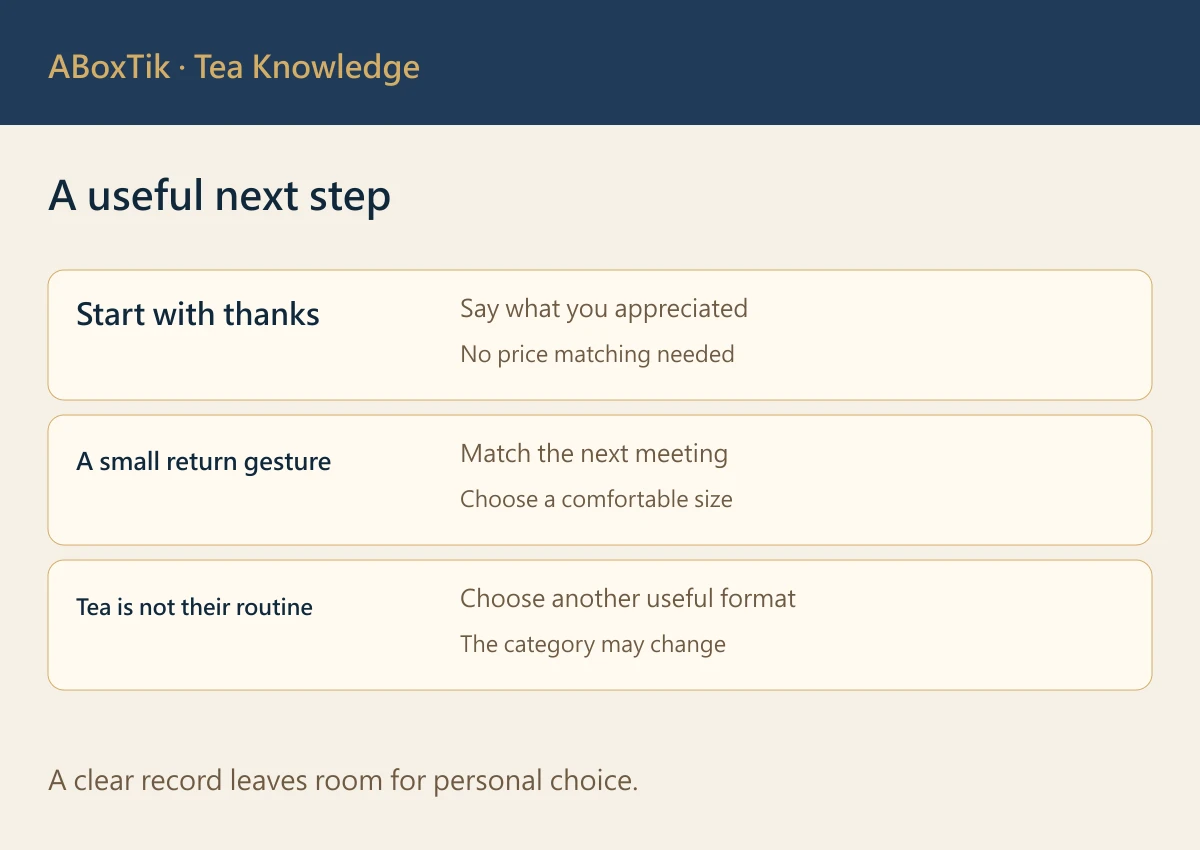
When a friend gives you tea, a sincere thank-you is a complete first response. Whether you return the gesture can depend on the occasion, the relationship and what feels comfortable; it does not require matching the price of the original gift. If you do wish to give something, begin with a small item your friend will actually use, a shared moment, or a message that names a detail you appreciated. Tea is an invitation to connect, not an invoice waiting to be settled.
An unexpected gift can make the question of cost feel louder than the gesture itself. Before trying to find out what the box cost, remember the occasion. Was it a travel discovery, a birthday present, a visit, or simply something your friend thought you might enjoy? Each situation offers a different way to respond. Understanding the reason for the gift usually gives you a more useful clue than guessing its price.
Say thank you before deciding what comes next
Mention one real detail. “Thank you for thinking of me; this looks like a lovely tea for a quiet weekend” is enough. If you have already brewed it, describe something you noticed, such as the aroma or the ease of making a cup. If you have not tried it, there is no need to pretend to have tasted it. An honest response lets the sender know their thought reached you.
For a parcel, a brief message confirming its arrival and thanking the sender is considerate. You can share a genuine impression later when you have time to open it. This is not a test of how quickly you can produce tasting notes. A friendship can continue at a pace that works for both people.
Four questions for choosing a response
First, was there a particular occasion? A friend sharing an extra packet may appreciate a simple thank-you and a later note about the tea. Second, do you both enjoy making tea together? If time and interest align, invite them for a cup. Third, do you know what they like? A small favourite snack or a tea they already enjoy can make an easy shared treat. Fourth, is a gift practical for you now? If money, time or distance is tight, a warm message and a future meeting are perfectly reasonable.
None of those answers creates an obligation. If your friend explicitly says that a return gift is unnecessary, respect that. If you genuinely enjoy sharing things, you might bring something when an appropriate opportunity appears. Two gifts do not need to arrive on the same day or balance on the same scale.
Tea from a trip: respond to the story
Suppose a friend brought tea home from a journey. Ask whether they discovered a favourite way to brew it or what led them to choose it. The gift may be a way to share a memory as well as a flavour. At a later meeting, you could bring a tea you regularly drink or a small snack to enjoy together. If meeting is difficult, a message mentioning the trip can be just as thoughtful.
Keep the package and preparation instructions when the tea is unfamiliar. Begin with its suggested amount, water and steeping time. If the flavour is new to you, there is no need to invent an enthusiastic tasting note. You might say, “I made it in my mug and enjoyed the gentle roasted aroma,” or “I am still getting to know this flavour.” A shared discovery does not require a perfect review.
Birthdays and visits: notice the care behind the gift
A birthday present does not automatically call for an immediate gift of the same value. Thank the person for remembering; when their own birthday arrives or you next meet, you can decide how you would like to mark it. When a visitor brings tea, a warm welcome, a glass of water and an unhurried conversation may already be a meaningful response. What hospitality looks like depends on the circumstances and on both people.
If your friend does not drink tea, there is no reason to send tea merely because tea was the original gift. A small item they use, a walk or a shared snack may suit them better. What they enjoy is a stronger clue than the value of the box. When you do not know their preference, asking is often the most thoughtful step.
If you want to give tea, check three practical details
How does your friend usually make a cup: with a mug, a pot, or rarely at home? Choose between tea bags, loose leaf and a mixed selection with that routine in mind. Next, consider known flavour preferences and any ingredients they prefer to avoid. Do not assume health needs or ingredient suitability on their behalf. Finally, check whether the quantity and handover are convenient. A large package that requires special storage might not fit a busy household.
Review the current product details, portions, storage instructions and delivery arrangements before choosing. Two distinctly different teas may start a pleasant conversation if your friend enjoys comparing them. If they already have a favourite, an unfamiliar choice is not automatically more thoughtful. Taiwan's Tea and Beverage Research Station discusses moisture, light, temperature and odours as storage considerations. Keeping the original packaging and directions with the tea helps the recipient decide how to store it.
Three messages to adapt
For a travel discovery: “Thank you for bringing this find back for me. If we get a chance, I would love to share a cup and hear about your trip.” Make the invitation only if sharing tea would be welcome, and leave the timing open.
For a birthday gift: “Thank you for remembering my birthday and for the tea. I picked up [a small thing you know they enjoy] and hope it brings you a pleasant afternoon.” Fill the blank with something actually confirmed; it is better to leave it out than guess at a preference.
For a friend who helped as well as sending tea: “I remember your help that day and the tea you sent. Thank you; I wanted to share a little something with you too.” Shorten or rewrite the sentence in the way you normally speak. The message should sound like the relationship, not like a card chosen for its impressive vocabulary.
Tea gifts at work need another check
If the tea came from a colleague or business contact, distinguish a personal sharing gesture from an organisational gift and check any applicable policies on both sides. Where a declaration or question is needed, use the appropriate contact. A personal return gift is not a way around a policy. If the recipient cannot accept a gift, a suitable thank-you message may be a better response.
When an entire team receives tea, check whether it can be shared at work and retain the ingredient and preparation information so each person can decide. Do not assume that everyone drinks the same thing simply because the gift is tea. Giving people room to choose is a practical form of care.
Make room for your own circumstances
Try completing three short phrases: “This tea reminds me of…”, “I know my friend likes…”, and “What I can comfortably do now is…”. If the second answer is blank, there is no need to rush to a shop. If the third answer is simply “send a message”, that is a complete next step. The exercise is there to clarify your thoughts, not turn gratitude into paperwork.
For a future gift, compare the current ABoxTik product information for tea styles, quantities and formats. A tea-gift selection guide and thank-you card examples can provide further ideas. The cup you received does not need to become another box immediately. Remembering the gesture may be the nicest beginning for the next time you meet.
| Question | A possible next step |
|---|---|
| Was it a casual gift? | Thank the giver and share a genuine detail |
| Would you enjoy meeting? | Offer time together when both are available |
| Do you know a preference? | Choose a modest useful item if you wish |
| Is giving difficult now? | A sincere message is a complete response |

Related reading and tea choices
Sources
Sources checked: 29 October 2026.