
Tea Knowledge
Tea Garden Visit Questions: An Interview Guide from Leaf to Cup
Bring a few questions to the tea garden, and leave enough time to listen.
On a tea-region visit, start with five questions: where is the garden, what is grown, what is being harvested, how is this batch made, and how does the tea in the cup relate to what you see? There is no need to memorise every technical term. Make each question specific to the place or batch, then keep what you saw, what your host explained and what remains unconfirmed in separate notes.
A first visit can be full of unfamiliar equipment, hillside paths and people getting on with real work. It is natural to wonder whether a question is too simple. “Which cultivar is growing in this row?” and “What happens after today’s leaves are picked?” are excellent ways to begin. This interview guide is a menu: choose a few questions that fit the visit rather than giving your host an unexpected examination.
Before setting off, find out what the visit includes
A tea garden is a working place. Opening times, routes, harvests and processing schedules vary. Contact the actual host to confirm whether visits are available, the meeting point, timing, price, transport and the areas included. For anyone who needs a gentler route, ask about walking distance, slopes, toilets and places to rest. Weather and work may change the day’s plan, so leave space in the schedule.
An official map can help orient you to a municipality and its roads; the host can then confirm the correct entrance. A tea-region name, a factory address and a particular garden location may answer different questions. One address should not automatically be used as the origin of every tea. Read our Taiwan tea regions guide for background, then use the interview card for the details of the place you actually visit.
Bring a notebook, suitable outdoor shoes and what the weather calls for. Ask before recording, photographing, touching equipment or entering a work area. If someone is operating machinery, wait for a suitable pause. The best opening question may simply be, “Is this a convenient time to ask?”
First stop: let the garden introduce itself
Begin with place: “What do you call this area? Which municipality or tea region are we in? Which part of the garden are we seeing today?” If your host is happy to explain, ask about the slope, orientation or light they notice in this specific plot. Record their words faithfully and leave uncertain details open. The notebook does not need to name every ridge before lunch.
Then ask, “Which cultivars grow here? Which one are we looking at? How do those choices affect the work you plan?” A cultivar gives information about the plant, not an automatic verdict on the quality or flavour of a finished batch. If there are several plots, ask which plot the answer concerns. A single region can include many growing conditions and working practices.
If the same place name appears on a tea package, a useful follow-up is: “Does this refer to where the leaves were grown, where they were processed, or a style used in the description?” This is a question about the meaning of a term, not a demand for private information. Your host can explain what information they are comfortable sharing and what applies to the particular tea.
Second stop: make the harvest specific
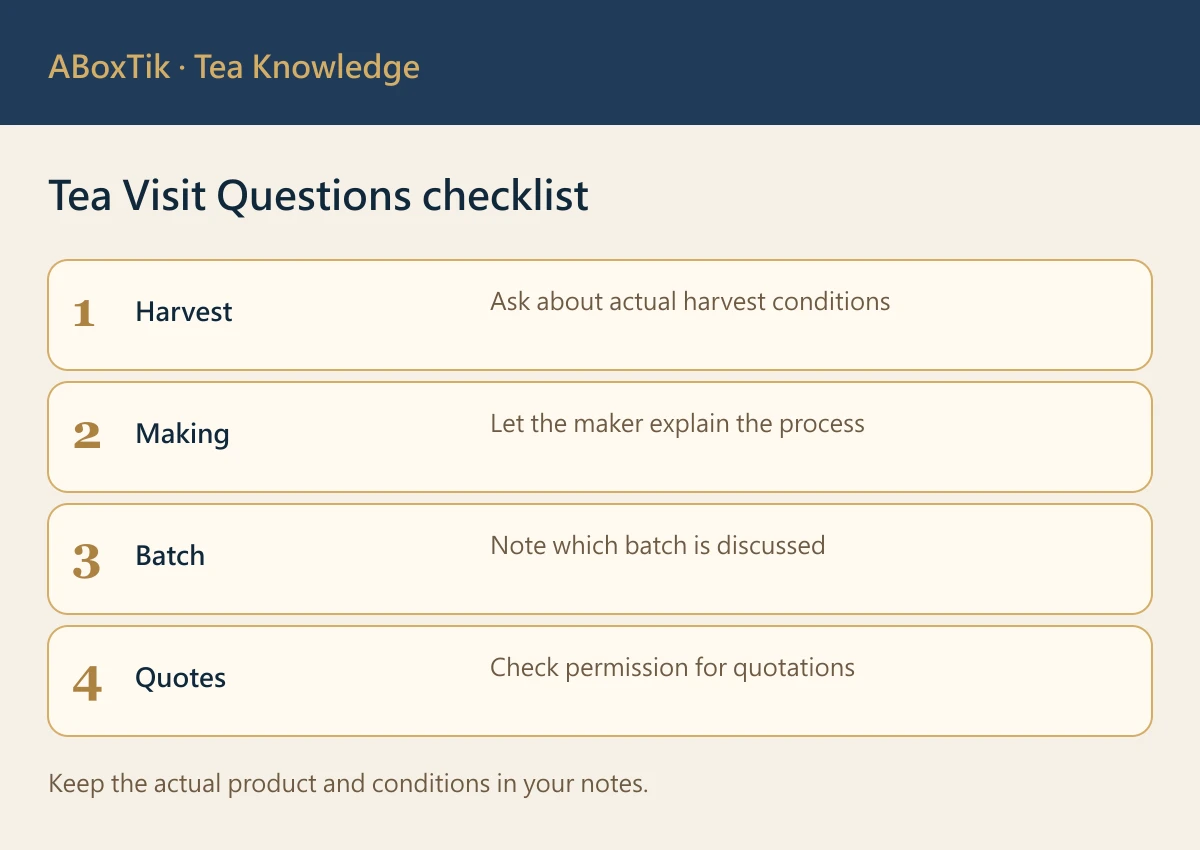
Ask, “Which harvest are we seeing today, and what conditions helped decide when to pick?” The host may discuss shoot maturity, weather, labour or other practical considerations. Such questions bring seasonal words back to actual work without assuming every spring or winter tea must have the same taste.
If there is no harvest on the day, ask about a recent one: “What had to happen between deciding to pick and bringing the leaves to the processing area?” If the host shows a photograph or record from another date, note its date and batch separately. A past photograph and today’s view can both enrich the conversation without being combined into a single event.
Open questions leave room for the producer’s judgment. Try “What do you pay particular attention to at this point?” and “What might cause the plan to change today?” If an answer concerns one plot or one harvest, retain that scope in the notes. One person’s experience is valuable without becoming a rule for every tea garden.
Third stop: follow the leaves into processing
The Taiwan Tea and Beverage Research Station describes steps such as withering, tea-making operations, fixation, rolling, drying and roasting in its overview of Taiwanese specialty teas. The exact sequence and choices depend on the tea and the producer. Ask first, “What kind of tea is this batch intended to become?” Then ask what is happening now, what came before and how the next step will be decided.
Before approaching equipment, confirm where visitors may safely stand and whether photographs are permitted. A practical question is: “What role does this machine play in this batch, and what do you observe before using it?” There is no need to demand proprietary settings. If a temperature or time is offered, record the unit and the batch it applies to; do not turn a specific answer into a universal instruction for another workshop.
Withering, oxidation and roasting can sound like a list for an exam. A timeline makes them easier to approach: what is happening, what is the producer looking for, and what determines the next decision? When a term is unfamiliar, try “I understood that to mean ____. Is that right?” A correction received on the spot is more useful than a beautiful technical word whose meaning is guessed later.
A garden-to-cup interview card
| Stage | A question to bring | Notes |
|---|---|---|
| Place and cultivar | What is this plot called, and what grows here? | _____ |
| Harvest | When was this batch picked, and how was the timing chosen? | _____ |
| Processing | Which stage is this batch in, and how is the next step decided? | _____ |
| The cup | How does the tea served relate to the leaves or batch seen today? | _____ |
| Follow-up | Which details may be quoted, and what still needs checking? | _____ |
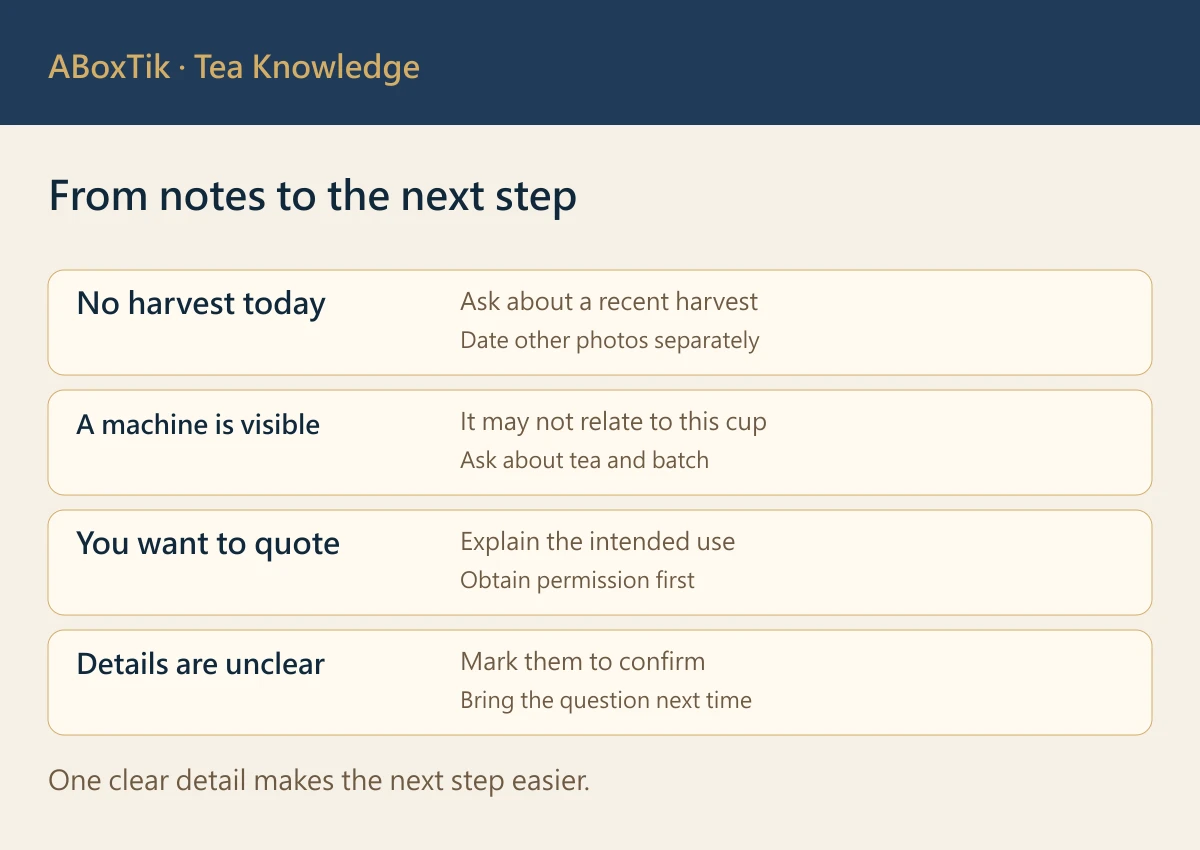
A visit may not coincide with a harvest, and the tea offered for tasting may have been made earlier. Record the tea name and any harvest or production information the host provides. Equipment seen today can help explain a process; it does not automatically establish that the cup went through every step observed on this visit. Keeping the distinction makes the story easier to check later.
At the tasting table, separate the explanation from your impression
If a tasting is offered, ask for the tea name, cultivar, production direction and brewing conditions. Mark anything unavailable as unconfirmed. In a separate space, write your own impression of aroma, taste and mouthfeel. It is fine to enjoy a cup or decide it is not your preference. The flavour-wheel note card provides vocabulary without requiring everyone to find every term in the description.
People at one table can notice different things. Let each person write a word or two before inviting the host’s explanation; it gives everyone room to contribute. If you would like to buy tea to take home, check the actual product, packaging, storage instructions and price. Enjoying a visit does not require an immediate decision about how much tea to buy.
Turn the conversation into a shareable account
Before leaving, check the person’s name, role and preferred public form of address. If you want to quote a remark or use a photograph, explain the intended use and ask permission. Afterwards divide the notes into three columns: “I observed,” “my host explained,” and “to verify.” For example, seeing a machine run is an observation; its described purpose is the host’s explanation; whether the tea in your cup used that machine may still need confirmation.
When sharing, include the date, place, speaker and scope of the information. If a name, batch or detail of someone’s history is uncertain, leave it open or ask again rather than completing a polished story with imagination. Other gardens may work differently. A visit offers a real window into one place and time, not a map of every tea mountain.
For background, read about the difference between Taiwanese tea and Taiwanese-style tea. At home, the high-mountain tea questions can help organise package information. Keep the interview card with your notes, and the next conversation can begin where this one left off.
Carry one question into the next cup
A visit does not need a perfect score. Knowing where you were, what you saw and who explained a detail already gives the next cup a useful context. Leave one question for another day. When tea is brewed at home, let the notes open alongside the leaves; what you cannot remember can remain blank until there is a chance to ask.
Related recommendations
- Explore Taiwan’s tea regions before a visit.
- Use a tasting note card to separate explanations and personal impressions.
- Explore a Taiwanese tea assortment and read its current product details.
