
Tea Knowledge
Does Darker Tea Taste Stronger? A Colour and Taste Comparison
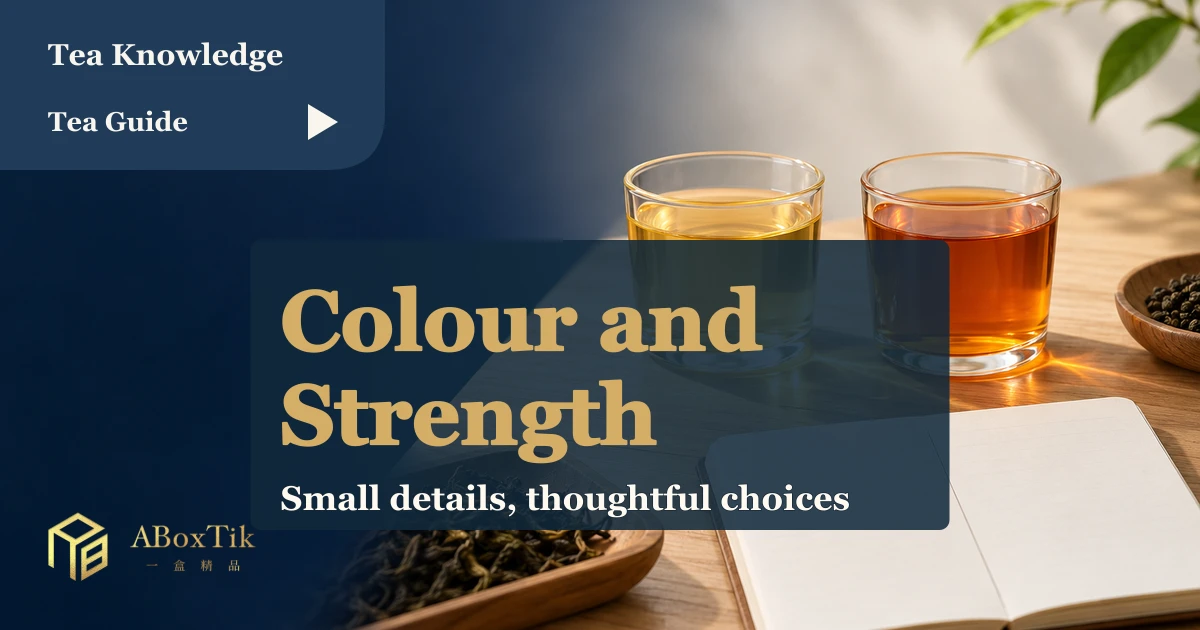
Look first, then take a sip. Colour and flavour each have something to say.
A darker tea is not necessarily stronger in taste. The leaves, processing and brewing conditions can all affect what appears in the cup. Colour is useful to record, but it cannot by itself tell us the aroma, bitterness, astringency or body. Compare similar amounts in similar cups under the same light, then give appearance and taste separate spaces in your notes.
Set two cups on a table and the darker one may immediately look more assertive. The first sip might agree—or it might have another idea. This guide offers a blank comparison card for trying one tea under different brewing conditions. It also leaves room for a perfectly acceptable observation: “I did not notice a clear difference today.”
What does “strong” mean in this cup?
Appearance can be described through colour, shade and clarity, with a note about the lighting. In conversation, “strong” might mean a prominent aroma, intense taste, a bitter or drying sensation, or a fuller mouthfeel. Two people can use the same word for different things. Ask whether the observation concerns what is seen, smelled or tasted, and write each answer in its own column.
For the visual comparison, use similar clear or white cups against a light background. Pour comparable amounts and place them together under the same light. The shape and colour of the vessel, the depth of liquid and the surroundings can affect what the eye sees. If one cup contains more tea, record that difference instead of immediately attributing the whole visual contrast to the leaves.
A lively floral aroma and a drying sensation on the tongue are also separate observations. Our flavour-wheel and tasting-notes guide offers vocabulary for aroma, taste and mouthfeel. Here the immediate question is narrower: do the appearance and the drinking experience tell the same story to the person holding the cup?
Colour is a clue, not the tea’s whole history
Taiwan’s Tea and Beverage Research Station includes typical liquor colours alongside aroma and taste in its flavour-wheel materials for different tea styles. These references provide a way to describe broad categories. A particular cup is still shaped by the leaves, preparation and viewing conditions. One glance cannot reliably identify its cultivar, exact processing history or quality.
Even with the same tea, changing the amount of leaf or water, the temperature or the steeping time may change the cup. With two different teas there are still more variables: their raw material and processing, for example. If a roasted tea looks darker and a floral tea looks lighter, do not assign all differences in taste to colour. A first comparison using the same tea keeps the question manageable.
Two cups that look similar can smell or taste different. Two people who agree which cup is darker can also disagree about bitterness or body. This is not a puzzle that requires a single correct answer. It is an invitation to give the eyes, nose and mouth their own lines in the record.
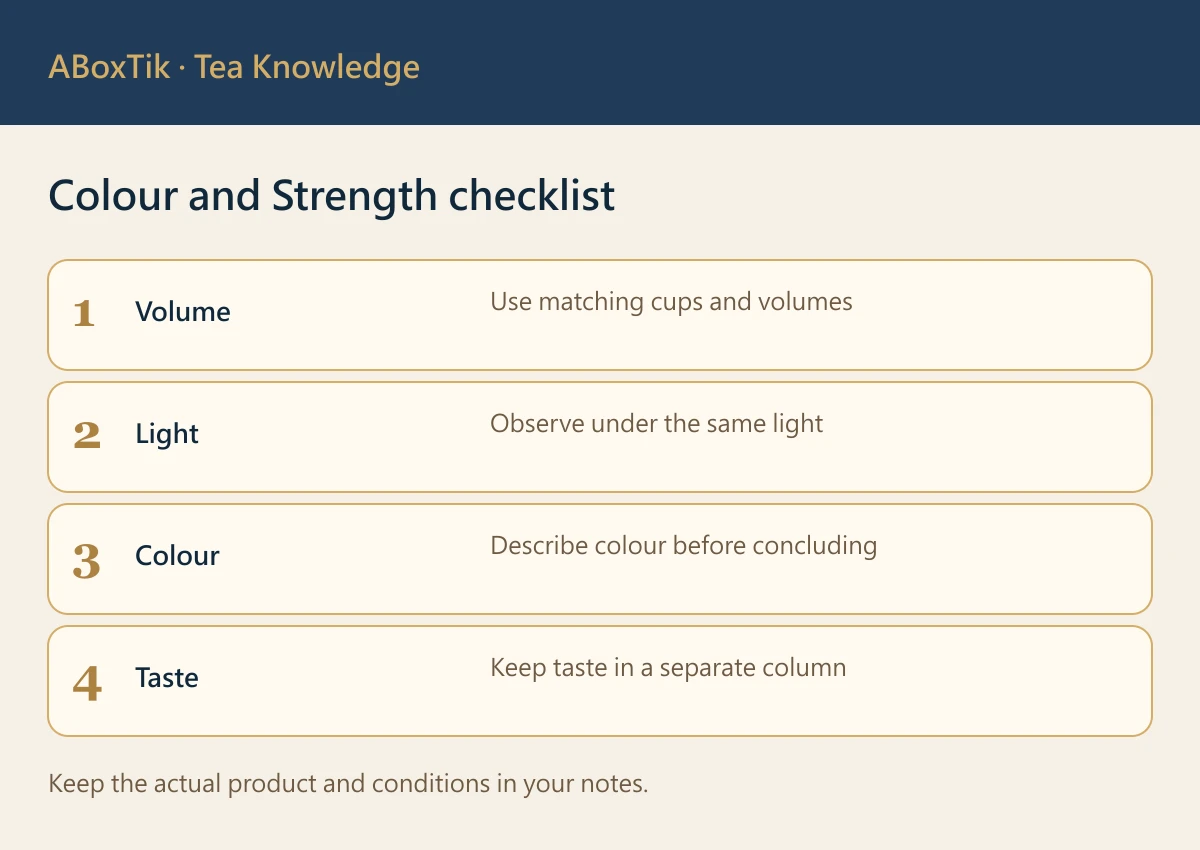
A same-tea comparison to try at home
- Choose one familiar tea. Begin with the product instructions and record its name, leaf amount, water, temperature and steeping time. Leave unmeasured numbers blank.
- Prepare two brews. Use the same tea and keep equipment, water volume and other conditions as similar as practical. Vary the steeping time between the two, recording what you actually did for each.
- Serve similar amounts. Pour into comparable cups on the same light background. Separate the leaves from the liquor so they do not continue steeping while you compare.
- Look first. Label the cups A and B and note shade and depth of colour. If the difference is difficult to see, write that down.
- Smell and sip at a comfortable temperature. Record aroma, perceived taste intensity, bitterness or astringency, and mouthfeel separately. Avoid deciding in advance which cup ought to taste stronger.
- Pause and change the order. Drink some water, rest as needed and revisit the cups. Note which you prefer and one thing you might change next time.
This is a household observation exercise, not a laboratory measurement of concentration. If other conditions were not identical, note them. Measuring the actual quantity of substances in a tea requires an appropriate method; a shade of amber or the phrase “very strong” cannot be converted into a numerical result.
A card for appearance and taste
| Record | Cup A | Cup B |
|---|---|---|
| Tea, leaf and water | _____ | _____ |
| Temperature and steeping time | _____ | _____ |
| Serving amount, cup and background | _____ | _____ |
| Colour and depth | _____ | _____ |
| Aroma and perceived taste intensity | _____ | _____ |
| Bitterness, astringency, body and preference | _____ | _____ |
| One question for next time | _____ | _____ |
A useful note can be short: “A looked darker, but B seemed more aromatic to me,” or “They looked similar; one felt more drying.” These are sentence patterns, not results from this exercise. Fill them with the observations that actually occur at your table. First record what you notice, then decide which cup you prefer.
When friends join in, write independently before sharing. One person may pay attention to colour, another to mouthfeel. The card is a starting point for conversation rather than a vote on which sense has the highest authority. If nobody notices a difference, that result belongs in the notebook too.
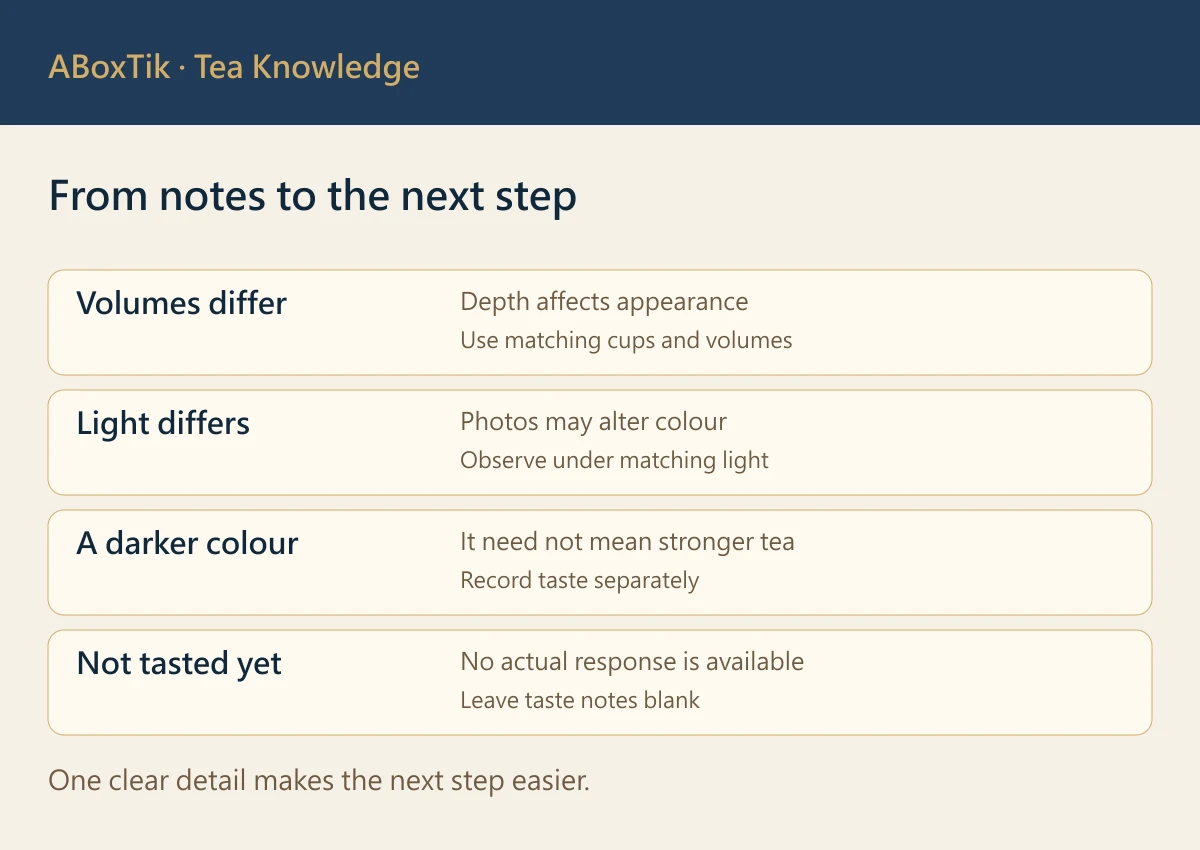
Why does one person say “strong” while another disagrees?
They may be describing different features. For one drinker, a strong tea has a prominent smell; for another, it has a distinctly bitter taste. Follow up with a gentle question: “Do you mean the aroma or the taste?” Then try “Is it bitter, drying, or simply fuller in the mouth?” The answers make the conversation more precise without requiring anyone to be declared the better taster.
Serving order, food and the temperature at which the tea is drunk may also affect an impression. Give both cups comparable conditions, pause between them and drink water as needed. There is no obligation for a group to agree. If a cup is unpleasant, stop or adjust the next brew to suit the person drinking it.
Adjust a brew without chasing its colour
Start with the instructions for the tea in hand. If the cup feels too intense, try either a shorter steep or less leaf next time, changing one factor and writing down the result. If the tea, water, cup and timing all change together, it becomes difficult to know which change mattered. Our bitterness and astringency guide offers ways to describe the sensation before adjusting it.
A pale-looking tea may still taste bitter to you. The helpful response is to return to the actual taste and brewing conditions rather than insist that a pale cup must be mild. Equally, if a darker cup feels comfortable and balanced, write that down. A cup does not lose points for failing to match an expectation.
If comparing different teas, record each name and preparation separately. Following each package is a sensible starting point, but the teas differ in more than one respect. Your note describes those particular cups and should not automatically become a rule for all floral or all roasted teas. The light and roasted tea guide adds background on style.
Leave a little room for the next cup
The value of a comparison card is not in filling every box. It is in preserving conditions you can revisit and impressions you actually had. Next time, find similar cups and lighting, then choose one adjustment. If the clearest note today is “darker than I expected, but not as intense on the palate,” that is an excellent place to begin.
For a relaxed shared tasting, choose a familiar tea and let each person write a word or two before discussing it. Colour does not owe the table a standard answer. A little curiosity, a clear note and the wish to brew another cup are more than enough for one afternoon.
Related recommendations
- Use the flavour wheel to record aroma, taste and mouthfeel.
- Explore bitterness and astringency before adjusting a brew.
- Explore a Taiwanese tea assortment and check the current product information.
