
Tea Knowledge
Tea Garden Story Gift Card: Check Facts Before Writing
A gift card does not need to carry the whole story of a tea garden. Choose one detail that can be checked and that belongs to the tea in the box, then explain in your own words why you chose it. Do not invent a place, person, quotation or promise to fill a gap. A little space lets the real detail breathe.
| What you want to say | What to verify | How to use it |
|---|---|---|
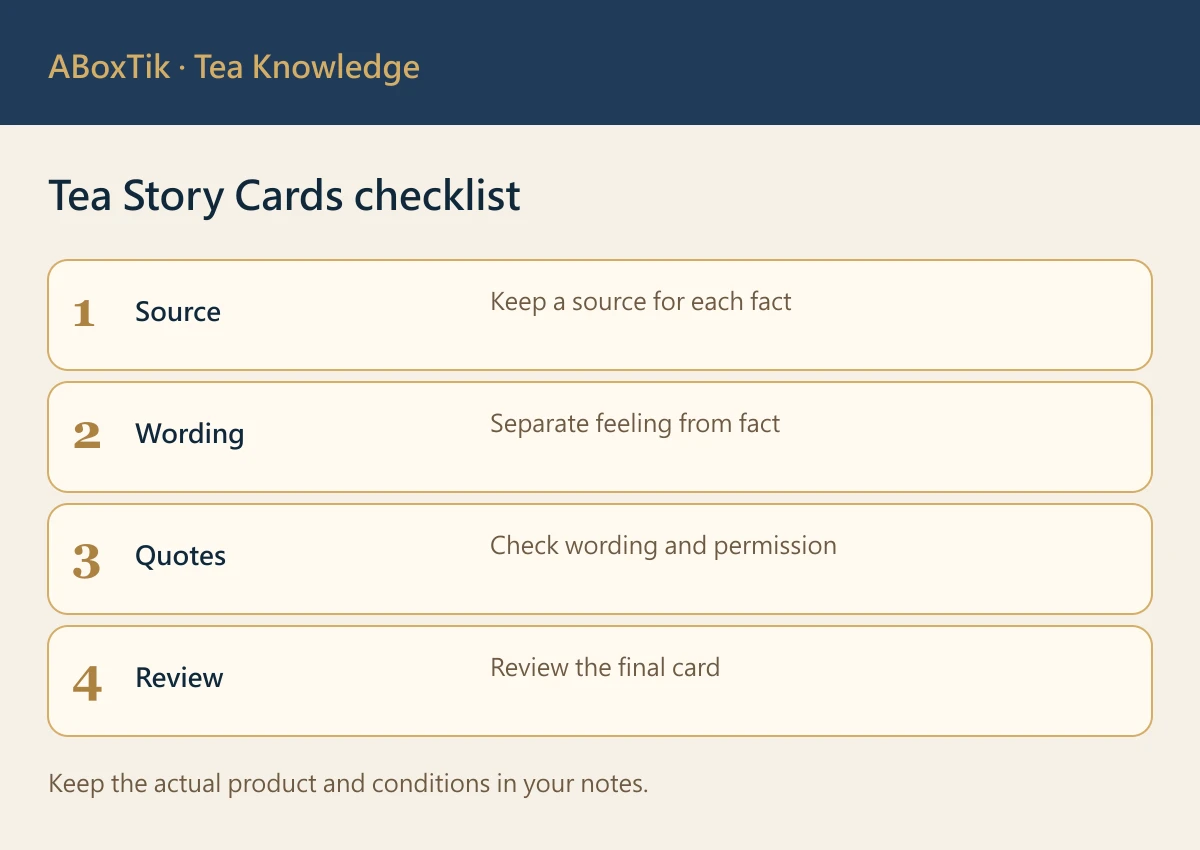
| Origin or garden | Leaf source, place name and date for this batch | Match the actual information; do not confuse packing with growing location |
| Production | Whether this tea’s process is documented | Describe a confirmed step without inventing a maker’s personal story |
| Person or quote | Identity, original words and permission | Quote only when verified and appropriate |
| Flavour and intention | Product description or your actual reason for choosing it | Invite the recipient to explore; do not promise an identical experience |
Keep the source link, document version, date and supplier confirmation in an internal working sheet. The card can stay brief. If the available information names a county rather than a particular garden, use the level of detail actually supported.
A three-sentence structure
Start with the verified tea or origin. Add your real reason for choosing it, then offer a gentle first step such as following the brewing instructions on the package. Fill the brackets with the details you have verified:
This tea is [verified tea name and origin]. I chose it because [your genuine reason]. When you have a quiet moment, follow the package instructions and find a strength you enjoy.
If the garden details are unavailable, use the verified tea name. A sincere card does not require a dramatic origin story. Before using someone else’s words or photographs, confirm the permission and scope; an attractive image cannot establish the source of a batch.
Check the card beside the actual box
Compare tea name, cultivar, origin, quantity and brewing information with the product in hand. Does the wording apply to this specific tea or batch? Does a translation turn “may” into “always”? Ask someone familiar with the product to confirm the final version. If an answer is pending, leave it out or wait before printing rather than sending the same mistake in every box.
A useful card tells the recipient what is inside, why it was chosen and how to begin. The rest can wait for a conversation over tea.
Build a source trail before writing the story
Give each candidate sentence a row: the sentence, the product and batch it refers to, its source, the date or version, the person who can confirm it, and its status: verified, awaiting confirmation or excluded. If a document applies to one harvest, do not automatically transfer it to another batch. When information changes, record the update date and where the earlier version is kept so the next person can trace the decision.
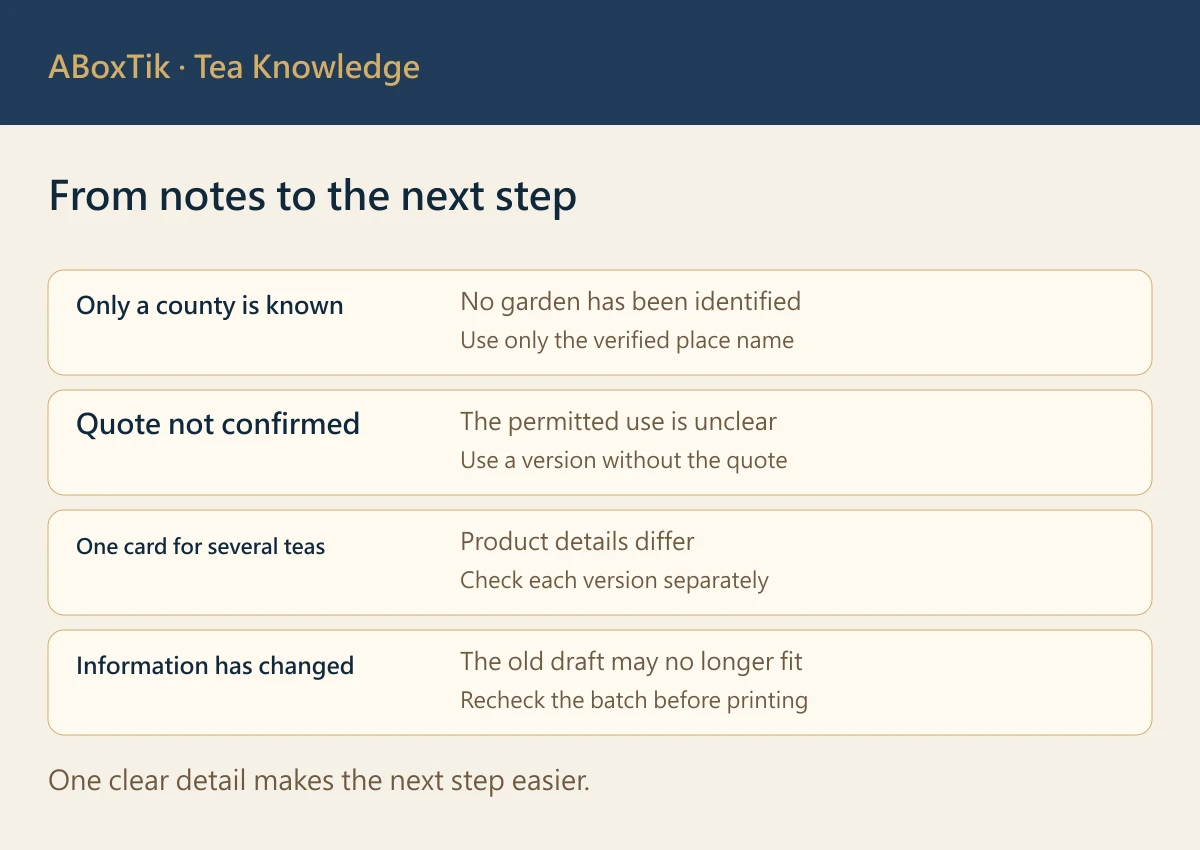
Imagine a supplier’s product sheet identifies a county and process but does not name a garden. The card can use those verified details; a mountain in a photograph does not supply a missing garden name. If more specific information arrives later, check that it refers to the same product and batch before updating the card. Record a photograph’s location, date and permission separately from the tea’s own origin.
A source trail need not appear in full on the printed card. Its job is to make a short public sentence dependable and easy to update. Keep the link or document, version and contact in a working file. A colleague should be able to understand not only where a detail came from, but also whether it is still relevant to the product being packed today.
Three common starting points
You have a product label, but no interview with the grower
Introduce the verified tea name and any supported information, then explain your own reason for choosing it. “You mentioned enjoying tea together, so I wanted to leave room for another shared cup” describes your intention. “The grower picked this especially for you” describes a specific person’s action and needs a matching source. Without that evidence, the first sentence is both warmer and more reliable.
Keep the distinction between an editorial observation and a production fact visible. You can write that the gift was chosen for an unhurried visit if that is your genuine reason. You cannot infer the grower’s daily schedule, family history or personal feelings from a photograph of a hillside. A straightforward card is not an incomplete story; it gives the recipient a truthful starting point.
You have a maker’s quotation, but are unsure about publication
Keep the original words and record who supplied them. Ask whether they may be used on this card, translated and printed, and confirm the person’s name, role and the scope of the permission. If the quote must be shortened, show the shortened version to the speaker so that a missing condition does not change the meaning. Until permission is clear, use a version without the quotation.
Separate permission from factual verification. A person may agree to be quoted without confirming every specification for every product in a gift series. Check the tea name, origin and batch with the person or document responsible for those details. The card is ready when both the wording and the information behind it have a clear home.
One card design accompanies several teas
Separate the shared greeting from the details unique to each product. A shared line can express the giver’s wish to spend time together. Tea name, cultivar, origin and preparation information should be filled in for the corresponding tea. Give each version a clear identifier and compare the card to the actual box. An elegant card loses its usefulness if it describes the tea in the box beside it.
For a multi-location order, agree who checks the final version and how corrections are returned. A simple register can list the product, language, card version and approver. Ask the supplier to confirm the quotation, quantities and handover time for the particular order.
Translation should not fill an evidence gap
Use a comparison sheet with the original sentence, verified fact, proposed translation, names requiring confirmation and reviewer. Use place and cultivar names consistent with the product information. Translate sensory language naturally, but do not turn “an aroma reminiscent of flowers” into a claim that flowers were added. If a sentence expresses only a mood, make it clearly the giver’s own wish rather than presenting it as a record from the garden.
Ask a second reader to read the translation on its own and explain what they understand about the place, person and promise. Compare that understanding with the source. If a reasonable reader could infer a claim the evidence does not support, revise the sentence. The versions do not have to mirror every phrase, but they should carry the same factual boundaries and the same invitation to the recipient.
Names deserve a separate check. A place can be a growing location, a processing location or a packing location; those are not interchangeable. A cultivar name describes the plant and may appear beside a regional tea name. When the underlying information does not specify which location a term describes, keep the wording narrow and ask for clarification instead of making the translation more specific.
Five questions before printing
- Do the tea name, origin and batch match the actual product?
- Can each factual statement be traced to the relevant version and a person who can confirm it?
- Do names, quotes, photographs and translations have permission for this use?
- Has an aroma description become an ingredient claim or a guaranteed effect?
- Have the responsible people confirmed the final proof, quantity and handover?
If an answer is pending, name an owner and a time to follow up rather than treating the draft as final. Keep the approved proof and the change record. When another batch needs a reprint, compare the underlying information again instead of copying an old file without review. A small version note can prevent a large box of avoidable corrections.
Frequently asked questions
Will a card feel ordinary without a garden photograph?
No. Clear typography, a recognisable tea name and a sincere message can do the job. If you use an image, verify its origin and permission. A generic landscape may set a mood, but do not imply it depicts the garden supplying this tea.
Should every story supplied by the seller appear on the card?
No. Select one or two details that belong to this tea and the occasion, and retain the source for further questions. The card has limited space; a reader should be able to understand it without a miniature archive printed on the back.
Can a verbal confirmation be used immediately?
Write down what you understood and ask the provider to confirm the wording, the products it covers and whether it may be shared publicly. If the answer is still pending, use the shorter verified version. Waiting for a definite answer protects the people whose story is being told as well as the people receiving it.
Does every gift need a dramatic origin story?
No. A tea name, preparation guidance and a genuine reason for giving can be enough. A story earns its space when it is relevant, accurate and pleasant to read; it does not need a fictional character or an invented journey to make the gift meaningful.
Related reading
