
Tea Knowledge
Comparing Black Tea and Oolong Withering
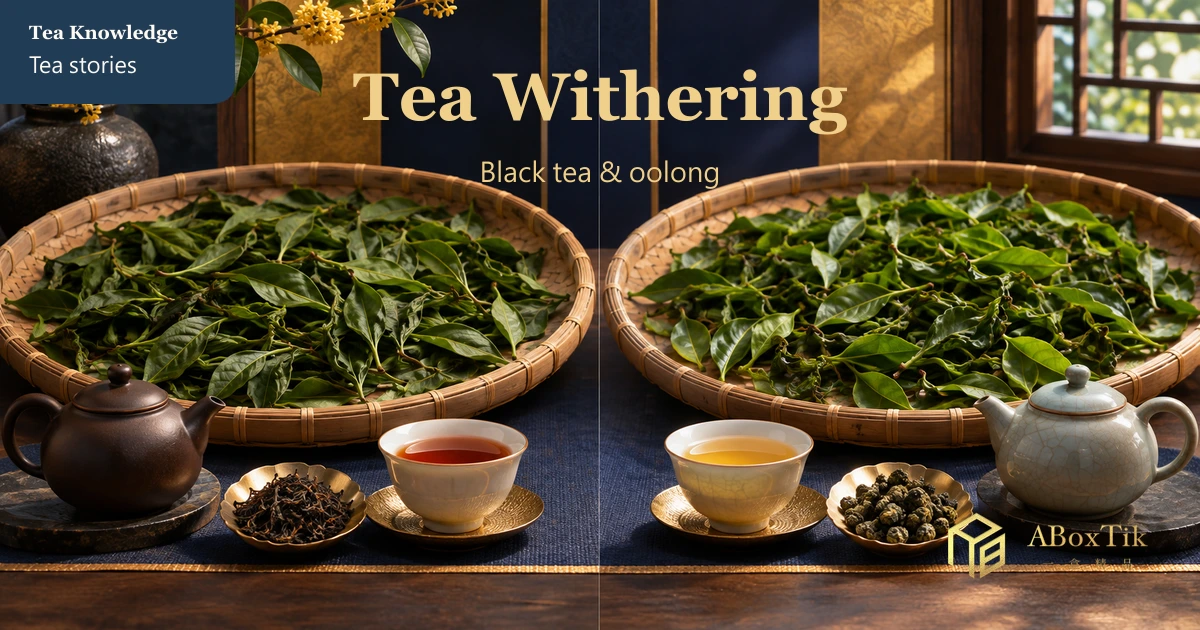
Compare the purpose before the clock
Both black tea and oolong may be withered, but elapsed time alone cannot establish which was handled better. Consider the leaf, production goal and later steps, then ask how the maker adjusted the process.
What happens during withering?
After picking, withering involves changes in moisture and biochemical activity. Environment, leaf condition and handling affect its progress. Equipment, leaf depth and weather vary between makers, so one number cannot describe every batch.
The later steps matter
Taiwan’s tea research station describes black tea moving through suitable withering, rolling and oxidation before drying. Common lightly oxidised oolong processing includes sun withering and subsequent handling. This is an introductory outline; actual methods vary with tea style and maker.
Make the comparison fair
Record leaf material, withering setting and conditions, the maker’s goal, later steps and tea sample. When leaf and environment both differ, the difference in the cup cannot be assigned solely to withering time. Without controlled information, keep possible causes as questions.
Use the information at the table
Ask the supplier what mattered in this tea’s production, then record your own brewing and sensory impressions. Processing is a relay: withering runs one leg, while the finished cup reflects the whole team.
To bring these questions back to an actual tea choice, browse ABoxTik Taiwan teas, then check the product label and batch information supplied for that tea.
The shared word does not imply the same target
Both black tea and oolong processing may include a stage called withering. In each case, freshly picked leaves lose moisture while internal changes continue, and the leaf becomes more suitable for later handling. Withering is not a button that produces one standard result. A maker judges the leaf in relation to maturity, initial moisture, weather, spreading method, intended tea style and the next operation.
The useful question is not simply “Which tea withered longer?” It is “What condition did this batch need to reach for the next step?” Black tea and oolong follow different arrangements for oxidation and handling, so their withering stages serve different process routes. Time belongs in the record, but it cannot act as the sole quality judge.
Black-tea withering prepares the leaf for rolling and oxidation
Taiwan’s Tea and Beverage Research Station summarises black-tea manufacture as a sequence that includes withering, rolling, enzymatic oxidation and drying. The withered leaf must be suitable for rolling, after which tissue disruption and controlled conditions support the oxidation that contributes to black-tea character. This outline explains the order of operations; it does not prescribe one temperature, layer depth, duration or moisture target for every factory.
If one black-tea record shows a longer wither, the immediate conclusion is only that its recorded duration was longer. Starting moisture, ambient humidity, airflow and the quantity of spread leaf can change the pace. Without comparable leaf and conditions, hours cannot be converted directly into more aroma, greater sweetness or higher quality.
Oolong withering belongs inside the leaf-disturbance sequence
Taiwan oolong manufacture commonly includes sun or indoor withering together with cycles of leaf agitation and resting, followed by steps such as fixation, rolling and drying. Changes in moisture, flexibility and aroma during this route affect how the leaf can be handled toward the maker’s intended style. Oolongs differ in oxidation, shape and finishing, so one timetable cannot cover lightly oxidised, more oxidised, twisted and tightly rolled examples.
“Sun withered” does not mean that more exposure is automatically better. Light intensity, leaf temperature, wind and leaf condition all affect progress. Practical judgment depends on continuous observation by the maker. A reader can understand the purpose without treating a duration found online as a remote audit of whether an unseen batch was made correctly.
Process-purpose comparison
| Question | Black tea | Oolong |
|---|---|---|
| Shared starting point | Picked leaves lose moisture and undergo internal change in preparation for later handling | |
| Later route | Rolling, oxidation and drying | Agitation/resting, fixation, rolling and drying, adjusted to the style |
| Do not judge alone by | Total hours, one visible sign or a single aroma word | |
| A fair comparison needs | Leaf material, environment, spreading, handling, target, later operations and finished samples | |
This table organises questions; it is not a manufacturing recipe. If a description says “long withering,” ask about the conditions, the maker’s observation and the following steps. When a supplier does not publish proprietary details, it is fine to stop at the verified tea type, origin, packaging and brewing guidance instead of reconstructing an imaginary factory.
How to compare finished teas fairly
Brew each tea separately and record tea amount, water volume, temperature, time and infusion number. Then note aroma, taste, mouthfeel and change across infusions. Differences in the cup reflect leaf, the whole production sequence, storage and brewing, not withering alone. A study of the withering variable would need samples with closely matched leaf and processing in which that condition was deliberately varied. Two unrelated retail packages rarely provide such control.
Three questions are easier for a supplier to answer: “What processing style is this tea?” “Which operation follows withering in this production?” and “Is the aroma description based on this batch, a typical style, or a general process explanation?” Clear questions keep the conversation useful without demanding trade secrets or pretending that one number explains the cup.
For the Taiwanese style often discussed where black-tea and oolong vocabulary meet, continue to the red oolong processing guide. That page explains the identity and sequence of red oolong. This article keeps a narrower promise: showing why black-tea and oolong withering cannot be compared by duration alone. The two intents can sit beside each other without being poured into the same pot.