
Boutiques
Hsinchu Glass Craft: Light, Form and the Work of Heat
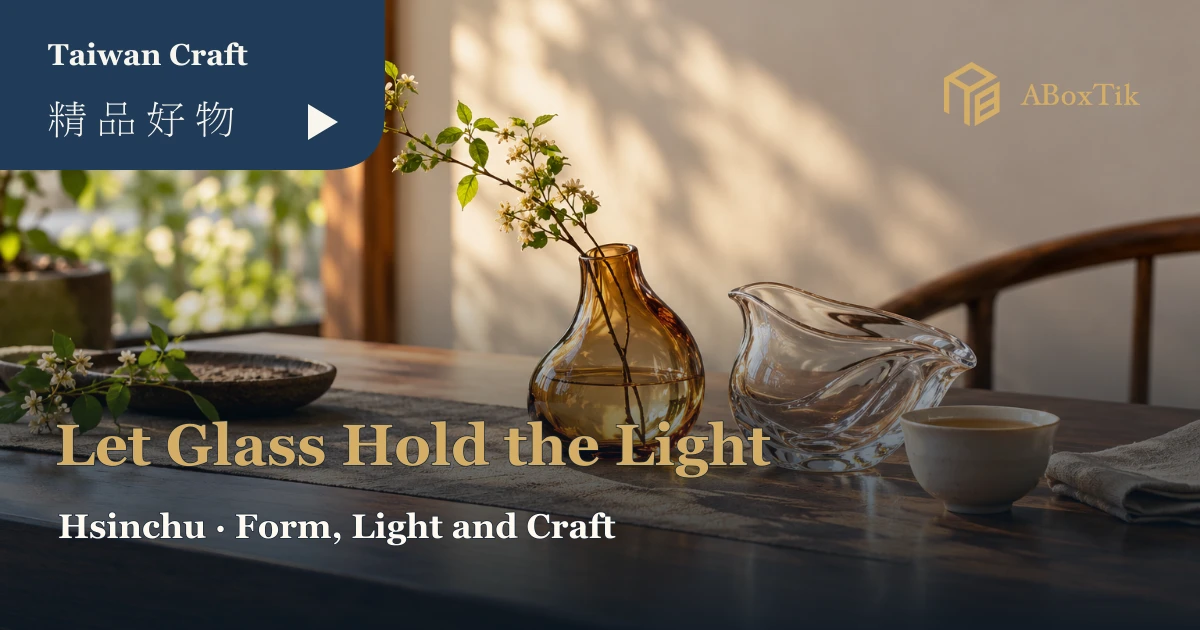
Light finds a different route through every piece of glass. Pause for a curve, a colour and one thoughtful question, and let a local craft story become part of an ordinary afternoon.
To appreciate Hsinchu glass craft, start with its local industrial story, then look at light, form, process and purpose. Notice how light travels through the piece or settles on its surface. Follow the silhouette, read the maker’s description of the techniques, and ask whether the object is intended for display or practical use. Clear glass is only one possibility: colour, translucent areas and opaque surfaces can be just as much a part of the work.
Standing in front of a piece and thinking “that’s lovely” is a perfectly useful beginning. Add one detail: a curve, a colour, or something that appears from the side. There is no surprise vocabulary test waiting in the next gallery. This guide focuses on a regional craft and ways of looking; for choosing a brewing vessel, keep the teapot materials guide alongside it.
Why Hsinchu glass craft matters: industry becomes a creative foundation
In its 2025 introduction to the “Wind in Motion—Hsinchu” craft exhibition, the National Taiwan Craft Research and Development Institute describes natural gas and silica sand as resources that helped establish the city’s glass craft. It also presents glass and high technology as coexisting parts of Hsinchu. The regional story therefore involves materials, energy, skilled work and accumulated experience, as well as the objects themselves.
The institute’s profile of glass artist Li Wen-fu offers a particular example. He began as an apprentice in an instrument factory, spent many years in the glass industry, and later applied his experience of hollow glassblowing to creative work. Industrial precision can become a foundation for artistic decisions. His route is one individual story; other makers have their own backgrounds to discover.
When a shape looks simple, ask how it was formed. When a sculpture is richly coloured, ask what the artist wanted to explore. Read Hsinchu alongside Taiwanese ceramic craft history and Sanyi woodcarving to see how different materials develop through different local histories. A place can connect makers without requiring every maker to produce the same style.
Look at light and form before trying to name the technique
Begin with the whole outline, then change your own viewing position where the gallery permits it. The front and side may reveal different colour layers, edge brightness or views of the background. Thicker and thinner areas can look different. With a frosted, dark or opaque surface, notice where the light settles rather than asking only how much can be seen through it.
Follow the shape next. Does the opening narrow or spread out? Does the base feel visually grounded, or does the eye travel upward? Are the curves continuous, or interrupted by a deliberate turn? Everyday descriptions work well here. Occasionally the background seems to play hide-and-seek through a glass object; make a note of the effect and leave the production details for the label or maker.
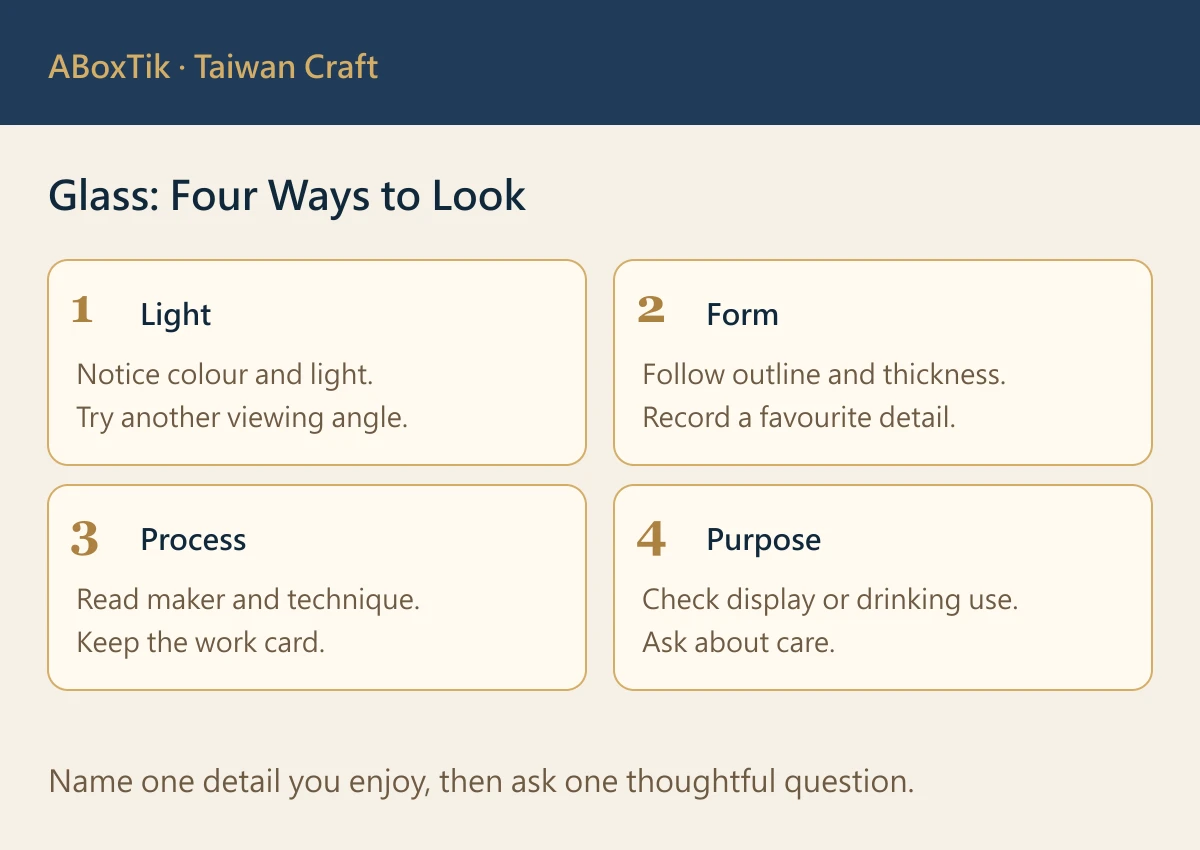
A one-minute invitation: choose a piece and complete three sentences: “I first noticed…”, “From the side…”, and “I would ask the maker…”. Perhaps the amber colour caught your eye, a side view revealed a change in thickness, and you want to know how the colour was introduced. Keep the exhibit in place, follow the viewing rules and let the gallery lighting do its work.
Check photography rules before taking a picture. Recording the title and artist gives that picture something useful to travel home with. If a companion notices the line while you notice the colour, compare those observations. Two specific details can open a richer conversation than deciding who understands the work better.
What heat does: blowing, kiln forming and coldworking
There are many glassmaking techniques, but three groups of actions make a helpful starting point. The Corning Museum of Glass describes blowing as inflating hot glass to form an object, and kiln forming as heating glass in a kiln to fuse or shape it. Its educational process listings also distinguish coldworking tasks such as grinding and cutting from kiln work, furnace work and blowing. A single piece may combine several processes.
| Starting point | Basic action | A question for the maker |
|---|---|---|
| Blowing and hot shaping | Changing the shape while glass is workable, using air or tools | Which parts were blown, and which were worked afterward? |
| Kiln forming | Heating glass in a kiln to fuse it or shape it with a mould | How were the layers and form arranged? |
| Coldworking | Grinding, cutting or treating the surface of formed glass | How was this edge or surface finished? |
Cooling also matters. The museum’s definition of annealing explains how controlled cooling addresses internal stress: cooling too quickly can leave glass vulnerable to breakage. Making is therefore about waiting and control as well as a dramatic moment of heat. Different materials, sizes and processes call for their own schedules.
Being made at a high temperature does not mean a finished object can accept any hot drink or sudden temperature change. For tea use, ask about the particular vessel’s intended purpose, water temperature and handling instructions. A display piece can remain a display piece; it does not need a second career as a teapot to earn its place on the table.
Bubbles, colour and traces: observe first, then ask
If a bubble catches your eye, note its position, size and distribution. If a colour layer stands out, see how it relates to the shape. Such details invite questions about composition and making, but cannot establish handmade origin, price or quality on their own. A bubble should not have to issue its own certificate of craftsmanship. The maker’s explanation and the work’s documentation are more useful.
Appreciating variation and checking condition can happen together. Before buying, ask the seller to explain the condition of the rim, base, joins and surface. Have an unfamiliar line identified and recorded. If an object already in use develops a crack or damage, stop using it and consult the maker, especially when hot water is involved.
Keep place, maker, material and technique as separate fields. “Hsinchu” supplies a regional context; it does not specify a single glass recipe. The same approach helps when reading Miaoli pottery: a place opens the story, while the individual object keeps its own details.
Before collecting: make a light, form, process and purpose card
Picture where the piece will live. A shelf, a window area and a tea table offer different spaces and routines. Viewing angle, stability, moving and cleaning all deserve attention. Measure the space before checking the dimensions of the object; the shelf and the sculpture will have a much easier first meeting.
- Light: record the colour and angle you enjoy, and ask about suitable display lighting.
- Form: note dimensions, weight and base, then check space and handling.
- Process: record the artist, title, place of making and principal techniques; keep the work card.
- Purpose: confirm display, holding objects or drinking use, together with cleaning and handling instructions.
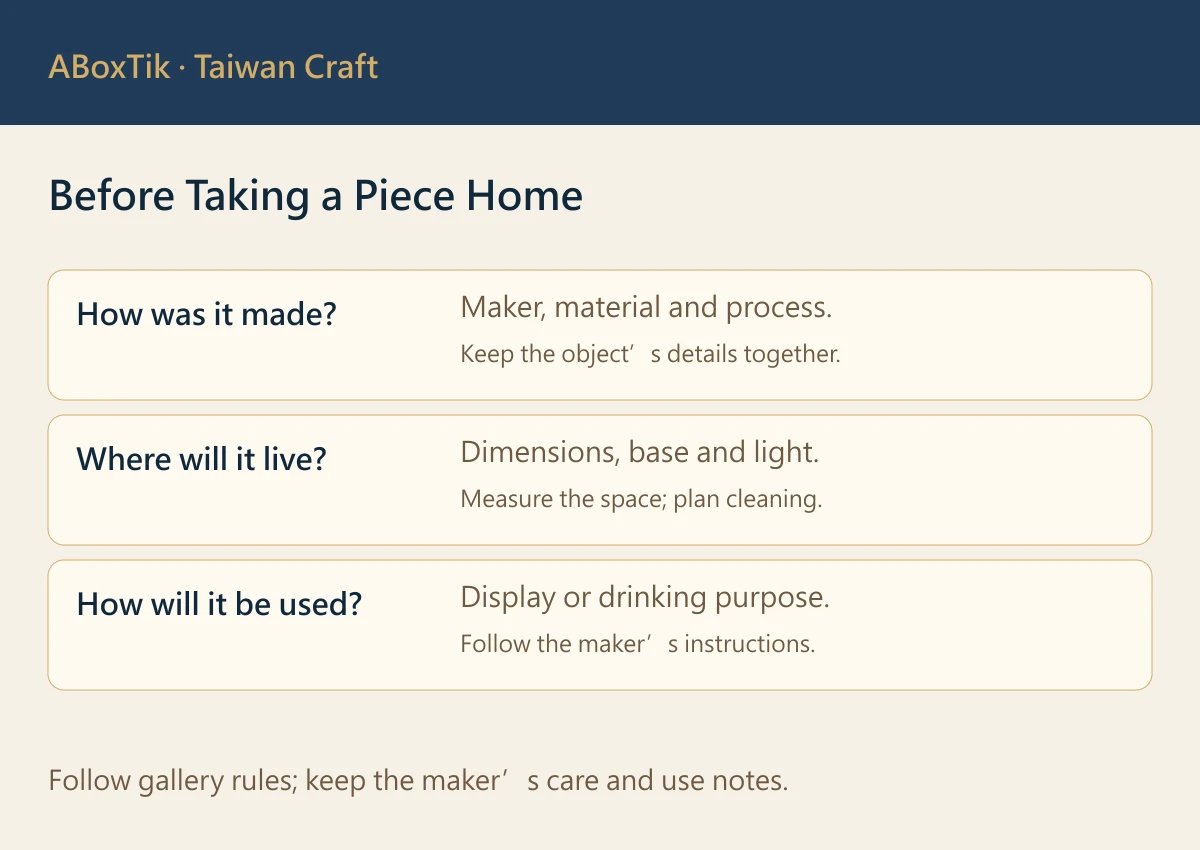
For a drinking vessel, ask separately about hot water, sudden temperature changes, heating appliances and cleaning. Appearance cannot answer those questions. Continue with the teapot materials guide for everyday brewing considerations, or place the stoneware teaware guide alongside it to practise similar questions with another material.
For a gift, the recipient’s space and preference for display or use are often more helpful than an impressive appearance. Include the maker’s information and care notes. Visiting an exhibition, listening to a guide and recording a favourite work are also ways to begin supporting a deeper relationship with craft. Buying need not be the first step.
Where to begin in Hsinchu: give one object another half-minute
The Hsinchu City Glass Museum is a useful starting point for the local craft story. Check the city Cultural Affairs Bureau’s museum section for current exhibitions, visits and guided activities. Workshops and practical sessions need their own checks for booking, age requirements and participation rules. Let current notices organise the trip, and use historical material to understand the background.
There is no need to understand the entire gallery in one visit. Choose a piece you want to see again, read its label, move to a permitted viewing angle and record one question. During a demonstration, notice the maker’s actions and pauses while keeping to the designated viewing area. Curiosity works well with a little room around it.
At home, place the card beside a photograph and ask: “Was it the light, form, process or purpose that stayed with me?” The answer may differ from what you expected before the visit. That change is part of the pleasure. On a later visit to see Sanyi woodcarving, the same rhythm—look first, then ask about the story—will still be useful.
Questions about Hsinchu glass craft
Does Hsinchu glass craft have to be transparent?
No. Look at translucent and opaque areas, colour layers and surface texture as well. Transparency is one part of a work’s expression; consider how it works with shape and light.
Do bubbles prove that glass is handmade?
No. Record the detail, then ask how the work was made and whether that feature forms part of the design. Keep the artist’s information with the object.
Can any glass artwork be used for tea?
Follow the intended purpose. Before drinking from a piece, confirm the maker’s instructions for beverage contact, hot water, temperature changes and cleaning. Display works should be placed and cared for as display works.
Is a visit worthwhile if I cannot identify the techniques?
Yes. “I see”, “I like” and “I would ask” provide a good beginning. Labels and guided conversations can carry that curiosity further.
Tea with ABoxTik

A craft conversation can begin beside an ordinary cup of tea. While sorting exhibition notes, use the cup and brewing routine that already feel comfortable, leaving attention for the details remembered today. Read ABoxTik’s story to explore how we share Taiwanese products. For a tea-and-conversation afternoon, the four-box Taiwanese pure tea gift offers a choice of teas; let the product information and your own preferences guide the selection.
Next time a glass object draws you in, add one specific reason to “that’s lovely”. It might be a curve, or the way the background appears through an edge. Understanding can build gradually. Another moment of attention is already a way of bringing regional craft closer to everyday life.
Related recommendations
- Sanyi woodcarving: practise looking at form and reading an artist’s story through another material.
- Taiwanese ceramic craft history: place regional industries and everyday objects on a wider craft map.
- the four-box Taiwanese pure tea gift: choose tea by taste for a conversation after the exhibition.