
Tea Knowledge
Miaoli Pottery: Clay, Wood Firing and a Sense of Place
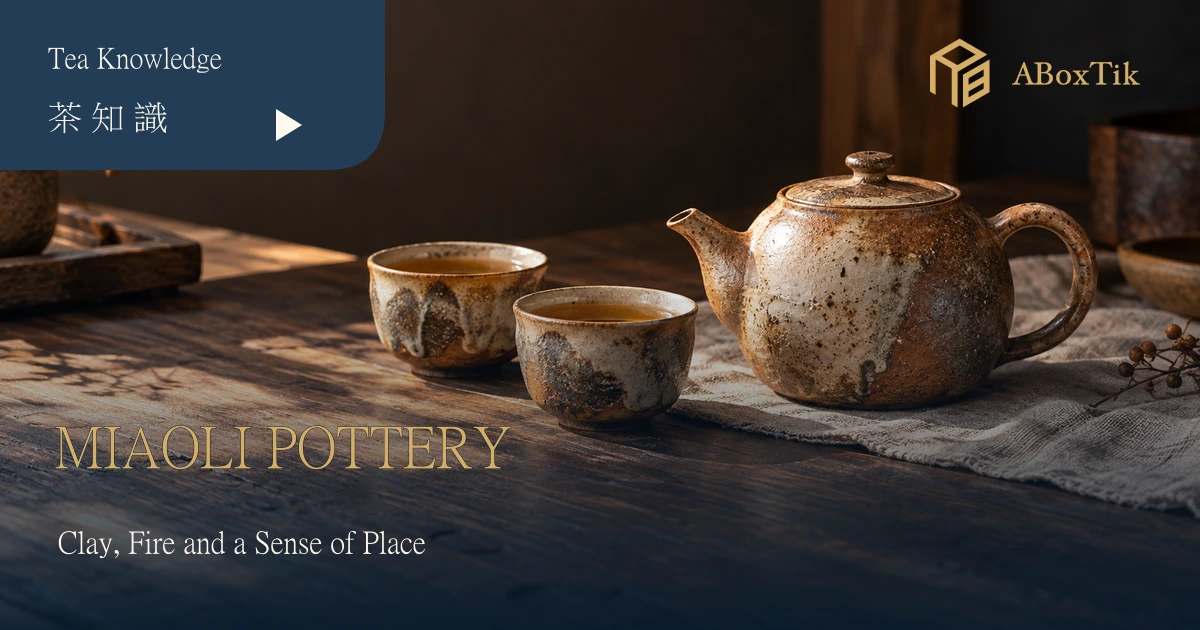
A ceramic piece can feel welcoming before its story is fully understood. Begin with its shape, a surface detail and a question for the maker. There is time for the rest to unfold over tea.
Miaoli pottery is best understood through several connected stories: regional clay and fuel resources, a history of practical jars and decorative ceramics, and the individual choices made by potters. Wood firing is an important part of that picture, but it is not the only one. A brown surface, an uneven texture or an ash-like glaze cannot, by itself, identify a piece’s origin or firing method.
For someone meeting Taiwanese ceramics for the first time, those distinctions can be reassuring. There is no need to recognize every kiln technique before enjoying a cup. This guide offers a way to look, then a few useful questions to ask. For a broader background, continue with Taiwan’s ceramic craft history; for daily brewing choices, the teapot materials guide covers a different, practical set of decisions.
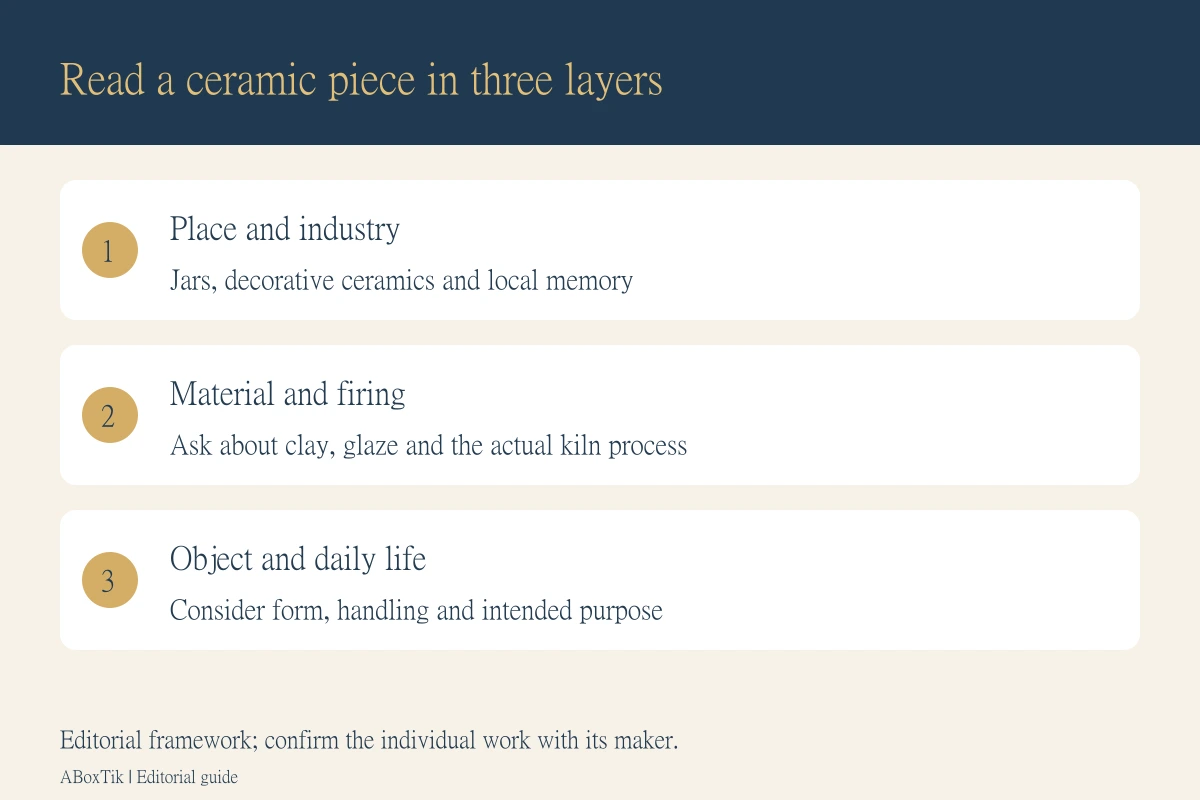
Reading Miaoli pottery in three layers
| Layer | What it helps explain | What to confirm about one piece |
|---|---|---|
| Place and industry | Resources, practical jars and decorative manufacturing | Maker, studio, place of production and date |
| Material and firing | Clay, glaze and the kiln process | Actual clay body, surface treatment and firing method |
| Object and daily life | Form, touch, handling and intended use | Whether it is an artwork for display or a vessel for tea |
This is ABoxTik’s editorial reading method, rather than an attribution or valuation formula. A pot made in Miaoli may use prepared or blended clay from elsewhere. A maker may draw on a local story while choosing a different kiln process. Separating where, what and how gives the object room to be described accurately.
The same care applies when comparing regions. Yingge ceramics has its own industrial context; neither place needs to win a ranking. Clear information about the maker and intended use is more helpful to a future owner than a broad regional reputation alone.
Clay, jars and decorative ceramics: a varied regional history
Miaoli County’s historical account identifies local clay, woodland and natural gas among the conditions supporting its ceramic industry. It also recalls wine jars and decorative exports. A separate county report on a 2023 exhibition describes ceramic figurine manufacturing in Gongguan and other local areas during the 1970s.
These records widen the picture beyond a single rustic look. A storage jar invites questions about capacity, opening and original purpose. A decorative object invites attention to modeled form, painted detail and the manufacturing story behind it. Looking at both helps explain how different needs shaped the region’s ceramics.
Regional resource descriptions still do not establish the composition of an individual clay body. Ask the studio for that information. If the question is how a vessel fits brewing, brewing tea in porcelain provides another starting point, with attention to the specific object rather than its place name.
Looking at wood firing without rushing to a verdict
The National Taiwan Craft Research and Development Institute’s profile of Zhunan Snake Kiln describes natural wood ash interacting with clay at high temperature to form an ash glaze. This offers a concrete local example. Its particular kiln technique is not a universal temperature prescription for wood-fired pottery.
For an unhurried first look, turn the piece gently where handling is permitted. Notice a brighter area, an exposed clay surface, a thin deposit or a thicker layer. Then look at the rim, foot and overall proportions. Ask how the maker explains these details; appearance supplies questions, not a complete process record.
More ash does not automatically mean a better piece. An appealing surface can coexist with a form that does not suit a particular hand or tea table. For a drinking cup, the rim and the ease of cleaning deserve attention alongside color. A work made for display can be enjoyed in that role without becoming a brewing vessel.
Tea’s own aroma deserves a separate observation, too. The tea aroma guide helps organize impressions of leaves, liquor and cups. A ceramic story can be meaningful without promising that a regional clay or kiln method will always improve flavor.
Six thoughtful questions before choosing teaware
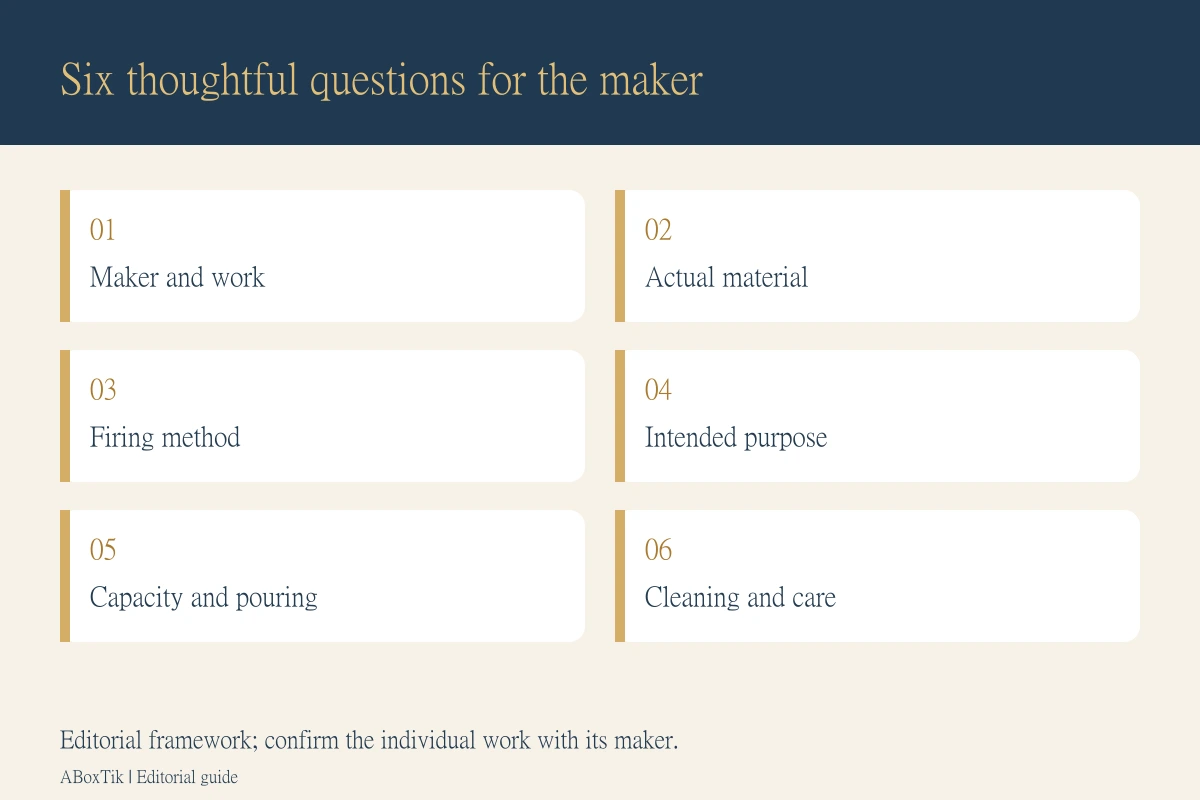
- Who made it? Confirm the maker, studio, production place and date. Keep the work card or written description.
- What is the material? Ask about the clay body and glaze, including differences between inside and outside.
- How was it fired? Request the actual method rather than relying on a regional assumption.
- What is it intended for? Confirm whether it was designed for hot water, tea or food contact, and ask about limitations.
- How does it handle? With permission, check grip, usable capacity, filled weight, lid and pouring.
- How should it be cared for? Ask about cleaning, drying, storage and what to do after damage.
The conversation can start simply: “We usually drink tea as a pair; would this vessel suit us?” That gives the maker a practical context. If shape is still undecided, gaiwan versus teapot can help. An existing, comfortable vessel is also a perfectly good place to remain while a new choice takes shape.
A useful small exercise is to write two notes before buying: what first attracted attention, and what the piece would do at home. A beautiful surface answers the first. Capacity, cupboard space and a manageable cleaning routine answer the second. Neither note should erase the other.
Visiting, collecting or giving: leave time for understanding
A craft visit can begin with one place of interest rather than a long list of stops. Check current opening and booking arrangements directly. Historical event reports are useful for understanding the industry; they should not become today’s travel timetable. Reading one label and asking one question may make a visit more memorable than photographing every surface.
For a first collection, begin with a work that is affordable and worth returning to with the eyes. Record the form, color and maker’s explanation that led to the choice. Price, fame, handmade production and wood firing each provide information, but none alone establishes personal suitability. The premium tea value guide encourages a similarly careful separation of story and practical need.
For a gift, ask whether the recipient prefers display or everyday use, and consider storage and care. Include the work card and instructions. If teaware would create an unfamiliar routine, a familiar tea may be a thoughtful alternative: the tea gift guide offers another path, while whole-leaf teas suit someone who already has brewing equipment. There is no obligation to add a new object.
Common questions about origin, firing and tea
Does a piece made in Miaoli always use Miaoli clay?
No. Production location and raw material origin are separate details. A clay body may also be blended. Confirm the particular work’s information with its maker.
Does a brown or rough surface prove wood firing?
No. Materials, glaze, forming and firing can all affect appearance. Use the maker’s account to establish the actual process.
Is every wood-fired piece suitable for tea?
Confirm purpose, interior surface, capacity, pouring and care for the individual vessel. A sculpture can remain a sculpture; brewing adds practical questions.
Must a beginner buy a matching set?
A single comfortable cup, a visit or further reading can be enough. For everyday practice, combine a familiar tea with the brewing guide and notice what feels useful.

Follow ABoxTik over tea | An object’s story begins with a closer look. Its place in daily life begins with a comfortable hand and thoughtful care.
Let a regional story find its place at the tea table
Miaoli’s ceramic story includes daily life, manufacturing and individual artistic choices. Enjoy the surface, then ask about origin and use. For a next step, browse ABoxTik’s teaware and craft selections, or choose a familiar companion from the Taiwanese whole-leaf tea collection. The thinking behind the brand is available in About ABoxTik, whenever there is time to read a little further.
Sources
- Miaoli County Government: local ceramic association activities and industry background (2020 historical report; checked 2 October 2026)
- Miaoli County Government: exhibition on Taiwan’s 1970s ceramic figurine industry (2023 historical report; checked 2 October 2026)
- National Taiwan Craft Research and Development Institute: Zhunan Snake Kiln (checked 2 October 2026; individual kiln example)