
Tea Knowledge
Jin Xuan vs Four Seasons Spring: A Practical Buying Guide
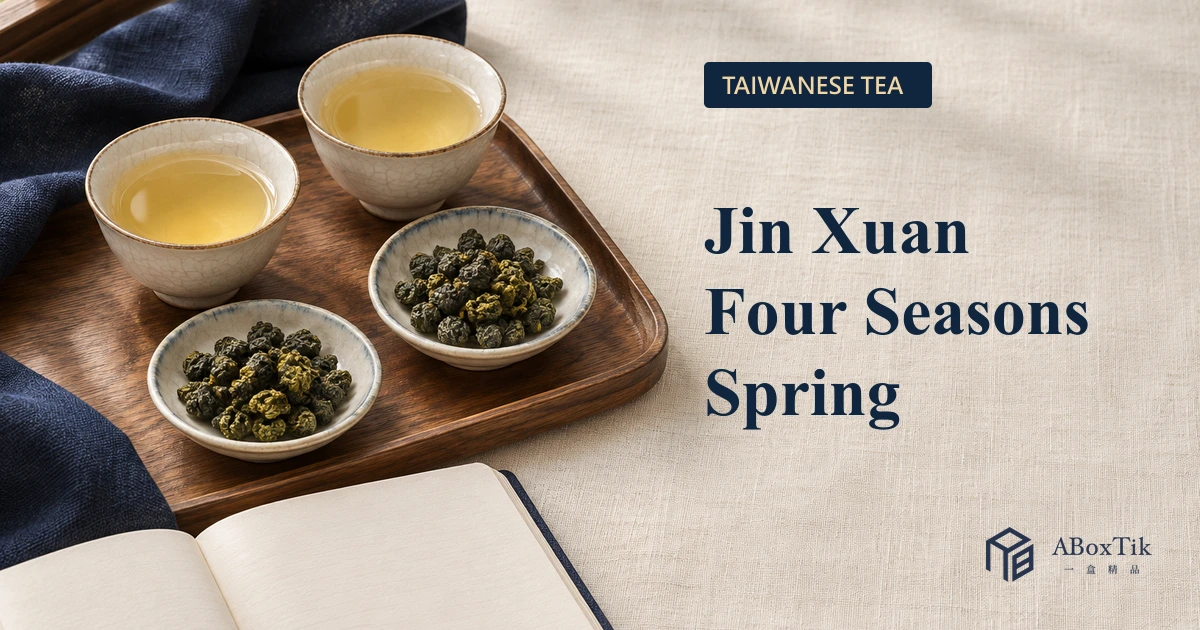
Choose between Jin Xuan and Four Seasons Spring by checking the finished tea’s roast and flavour description first. Jin Xuan is cultivar TTES No. 12; Four Seasons Spring is a different cultivar. Milky, floral, sugary or roasted impressions belong to the actual product, not to a permanent promise attached to either name.
Because both names are familiar, a decision can collapse into a shortcut: one must be softer, the other more fragrant. A better approach separates information that can be checked from impressions that belong in a personal tasting note. This editorial guide uses an actual ABoxTik range example, an aroma-and-texture note and a four-question buying card. Keep the card with the teas as a practical buying reference.
Two cultivars, rather than two quality levels
The National Museum of Natural Science identifies Jin Xuan and Four Seasons Spring separately in its introduction to tea cultivars. Jin Xuan carries the TTES No. 12 identity; Four Seasons Spring has its own selection history. Cultivar information helps describe the raw material, while growing conditions, harvest and processing also contribute to the finished tea. A cultivar number is not a quality score, and a cultivar without such a number is not automatically a lower grade.
If a packet says Alishan, Jin Xuan and oolong, read those as different kinds of information: origin, cultivar and tea category. If it says Four Seasons Spring late-winter harvest, the harvest description adds another line. It does not create a new cultivar. The Taiwanese tea style guide provides the wider context before returning to the two products being considered.
Give roast its own place beside milk and flowers
Jin Xuan is often associated with a milky aroma. Agricultural explanations also connect its expression with suitable material and processing conditions. A useful question is: “Does this batch emphasise a natural milky impression, floral notes or a warmer roasted sweetness?” State a strong preference before buying. The cultivar name cannot answer that product-specific question alone.
Four Seasons Spring likewise should not be reduced to one fixed floral volume. Read its harvest and processing description instead of assuming a particular price, intensity or brewing method. When comparing a lighter tea with a roasted tea, the roast may be an important part of the difference. Keep that visible rather than assigning the entire result to cultivar.
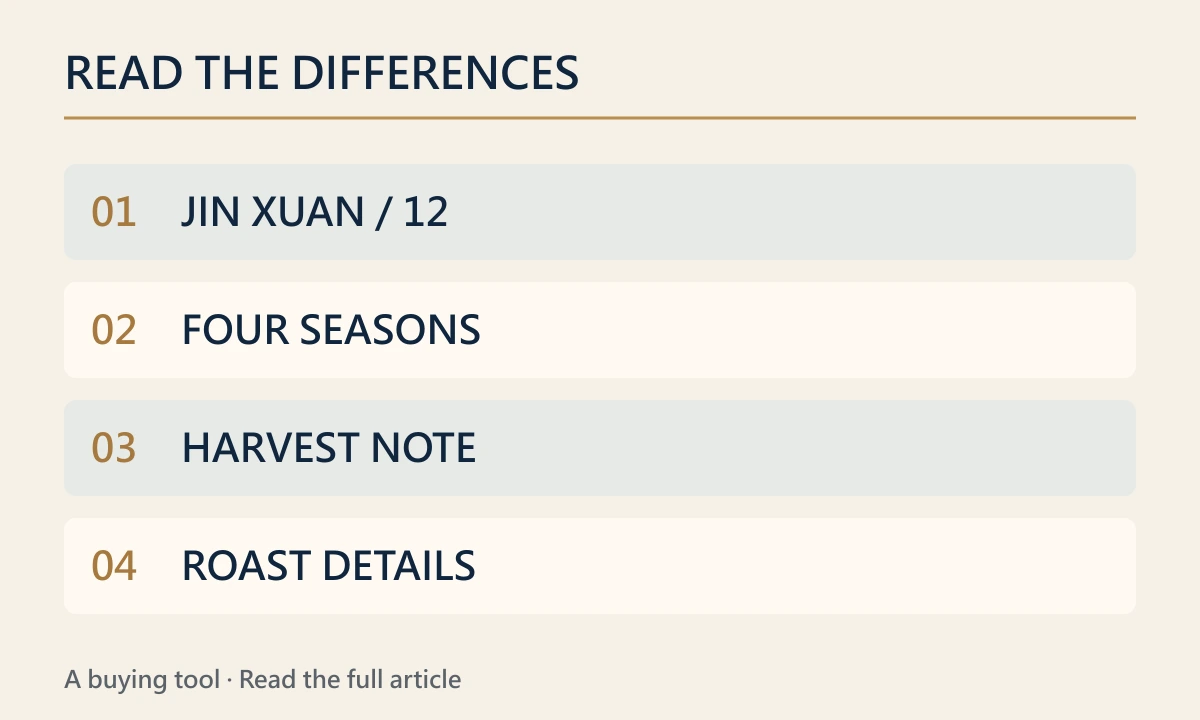
| Preference | Question for the seller | Personal note |
|---|---|---|
| Milky aroma association | How is this Jin Xuan described, and what ingredients are listed? | Where it appears and whether it is enjoyable |
| Lighter floral aroma | Which actual product is closer, and how is it roasted? | Aroma compared with the sip |
| Warm grain or sugar notes | Is there a clearly described roasted style? | Aroma, strength and astringency separately |
| Easy daily preparation | What format, water volume and removal method are suggested? | Whether the usual vessel works comfortably |
An ABoxTik example: cultivar and product do different jobs
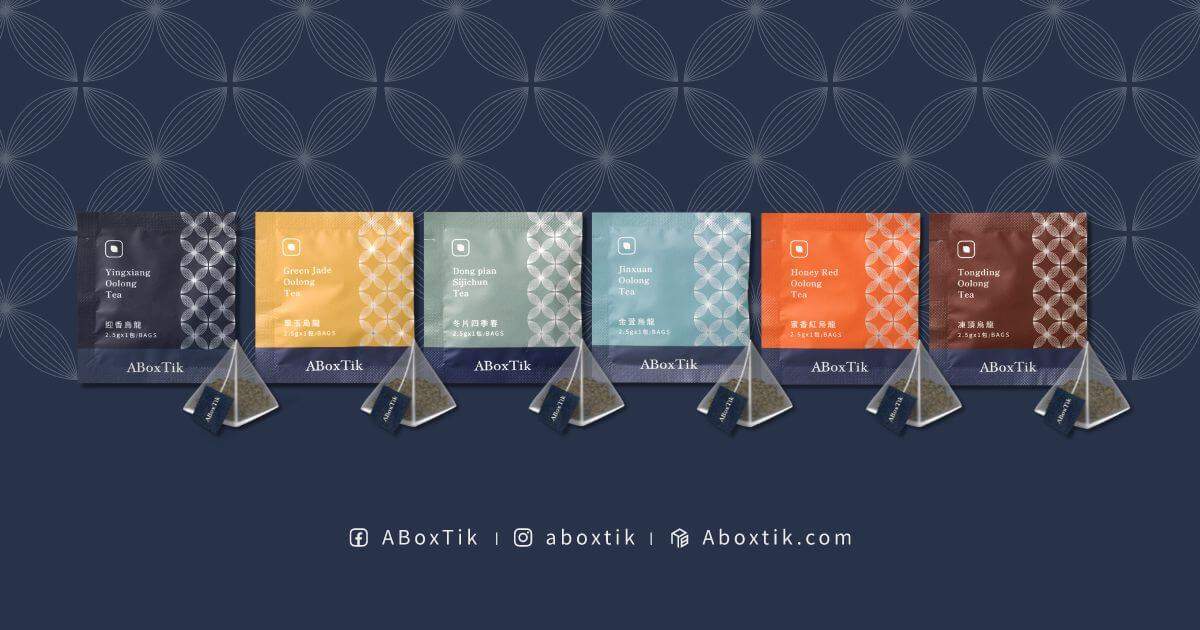
The ABoxTik classic-range information reviewed for this comparison describes its Jin Xuan oolong through roasted-rice and sugar-like notes. Its late-winter Four Seasons Spring is described through floral, gardenia-like and honeyed aromatic directions. This is a useful example of why Jin Xuan should not always be presented as milk tea, or one late-winter product as the definition of every Four Seasons Spring tea.
Keep the full product names in the notes. The observation concerns the particular Jin Xuan oolong and particular late-winter Four Seasons Spring being offered. The ABoxTik six-tea comparison explains the rest of the classic range. Check current contents, pack counts and availability on the selected product page instead of relying on a price copied into an article.
If the original aim was to compare two lighter teas, but the available pair consists of roasted Jin Xuan and lighter Four Seasons Spring, the exercise can still be enjoyable. Simply call it a comparison of those product styles. To investigate cultivar more closely, ask whether similarly processed options are available. Let the tea samples match the question being asked.
Use two columns so aroma does not answer everything
The first column records what is smelled; the second records how the sip feels. For example: “lighter floral association” beside “comfortable strength, some astringency.” Enjoying the aroma but wanting a weaker cup suggests a different next step from enjoying the texture but wanting to explore another aromatic direction. A single word such as “fragrant” hides that useful distinction.
Prepare small amounts according to each product’s instructions, use the same water source, and remove the bags or drain the leaves before comparison. Write independently before exchanging notes with a friend. Hearing that one cup “must be milky” can send attention searching for the expected answer. Plain language that can be recognised next time is more helpful than borrowed terminology.
Add a third line for the intended occasion: a desk break, a shared meal or a small-pot weekend session. Record the routine so the purchase can fit how the tea will actually be prepared. If a tea is enjoyable only under a preparation that is difficult to repeat, that practical limitation also belongs in the buying decision.
Four questions keep the purchase proportionate
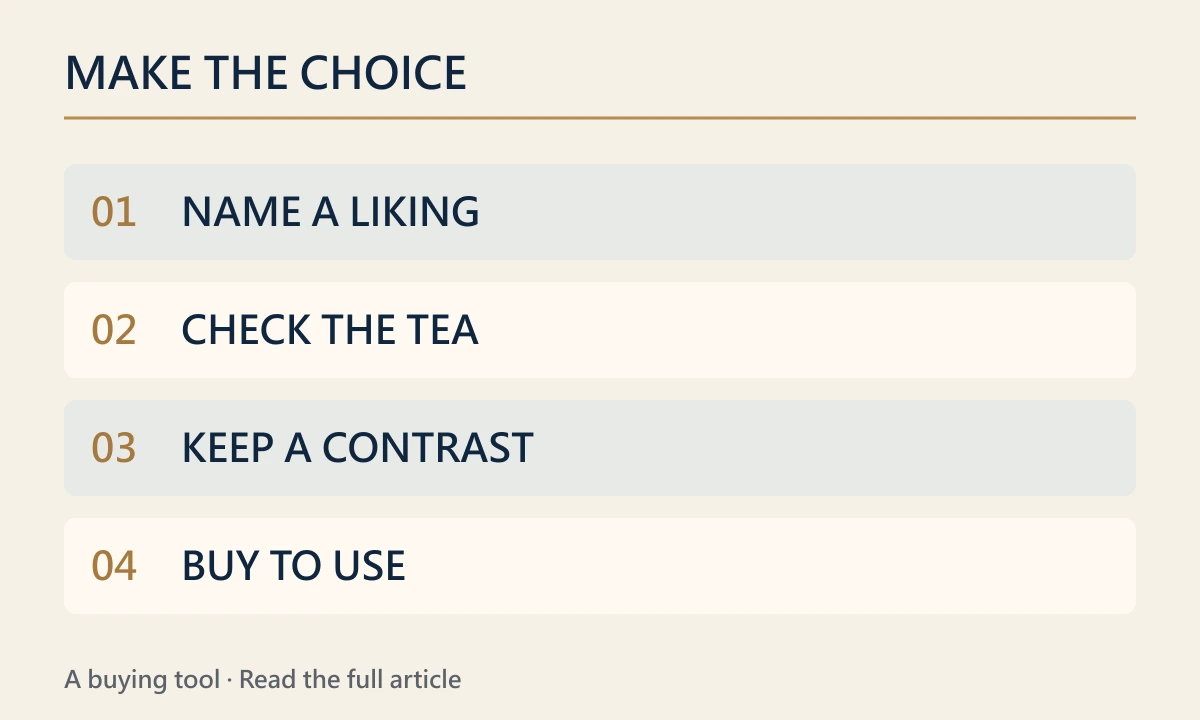
- Which one aroma or texture matters most for this purchase?
- Are cultivar, source and processing direction described clearly enough?
- Can the usual vessel follow the instructions and separate the leaves?
- Does the quantity match the likely drinking frequency?
A clear existing preference may need only one tea. For exploration, pair something familiar with one contrasting direction, rather than buying the entire range to complete an exercise. Ask about any currently offered small packs or tasting arrangements without assuming free samples are available. A suitable regular pack can still be a measured first purchase.
For a gift, turn the preference into an easy choice: lighter floral or warmer roasted sweetness. Then select the actual products that fit. The ABoxTik Taiwanese tea selection offers formats to explore, while the sampler and reorder guide helps retain useful buying criteria. Knowing how the recipient will prepare the tea is often more considerate than presenting a long list of cultivar names.
Common questions about Jin Xuan and Four Seasons Spring
Is Jin Xuan poor quality without a strong milky aroma?
No such conclusion follows from that alone. Read the product’s intended style and consider the overall cup. If a milky aromatic impression is important, ask specifically before purchasing.
Is late-winter Four Seasons Spring another cultivar?
No. Four Seasons Spring names the cultivar; late-winter describes a harvest context. Keep the year, batch and processing alongside that description.
Should a floral-tea drinker always choose Four Seasons Spring?
Check both finished products. Comparing teas with similar processing provides a more useful starting point than treating a cultivar shortcut as a permanent buying rule.
Two cultivar names are enough homework for today. Tea gifts, further reading and the latest selections below leave the next choice to the aromas you enjoy.
Sources
- National Museum of Natural Science: Tea Cultivars
- Ministry of Agriculture: Jin Xuan Aroma
- ABoxTik: Classic Taiwanese Tea Collection
Sources reviewed 17 November 2026. Methods and fictional calculations are editorial tools; product details follow the current listing.