
Tea Knowledge
Tea Sampler Guide: Three Tasting Rounds for Better Buying
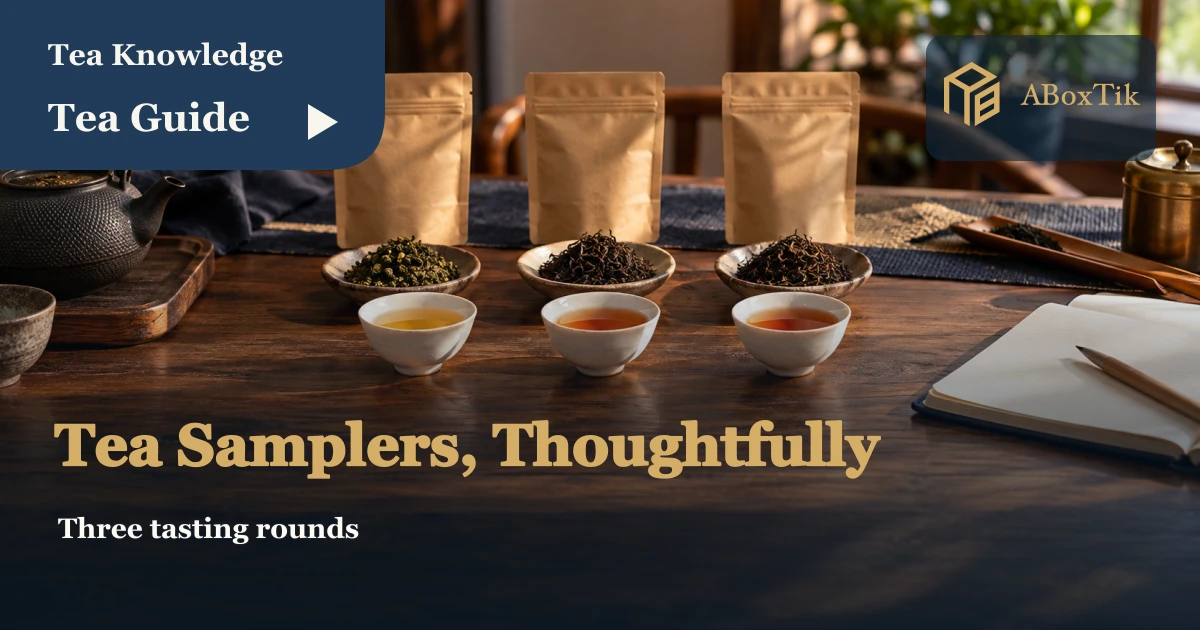
A small tasting can make the next cup easier to choose.
Buy a tea sampler to answer one buying question, then taste it in three rounds before ordering a larger pack. A sampler is not a test of whether you can name every aroma or mountain. Its quiet value is that a small portion can become a usable buying brief: which direction you enjoy, at what strength, and in which part of your day you would honestly make another cup.
Start with a specific question: do you want a fresh, floral everyday tea, or a warmer finish after dinner? Two or three clearly different teas are more useful than a crowded collection of similar names. This guide is about purchase and repeat-brewing decisions. Our Taiwanese tea guide offers a wider introduction, while the high-mountain tea quality guide explains how origin, cultivar, processing and storage belong in a fuller choice.
Tea sampler formats: check what can be compared
“Sampler” is not a standard format. It may be a measured single packet, a resealable pouch, or a mixed set. Before comparing price, check each tea’s actual net weight, whether it is separately packed, whether it can be resealed after opening, and whether the seller gives tea type, flavour direction and brewing guidance. A handsome box cannot answer those practical questions for you.
Estimate cost per session without making up a universal price or dose. Divide the amount paid for the set by its actual total tea weight, then multiply by the seller’s suggested leaf amount for one session. If a packet is clearly a one-brew portion, count one packet as one session. This is a personal budget note, not a quality score: leaf shape, vessel size, water volume and the producer’s guidance all change the number of useful brews. If the guidance is missing, leave “ask seller” on the card rather than borrowing a number from an unrelated tea.
- Useful comparison: each tea shows weight, pack format, storage or date information, and brewing direction.
- Pause before buying: the listing has attractive flavour words but no way to identify the tea, portion, or intended brewing.
- Ask first: how many sessions is this sample intended for, and what leaf, water, temperature and time were used?
Taiwan’s Tea and Beverage Research Station notes that tea readily absorbs moisture and odours, and that light, temperature, oxygen and time influence storage. A sampler is therefore not more economical merely because it waits longest in a cupboard. A portion you can finish, reseal, and repeat under similar conditions is often the more useful small format.
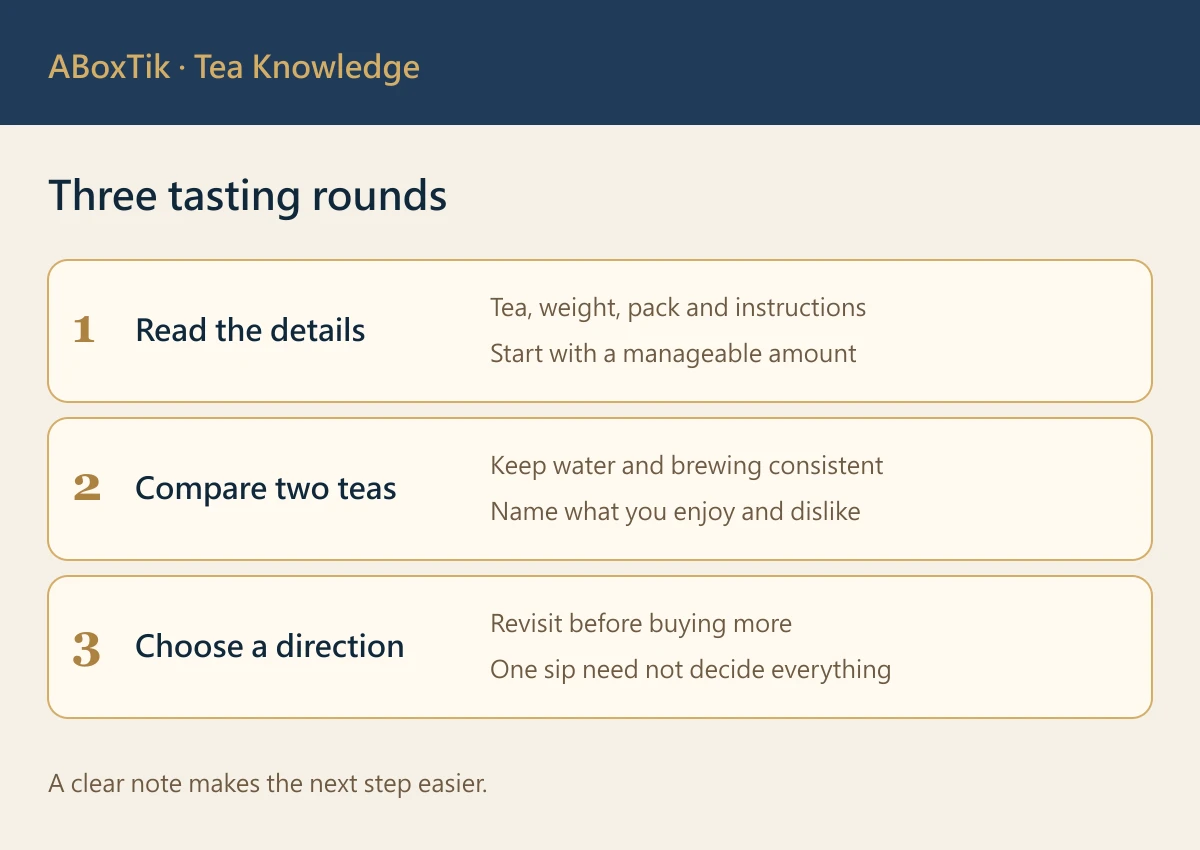
Round one: orient yourself and keep the context
Choose two or three genuinely different directions: for example, a fresh oolong and a roasted oolong, or a floral tea and one with a fuller profile. Keep water source, cup and water volume stable. Where a packet has guidance, follow it first and write down what you did.
| Tea / net weight | Date and brew conditions | What you notice first | First sip and finish | Next step |
|---|---|---|---|---|
One plain phrase per field is enough: “floral, bright entry, drying finish; try a shorter steep.” You do not need professional vocabulary. A flavour wheel can help you notice more carefully, but “rounder,” “like wet leaves,” or “I would not make it stronger” are valid personal observations. Round one does not crown a winner. It tells you what to revisit. The first-taste tea guide offers a few starting directions.
Round two: test one change only
It is easy to change the pot, water, leaf amount and time at once, then lose the reason the cup changed. Choose one variable: steeping time, leaf amount, water temperature or vessel. Use fresh dry leaf from the same batch for each round; when changing time, keep leaf weight equal. Record successive infusions of used leaves separately, since they are not independent samples. Leave the other conditions as they were. The research station’s work on water quality and temperature shows why those details can affect aroma, flavour and liquor; writing them down is practical housekeeping, not ceremony.
| Tea | What stayed fixed | One change | What changed in the cup | Repeat? |
|---|---|---|---|---|
For a hypothetical example, if a tea felt thin in round one, make a modest change to leaf amount while keeping time, water and cup still. If it becomes more balanced, record the condition. If it becomes harsh, return to the baseline; the tea has not “failed.” A just-opened packet, a sample open for weeks, a scented kitchen, or a cup holding the last tea’s aroma all belong in the note. They make a repeat meaningful.
Round three: turn preference into a buying condition
Round three is for an action, not more adjectives. Rebrew the leading tea after a short pause, then read your first note. A larger pack earns its place when you enjoyed it in two sessions, know roughly how you would make it, and can name a real place for it in your routine.
| Tea | Best moment for it | Confirm before reordering | Buy more / keep sampling / pause | Why |
|---|---|---|---|---|
Simple buy-again criteria are enough: two enjoyable sessions; no need for extreme brewing to make it work; willingness to finish the opened portion; a per-session cost and drinking frequency that feel comfortable; and enough detail to identify the same tea or ask about its batch and packaging. If one of these remains unclear, “keep sampling” is a complete answer. If no tea wins, the sampler has still removed an unhelpful path.
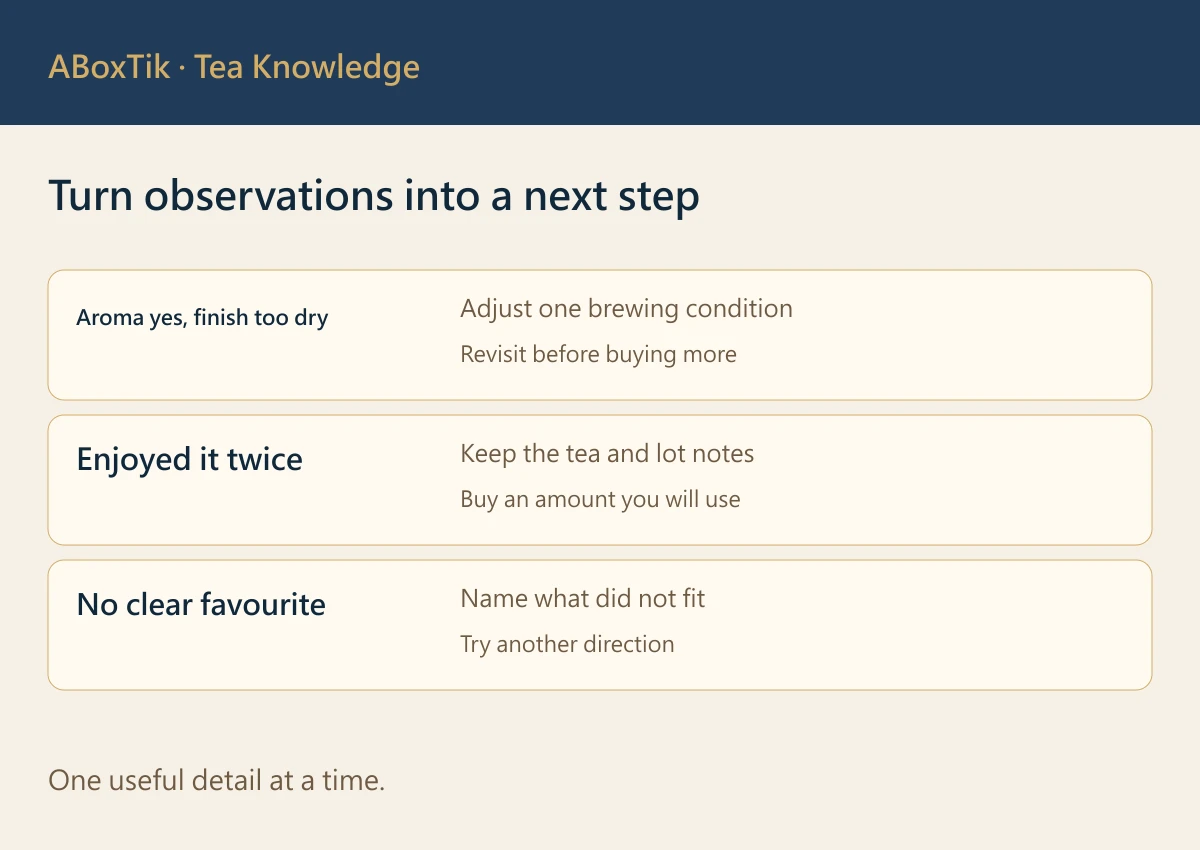
Two hypothetical buyer paths
Path one: a newcomer to Taiwanese tea. Choose one fresh direction and one roasted direction. Use round one to learn which aroma and texture you want to approach, then adjust only the preferred tea in round two. The third-round answer may simply be “buy a small pack I can finish.” Compare fresh and roasted styles and whole-leaf tea-bag formats as starting directions for an ordinary routine.
Path two: a regular tea drinker clarifying one detail. Choose two teas with one meaningful difference: similar tea types with different roast directions, or a similar flavour aim in different pack formats. Hold the baseline steady, then brew each once to its seller’s guidance. This path asks whether the difference is worth reordering for you; two cups cannot decide the quality of every region or cultivar.
Questions worth sending a seller
Specific questions tend to bring useful answers: What is the net weight of each sample? Is it intended for one brew or several? What leaf amount, water volume, temperature and time do you recommend? What is the package date and storage advice after opening? Which full-size product corresponds to the sample? If the same name has different batches, how can I identify them? If a sample provides only one session, keep that result as an initial impression. Ask about repeat portions from the same lot before planning three independent rounds. Used leaves from one packet do not become three fresh samples. These questions help clarify the purchase. They help ensure that a later order matches the tea you actually tasted and enjoyed.
Follow ABoxTik: leave room for ordinary life
A good sampler does not need to reveal one perfect tea. It may tell you, “I like brightness in the morning,” “this tea needs a shorter steep,” or “I want to confirm the aroma before gifting it.” Those are already useful buying conditions. For more language, continue with our tea aroma observation guide; for several starting directions, explore the Classic Taiwanese Tea collection. Current specifications and availability belong to each product page.

Related reading and tea choices
Sources
- Tea and Beverage Research Station: Tea packaging and storage (checked 2026-10-24)
- Tea and Beverage Research Station: Water quality and temperature effects on tea liquor (checked 2026-10-24)