
Tea Mixology
Mint and Light Oolong: Build a Blend Around the Tea
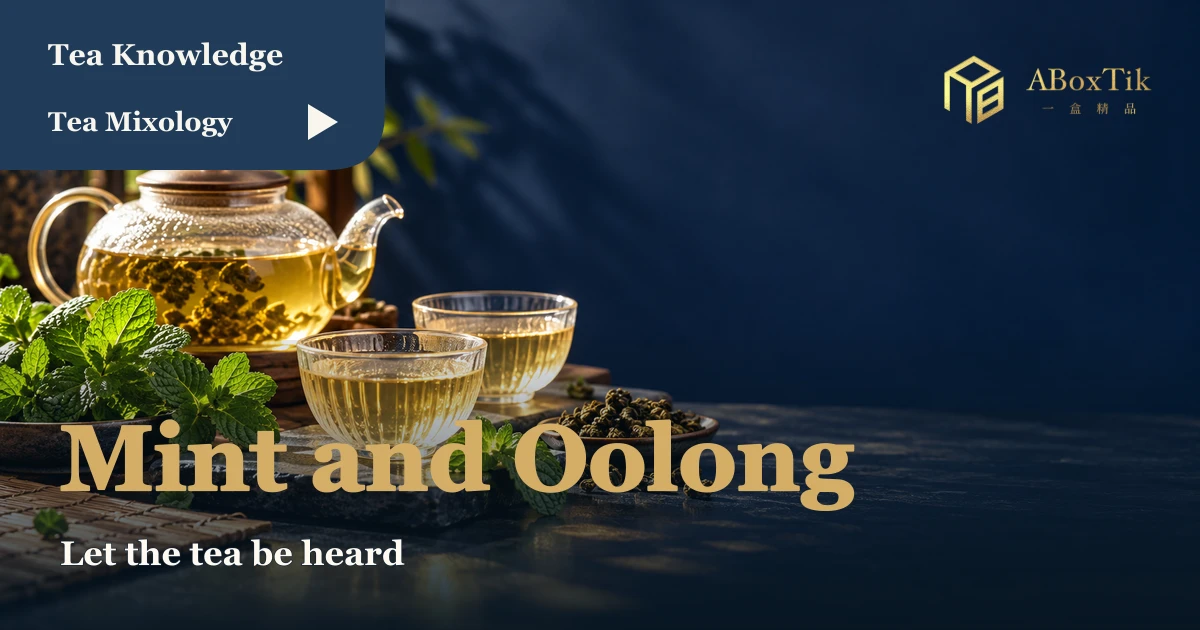
Mint makes an entrance. Give the oolong room to introduce itself too.
Start mint oolong with a plain-tea reference and a separately prepared mint ingredient, then compare small cups before choosing your own balance. Identify what you enjoy in the tea first. Next, check whether the mint is fresh, dried, a prepared infusion or a flavoured syrup. Those forms bring different things into a cup. Sharing a name does not make them interchangeable by the spoonful.
This approach suits anyone who wants a little herbal character while keeping the oolong recognisable. Choose one tea you already enjoy rather than buying a whole windowsill of ingredients. A useful aim is simple: “I would like to notice both the tea and the mint.” Keep an unchanged reference nearby so that every adjustment has somewhere to return.
Let the plain tea introduce itself
Prepare the tea using its package directions or the seller’s guidance. Remove the leaves or bag, then taste a little at a comfortable temperature. Note the aroma you would like to retain, the strength of the drink and an impression from its finish. Light oolong describes a style direction; individual products and batches still differ. Cuiyu is a cultivar, not a name for every lightly styled oolong.
If the plain tea is already unpleasantly bitter or rough for you, adjust that preparation first. Adding mint to a tea you dislike may simply give the problem a herbal hat. The reference does not require the final drink to taste unchanged. It helps answer a more useful question: what would you like to add, and how much of the original tea character are you willing to give up?
Identify the mint before measuring it
| Form | Check first | Record |
|---|---|---|
| Fresh culinary mint | Source, condition and cleaning | Actual quantity, leaf condition and contact method |
| Dried mint | Ingredients and preparation instructions | Weight and preparation used |
| Mint-flavoured syrup | Ingredients, sweetness and directions | Volume, sweetness and added liquid |
| Prepared mint drink | Full ingredients and existing strength | Preparation, amount added and final volume |
Fresh leaves vary in size. “Two leaves” may be a useful reminder, but it does not precisely reproduce another person’s serving. Weigh them when practical, or photograph the portion and mark an estimate as an estimate. Do not convert dried mint into fresh mint by matching their apparent volume. Switching to syrup deserves a separate comparison because aroma, sweetness and liquid may all change together.
Choose ingredients intended for food use with a clear source, and follow their instructions. Leave unidentified garden leaves out of the cup. Wash fresh mint under running water and use clean equipment; do not wash produce with soap or detergent. Plan preparation and storage around the actual ingredient and drink instructions. Dried products and syrups have their own directions, so a fresh-leaf routine should not be applied to every form.
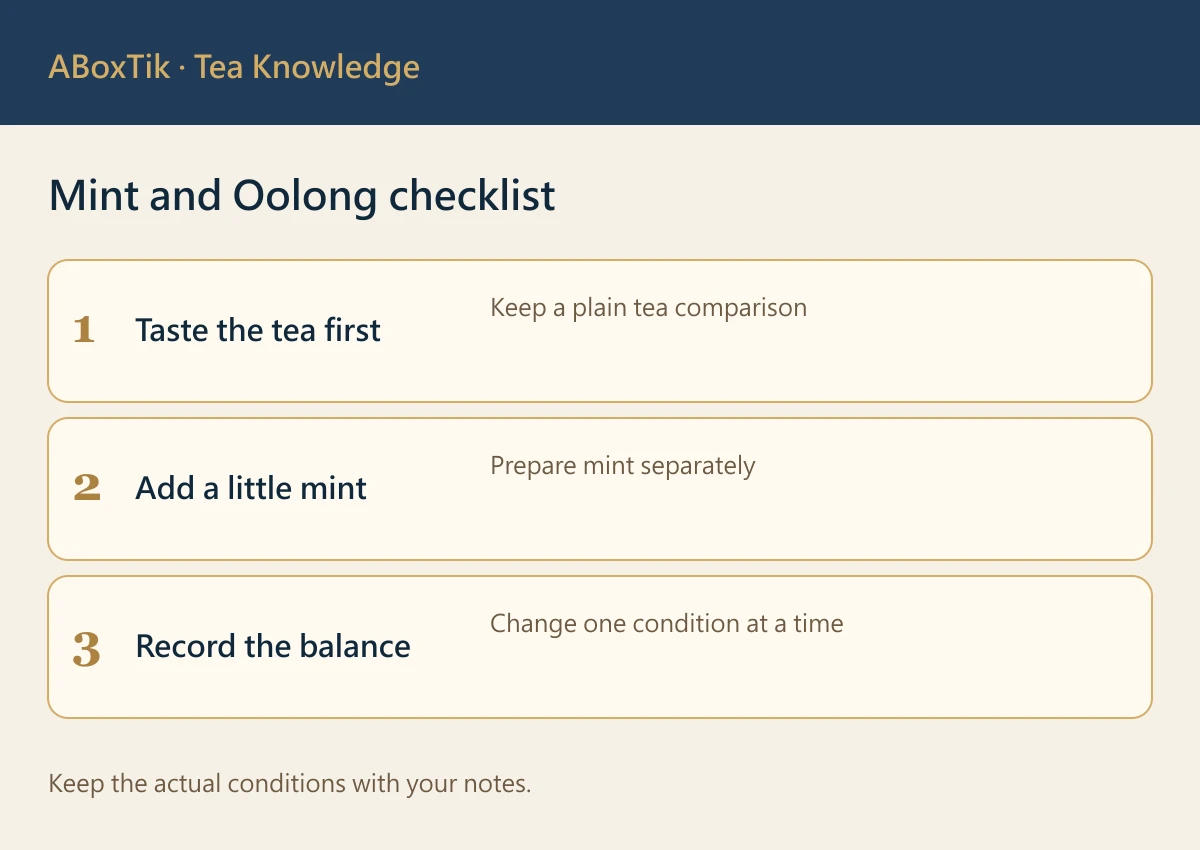
Give two fresh cups one question
For the first round, leave out sugar, ice and fruit. Mix the prepared tea gently before dividing it into measured portions. Use matching cups and compare at similar, comfortable drinking temperatures. Leave one portion plain. In the other, try a small, recorded amount of the selected mint ingredient. Prepare that ingredient separately so the amount going into the tea is a deliberate choice.
Ask whether you still enjoy the tea’s presence after this addition. Smell, sip and record whether the mint stands out, whether the tea remains easy to recognise and whether you would like another sip. If the cups have different final volumes, or a mint infusion adds extra water, record that too. A difference in strength should not be quietly described as a pure aroma effect.
For the next amount, measure a new portion of tea and make a new comparison. Keep the tea preparation and other choices steady. Repeatedly topping up the same cup makes the later versions difficult to reconstruct. Give each cup a label and note when you tasted it. The cup is wonderfully patient, but it cannot remember all those unmeasured splashes for you.
Keep a liquid ledger alongside aroma notes
| Field | Plain cup A | Mint cup B |
|---|---|---|
| Tea, preparation and division time | Fill in | Same batch; note differences |
| Tea and other liquid | Fill in | Tea amount; mint liquid amount |
| Mint form and actual quantity | None | Fill in |
| Tea aroma, mint and strength | One note each | One note each |
| One choice for the next cup | Keep as reference | Fill in |
Explore sweetness after you have a useful aroma comparison. Record the sweetener, its amount and the final volume as another round. If you switch to a sweetened mint product, revisit any sugar you were adding separately. A sweeter version may be your preference; the important part is knowing which choice produced it rather than asking mint, sugar and water to negotiate all at once.
Turn an awkward cup into a specific next step
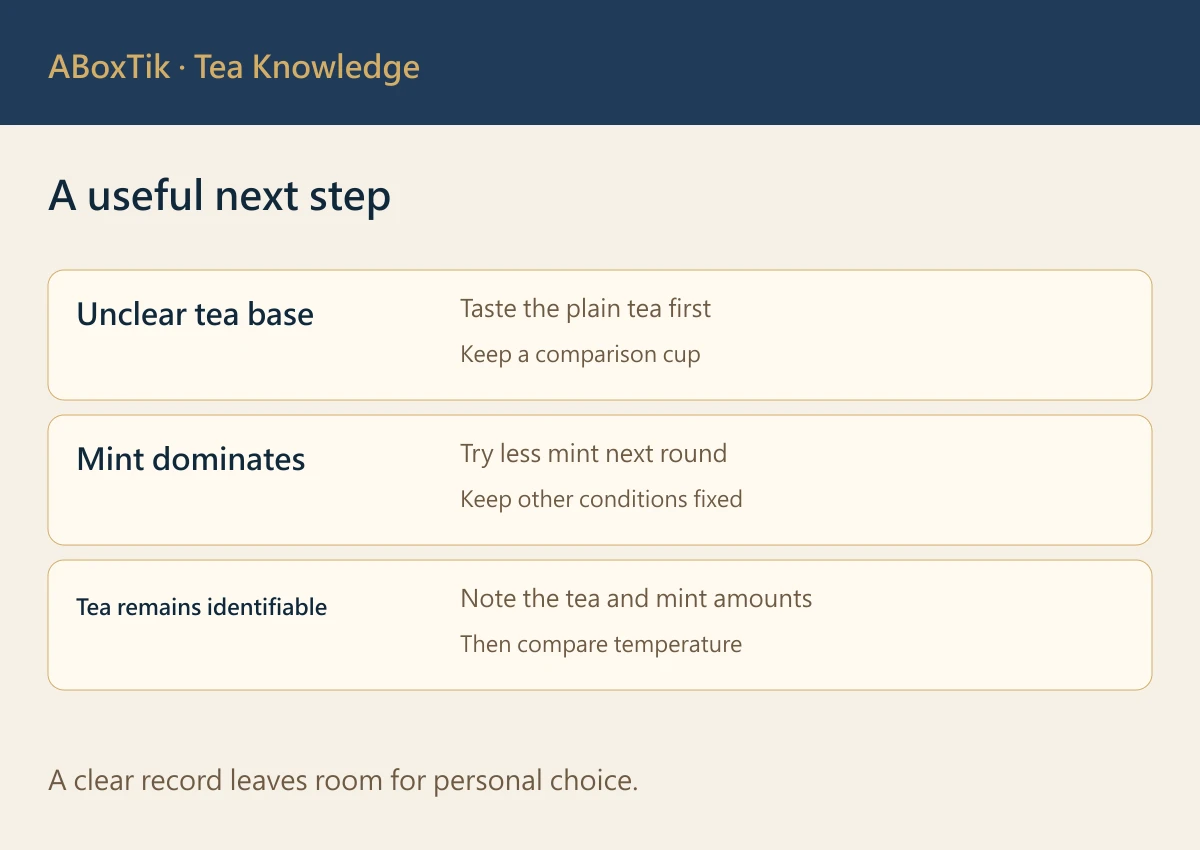
If the plain tea is enjoyable but mint dominates the blend, reduce either the mint amount or its contact in the next cup. Choose one of those changes. If the plain tea is unclear too, revisit its preparation. If a blend is pleasant before ice but seems weak later, record the ice, waiting time and liquid volume in a separate comparison. Longer tea steeping is not the automatic answer to every missing flavour.
You do not need a specialised aroma vocabulary. “I can still recognise the tea, but I prefer smelling it plain” is an excellent note. When sharing, let each person write one impression before discussing it. The first description should not become the compulsory headline for the whole table. Someone wanting more mint can have a separate small portion without changing everyone’s drink.
Open a new page for ice or bubbles
Once you have a preferred tea-and-mint direction, consider ice or sparkling water separately. Melting ice brings water into the drink, and sparkling water increases the liquid too. A warm comparison does not automatically specify the final cold version. Keep the selected tea and ingredient record, change one additional choice, and note the drink both when prepared and later.
The sparkling oolong guide explains a separate preparation sequence. Follow the instructions for any equipment you use. There is no need to invite lemon, juice, syrup and bubbles into the first mint trial. Knowing what you already like provides a useful starting point when the next ingredient arrives.
Leave room for the people sharing it
Explain the actual tea, mint ingredient and any sweetener before serving. Offer plain tea as a real choice. Try asking, “Would you like the tea to stand out more, or the mint?” It invites a preference rather than a performance. A friend who chooses the plain version has still joined the conversation perfectly well.
Keep the ingredient record, one preferred direction and one change for next time. Read the alcohol-free tea mixing guide for a broader approach, or check the current ABoxTik Taiwan tea collection when considering another base. Start with tea you enjoy on its own, then let mint become company for it.

Related reading and tea choices
Sources
Sources checked: 29 October 2026.