
Tea Mixology
Sparkling Oolong Tea: Three Alcohol-Free Table Drinks
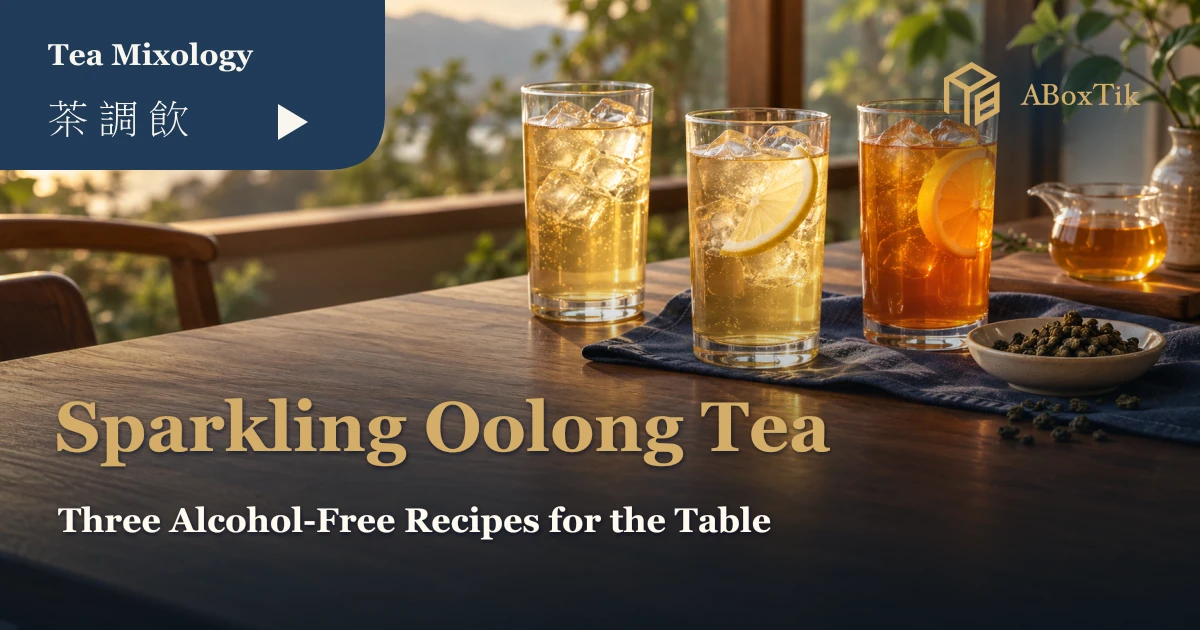
Cool the tea first, then add the quiet lift of bubbles at the table. One measured glass can give a shared meal its small ceremony.
The easiest sparkling oolong tea begins with brewed, strained and chilled Taiwanese oolong, then brings in plain sparkling water in the glass. There is no need to carbonate tea itself, and no need for tonic water. With 90 ml of chilled tea, 100–120 ml of sparkling water and 100 g of ice, you have an alcohol-free drink that can sit comfortably beside a meal. Begin with the measured proportions below, then change only one element after tasting.
Keep the first attempt simple: chill the tea and plain sparkling water, then set out a generously sized glass. Our cold-brew tea guide is useful for planning ahead; this page instead uses a brief hot brew, cooled before mixing, so the oolong still has a clear voice once the bubbles arrive.
Set up sparkling oolong tea before the bubbles
Use a clear glass of at least 400 ml for each recipe and place 100 g of food-safe ice in it first. Ice and liquid need room together, especially while the sparkling water is foaming. A measuring jug, a fine strainer and a spoon are enough for the rest.
For a pale oolong batch, brew 6 g of leaves with 150 ml water at 90°C for 90 seconds. For red oolong, use 6 g with 150 ml water at 95°C for 90 seconds. Strain, cool promptly in an ice-water bath, then refrigerate. If the strained tea is short of 150 ml, top it up with boiled, cooled water; measure 90 ml for one drink and keep the labelled remainder chilled for another preparation. If you begin with a bag, follow its own instructions first. The guides to whole-leaf tea bags and pyramid tea bags can help you choose a convenient format.
For a home carbonator, make cold plain water sparkling first, then combine it with tea in the glass. The permitted liquids depend on the model: SodaStream’s official guidance distinguishes water-only machines from MIX models. Do not put tea, juice, syrup or an already mixed drink into a water-only machine. These recipes call for sparkling water only, never tonic water.
One table of proportions keeps the three drinks easy
| Drink | Chilled tea | Other liquids | Total liquid | Ice and glass |
|---|---|---|---|---|
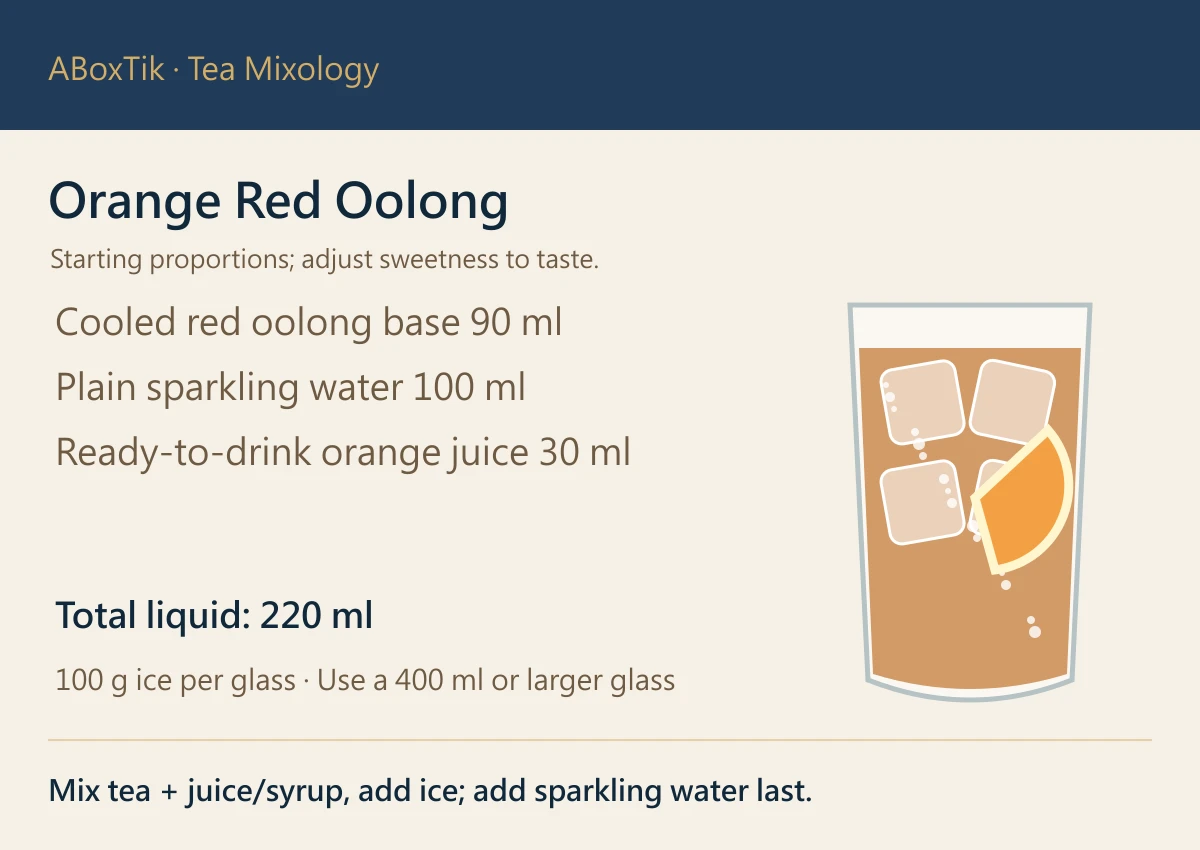
| Plain oolong soda | 90 ml | 120 ml sparkling water | 210 ml | 100 g ice; 400 ml+ glass |
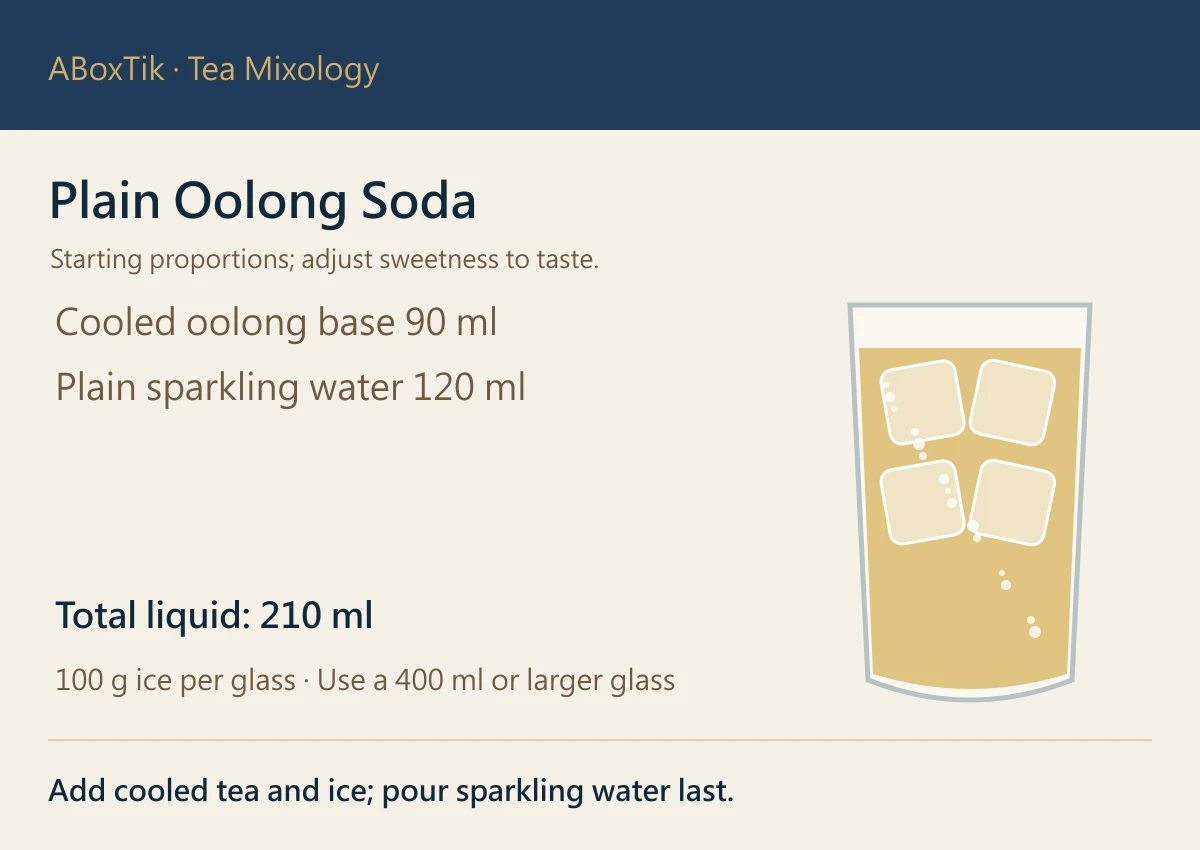
| Lemon light-oolong soda | 90 ml | 110 ml sparkling water, 10 ml lemon juice, 10 ml syrup optional | 220 ml with syrup; 210 ml without | 100 g ice; 400 ml+ glass |
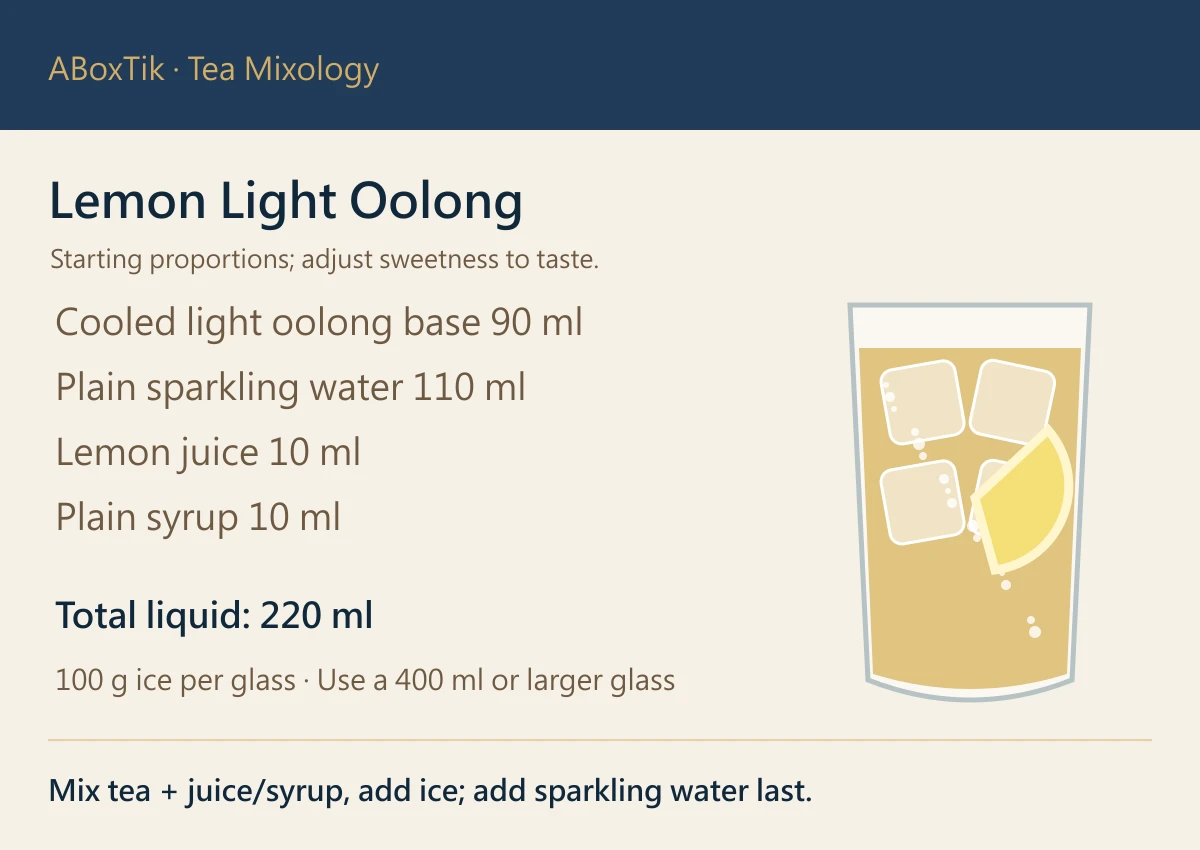
| Orange red-oolong soda | 90 ml | 100 ml sparkling water, 30 ml orange juice | 220 ml | 100 g ice; 400 ml+ glass |
If you would like syrup, make a plain syrup with sugar and water at a 1:1 ratio by weight, then cool it. The lemon drink is 210 ml when its optional 10 ml syrup is omitted. Pour sparkling water slowly down the inside of the glass and use it soon after opening; both small habits help the glass stay composed.
Recipe one: plain oolong soda
For one glass: 90 ml chilled pale oolong, 120 ml chilled plain sparkling water, and 100 g ice. Put the ice in a 400 ml-or-larger glass, pour in the tea, then add the sparkling water slowly over the ice. Stir only two or three times. This is the clearest place to learn what the tea brings: a light floral, green or softly roasted direction can remain present without becoming a sweet soft drink.
If the tea seems faint, make the next tea base a little stronger or reduce sparkling water by 10 ml. If it feels concentrated, keep the tea amount and add 10 ml more sparkling water. Change one number at a time. For a fragrant Taiwanese oolong direction, meet Cuiyu, TTES No. 13; for a more deliberate starting point with heat and time, see our oolong water-temperature guide.
Recipe two: lemon light-oolong soda
For one glass: 90 ml chilled pale oolong, 110 ml chilled plain sparkling water, 10 ml fresh lemon juice, 10 ml plain syrup if wanted (210 ml total when omitted), and 100 g ice. Combine tea, lemon and any syrup in a measuring jug, pour it over ice, then add sparkling water last. A thin washed lemon half-slice may sit on the rim if you like; it is a garnish, not part of the measured liquid. Lemon should brighten the tea rather than turn it into lemonade.
Taste the tea-and-lemon mixture in the jug before adding 5–10 ml syrup if wanted; stir it in before adding ice and sparkling water. If the lemon is especially sharp, reduce it to 5 ml first instead of correcting with more sweetness. The tea-aroma observation guide offers a useful way to notice the tea before fruit takes centre stage. If you are setting out several cold drinks for food, our barbecue and chilled-tea pairing guide can help with the broader table plan.
Recipe three: orange red-oolong soda
For one glass: 90 ml chilled red oolong, 100 ml chilled plain sparkling water, 30 ml orange juice, and 100 g ice. Combine red oolong and orange juice in a measuring jug, pour over ice, then add sparkling water slowly. An optional washed orange half-slice is decorative only. The Tea and Beverage Research Station describes red oolong as a Taiwanese specialty tea with orange-red liquor, an oolong character and a fuller ripe-fruit direction. Start with a little orange juice so those tea notes still have room to come through.
Choose orange juice labelled alcohol-free, and do not substitute orange soda for sparkling water. If the juice is already sweet, use 20 ml, then add 5 ml tea and 5 ml sparkling water to retain 220 ml total liquid. To put red oolong in its processing context, continue with oolong oxidation and how to notice roasted tea aromas.
Serve with a little space for preference
Prepare and chill tea ahead, measure juice just before serving, and open sparkling water at the last moment. A small jug of syrup on the table lets each person decide after tasting. Offer plain oolong to anyone who prefers no fruit, and keep lemon as the brighter option. That leaves time to enjoy dinner while each person finds a comfortable balance.
For a separate, seasonal set of dark-fruit recipes, visit Halloween tea mocktails. Its occasion and colour palette are intentionally different from this fresh sparkling-water approach.
Bring Taiwanese oolong to the table, one measured glass at a time
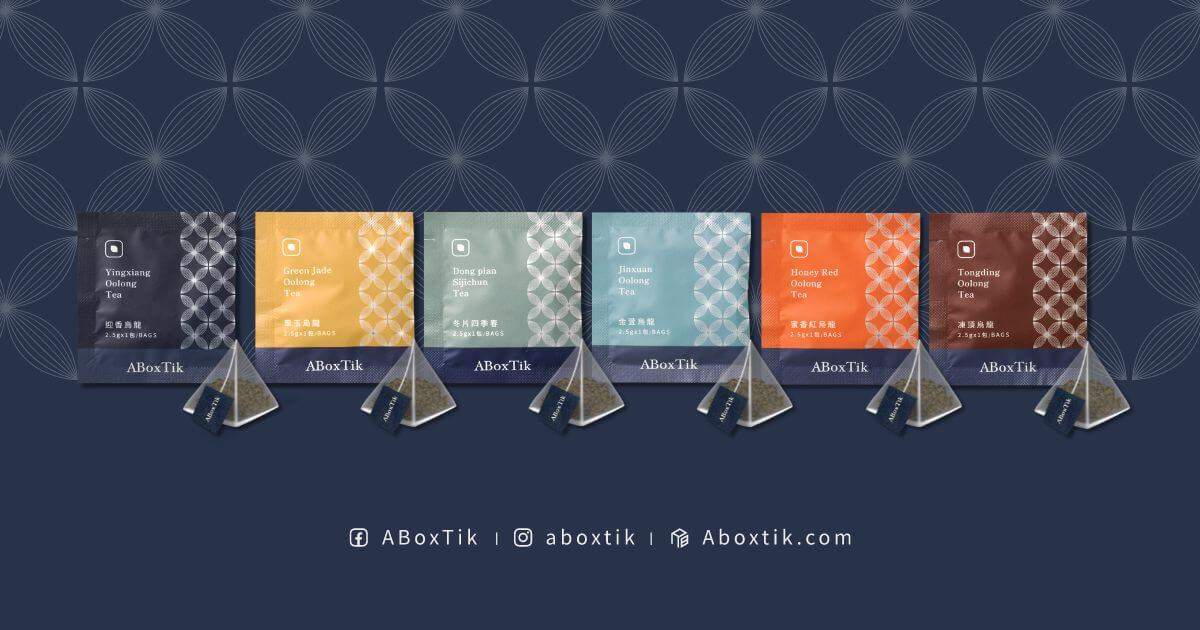
A chilled tea base, plain sparkling water and a glass that accommodates ice can be enough for a gentle table ritual. To practise across several teas in an approachable format, explore the Premium Taiwanese Tea Bag Gift Set; for a tasting sequence of different styles, see the Classic Taiwanese Tea four-box set. Our introduction to Taiwanese tea craft and terroir provides a considered next read.
Follow ABoxTik
Explore the ABoxTik story when you would like to continue from a single glass to the wider world of Taiwanese tea.
Sources
Editorial sources reviewed: 8 October 2026.
- Tea and Beverage Research Station, Ministry of Agriculture: Origin of Red Oolong
- SodaStream: Classic product FAQ (permitted liquids vary by machine; follow the manual for your model)