
Tea Knowledge
How to Simplify Office Tea: Mug, Tea Bag and Flask
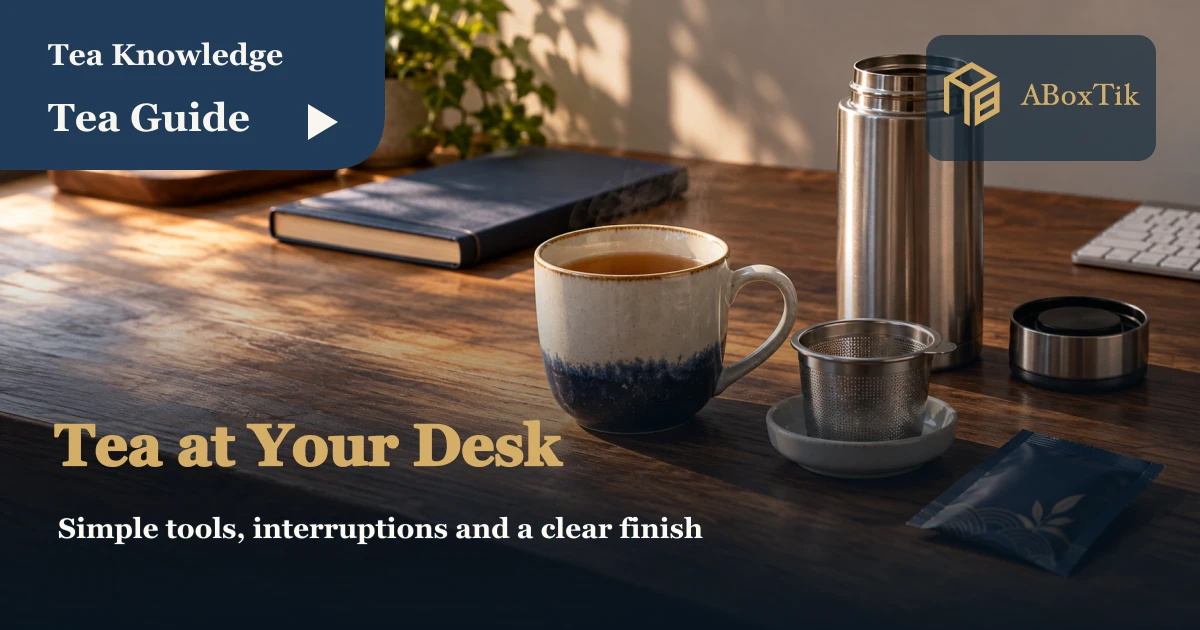
Office tea does not need to imitate a home tea table. The best method is the one you can close down gracefully when a meeting appears.
Office tea brewing works when time, tools and cleaning are considered together. A mug with a removable infuser, tea bags, and a flask filled after leaves are removed each suit a different interruption pattern. Choose the flow that asks least of your next ten minutes.
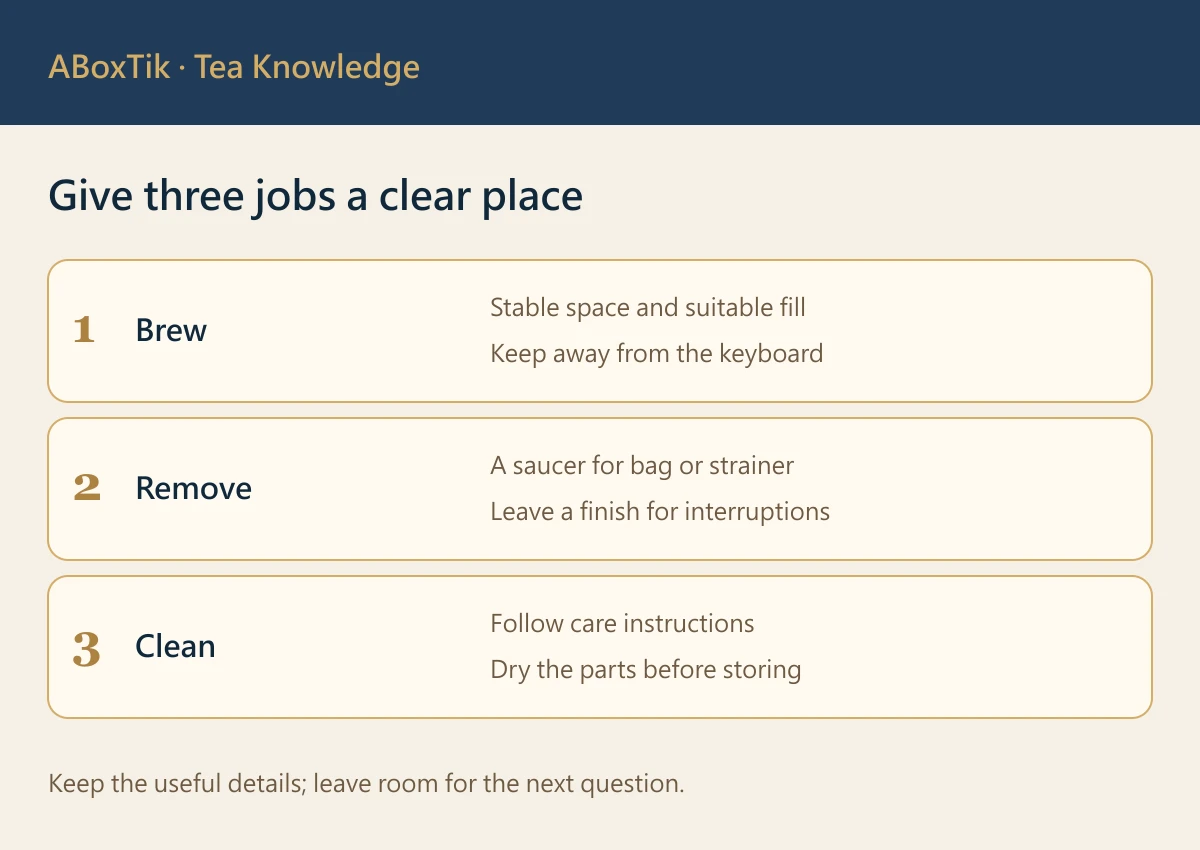
Begin with the tea and vessel instructions. Give the removed bag or strainer a place to drain, then plan how to finish before stepping away. Fill and clean a flask according to its specific model’s directions, after separating the tea from the leaves.
Office tea brewing: start with interruption cost
At work, the main variable is often not water temperature but a message, a meeting, or a colleague asking whether this is a good moment. Ask: if I must leave in three minutes, can I tidy the cup, leaves and desk without creating a small wet emergency?
A mug with a removable infuser suits loose leaf drinkers who can remove leaves promptly. Tea bags suit limited space and easy cleaning. A flask works best when tea is brewed, leaves are separated, and the liquor is then carried away. These are workflows, not a podium.
A useful desk setup has a “leave now” state. Keep a dish for the removed infuser, a wipe for a wet rim, and a place where used leaves can wait briefly without travelling across documents. The goal is not to make the desk look like a tea room; it is to make an interruption boring rather than messy.
Before adopting a new office routine, run it once on an ordinary day rather than a perfectly quiet one. Notice when you look for a timer, where water drips, and whether the clean-up fits between tasks. Small friction points are useful evidence. Adjust the setup before buying more tools; often a dish, a wipe, or a nearer bin solves the real problem.
The porcelain brewing guide offers another vessel reference; use the capacity and directions for the mug actually on the desk.
Method one: mug and removable infuser
Put loose leaf tea in the infuser, add water following package guidance, set a timer, then remove the infuser to a small dish. You gain control over leaf amount and strength; you also accept the cleaning of the infuser, leaf and dish.
If meetings are unpredictable, do not begin a steep by guessing whether you will return. Use a phone or computer timer, or remove the infuser before stepping away. Basic brewing tools and steps can refresh the essentials; an office method succeeds when it is finished before the next call.
The infuser method benefits from one decision made in advance: where does the wet infuser go? A small washable dish prevents drips and means the mug can remain the drinking vessel rather than the storage place for leaves. If the answer requires hunting through drawers, the simpler tea-bag route may be kinder on a busy day.
Make replenishment part of the workflow. Keep a small, sealed tea supply where it stays dry and away from strong office odours, and refresh it before the last bag disappears. The aim is not an elaborate pantry. It is to ensure that the simple method remains simple on the morning when there is no spare time for improvisation.
If brewing before leaving home, the home tea corner guide helps organise the brew, separation and transfer sequence.
Method two: tea bags
Tea bags keep leaves and brewing space together. With a mug, a small dish and hot water, a short gap becomes enough. Dispose of the used bag according to local waste rules, then rinse the mug. It is a direct, manageable sequence.
Follow the package guidance for the first cup. If a lighter cup suits you, shorten the steep next time rather than nursing an over-strong tea until the end of the day. Whole-leaf tea bag guidance offers more context, and a tea-bag set is one current option subject to its product page.
Tea bags reduce handling, but they still benefit from a clear finish line. Set the bag on the dish, empty the cup when you are done, and avoid leaving it to dry against papers or electronics. A short, reliable reset is usually more valuable than attempting a detailed ritual between calendar alerts.
If the office has shared facilities, label personal tools and leave common spaces clearer than you found them. This practical courtesy protects both tea flavour and colleagues’ patience. A method that creates a queue at the sink or an unexplained wet counter may be technically workable, but it is unlikely to survive a busy week.
For loose-leaf exploration, check the teas in the classic tea selection; the entire assortment need not commute to the office.
Method three: flask after leaf separation
For a flask, brew in a suitable vessel first, remove the leaves or bag, and then transfer the tea liquor. The point is not a fixed number of seconds. It is to separate leaf and tea at the strength you prefer before walking away from the desk.
Follow the manufacturer’s instructions for use and cleaning. Thermos Taiwan’s FAQ and Taiwan FDA guidance on stainless food containers both point readers back to material and product directions; do not turn one brand’s advice into a rule for every flask. If desk space is tight, a tea bag or removable infuser is often simpler.
When transferring to a flask, leave enough time for the tea to be at a comfortable drinking temperature and follow the flask’s own instructions. The workflow is about mobility after the brewing decision is complete, not about keeping leaves in a sealed container while work carries on elsewhere.
The right workday tea setup should feel almost invisible once learned. It lets you make a drink, step into a meeting, return to a clean desk, and repeat the process without a long reset. That steadiness is its own kind of comfort: not a performance of leisure, but a small reliable interval inside a real schedule.
The mixed tea-bag selection guide can support replenishment; begin with formats that are actually used.
Treat temperature and time as adjustable dials
Tea Research and Extension Station information notes that water and temperature influence tea performance. Begin with package guidance. If the cup is too forceful, adjust one thing at a time: lower the temperature, shorten the time, or use less leaf. That order gives you a clearer reason for the change.
Office brewing does not require every tool from home. Conditions you can repeat are more useful than a perfect one-off cup. Record time, ratio and impression in a phone note. A short aroma sequence can make even a quick break more informative.
A quick note can state: tea, leaf amount, water setting, steep time, and one word for the result. When a cup disappoints, change only one of those entries next time. This makes adjustment less mysterious and protects a work break from becoming another project plan with colour-coded dependencies.
A short review at the end of the day can keep the method honest: did the tea fit the calendar, were the leaves removed at the intended point, and was the vessel easy to reset? There is no prize for choosing the most elaborate setup. A process that can be repeated without fuss is the one most likely to make space for a good cup tomorrow.
Consult the sweet aftertaste guide when describing the cup, rather than using steep duration alone as a quality score.
Choose a low-friction workflow
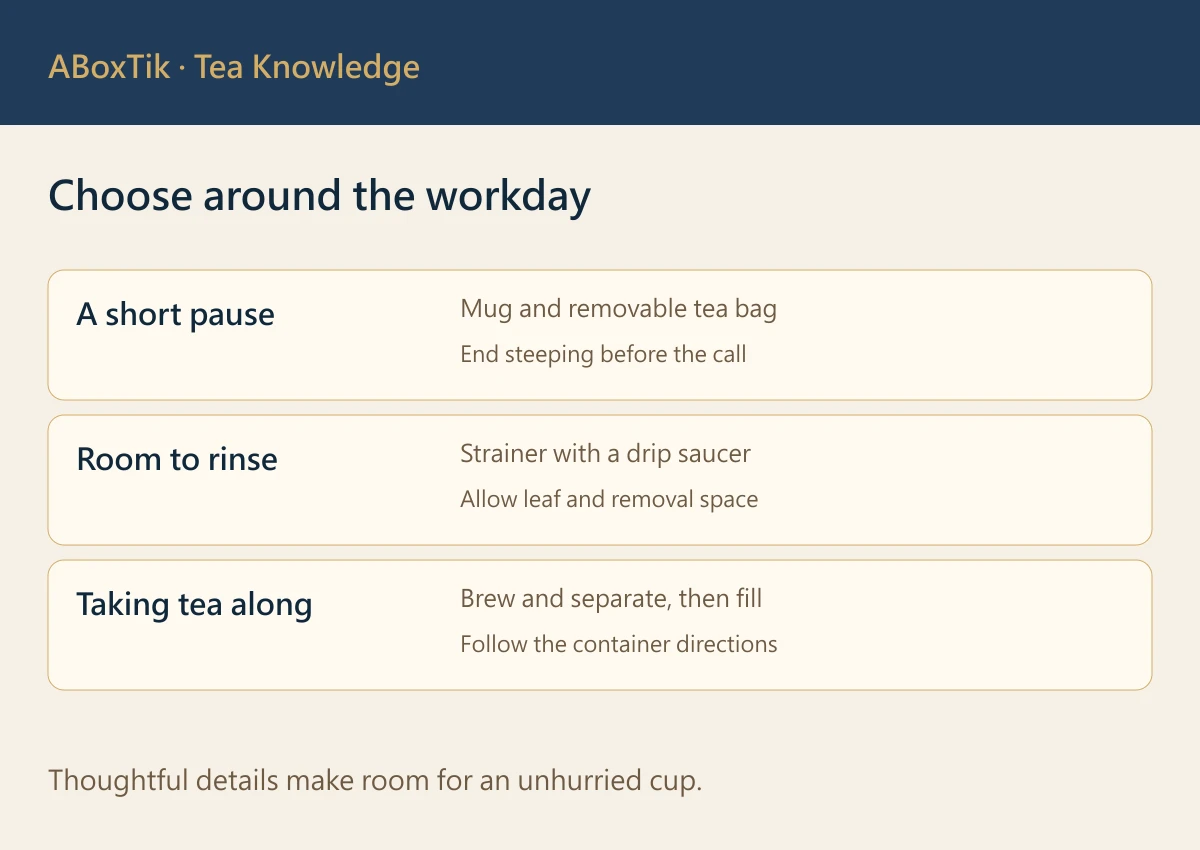
| Work pattern | Method | Finish before leaving | Reset |
|---|---|---|---|
| Predictable pause | Mug and removable infuser | Lift to a drip dish | Empty leaves; wash infuser, mug and dish |
| Frequent calls | Tea bag and mug | Remove bag to a dish | Dispose appropriately; wash mug and dish |
| Moving between rooms | Brew, separate, then fill flask | Check the lid and fill directions | Wash lid and removable parts as directed |
Make three note columns: setup steps, what must happen before leaving, and what must be cleaned after returning. Test for a week and remove steps you never complete. Light and roasted Taiwan tea can guide flavour exploration once the process is dependable.
At the end of a week, choose the method that produced the fewest unfinished tasks: loose leaves left in a mug, a flask awaiting a wash, or a tea bag that was easy to clear. The winning workflow is the one that fits your real calendar and leaves the next cup free of yesterday’s flavour.
Use the tea categories overview for the broader classification; keep enough space at the desk to finish and clean up.

ABoxTik makes room for tea that fits a real workday.
Simplify your office tea workflow
Begin the next workday with one method and a clear place for the used bag or infuser. Notice whether the timer, drip dish and rinse can be reached without moving papers or balancing hot tea near electronics. Fix that practical detail before adding more equipment.
At the end of the day, clean and dry the vessel and removable parts according to their instructions. Check the supply for tomorrow, then let the tea corner be finished work. A dependable pause is easier to enjoy when yesterday’s cup has already been put away.
Related reading
Sources
- Tea and Beverage Research Station: brewing water and temperature
- Thermos Taiwan: product-use and care FAQ
- Taiwan Food and Drug Administration: stainless food containers
Sources checked 17 October 2026.