
Tea Knowledge
Is Tea Astringency Bad? A Guide to Balance in the Cup
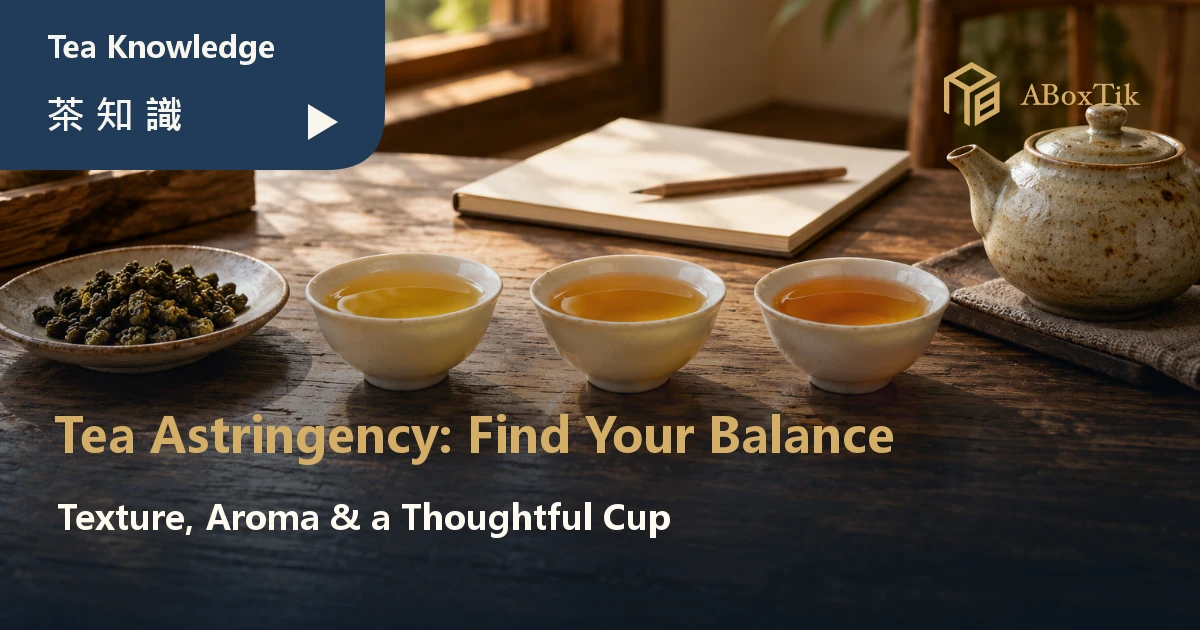
A cup does not have to pass a good-or-bad test. Let texture, aroma and the finish each have a small say.
Tea astringency is not automatically a flaw. It is the drying, gathering or firm sensation a tea can leave in the mouth; the useful question is whether its texture, duration, aroma and body feel at ease together. Taiwan Tea and Beverage Research Station describes astringency through the mouth-drying, puckering impression familiar from unripe fruit. That gives us a starting point for noticing, rather than a reason to score a cup too quickly.
If your first reaction is “a little dry”, that is a perfectly useful beginning. You can enjoy a firmer cup one day and want something gentler the next. Before handing the tea a verdict, ask a smaller question: what kind of feeling is this, and how long does it stay? Your cup has not applied for a performance review.
What tea astringency feels like
It may appear on the tongue, gums or inner cheeks as a light grip, a powdery texture, a clean tension or a coarser dryness. One word, “astringent”, can cover very different experiences. Tea material, making and brewing conditions can all change the impression, so a single sip need not supply a single cause.
Try a small sip, pause, and notice where the sensation sits. You might feel a soft grip along the cheeks while the centre of the tongue feels different. Use ordinary words before reaching for specialist ones: fine, firm, brief, lingering, comfortable. A plain description that you understand tomorrow is more helpful than an impressive phrase you cannot recognise again.
Bitterness, astringency and sweetness are separate notes
Bitterness is a taste; astringency is largely a mouthfeel. They can arrive together, but they do not have to. For questions about bitterness, over-strength or a brewing concern, visit our bitterness and astringency guide. Here, the focus stays with texture and balance.
A sweet or rounded finish may follow, but an astringent tea does not owe us sweetness. Record the finish separately from the first mouthfeel; it is kinder to the tea and more useful for your own preference.
Four quiet observations for tea astringency
Keep this card beside your cup and note intensity, texture, duration, and how it pairs with aroma and body. “Medium intensity, fine texture, brief finish, floral aroma still clear” is already a helpful note.
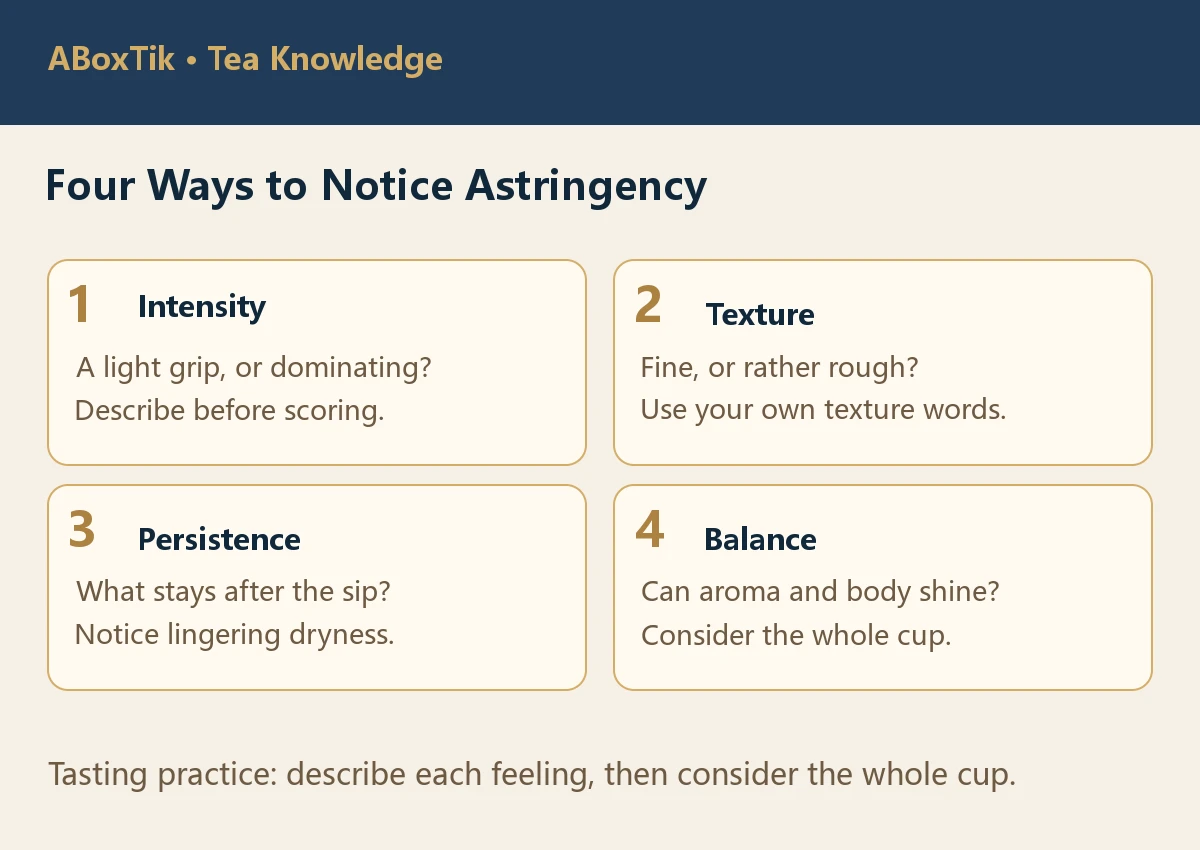
Imagine two cups that you describe as moderately astringent. In one, the texture feels fine and clears fairly soon; in the other, it feels rougher and stays along the cheeks. The intensity word is the same, but the experiences differ. This imaginary comparison shows why a second word about texture, and a third about duration, can make a note much more useful.
Read the whole cup, not one contraction
Balance does not mean every feature is equally loud. Aroma may rise, body may be present and astringency may provide shape. Notice whether those features still make sense from the first sip to the finish, and whether you would like another sip under the same conditions. For aroma language, use the tea aroma guide alongside this card.
Ask yourself four friendly questions. Is the aroma still easy to notice? Does the body feel comfortable alongside the grip? What remains after you put the cup down? Would you like another sip under the same conditions? You do not need to add these answers into a numerical score. A cup can have a clear character without every feature being equally strong.
An A/B practice with two teas
Choose two teas with clear information and similar brewing guidance. Begin with each product’s instructions, keeping comparable details consistent. Write down any differences in leaf amount, water, temperature or time so that your notes retain their context. One note might say “fine grip, short finish, orchid-like aroma remains”; another may say “firmer entry, fuller body, aroma returns as the cup cools.” Different tea types can respond differently to water temperature, so consistency helps create a fair comparison rather than a universal rule.
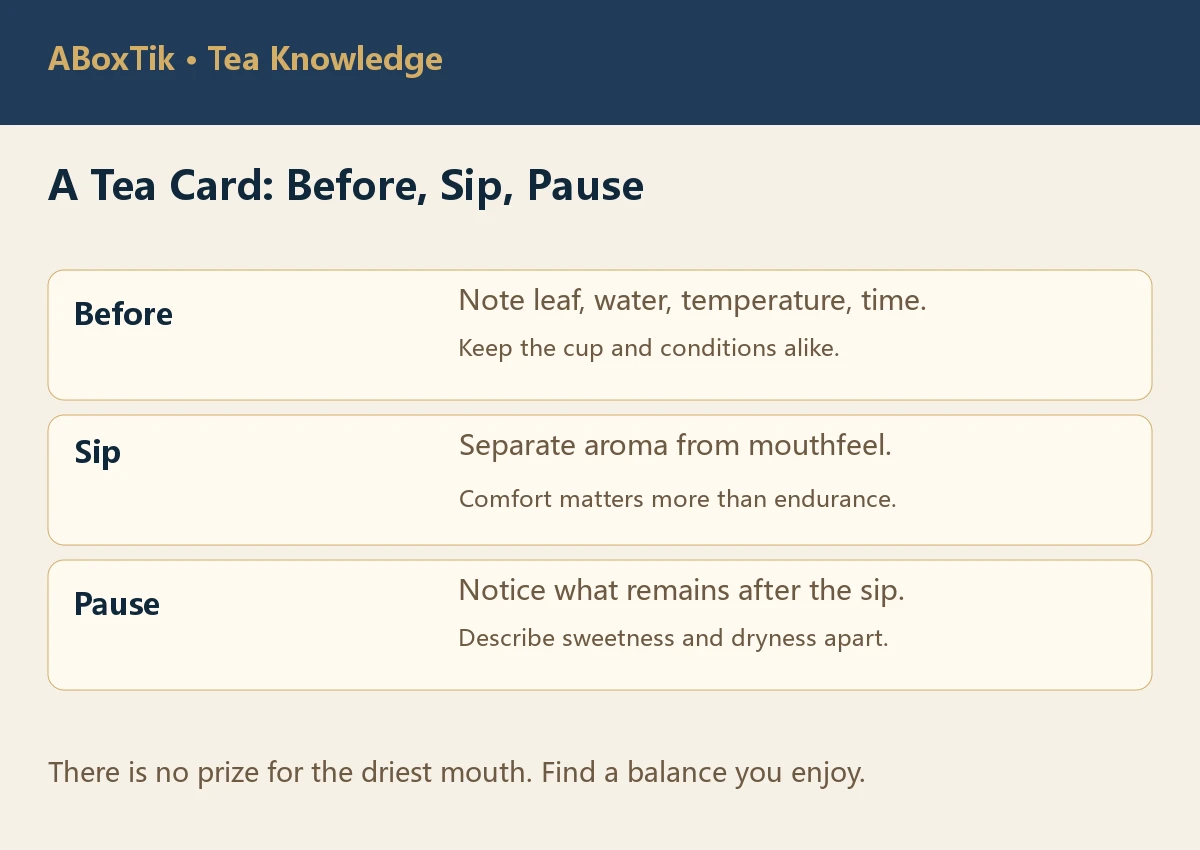
Keep the cups separate and take your time between them. You are collecting descriptions of two experiences, including their brewing conditions. If the teas need different preparation, retain those differences in your notebook. That makes it easier to revisit your preference later. It also keeps a home tasting friendly: the kettle is helping you make tea, not chairing a competition.
Before, during and after the sip
- Before: note leaf amount, water, temperature and time.
- During: keep aroma and texture in separate notes, including comfort.
- After: note what remains: aroma, dryness, body or a sweeter impression.
Start with the instructions for your tea. If you change a brewing detail, change one small thing at a time and follow the tea’s own guidance.
Taste Along with ABoxTik
Choose with your own comfort in view
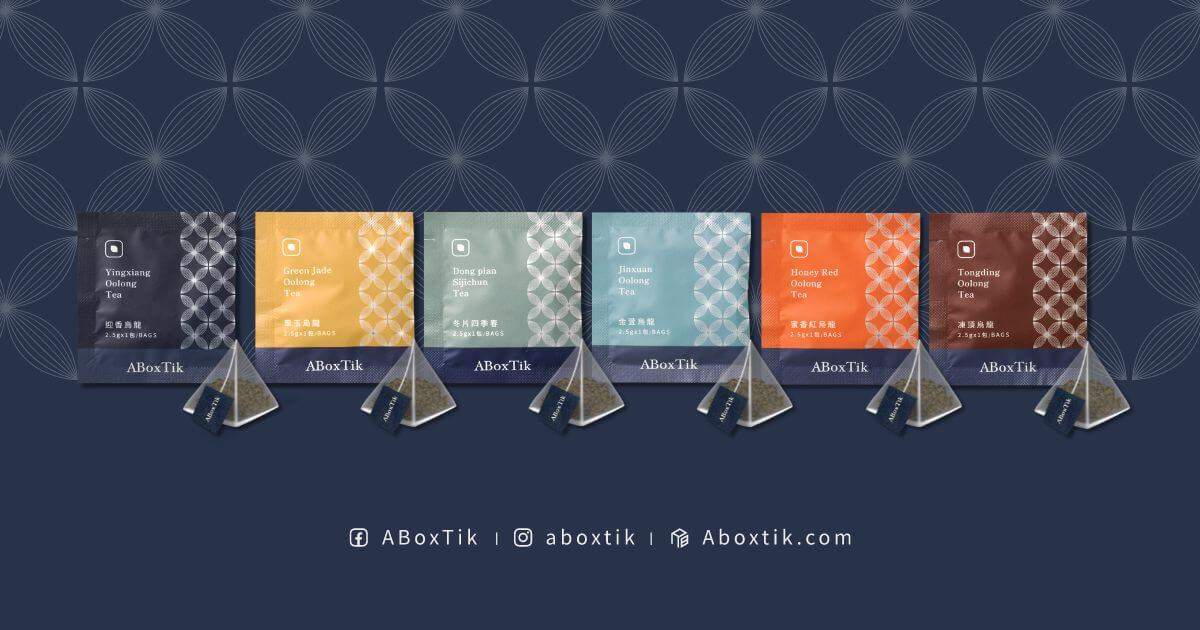
Astringency can give a tea contour, or simply tell you it does not suit this moment. Taiwan Tea Grading offers the wider assessment context; your comfort still belongs at the centre of your choice. Compare styles in the Classic Taiwanese Pure Tea Gift, then return to the Taiwanese tea guide for place and craft.
Try turning “I dislike astringency” into a more specific preference: “I enjoy a fine texture that does not linger for long.” Or perhaps you prefer a firmer contour with a fuller cup. Either note gives you language for choosing next time. If someone at the table disagrees, keep both descriptions. A shared pot can hold several opinions, and “I am still finding the words” is welcome too.
Related recommendations
Sources
- Taiwan Tea and Beverage Research Station: Tea Astringency
- Taiwan Tea and Beverage Research Station: Water Quality and Temperature
Sources checked 11 October 2026. The tasting card is an editorial exercise.