
Tea Knowledge
Bitter or Astringent Tea? A Gentle Guide to the Next Cup

A bitter sip need not become a verdict. Give the taste a name, make a small adjustment, and leave room for the next cup to feel more comfortable.
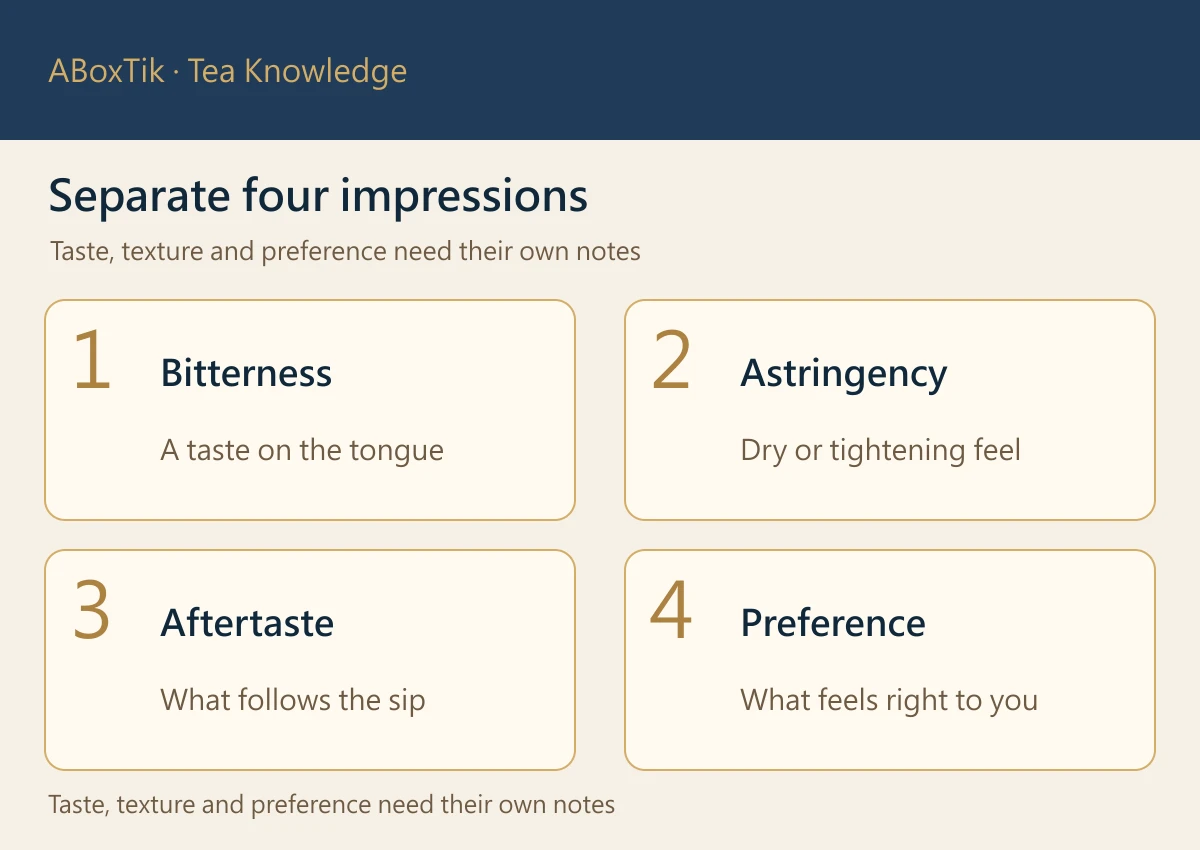
Bitter tea has a taste; astringent tea creates a drying or tightening sensation in the mouth. They can appear together, but they deserve separate notes. A little bitterness does not automatically mean poor processing. Begin with the packet’s brewing guidance, then notice aroma, taste and finish. Compare a fresh portion with a slightly shorter steep while keeping other conditions steady. If repeated brews still feel harsh and carry an uncomfortable odor, share the recipe and batch details with the seller.
Bitterness and astringency: give each a separate note
Taiwan’s Ministry of Agriculture identifies caffeine as a major contributor to tea’s bitterness, with catechins and other compounds also involved. The Tea and Beverage Research Station explains the role of catechins in astringency. For home tasting, the useful distinction is simpler: a bitter taste on the tongue differs from a dry, contracting feeling across the mouth. There is no need to memorize the chemistry before describing the cup.
| Impression | Useful words | What to notice |
|---|---|---|
| Bitterness | Lightly bitter, prominent, lingering. | Does it cover other tastes? Is another sip welcome? |
| Astringency | Dry, tightening, more friction in the mouth. | Intensity and duration; record aroma separately. |
| Aftertaste | Sweetness, lingering aroma or a change after swallowing. | Describe the actual change without searching for a required sweetness. |
| Preference | Lighter, softer, comfortable with a little bitterness. | Keep personal comfort separate from a quality verdict. |
This is a vocabulary aid, not a score sheet. “A bitter opening and a dry finish” already gives the next brew a direction. To add aroma later, follow our tea-smelling sequence and floral aroma guide. One clear distinction today is enough.
Does a bitter edge mean poor tea?
No. Leaf material, cultivar, processing, brewing and storage all contribute to the experience. A little bitterness within a cup that still offers other tastes differs from bitterness that dominates every sip. A brief drying sensation also differs from a finish that remains uncomfortable. Describe those differences first. Disliking a particular bitter edge does not mean someone has failed to understand tea.
The saying that tea must be bitter and astringent should not become a reason to endure a cup that feels wrong. Equally, an absence of obvious bitterness cannot establish superior quality. Consider aroma, balance, finish and clear information about the tea together. Our introduction to Taiwanese tea craft offers context; the rare-tea guide helps separate an interesting story from everyday drinkability.
Check concentration before changing everything
Start with leaf quantity, steeping time and whether the leaves remain in the water after the intended finish. The research station’s temperature comparison found that hotter water affected the extraction of caffeine, catechins and amino acids, while different tea styles performed differently in sensory assessment. Lowering temperature sharply is therefore not the answer to every bitter cup.
Follow the packet first. For the next comparison, use a fresh, equal portion from the same batch and shorten the steep slightly. Keep water volume, water source, temperature and equipment unchanged. If the result feels better, keep that recipe for now. Our steeping-time guide explains how to record filling and pouring. Explore oolong water temperature as a separate next step.
Tea bags need an end to leaf contact too. Remove the bag according to its instructions, or separate loose leaves from the liquor, so the cup does not keep getting stronger during a conversation. Record mug capacity and bag count together. Topping up a half-finished mug changes more than time. The gaiwan and teapot comparison and pot-brewing guide can help with practical handling.
When to ask the seller about a batch
The research station notes that unsuitable withering and leaf manipulation in partially oxidized tea can contribute to coarse or green astringency. That describes a possible processing cause; it does not turn a single sip into a diagnosis. A drying mouthfeel alone cannot identify which manufacturing operation went wrong. Leaf material, brewing and storage still need consideration.
If several fresh brews made with the recommended recipe remain forcefully bitter or astringent and carry a persistent uncomfortable odor, bring those observations to the seller. Smell the dry tea, clean empty equipment and water separately. Notice whether the problem appears only in one vessel or remains with another clean vessel. These details are more useful than guessing that fixation or oxidation must have failed. The guides to withering and oolong oxidation can help explain the maker’s response.
Include the tea name, batch or packing date, opening date, storage and complete recipe. A message such as “I followed the instructions, then shortened the steep; the drying finish and an unfamiliar odor remain” gives the conversation a clear starting point. If the smell makes the tea unappealing to drink, set the cup aside. Completing a tasting note does not require repeated uncomfortable sips.
A small tasting card for a useful next step
This ABoxTik editorial exercise begins with one familiar tea. Two fresh brews can offer enough information; a cupboard of comparison teas is unnecessary. Reinfusing the same leaves is useful for observing development, but the leaves have already changed. A second infusion cannot isolate timing alone.
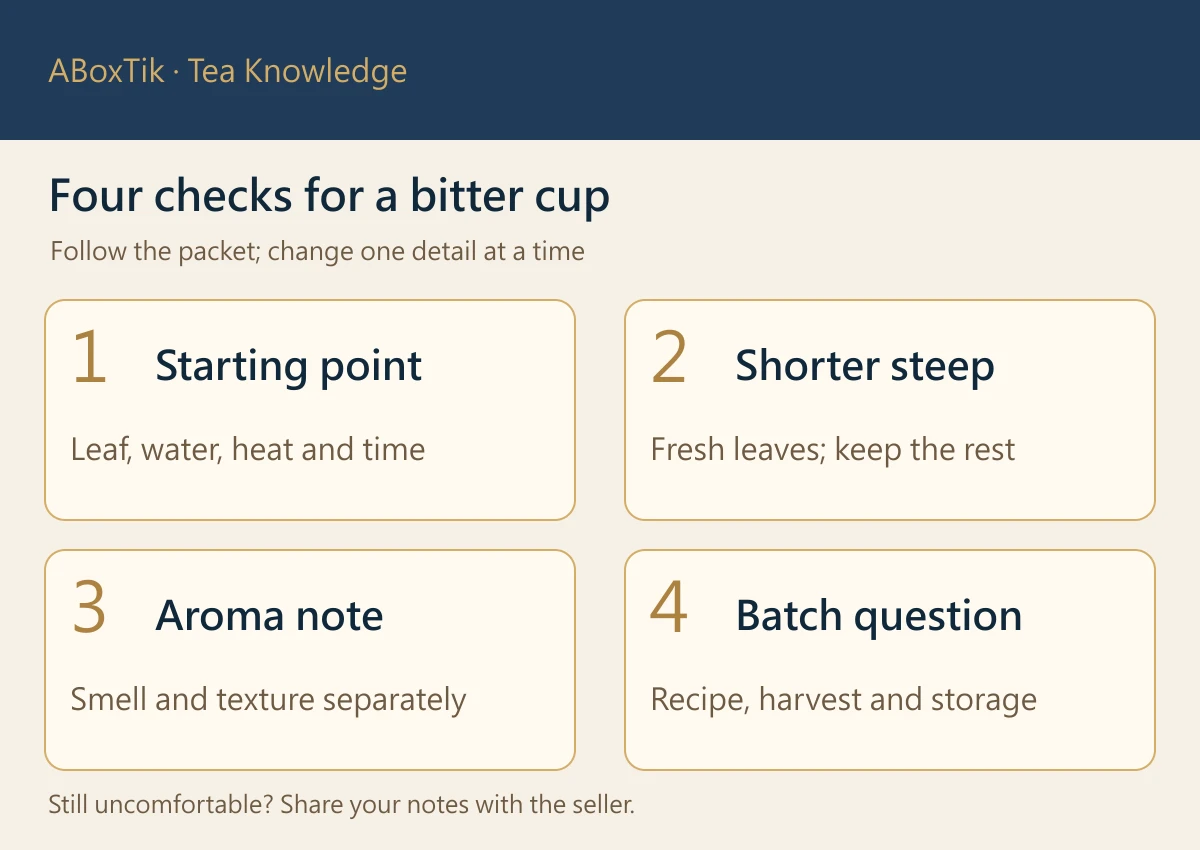
- Record the starting point: tea and batch, dry-leaf weight, water volume and source, temperature, vessel and time.
- Separate the impressions: write one phrase each for aroma, bitterness, dryness and the change after swallowing.
- Change time only: use fresh, equal leaves and a slightly shorter steep; keep the rest steady.
- Choose the next step: keep a comfortable recipe, explore another style for preference, or ask about a persistent unusual result.
A note need not be elaborate. “Less bitter with the shorter steep; still dry, floral aroma clear” is more useful than a number alone. When sharing tea, ask whether someone would enjoy a lighter or fuller cup. The answer helps the next pot. Add leaf observations through our rolling and unfurling guide, or explore the fresh and roasted style comparison when ready.
Questions about bitter and astringent tea
Does more bitterness mean more caffeine?
Bitterness cannot estimate caffeine content. Several compounds and brewing conditions shape the taste. A tasting note is not a composition test.
Does a sweet aftertaste guarantee good tea?
A sweet finish can be enjoyable, but aroma, texture, provenance and storage deserve attention too. There is no need to find sweetness that is not apparent.
Are tea bags necessarily more bitter than loose leaves?
No. Compare leaf amount, water, leaf form and contact time, following each tea’s instructions. Different recipes cannot fairly rank packaging formats.
Share a cup with ABoxTik
Let a comfortable cup make preference clearer
Understanding bitter tea gives the next cup a direction: separate bitterness from dryness, make brewing repeatable and turn persistent unusual results into specific questions. Tea tasting need not ask anyone to endure discomfort or reach a verdict every time. ABoxTik brings Taiwanese craft closer to everyday brewing, so the person offering a cup can feel a little more at ease. Our brand story continues that invitation.
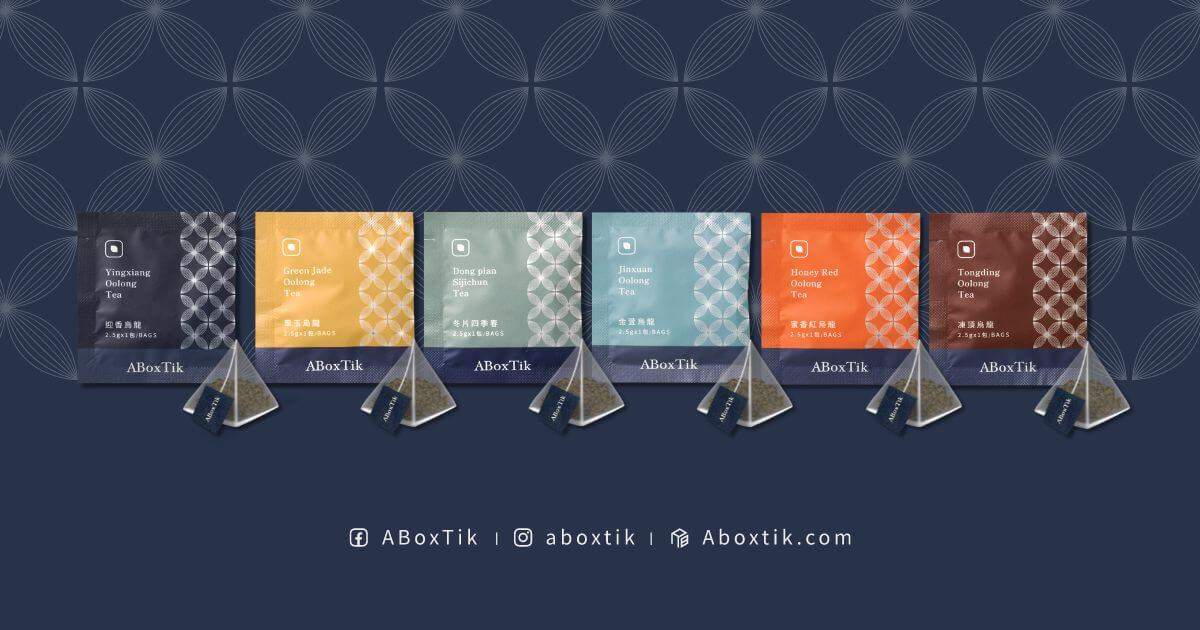
- Classic Taiwanese Tea four-box gift set: explore the currently available styles, following each tea’s instructions and recording preference.
Sources
Editorial sources accessed 8 October 2026.