
Tea Knowledge
TAGs Taiwan Tea Explained: Grading and Flavour Wheels
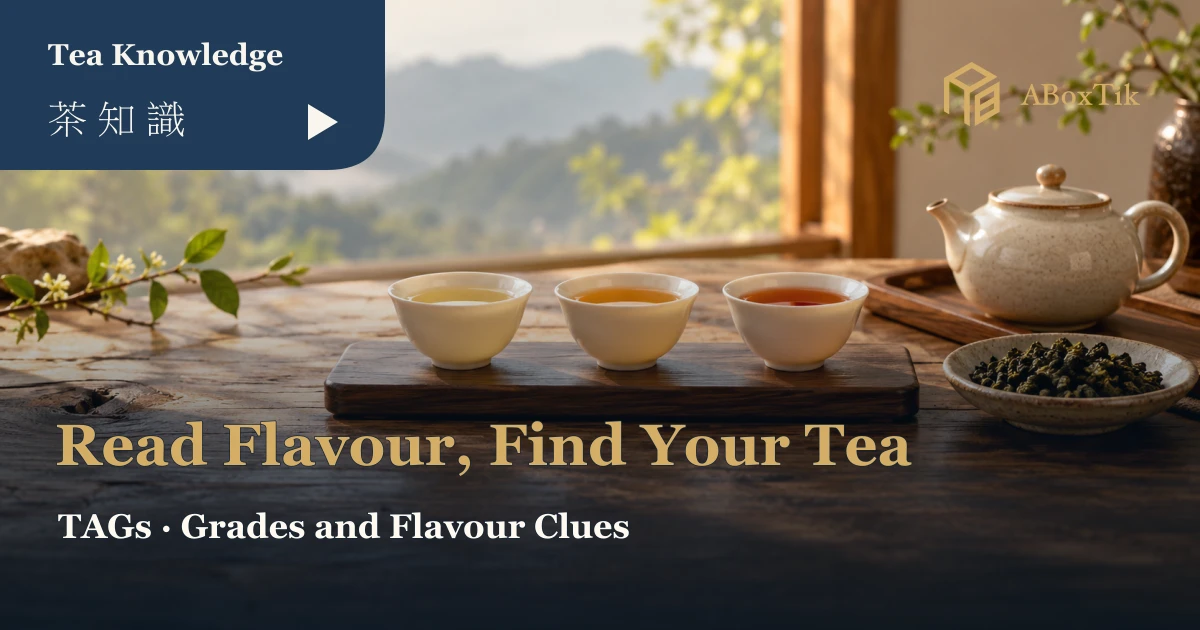
A flavour clue offers a beginning, not an exam. Read the record, take a comfortable sip, and leave room for an impression to become familiar.
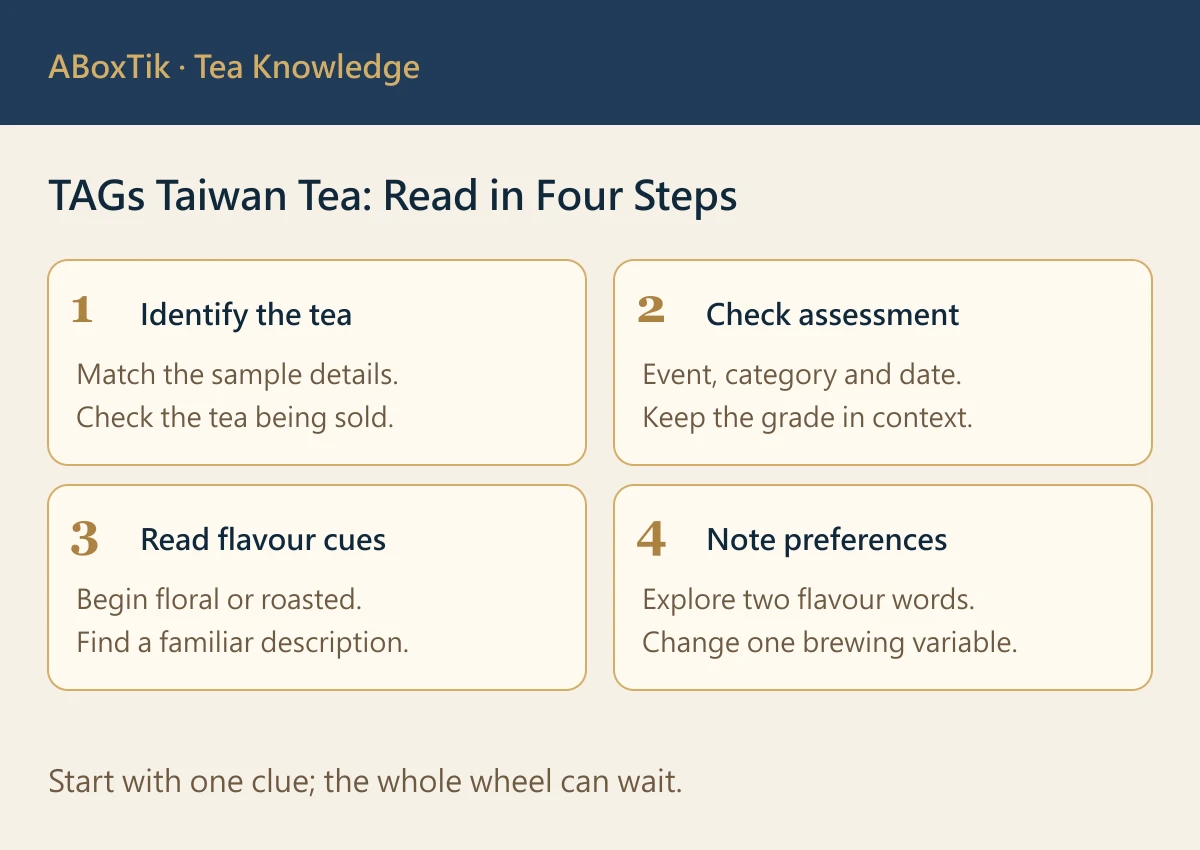
TAGs Taiwan tea refers to the Taiwan-tea Assortment & Grading system developed by Taiwan’s Tea and Beverage Research Station. It brings traceability, testing and sensory assessment together, using flavour wheels to describe assessed teas. Start with the tea sample and assessment event, then read the grade and flavour description. A grade provides assessment context; flavour helps decide what you would enjoy drinking.
A tea listing can contain a label, a grade and a whole circle of unfamiliar aromas. It may feel as though the cup has arrived with a school report. There is no need to memorise everything. This guide separates three useful questions: what tea is this, what does its assessment say, and which flavour direction sounds appealing? For background on the island’s teas, begin with what makes Taiwanese tea distinctive.
TAGs Taiwan tea: classification, grading and flavour do different jobs
The official TAGs introduction identifies three core values: safety, Taiwanese origin, and product classification and grading. Traceable production and testing information support the tea’s background. A panel drawn from industry, government and academic expertise assesses tea samples and describes their character through flavour-wheel terminology. The system places these different kinds of information alongside one another so that consumers can understand participating teas more easily.
Classification helps describe the type of tea. Grading presents an assessment result. Flavour descriptions give that result something more useful than a general adjective such as “good”: clues about aroma, taste and other sensory characteristics. Floral and roasted aromas are different directions rather than positions on a podium. A delicate cup can suit someone better than a fuller one. tea flavour foundations explains flavour foundations, while tea price and value considers the separate question of price and value.
The official introduction mentions traceability certification, organic verification or tea-origin certification among the qualifications. Its assessment implementation page describes traceability or organic information, residue testing and subsequent sensory assessment. When checking a particular tea, use the rules of the relevant event and the sample’s documents. Keep the event name and year with the result. tea traceability records and organic and traceability verification explain verification questions in more detail; they serve a different purpose from learning to read a flavour report.
How to read a flavour wheel without turning tasting into homework
A flavour wheel is an index of sensory descriptions. The platform introduces six wheels: Taiwanese green tea, lightly oxidised strip-shaped pouchong, fresh-style rolled oolong, roasted rolled oolong, Oriental Beauty, and Taiwanese black tea. These specialty-tea groupings are different from the familiar green, white, yellow, oolong, black and dark tea classification. Choose the wheel relevant to the tea being described.
Read aroma from the inner categories towards more specific outer descriptions. Compare liquor colour with the colour cards around the outside, then distinguish taste from mouthfeel: bitterness and sweetness answer different questions from smoothness and body. A floral or fruit term describes a sensory impression, not necessarily an added ingredient. Check the ingredient list when that distinction matters. smelling and tasting tea helps explore the cup.
Notice the dry leaves, the aroma after brewing, and the taste once the tea is comfortable to sip. Choose one or two words rather than trying to recognise every term at once. If “fresh floral” is the clearest description today, write that down. floral tea aromas and honey and fruit aroma cues provide further vocabulary. The aim is a useful conversation with your own cup, not a spelling test conducted by your nose.
Read the grade alongside the sample, event and date
The station’s page about its Taiwanese traceability-tea TAGs assessment presents three grades: 特選, 精選 and 優選. Read these as an example from that assessment series. The platform explains that organisers and experts establish standards for each event, considering appearance, liquor colour, aroma and taste. Identify the event, category, sample and date. Keeping the original grade wording avoids inventing an English equivalence.
Ask the seller, “Which tea currently for sale corresponds to this report, and is the complete document or a lookup page available?” Match the tea name and supplier information with the assessment record. A cropped grade label leaves less context than the whole report. Different events, tea categories and years should not be combined into a single league table for the entire market.
If the document does not provide a score, threshold or duration, ask for clarification rather than filling in the gap. Tea also changes with storage and brewing conditions. Use the assessment to narrow a selection, then follow the individual tea’s handling instructions. tea storage covers everyday storage. A report has not brewed the first cup for anyone; tea, water and a little attention still have a part to play.
Traceability, sensory assessment and preference answer separate questions
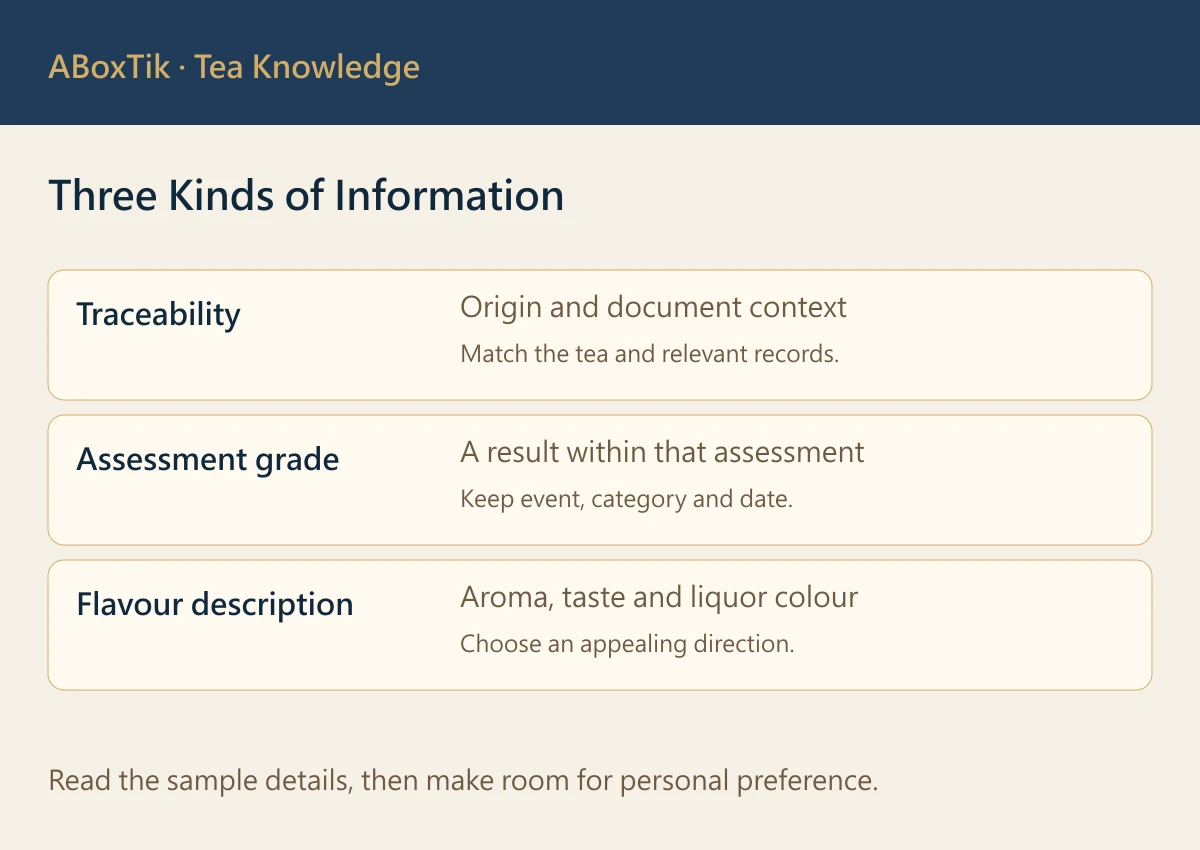
Shopping becomes confusing when one kind of information is asked to do another’s job. Origin and verification records help establish the sample’s background. A sensory assessment records an evaluation within its context. A flavour description points towards a possible drinking preference. Personal enjoyment depends on what someone likes and how the tea is prepared. Decide which information is missing before looking for an answer.
| Information | Look for | Check next | Useful for |
|---|---|---|---|
| Traceability and verification | Origin, supplier and relevant records | The tea and applicable documents | Understanding background |
| Grade | The result shown in that assessment | Event, category and date | Reading assessment context |
| Flavour description | Aroma, taste and liquor-colour cues | Corresponding sample and brewing conditions | Choosing an appealing direction |
Two people can both enjoy Taiwanese tea and choose quite different cups. One may prefer a light floral direction; another may want roasted aromas. fresh and roasted tea styles helps explore that choice. When selecting a gift, consider the recipient’s usual drinks and available equipment as well. Start with those practical questions. Understanding the information does not require abandoning a familiar favourite.
Bring the report to the table with a four-column tasting note
For a first attempt, make four columns: sample and document, report vocabulary, my impression, and next-brew adjustment. Pick two report terms to begin with. If comparing teas, keep the water, vessels and brewing arrangement reasonably comparable so that a difference in preparation is not mistaken for a difference between samples. Keep the exercise small enough to enjoy alongside the tea.
Start with the tea’s instructions. oolong brewing temperatures and first-infusion timing help explain temperature and timing adjustments. Change one variable on the next infusion instead of replacing the pot, water and leaf quantity together. a Taiwanese tea starter selection offers a way to build a small collection of flavour impressions. “I would like this lighter” is already a useful note; it gives the next cup a clear direction.
A small tasting question: would you begin with A, a fresh floral direction, or B, ripe-fruit or roasted aromas? After choosing, ask which report word helped make that decision. If the answer is “I am still learning the terms,” return to a broader category. Recognising one impression is more helpful than hurrying to name ten aromas that do not yet feel familiar.
Keep three questions for the seller: which tea does the record describe, what flavour cues should I look for, and how is this tea usually brewed? Taiwanese tea regions adds regional background, but record origin, grade and preference separately. A mountain name does not need to carry the whole decision. Let documents clarify the background, then give the cup enough attention to clarify the preference.
Follow ABoxTik · Read one flavour clue, then leave a sip for your own impression.
Use the TAGs Taiwan tea reading approach to choose a thoughtful box
Three habits travel well beyond one report: check the document, describe flavour simply, and make brewing manageable. When exploring ABoxTik teas, begin with each product’s ingredients, tea selection and flavour descriptions. With the four-box pure tea gift, explore the available pure-tea selections; the two-box tea bag gift offers a smaller gift format. Check the individual products, then decide which format fits daily use or a gift.
Read ABoxTik’s story, or bring a flavour preference and budget to the ABoxTik team. “I enjoy floral aromas and usually brew in a mug” is a perfectly useful beginning. There is no need to memorise the wheel before asking a question. A report can make a choice better informed; a cup can make a preference clearer. Give each a little room, and selecting tea becomes a calmer process.