
Tea Knowledge
What Tea Goes with Moon Cakes? A Pairing Guide
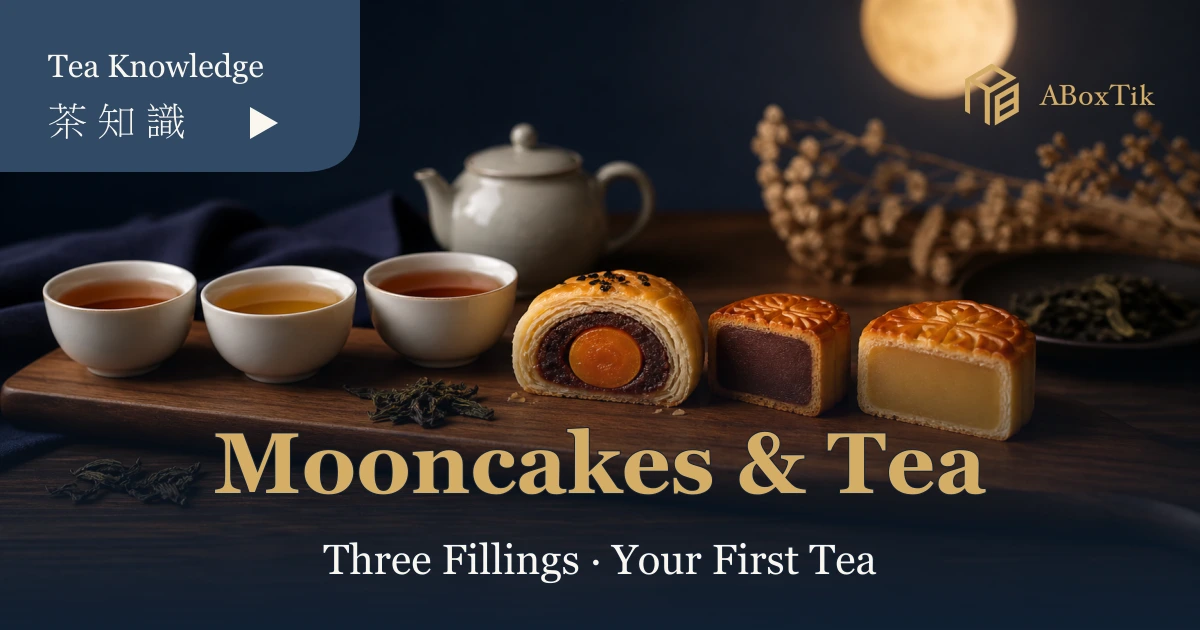
Moonlight brings the pastry to the table; tea leaves a little room for each filling to speak.
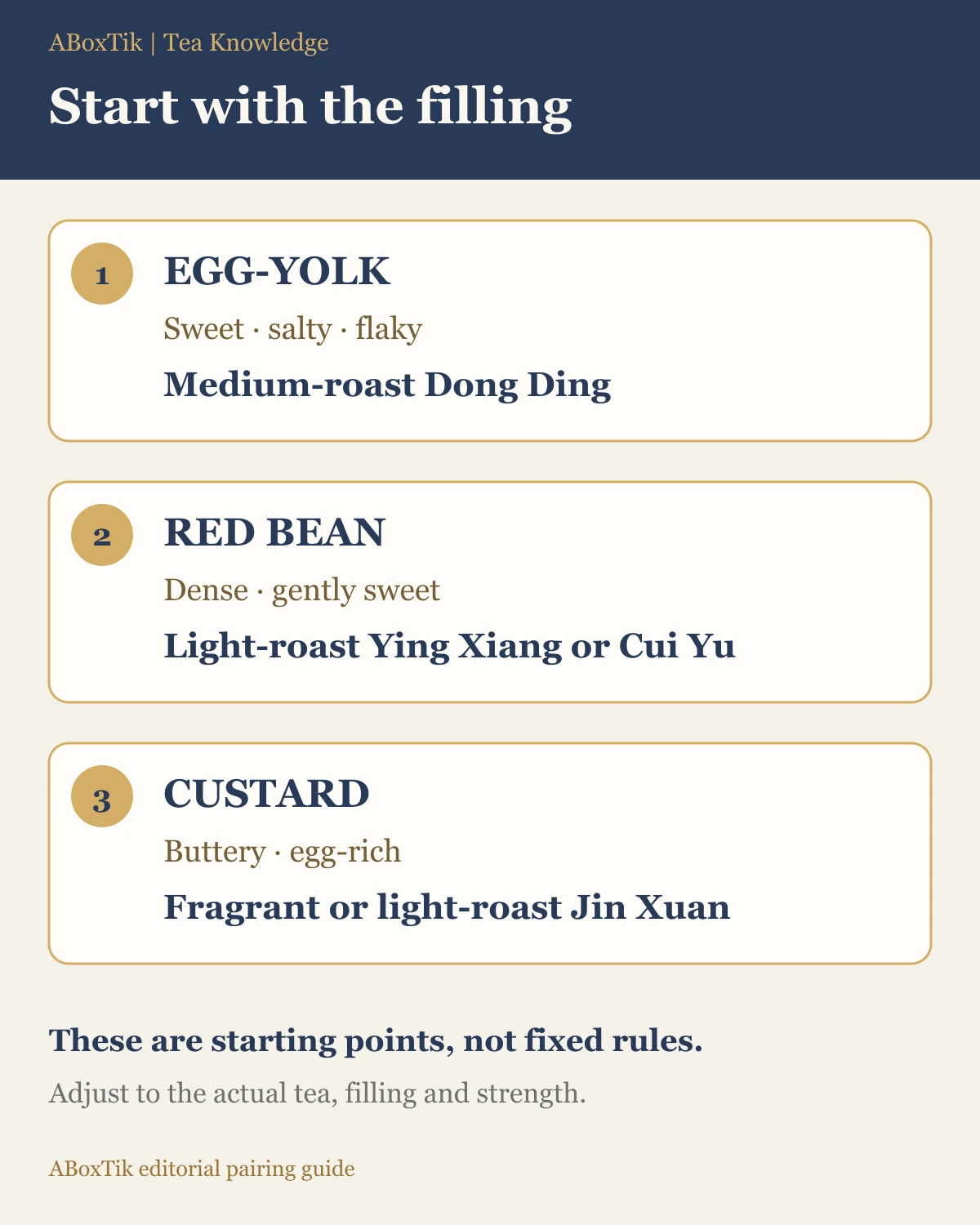
Moon cake tea pairing starts with the filling’s sweetness, richness and aroma, not with a single “correct” tea. Begin egg-yolk pastry with a medium-roast Dong Ding oolong; try a lightly roasted Yingxiang or Green Jade oolong with bean-paste or jujube-paste cakes; and start custard moon cakes with a fragrant or lightly roasted Jinxuan oolong. Cut each pastry into small pieces, keep the vessel and leaf-to-water ratio steady, then taste from clearer to richer styles.
This is an ABoxTik editorial tasting framework, not a sensory-science result or a rule for every moon cake. Recipes, yolk proportion, sweetness, roast and brewing strength all change the experience. We discuss flavour relationships only. For a broader gift-box and gathering guide, visit our Mid-Autumn tea gift box guide and our introduction to Taiwanese tea. This article stays at the smaller, more practical level of three fillings and a repeatable tasting method.
What should you notice before pairing tea with moon cakes?
There is no need to begin with the rarest tea. Take one small bite and notice what stays longest: bean aroma, egg, salt, butter, toast, or sugar. Then take a sip of a gently brewed tea. If the tea disappears completely, make the next infusion a little stronger. If both pastry and tea feel heavy, return to a clearer or less-roasted style.
| Moon cake style | What to notice | Starting Taiwanese tea | First adjustment |
|---|---|---|---|
| Egg-yolk pastry | Flaky crust, salty yolk, bean filling and richness | Medium-roast Dong Ding oolong | If roast dominates, brew more lightly or try a fragrant oolong. |
| Bean-paste or jujube-paste cake | Bean notes, fruit-like sweetness and a fine finish | Light-roast Yingxiang or Green Jade oolong | If sweetness lingers too long, shorten the infusion or test a warmer light roast. |
| Custard moon cake | Butter, egg, sugar and a smooth texture | Fragrant or lightly roasted Jinxuan oolong | If the creamy notes blur together, switch to a brighter floral oolong. |
Taiwan’s Tea and Beverage Research Station uses a flavour wheel to organise aroma and taste vocabulary for Taiwanese teas. It gives us useful words—floral, sweet, roasted and fruity—without turning one word into a promise of quality. Build your own vocabulary with our guide to smelling tea and introduction to tea flavour.
Egg-yolk pastry: begin with medium-roast Dong Ding oolong
Egg-yolk pastry often combines the richness of flaky crust, sweet bean filling and a savoury yolk. A medium-roast Dong Ding oolong is a useful first comparison because its warmer roasted profile can sit beside baked notes rather than asking a floral tea to carry every layer. Ministry of Agriculture material explains that roasting helps create the distinctive aromas of roasted Taiwanese teas, including Dong Ding oolong. That is a direction for tasting, not proof that every Dong Ding will taste alike.
Make the first cup slightly lighter than your usual brew. If roast is all that remains after the pastry, shorten the next steep. If the tea vanishes after the yolk, increase leaf or time only a little. For the production context, read how oolong oxidation and processing work and our Dong Ding oolong guide; follow the preparation guidance supplied with the actual tea you are using.
Bean-paste and jujube-paste moon cakes: leave room for floral notes
Bean-paste and jujube-paste fillings tend to have a long, quiet sweetness. Start with a low-roast oolong with a clear floral profile, such as Yingxiang or Green Jade. This is not a claim that bean paste can only go with fragrant tea. It is simply an easier first comparison, since intense roast and sweet filling are not both being pushed to their highest setting.
If the pastry makes the tea seem thin, add a little leaf. If the cup turns astringent or crowded, return to the original ratio and shorten the steep. Cultivar is a helpful clue, not a fixed flavour contract: growing place, harvest and processing matter too. Our Green Jade oolong guide explains that distinction in more detail.
Custard moon cakes: compare fragrant and lightly roasted Jinxuan
Custard brings butter, egg and cooked-sugar notes. A fragrant or lightly roasted Jinxuan oolong is a helpful first cup when you want to see whether its soft profile gives the filling more definition. Jinxuan is Taiwan Tea No. 12. The Tea and Beverage Research Station notes that naturally creamy notes may occur in partially oxidised teas under suitable leaf and processing conditions, but this does not mean every Jinxuan will express them with the same intensity, or that creamy aroma alone determines quality.
If tea and custard become too similar, test a more floral fragrant oolong for contrast. If custard seems overly sweet, make the next infusion lighter before moving to a much darker roast. Learn more about the cultivar in our Jinxuan oolong article, and check product instructions and ingredients for the particular tea and pastry on your table.
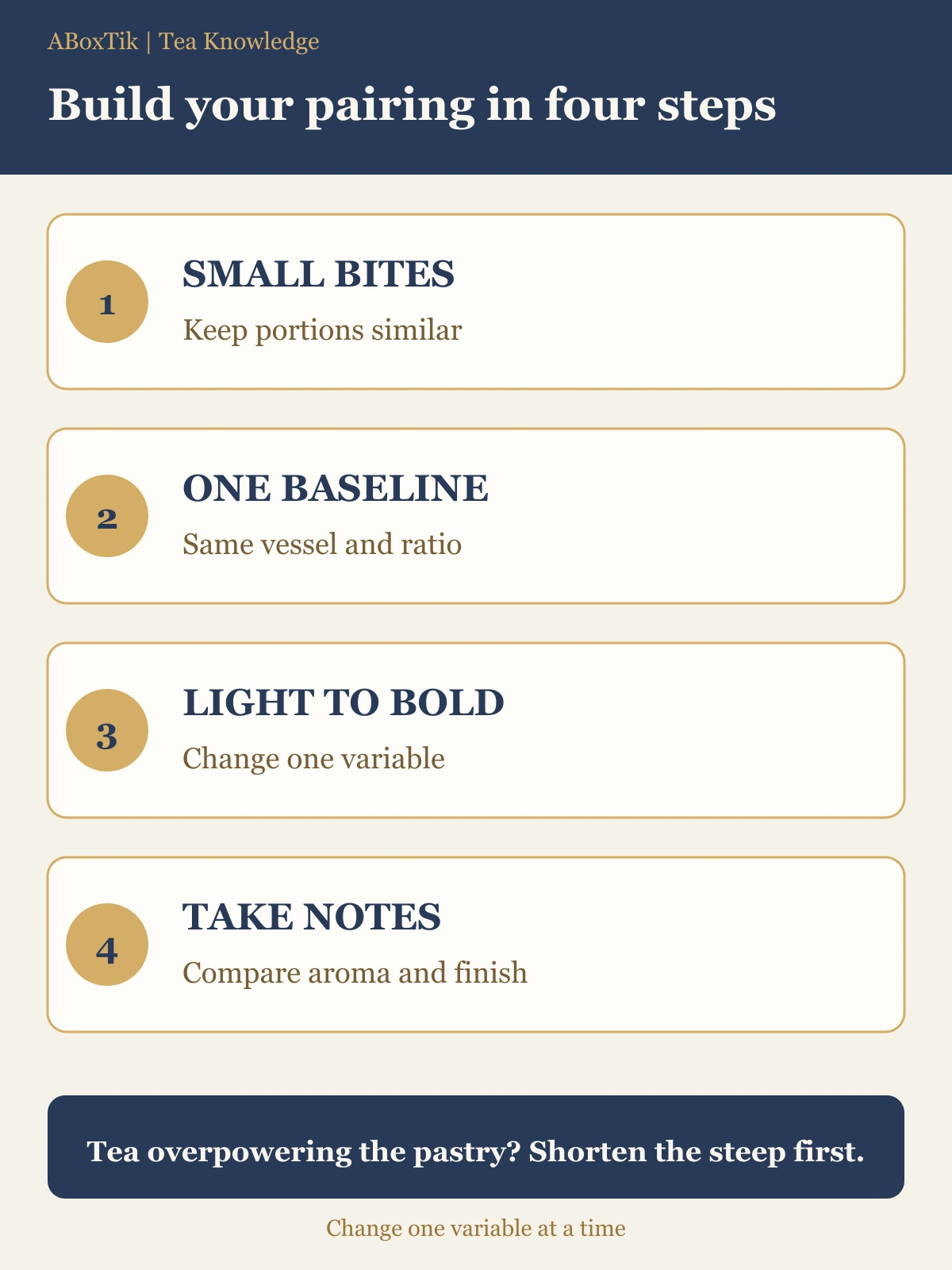
A four-step tasting method: clear to rich, one change at a time
- Cut small pieces. Keep each sample to one or two bites. Taste it plain before the tea so the previous filling does not overwhelm the next comparison.
- Keep vessel and ratio constant. Use the same cup or pot, water volume and a similar temperature. Professional tea evaluation also relies on consistent conditions; home tasting does not need to copy those specifications, but stable variables make your notes easier to read.
- Move from clear to rich. Start with fragrant or low-roast tea, then move toward warmer, more roasted tea. Taste the lighter moon cake first. If you adjust strength, change only leaf amount, steep time, or temperature in that round. A sip of room-temperature water between samples can help reset the palate.
- Take notes. Record what happens before the pastry, after it, and in the finish. This makes the next tasting repeatable rather than decided by the final bite alone.
The purpose is not to crown one winner for everyone at the table. It is to leave a trail you can repeat. When a tea has no preparation guidance, begin with ABoxTik’s tea-brewing introduction, then check the actual package and seller’s information.
Moon cake tea pairing questions
Do moon cakes have to be paired with oolong?
No. We use Taiwanese oolong as an accessible starting point because fragrant, roasted and light-roast styles are easy to compare. Apply the same small-piece, fixed-condition, one-change-at-a-time method to black tea or another tea you enjoy.
Does sweeter moon cake always need stronger tea?
Not necessarily. A very strong infusion can hide the pastry’s details or make bitterness more obvious. Begin gently and adjust from what you actually taste.
Is this a guide to “cutting through richness”?
No. We do not frame tea as a digestion, metabolism or weight-management tool. You may notice that a tea makes the next bite smell clearer, but that is a personal flavour observation rather than a health effect.
Leave room for comparison—and for your own preference
Follow ABoxTik
A Mid-Autumn table does not need one tea to judge every moon cake. A medium-roast Dong Ding, a floral oolong and a fragrant or lightly roasted Jinxuan already create useful comparisons for egg-yolk pastry, bean paste and custard. ABoxTik hopes Taiwanese tea’s cultivar, process and flavour can be explored at a relaxed pace. For a shareable selection, see our premium Taiwanese tea gift guide, Taiwan tea regions guide and tea gift box collection. Availability, ingredients and pricing should always be confirmed on the current product page.
Sources
- Tea and Beverage Research Station: Introduction to the Taiwan Specialty Tea Flavor Wheel (accessed 2026-09-06)
- Tea and Beverage Research Station: Taiwan Tea No. 12 (accessed 2026-09-06)
- Ministry of Agriculture Knowledge Portal: Roasting technology and roasted-tea aroma (accessed 2026-09-06)
- Tea and Beverage Research Station: Introduction to tea sensory evaluation (accessed 2026-09-06)