
Tea Bag, Tea Knowledge
Are Premium Whole Leaf Tea Bags Worth It? Convenience and Flavor
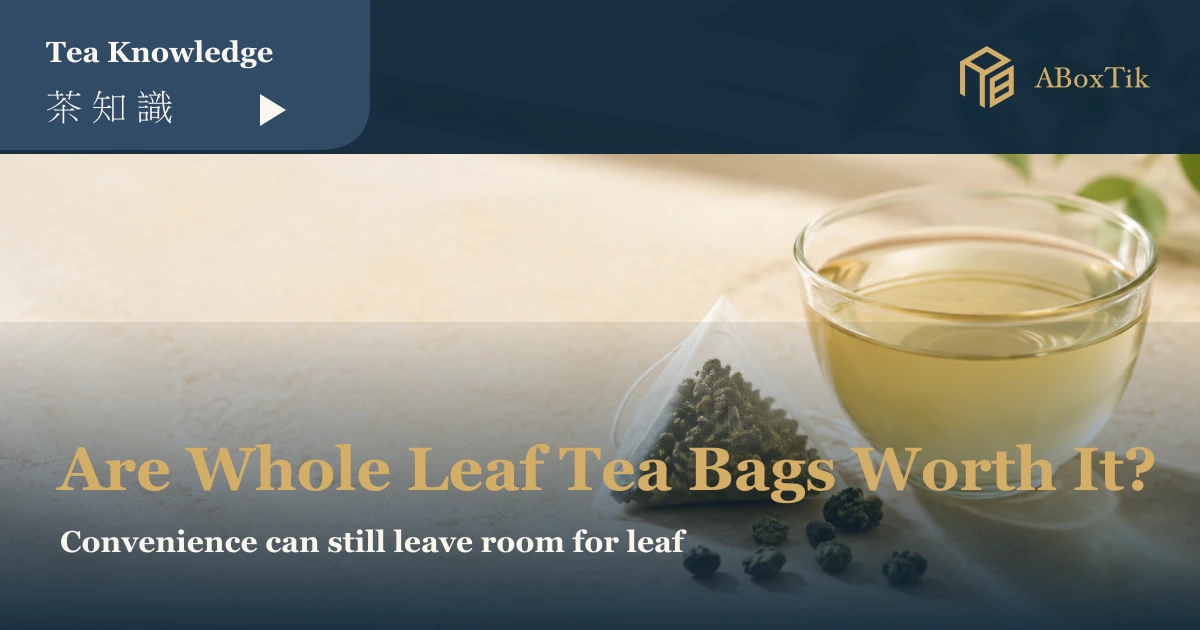
A tea bag does not have to make tea hurried. It can make a small, leaf-opening pause possible when there is no teaware nearby.
Are premium whole leaf tea bags worth buying? They can be, if you want a convenient cup with clear tea information, a more visible leaf form and a simple brewing starting point at work, while travelling or when giving tea. “Whole leaf,” however, is not a guarantee of quality or a promise that every cup will taste better than finely cut tea. A useful decision asks what is in the bag, whether the information is clear, whether the leaf has room to hydrate, how the tea is packed and whether the brewing guidance is usable.
This is not another comparison of pyramid and flat tea-bag geometry. Our pyramid tea bag guide covers usable space and extraction. This article answers the purchase question: should “whole leaf” earn a place in your everyday budget? Start with the broader types of tea bags, then use these five checks.
What whole leaf can offer—and what it cannot promise
A whole or larger leaf form gives you something to observe after brewing: how a rolled leaf opens, how the leaf bed looks and how dry-leaf, cup and spent-leaf aromas differ. Yet visible structure is only one piece of information. Cultivar, origin, processing, roast, storage and brewing conditions can all change the cup. The words “whole leaf” should invite better questions, not replace them.
Finely cut tea should not automatically be treated as inferior. Smaller particles often extract faster, which can be useful when a predictable cup is needed in a short break. A whole leaf tea bag is valuable because it combines some of loose leaf’s observational pleasure with a single portion’s convenience. It is neither loose leaf in miniature nor a certified premium label. Use our tea aroma guide to separate what you see from what you actually smell and taste.
Five checks before buying whole leaf tea bags
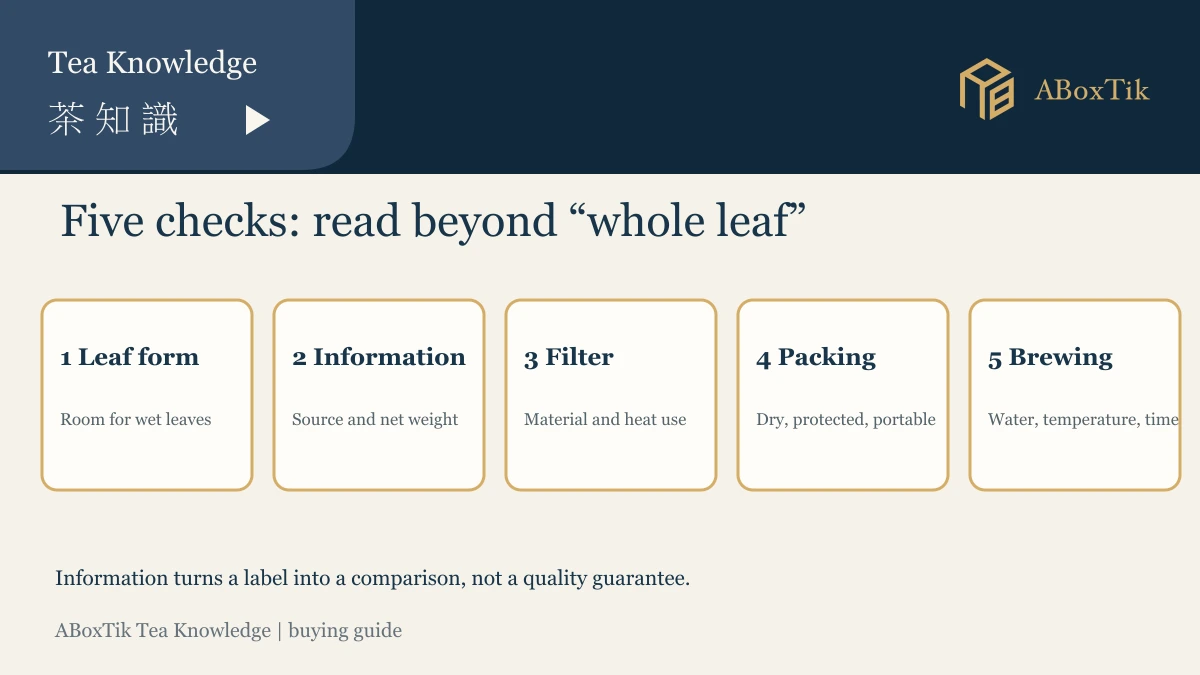
- Is the tea information specific? Look for the tea name, ingredient or source information, net weight, and production or storage guidance. Clear information does not promise personal preference, but it makes a comparison possible. Our guide to tea traceability and certification provides useful context.
- Do leaf form and usable space match? Rolled oolong or larger leaves expand when wet. The important point is room for hydrated leaf and water movement, not whether a bag merely looks triangular.
- Are filter material and heat-use instructions stated? Tea bags can use different materials. Do not infer material or heat suitability from appearance; follow the package’s food-contact, heat-resistance and use instructions, and ask the brand when they are unclear.
- Does the packing fit your rhythm? Individually packed portions travel well and are easy to share, but still need a dry, cool place away from odours. Quantity and storage both matter when a box will be opened over time.
- Is there a practical brewing starting point? Water volume, temperature and time need not be universal rules, but they should make the first cup repeatable. Keep the cup and water volume fixed, then change one variable at a time.
Can convenience and fine-tea flavor coexist?
They can coexist, but not automatically. A whole leaf bag simplifies measuring and removing tea, while suitable room can help certain tightly rolled leaves unfold. That makes a thoughtful cup easier to fit into a normal day. It does not protect a tea that has been stored poorly, steeped too long or brewed with unsuitable water.
Use the product directions as the first trial. If the cup is too strong or astringent, shorten the time before changing everything else; if it seems light, adjust water volume or time next. For the mechanics of bag space and extraction, return to the pyramid tea bag comparison.
Three occasions where whole leaf tea bags may fit
| Occasion | Possible value | Check first |
|---|---|---|
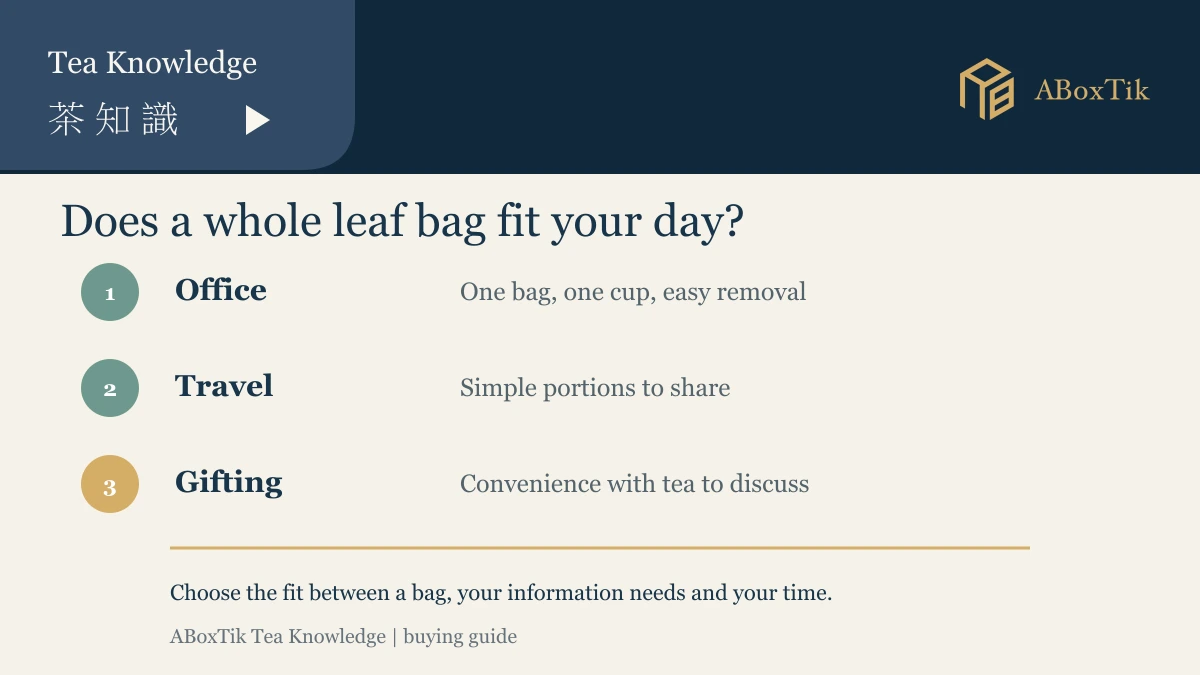
| Office or commute | One portion is easy to carry and remove without a strainer | Cup size, available water and storage |
| Travel or sharing | Portions are simple to distribute and introduce to new tea drinkers | Access to hot water and clear instructions |
| Gifts or slow home tasting | Convenience can still leave room for leaf, origin and flavor conversation | Recipient habits, current gift contents and availability |
Frequently asked questions
Are whole leaf tea bags always better value than loose leaf?
Not necessarily. Loose leaf may suit people with teaware who enjoy adjusting dose; tea bags include portioning, portability and easy removal in their value. Compare per-serving weight, information quality and what you will actually drink.
Can a whole leaf tea bag be steeped again?
You can try according to the package guidance. A larger leaf may express something in a second infusion, but the result depends on tea style, dose and the first steep—not a single quality test.
Does “whole leaf” tell me the filter material?
No. Tea content and filter material are separate questions. Read the material, heat-use and use instructions on the package instead of judging from appearance.
Tea, one box at a time
Choose a bag that you will genuinely use
Whole leaf tea bags are worth considering when you want convenience without giving up the chance to observe leaf and aroma. If speed and a consistent strong cup matter more, another format may fit better. The useful choice is not a hierarchy of bags; it is a match between information, leaf form and your time.
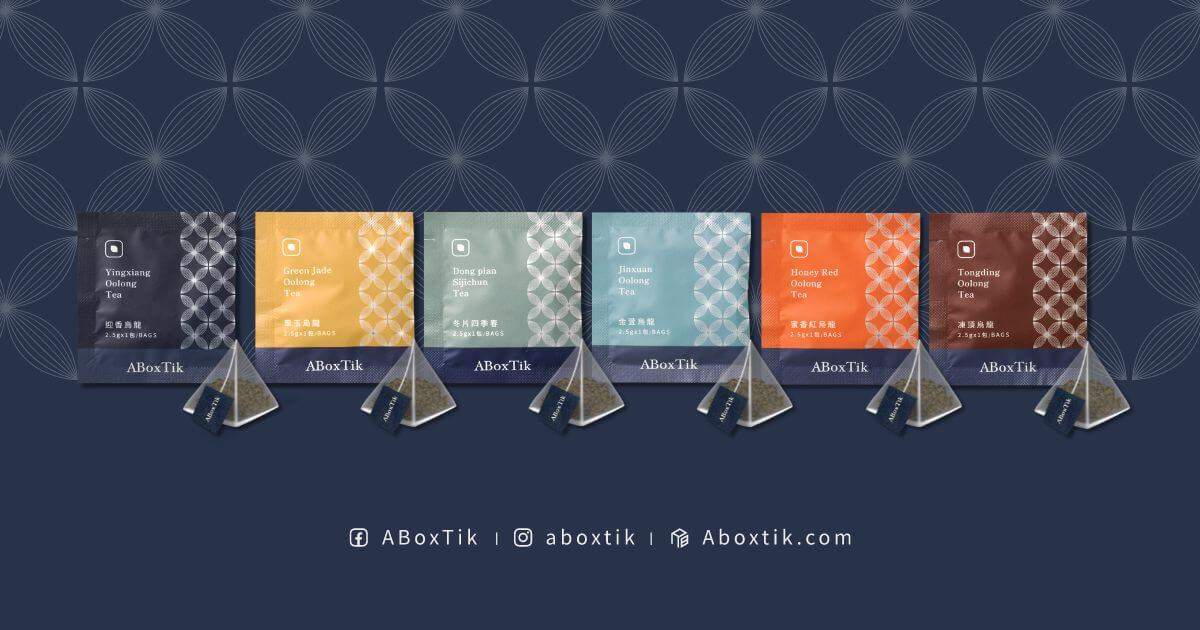
For an easy leaf-opening format, browse ABoxTik’s pyramid tea bags. To compare several Taiwanese tea styles in one box, see the mixed tea bag gift set. Confirm current contents, brewing guidance and availability on the product page.
Sources
- Food Chemistry: Kinetics of tea infusion. Part 3 — the effect of tea bag size and shape (accessed 2026-09-07)
- Journal of Food Engineering: Swelling and infusion of tea in tea bags (accessed 2026-09-07)
- International Journal of Food Engineering: Tea Brewing: A Critical Review (accessed 2026-09-07)
- Taiwan Food and Drug Administration: food-contact material and heat-use information (accessed 2026-09-07)