
Tea Knowledge
How Glass Shape Can Change the Way You Drink a Tea Mix
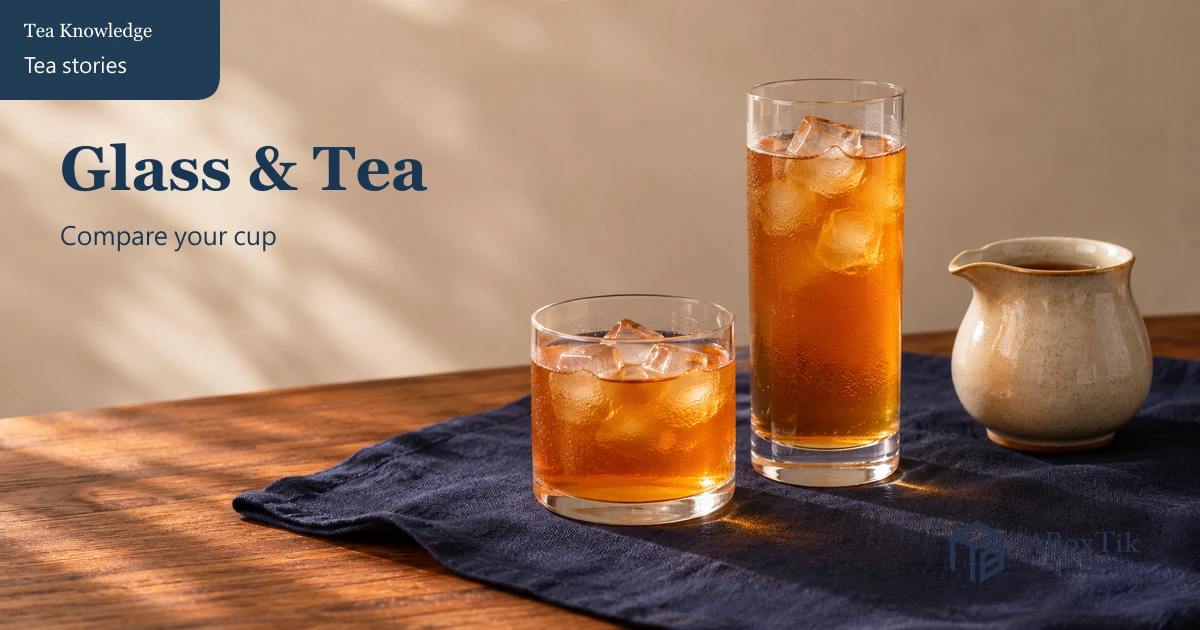
The same tea mix can feel different in another glass. Rim shape, capacity, ice and a straw can change the act of drinking. Keep the drink and serving amount consistent, then compare your own impressions.
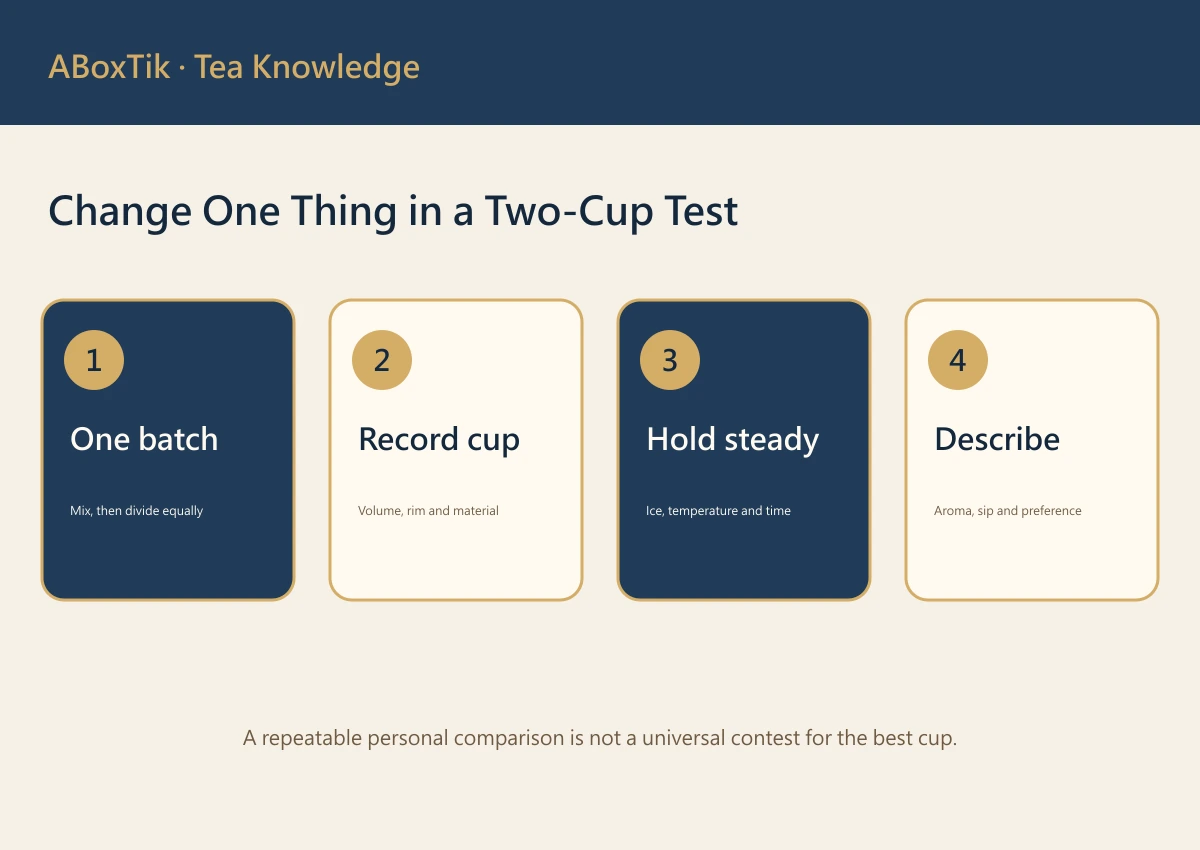
Start with the drinking action
Rim width, vessel height and grip can affect how someone drinks. If using a straw, record its position and whether the drink was stirred. Glass shape alone does not establish that everyone will taste a particular layer first.
Make a repeatable comparison
Use the same drink, serving amount, temperature and ice in both glasses. Record capacity, stirring, waiting time and drinking method. For a layered drink, ask the maker how it is intended to be served; change one condition at a time.
Use an observation card
Glass and capacity: ____; drink and amount: ____; ice and temperature: ____; straw and stirring: ____; first impressions: ____; changes after waiting: ____. This is a comparison framework, not a claimed test result for a recipe.
Serve with care
Choose a vessel appropriate for the drink’s temperature. Handle perishable additions according to their instructions and suitable hygiene conditions. Check ingredient and caffeine preferences and make the information available to guests.
Common questions
Is a tall glass always more aromatic? A general claim is not justified; compare under consistent conditions. Must a straw be used? Choose according to the drink and preference, and record each method.
Begin with capacity and the rim
Check the vessel’s total capacity, then record the intended tea, ice and additions while leaving room for handling and stirring. Total capacity is not necessarily a sensible fill level, especially when carrying a drink. A tall glass may display layers differently from a wide-rimmed cup, and the two invite different drinking actions; that does not establish that one makes every drink taste better.
Check that the opening accommodates any garnish, stirrer or straw. Follow the maker’s guidance on suitable temperatures and temperature changes before adding hot tea, a cold vessel or ice. Place decoration where it does not obstruct drinking; the first sip need not become an obstacle course.
Design a two-glass comparison
Imagine dividing one well-mixed non-alcoholic tea drink between a tall and a short glass. Record the drink amount, vessel material, starting temperature, ice quantity or weight, number of stirs and time drinking begins. If capacities differ, you might use the same volume of drink and note that the fill heights differ. Repeat the setup consistently on another occasion. This is a practical design, not a completed tasting result.
Smell each glass, take a small sip and note whether the aroma is easy to notice, whether the rim and drinking action feel comfortable, whether stirring is needed and which you personally prefer. Record the elapsed time and any later impression. To compare straws, first compare both glasses without one, then run another comparison with straws in both. Changing fewer conditions at once makes the notes easier to interpret; individual impressions are not predictions for every guest.
Ice, added water and waiting time
Melting ice changes the amount of water in a drink. For a before-and-after observation, record starting ice, surroundings and elapsed time, and begin each comparison at a similar moment. Glass shape, ice shape and ambient temperature can all matter in a particular setting; one observation cannot establish a melting rate for every vessel. If you add water separately, record the amount and time so dilution is not confused with a glass effect.
Handle milk, fruit and other perishable additions according to their labels and suitable hygiene and temperature conditions. Do not neglect storage merely to make a long comparison. Small servings consumed promptly can make a practical experiment easier. When serving others, provide ingredient information and leave room for people with caffeine or other ingredient preferences to choose.
Different questions for a table and a journey
At a table, consider base stability, comfortable handling and whether a coaster is useful. For takeaway, check that the container, lid and seals are suitable for the intended temperature, capacity and carrying method, and follow the maker’s instructions. For a fizzy drink or one with additions, confirm suitability rather than promising a seal is leakproof because it looks snug. Clean areas that may retain odours or ingredients.
A study of specialty coffee compared participants’ ratings using different cup shapes. It suggests that a vessel can be worth investigating, but the beverage, participants and conditions differ; it does not establish a best glass for a tea mix. Keep the study as background and put your own observations on the card so the next choice reflects your actual routine.
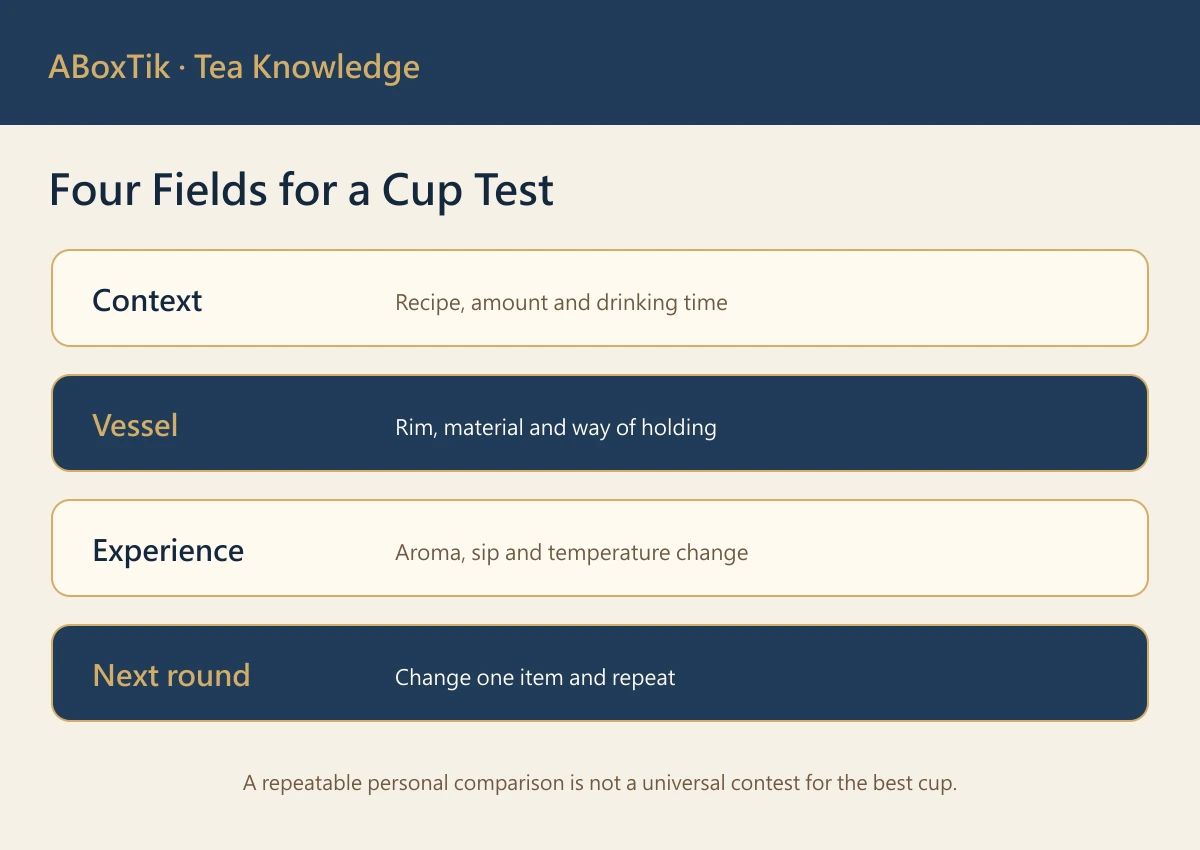
Vessels may influence experience without proving a recipe
Recent studies have found that vessel shape, material, texture or rim properties can alter participants’ ratings of aroma, taste and liking. The beverage, vessel, participants and procedures differ across those studies, however. A coffee experiment does not identify the best glass for a tea mocktail. A study involving green tea and cup-rim materials does not guarantee the same response for every recipe at home. Use the findings as a reason to observe, not as a scientific shopping league table.
In a tall narrow glass and a short wide one, the liquid surface, rim, drinking posture and distance from the nose may all change. Colour and weight can also set expectations. If glass shape, ice, recipe and straw are changed together, the result cannot show which item mattered. A considerate tasting gives people a comfortable comparison they can repeat; it does not announce their answer in advance.
Compare fairly, then return to the serving method that tastes good
Mix one batch thoroughly and divide equal amounts into two intact vessels that are suitable for the intended temperature. Record beverage amount, total vessel capacity, rim width, material, starting temperature, ice amount and the time drinking begins. Begin without straws. If straw use is the next question, make a separate round with the same straw specification in both vessels. Leave enough headspace to lift and stir safely instead of filling to a photogenic but spill-prone edge.
Note how easy the aroma is to notice, how the rim feels, whether the drinking motion is comfortable, how inclusions reach the mouth, and what changes after a stated time. Add preference last, and allow “no clear difference” as a useful result. After the comparison, there is no duty to serve every drink under identical conditions forever. Return to the vessel and method that makes each recipe enjoyable and practical. Fair comparison is a learning tool, not a new rule for the cupboard.
Ask separate safety questions for table service and takeaway
At the table, check base stability, comfortable handling and protection for the surface. For takeaway, confirm that the container, lid, straw and seals are intended for the drink’s temperature, contents and handling, and follow the maker’s instructions. Carbonation, fruit pieces, dairy or other ingredients can create different needs; a lid that looks snug is not by itself a promise of leak resistance or long holding time. When a recipe contains perishable ingredients, follow their labels and appropriate handling guidance, prepare modest amounts and serve promptly rather than extending a tasting experiment.
Before sharing, provide ingredients and caffeine information so each person can decide. Have participants write independently before discussing results; the first confident adjective can otherwise take over the table. A vessel can act like stage lighting, making some details easier to notice. The actual recipe, serving situation and drinker remain the main characters.
Explore next
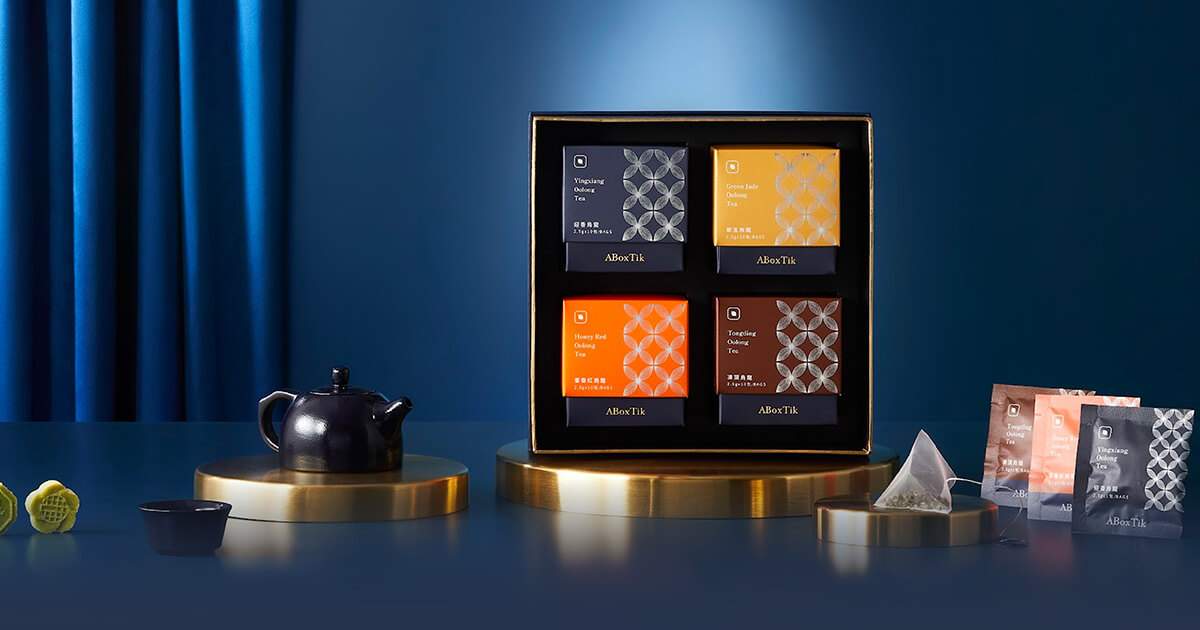
The glass may change the sip, but it need not complicate what comes next: explore a premium tea gift, pour another article into your reading list, or browse the latest boutique selections below.
Sources
Frontiers in Psychology—Visual and haptic teacup processing and tea flavour perception · Oxford University Research Archive—Cup shape and specialty coffee judgements · Applied Food Research—Cup-rim material, softness and flavour perception