
Tea Knowledge
Is a Gaiwan Good for Beginners? Size, Grip and Safer Pouring

It is completely normal to worry about heat, spills or dropping a gaiwan on your first try. Slow the movement down and let your hand find its place; tea is not a test you need to pass.
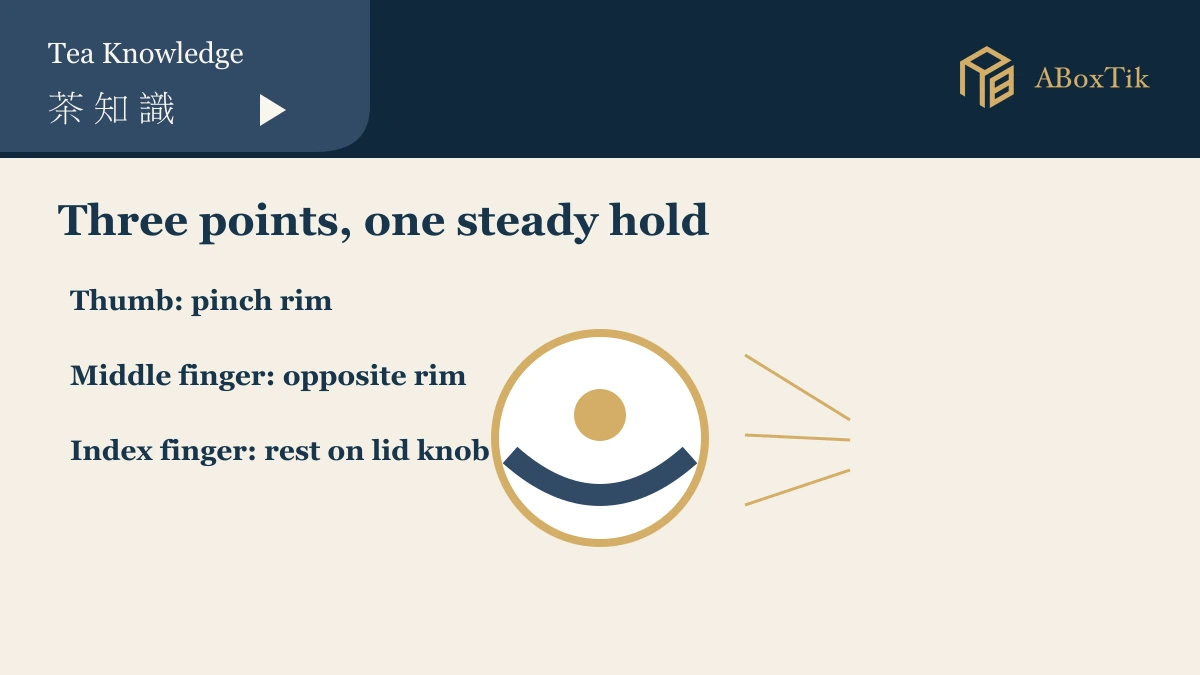
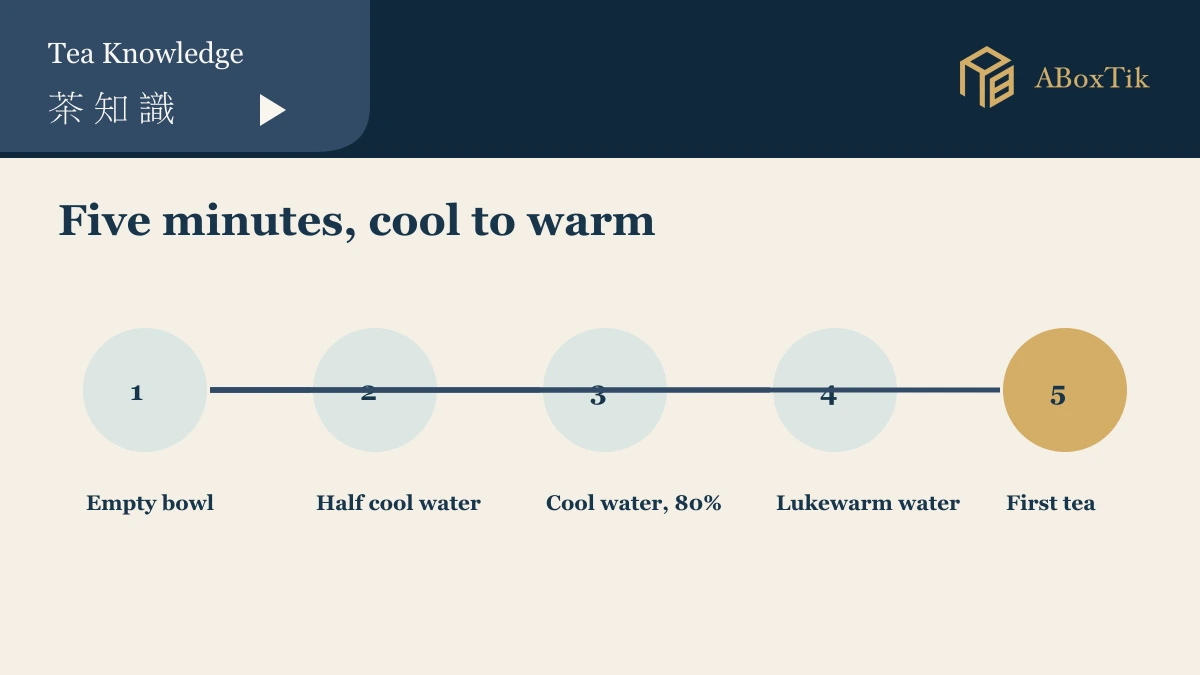
A gaiwan for beginners can be a lovely choice. Begin with a bowl your hand can hold securely: lightly pinch opposite rim edges with thumb and middle finger, rest the index finger lightly on the lid knob, leave a small lid gap, and pour away from the back of your hand. ABoxTik uses 90–120 ml and a fine gap as editorial practice starting points, not official or universal standards. Practice for five minutes with cool water before moving to warm water.
A gaiwan lets you see the leaves open, notice the aroma under the lid and pour the infusion away promptly. It can look intimidating, but it is not reserved for experts. If you are deciding between a gaiwan and a teapot for everyday use, read our gaiwan vs teapot guide; this article stays with the first practical session.
Choose a size your hand can trust
For a first session, 90–120 ml is a useful starting range: it is light enough when filled and easy to empty in one pour. Smaller hands may prefer 80–100 ml; a larger hand or two small cups may feel at home with 100–120 ml. These are starting points, not rules. Try lifting the empty bowl and then a partly filled bowl before you decide.
Look for a rim that does not make your fingers stretch, a lid knob that gives the index finger a clear resting point, and enough room to keep a steady hold without touching the bowl wall. White porcelain makes the liquor easy to see and lets you notice heat changes quickly, which can help you learn when to pause. If a bowl feels too thin, straight-sided or slippery, choosing another shape is sensible—not a sign that you have failed.
The three-point grip gives each part a job
- Thumb: lightly pinch one side of the rim, forming an opposing point with the middle finger.
- Middle finger: lightly pinch the opposite rim; do not push it toward steam.
- Index finger: rest lightly on the lid knob to steady, not clamp, the lid. The ring finger may assist below the foot or saucer only if comfortable.
Keep your elbow close, and let the wrist make a small turn rather than reaching the whole arm forward. Tea-culture materials from Longtan and the Pinglin Tea Museum show gaiwans in the wider practice of brewing and tasting; your own safe, stable hand position is still the one that matters.
Set the lid gap and pour away from your hand
After pouring water, shift the lid slightly toward the pouring side and leave a fine 2–4 mm gap. Too wide and leaves escape; too narrow and the pour slows or drips. Aim the gap forward and downward, keeping your fingers behind and to the side. Bring the fairness pitcher or cup close to the bowl instead of chasing the stream from a distance.
Steam escapes from the gap and rim first, so do not rest fingertips near the upper edge or lean your face over the opening. Let just-boiled water settle briefly when that suits the tea and its brewing guidance. For temperature, leaf amount and timing, continue with our tea brewing basics.
A five-minute cool-to-warm practice
- Minute 1, empty: lift and set down the bowl with the three-point grip.
- Minute 2, half full of cool water: make a small gap, tilt until water flows, then return upright.
- Minute 3, cool water at eight-tenths: bring the pitcher close and pour smoothly.
- Minute 4, lukewarm water: notice where steam would leave; keep thumb and middle finger on the outer rim and the index finger on the knob, away from the bowl wall.
- Minute 5, first tea: brew at the tea’s recommended temperature, then let the bowl release heat before adjusting it.
Stop whenever the bowl feels hot, slick or uncertain. Set it down, dry the outside and table, then restart. The point is room to learn, not one flawless attempt.
Heat, drips and blocked leaves: identify the link first
| What happens | Likely reason | Try this first |
|---|---|---|
| Rim feels hot | Water is too high or fingers are near steam. | Lower the water line; use the outer edges of the rim and point the gap away from your hand. |
| Tea drips | Uneven gap, wet exterior or a distant pitcher. | Dry the bowl, even the gap and bring the pitcher closer. |
| Leaves block the pour | Gap is too narrow or leaf amount is too high. | Pause, open the gap slightly; use less leaf next time. |
| Lid slips | The index finger is not steady on the knob, surfaces are wet, or the tilt is too fast. | Dry the knob and fingers, reset the three contact points, then practise a smaller tilt. |
Most first-session problems improve with a smaller bowl, lower fill level, dry surfaces and a slower turn. Once this feels natural, explore materials and shapes in our tea vessel material guide.
Give your first gaiwan session a comfortable beginning
A gaiwan does not need to become an exam. Choose a bowl you can hold, practise the gap and the pour with cool water, and keep steam away from the back of your hand. When you can pour a small bowl of water steadily, you are ready for your first tea.
Make the first cup easier to read
A simple session is easier to learn from than a dramatic one. Choose one tea, use the same leaf amount for two or three infusions, and make only one adjustment at a time. If the first infusion tastes too strong, shorten the next steep before changing everything else. If the leaves have not opened, give them another brief infusion rather than forcing a large lid gap. A gaiwan is helpful here because you can see the leaves and pour promptly, but it is still fine to use a teapot when that is the more relaxed choice.
For a gentle route into these details, our Taiwan tea regions guide explains why place matters; the oolong oxidation guide gives useful flavour context; and how to notice tea aroma offers a calm way to pay attention without needing specialist vocabulary. If you are using a compact whole-leaf format, see whole-leaf tea bags for an alternative brewing rhythm. For a wider look at vessel choices, the tea vessel material guide and gaiwan vs teapot guide can sit alongside this hands-on lesson rather than replace it.
For tea to observe and enjoy during practice, browse our tea collection or compare several styles with the Classic Taiwan Tea Set. Our guide to Taiwanese tea is there when you want to follow the story further.

Tea with ABoxTik
At ABoxTik, we like turning a complex tea moment into small steps you can use with ease. If you would like help choosing tea, a gift or a brewing starting point, contact us.
Continue at a comfortable pace
- Gaiwan vs teapot: compare the two vessels by everyday situation.
- Tea vessel material guide: understand how material can shape the handling experience.
- Browse Taiwanese tea: choose one tea you would enjoy observing in the next practice session.
Sources
- Longtan District Office: Hakka tea culture (checked 2026-09-13)
- Pinglin Tea Museum: Tea Fragrance booklet (checked 2026-09-13)
- National Taiwan Craft Research and Development Institute (checked 2026-09-13)
- MOE Revised Dictionary: gaiwan (checked 2026-09-13)
- National Museum of Natural Science: Formosa Tea (checked 2026-09-13)