
Tea Knowledge
Why Is Yingge Ceramics Famous? An Industry Cluster in Transition
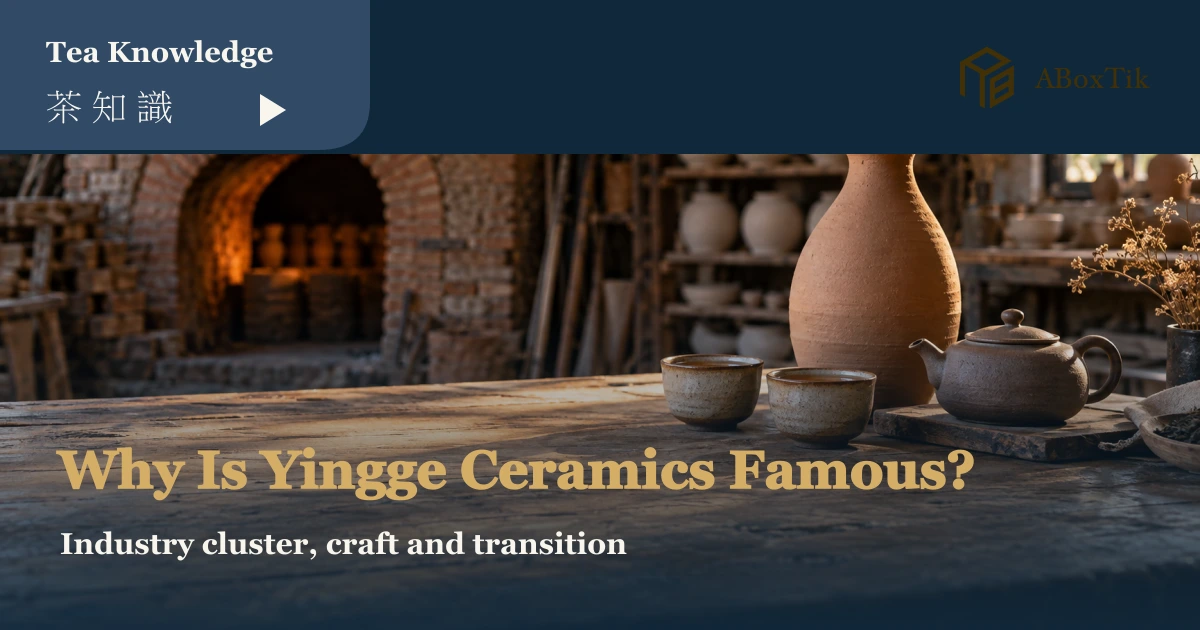
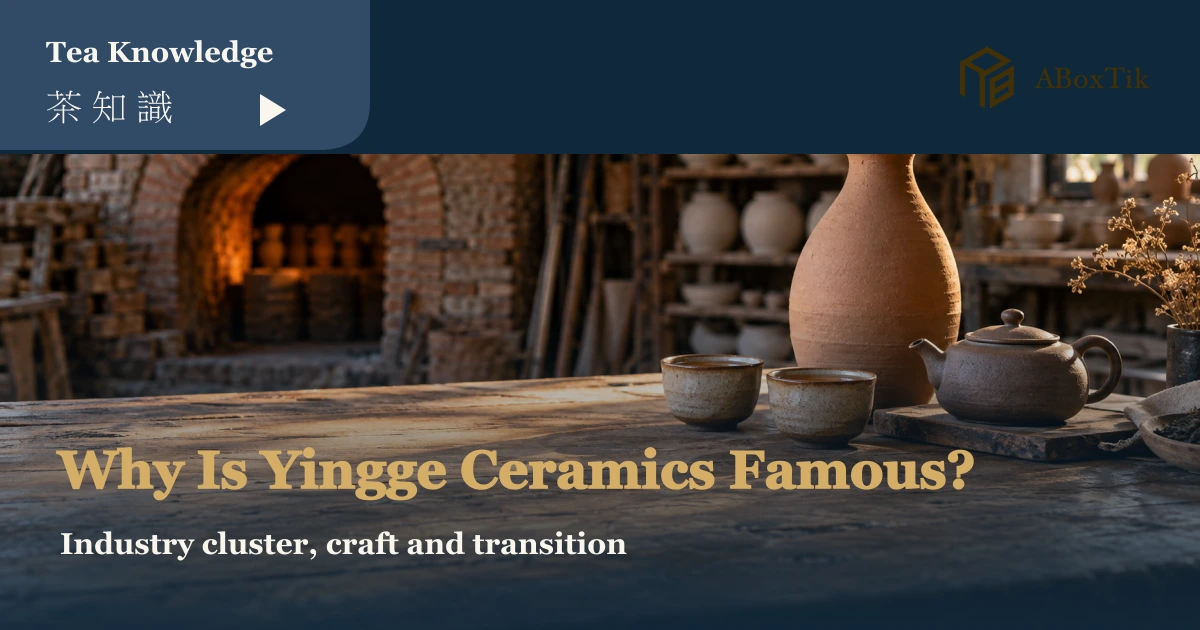
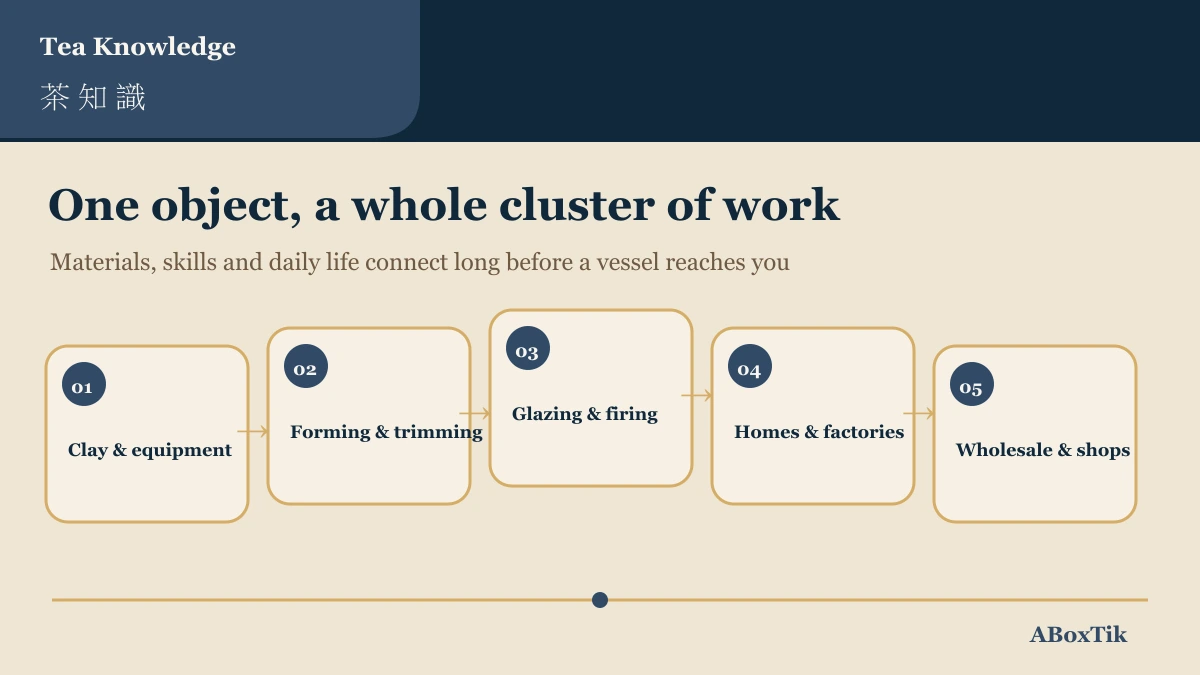
A ceramic object reaches your hands only after clay, tools, heat, specialist work and many ordinary days. Slow down for a moment, and Yingge becomes more than a street of shops.
Yingge ceramics is famous not simply because Yingge has pottery shops, classes, or a museum. Over more than two centuries, it developed into an industry cluster: materials, equipment, forming, firing, finishing, wholesale and retail could connect within one place. The Yingge Ceramics Museum describes a path from early nineteenth-century immigrant pottery knowledge, through household industry and industrialisation in the early twentieth century, to a post-war network of technicians, suppliers and markets. Today, everyday, architectural, industrial and art ceramics still sit in the same larger story.
If you are wondering whether “Taiwan’s pottery town” is only a tourism label, begin with a gentler question: why was an object made here, who participated in making it, and what kind of life was it made for? This article does not authenticate any individual vessel or promise that every item carrying a Yingge label has the same material, method or quality. For a particular object, the maker’s and seller’s own information comes first.
We also place this local craft story inside ABoxTik’s wider care for Taiwan. Begin with why Taiwanese tea is distinctive, or visit About ABoxTik to see why clear, respectful local stories matter to us.
Why did an industry cluster form in Yingge?
Clay, hills, fuel and transport are often named first. They matter: suitable clay supports making; transport moves raw materials and finished goods; accumulated skills and buyers give people reasons to keep working nearby. Taiwan’s National Taiwan Craft Research and Development Institute also places Yingge’s clay, transport advantages and more than two centuries of kiln-industry experience in the context of its representative status.
But one origin tale cannot explain a cluster. A Digital Ceramics Museum exhibition uses the 1804 arrival of the Wu An family as a marker in an early pottery timeline. It is useful orientation, not a complete or exclusive origin story. Migration, labour, family work and technical exchange all belong in the picture. A cluster is long-term infrastructure and relationships, not the achievement of one heroic founder.
From household side work to specialist production
Museum material records that pottery businesses increased in the early twentieth century, and that a 1921 producers’ and sales association marked an industrialising moment. After the war, people with research, development and production experience came to Yingge. Suppliers of materials and equipment, wholesalers, traders and subcontractors gathered too. Some firms commissioned particular processes or bought semi-finished pieces for further work; residents could take factory side jobs or undertake home-based piecework.
That is worth remembering when you look at a cup. A regular form, a smooth glaze or a printed decoration does not necessarily point to one pair of hands. It may involve mould-making, forming, trimming, glazing, firing, decoration, packing and sales. This does not make an object less meaningful. It simply prevents “handmade” from becoming the only language through which we respect making. For Taiwan-wide context, read Taiwan ceramic craft history.
Mass production is not the opposite of craft
Yingge is distinctive because several uses of ceramics can coexist in one locality. Official material groups its output as everyday, architectural, industrial and art ceramics. Earlier factories might combine different categories; from the 1960s, many businesses narrowed their lines and specialised. A bathroom fitting, tile, heat-resistant component, teacup, vase and sculptural work ask different questions of material and process.
So Yingge is not one fixed visual style. When you meet an object, ask what it was asked to withstand: heat, water, weight, repeated use, display, or a specific industrial task. That usually leads to a more useful conversation than “is this the best pottery?”
If the object is for tea, shape and handling may matter before any story about origin. Use our gaiwan vs teapot guide to name your everyday brewing needs, then return to the maker’s material notes.
Modernisation, competition, and more than one transition
Twentieth-century kiln work changed with machinery, newer kilns and changing fuels. The museum explains how refined materials, moulds and standard processes improved efficiency and consistency; continuous tunnel kilns were important to high-volume production. This was not a simple march of progress. It was a renegotiation of quality, energy, cost, labour and markets.
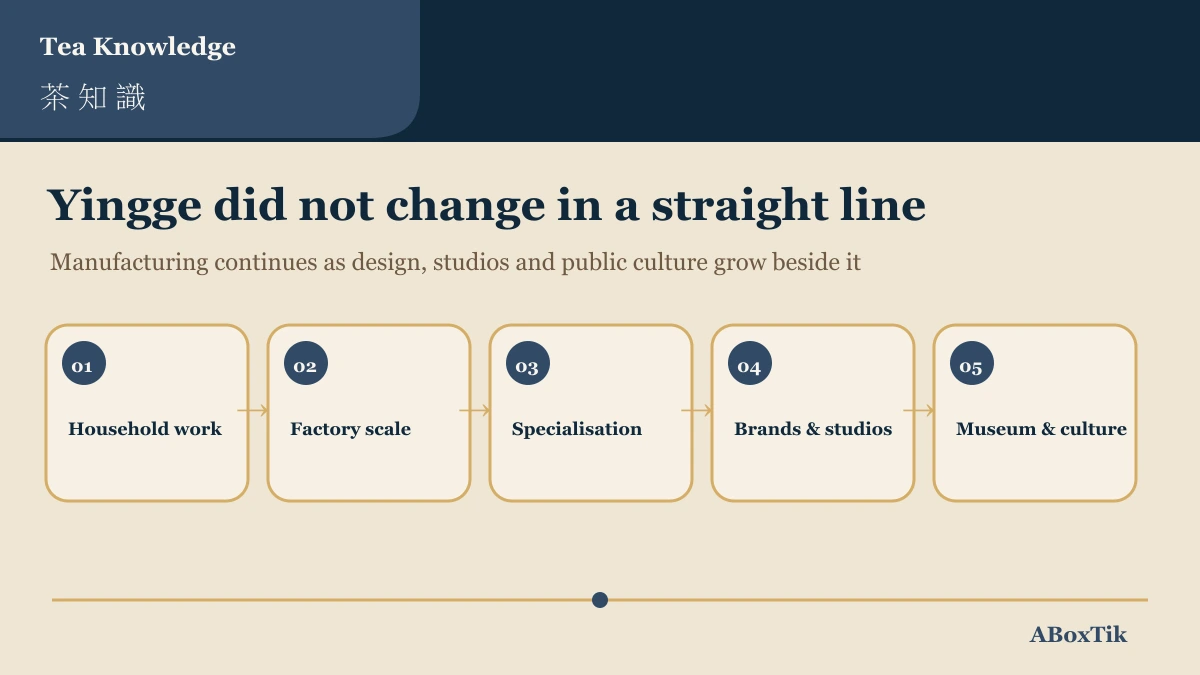
By the late twentieth century, competition from other materials, opening external markets and changing labour and material costs placed pressure on traditional production. Official sources describe some OEM capacity moving away, while local businesses explored upgrading, brands, design, studios and cultural tourism. Avoid a neat “industry ended and art replaced it” story: building, sanitary and industrial ceramics continue to innovate, and studios are one path rather than the whole future.
Museums, studios and contemporary work
The Yingge Ceramics Museum opened in 2000 as a public platform for collections, research, education and display. The Digital Ceramics Museum notes that, as the industry changed in the 1990s, creators established studios and accumulated new energy for ceramic art. These settings allow manufacturing knowledge, local memory and contemporary questions to be seen together.
Cultural tourism is not a guarantee about every shop or object. When you visit, read the object label and ask about materials, making and care. If a vessel will touch food or hot water, ask the maker or seller about its intended use and cleaning guidance. Clear questions are both self-care and respect for the work behind the object.
Five questions before you rush to buy
- What is it for? Everyday ware, building material, industrial parts and art have different requirements.
- Who provides the information? Look for clear material, process and care notes rather than an origin label alone.
- What kinds of work shaped it? Throwing, moulding, decoration and subcontracting can all be honest production methods.
- Does it fit your use? Capacity, grip, cleaning and food-contact guidance matter more than a promise that you will become “better at tea”.
- What do you genuinely like? Glaze, proportion, a local story and daily use are all valid reasons; no myth is required.
For tea ware, return to repeatable conditions: use a familiar tea, similar water temperature and similar timing. Do not claim that one clay always makes tea taste better. See our teapot materials guide and gaiwan beginner guide for practical starting points. Choose a familiar tea from the Taiwan tea collection, and use the tea aroma guide as a calm observation prompt.
There is also no need to purchase quickly in order to have a meaningful visit. A museum label can offer historical context; a studio can show a maker’s present choices; a shop can help you assess whether an item suits your home. Those are different kinds of encounters, and none needs to stand in for all of Yingge. If you choose a tea vessel, begin with the ordinary questions: can you hold it comfortably, can you clean it, and does its stated use fit hot tea? A calm, specific answer is more useful than a grand claim about what a place is supposed to make you feel.
Let an object open a place, not close the story
Yingge ceramics is famous because material conditions, transport, skilled people, household work, factory specialisation and market networks accumulated here over time. As conditions changed, manufacturing, design, studios, exhibitions and public culture continued to seek new ways forward. “Pottery town” is not a finished label; it is a place still negotiating how things are made, sold and understood.
If you enjoy seeing tea and local craft meet inside one thoughtful gift, continue with limited-edition tea gifts and Taiwanese craft. Current materials, makers and availability should always be confirmed on the relevant product page.

Tea with ABoxTik|Let touch, information and story sit together. One object never has to speak for an entire town.
Continue reading
- Taiwan ceramic craft history
- How to choose teapot materials
- Explore current tea and craft selections (live product details prevail).
Sources
- Yingge Ceramics Museum: Pottery Town (checked 2026-09-22)
- Digital Ceramics Museum: 200 Years of Yingge Pottery (checked 2026-09-22)
- National Taiwan Craft Research and Development Institute: Ceramics (checked 2026-09-22)